
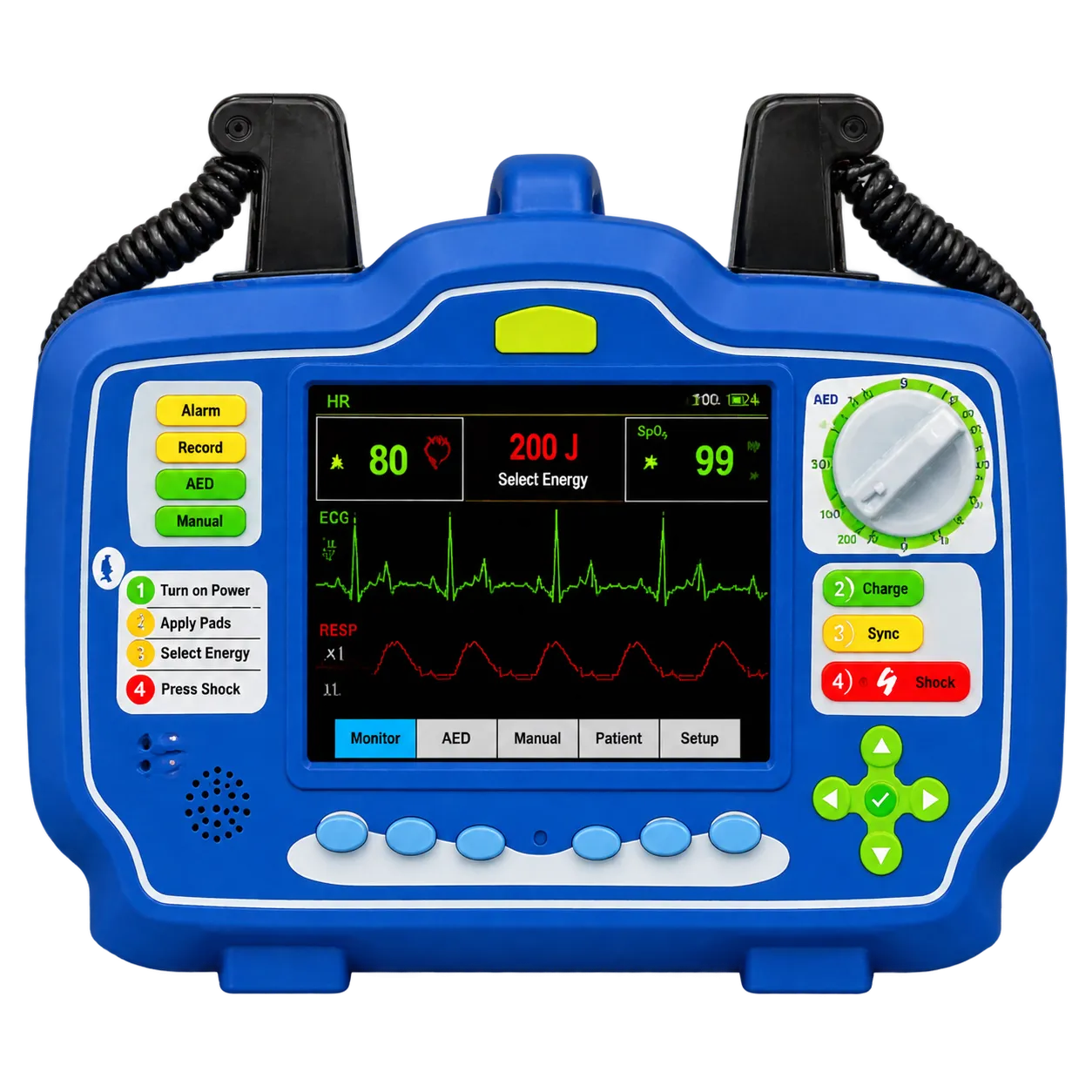
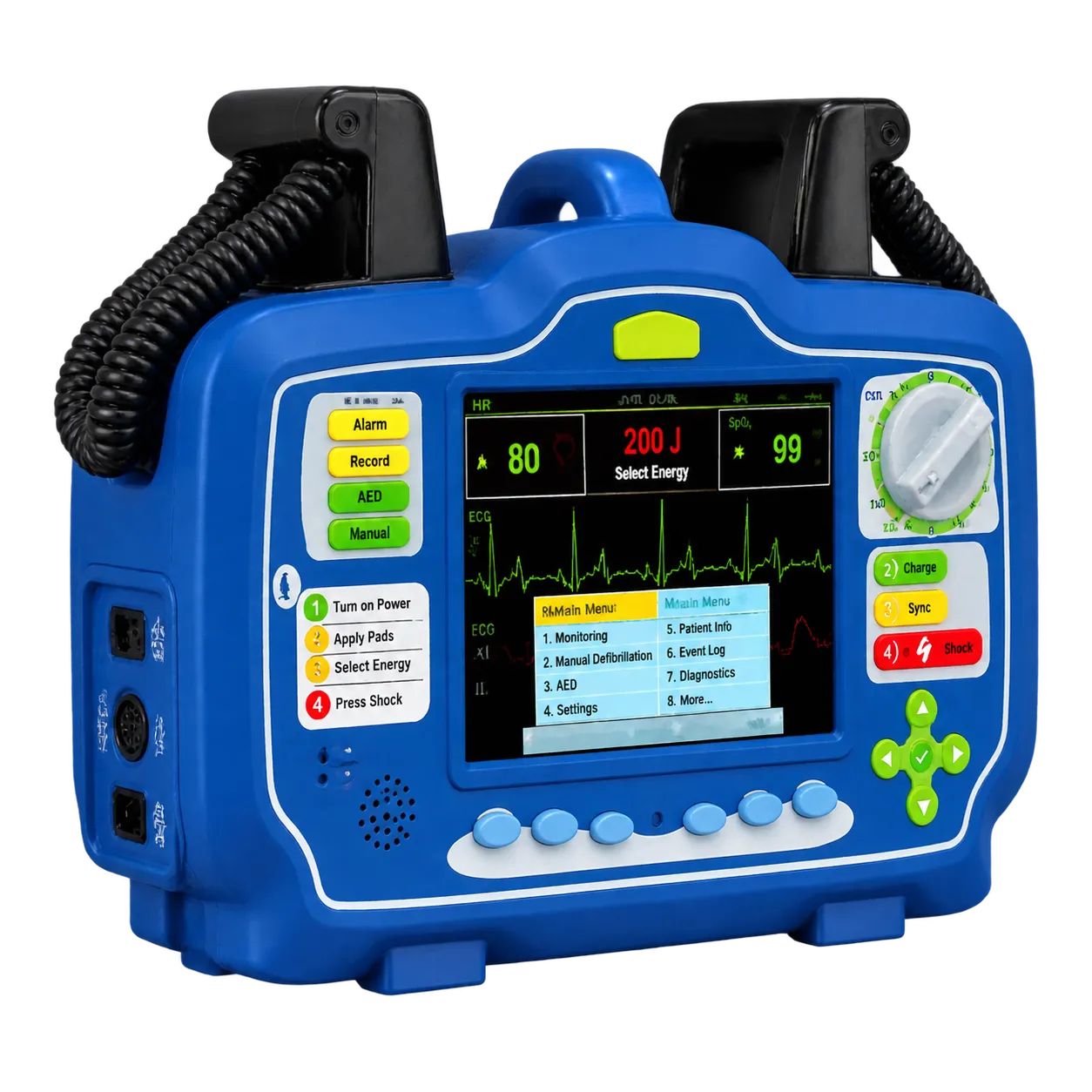
On any defibrillator monitor, the paddles question settles first on clinical grounds. Adhesive pads are placed once and left, so a shock is delivered without anyone touching the patient, and compressions resume immediately afterwards. Paddles require gel, hand pressure, and a clear verbal warning each time, which lengthens the pause and puts a rescuer's hands on the chest at the moment of discharge. Guidance has moved for good reasons, and a department buying a paddle-only unit should do so knowing exactly that.
Battery chemistry is the second. A defibrillator monitor is unusual equipment in that it does nothing for months, then must work instantly. Nickel-metal hydride self-discharges faster than lithium does, so a unit left on a bracket loses readiness between checks in a way a lithium equivalent largely does not. Four hours to a full charge compounds it, since a flat battery means a machine out of service for half a shift. Spare batteries and a charging routine therefore become part of the purchase rather than an afterthought discovered later.
What is absent matters here more than on any other sheet in this catalogue. No energy accuracy is published, so delivered joules against selected joules remains unknown. No charge-to-shock interval, which is what determines how long compressions stop. No self-test is mentioned, which is how anyone knows an idle defibrillator still works at all. And no conformity marking appears anywhere on the page.
Medigear.uk establishes every one of those before this defibrillator monitor reaches a clinical area.