
Introduction
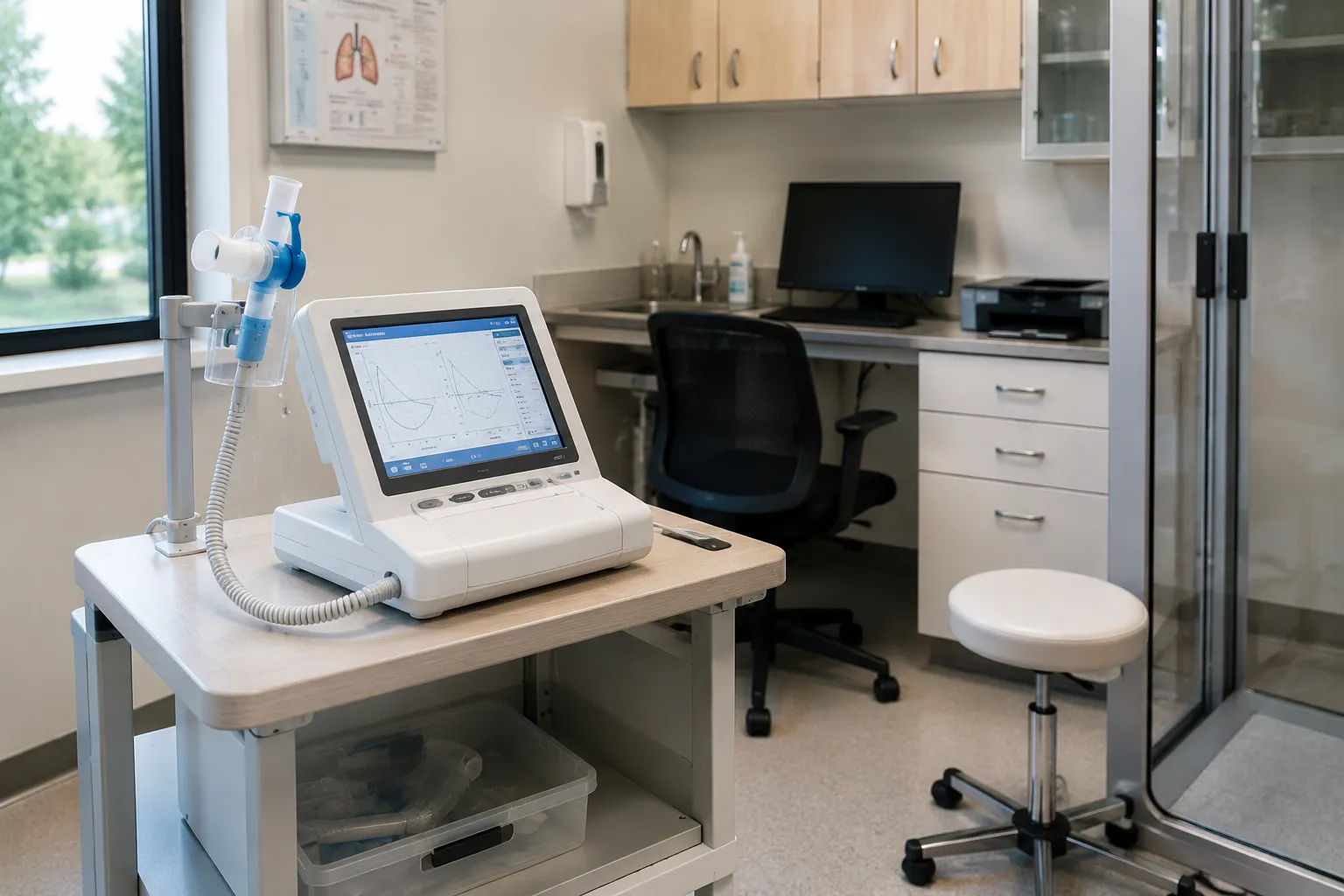
Spirometry is the core test of lung function, measuring how much air a person can breathe out and how fast. It underpins the diagnosis and monitoring of conditions such as asthma and chronic obstructive pulmonary disease, and its value depends entirely on accurate, consistent performance. A poorly calibrated device or an unreliable technique gives misleading numbers, so a good spirometry service is as much about quality control and calibration as it is about the spirometer itself.
Equipping a spirometry service is more focused than a full pulmonary function laboratory, but it carries specific requirements around accuracy, infection control and the ability to perform reversibility testing. This spirometry equipment buyer guide sets out what a clinic needs, why calibration and quality control are central, and the practical and traceability questions to settle early. It is written for respiratory clinicians, physiologists, practice teams and procurement across the UK, Europe, the US, the Gulf and South Africa.
What a spirometry service needs — the short version
-
A spirometer suited to the setting, from desktop clinic devices to portable units.
-
A calibration syringe and quality-control routine to keep measurements accurate.
-
Reversibility testing provision, with single-use filters and mouthpieces for infection control.
Start with the spirometer and its calibration.
The core purchase is the spirometer, chosen to suit where testing happens — a desktop device for a busy respiratory clinic, or a portable unit for community and domiciliary use. But a spirometer is only as trustworthy as its calibration, so a calibration syringe and a routine to check the device are just as fundamental. Accurate, comparable results depend on this discipline, which is why calibration and quality control are treated as core equipment rather than an afterthought.
Around the device sit the consumables and capabilities that complete the service. Single-use filters and mouthpieces protect against cross-infection and are a continuing supply need. Provision for reversibility testing — repeating spirometry after a bronchodilator — lets the service distinguish between conditions and guide treatment. Matching the device, its quality-control routine and its consumables to the clinic's caseload is the practical heart of setting up spirometry.
What spirometry needs
-
Spirometer. A clinic desktop or portable device measuring lung volumes and flows.
-
Calibration syringe. A reference syringe to verify and calibrate the device.
-
Quality-control routine. Regular checks and biological controls to confirm accuracy.
-
Reversibility testing. Provision to repeat testing after a bronchodilator.
-
Filters and mouthpieces. Single-use consumables for infection control.
-
Reporting software. Predicted values, interpretation support and structured reports.
-
Nose clips and accessories. Supporting consumables for a valid test.
The equipment checklist
|
Equipment |
Role in the clinic |
Key selection point |
|
Spirometer |
Lung function measurement |
Accuracy; setting; ease of use |
|
Calibration syringe |
Verifying accuracy |
Reference volume; compatibility |
|
Filters and mouthpieces |
Infection control |
Single use; fit; supply |
|
Reversibility provision |
Distinguishing conditions |
Protocol support |
|
Reporting software |
Interpretation |
Predicted values; record link |
|
Accessories |
Valid technique |
Nose clips; comfort |
Calibration and quality control
Because spirometry results guide diagnosis and are compared over time, device accuracy is everything. A calibration syringe verifies that the spirometer reads correctly, and regular checks catch drift before it affects patients. Many services also use biological controls — a known healthy operator tested regularly — as a further safeguard. This quality-control discipline is what makes results trustworthy and comparable, so it is planned from the outset rather than bolted on later.
Reversibility and infection control
Two practical features shape a spirometry clinic. Reversibility testing, in which spirometry is repeated after a bronchodilator, helps distinguish between respiratory conditions and informs treatment, so it is worth planning for. Infection control matters too: single-use filters and mouthpieces prevent cross-contamination between patients and form a continuing consumable need. Getting both right keeps the service clinically useful and safe for the patients moving through it.
Compliance and documentation
Spirometry equipment must be genuine, current and fully documented. In the UK, the MHRA regulates medical devices, and NICE publishes clinical guidance. Requirements vary by country and market, so confirm current obligations with the relevant authorities before you buy.
Support keeps a spirometry service running.
-
Installation, setup and familiarisation for spirometers and reporting software.
-
Preventive maintenance and calibration support that protect measurement accuracy.
-
Reliable supply of filters, mouthpieces, nose clips and calibration accessories.
-
Rapid technical response, because a faulty device stops a clinic list.
-
Clear documentation and traceability for devices and calibration records.
More from Business
-
Buyers — source compliant, fully documented equipment.
-
Suppliers — list your equipment and reach buyers worldwide.
-
Advertise — promote your products and services to a clinical audience.
-
Business overview — explore everything MediGear offers healthcare organisations.
Disclaimer
This article is for general information only. It does not constitute clinical, procurement, legal or regulatory advice. Equipment requirements for spirometry vary by service, setting, facility, country and market, and change over time. Always confirm current requirements with the relevant authorities, and consult qualified clinical, physiology, biomedical engineering, procurement and regulatory professionals for decisions specific to your organisation. medigear.uk accepts no liability for actions taken based on this content.
"Measured breaths, trusted results." A respiratory clinic equipped for reliable spirometry.
We supply medical equipment to healthcare organisations across the UK, Europe, the US, the Gulf and South Africa. Everything is genuine, documented and supported, so your spirometry service produces accurate, comparable results.
Frequently Asked Questions
A spirometry service needs a spirometer suited to its setting — a desktop device for a clinic or a portable unit for community use — plus a calibration syringe and a quality-control routine to keep results accurate. It also needs single-use filters and mouthpieces for infection control, provision for reversibility testing, reporting software with predicted values, and accessories such as nose clips.
Spirometry results guide diagnosis and are compared over time, so the device must read accurately. A calibration syringe verifies the spirometer, and a routine of regular checks catches drift before it affects patients. Many services add biological controls as a further safeguard. This quality-control discipline is what makes results trustworthy and comparable, so it is treated as core rather than optional.
Reversibility testing repeats spirometry after a patient takes a bronchodilator, comparing the results. It helps distinguish between respiratory conditions and informs treatment decisions. Because it is a common and useful part of respiratory assessment, provision for it — including the workflow and any supporting consumables — is worth planning when equipping a spirometry service.
Spirometry involves patients breathing forcefully into a device, so infection control is essential. Single-use filters and mouthpieces prevent cross-contamination between patients and are a continuing consumable requirement. Planning their supply alongside the spirometer keeps the service safe for the patients moving through it and avoids interruptions when stock runs low.
Yes. Devices and calibration records should be genuine, current and traceable. In the UK, devices are regulated by the MHRA and clinical guidance comes from NICE. Requirements vary by country and market, so confirm current obligations with the relevant authorities before purchasing.
Yes. MediGear supplies medical equipment to healthcare organisations across the UK, Europe, the US, the Gulf and South Africa. As a distributor we provide genuine, documented and supported equipment, from spirometers and calibration syringes to filters, mouthpieces and reporting software. Requirements differ by service and market, so we work with your team to match equipment to your service and its regulatory setting.