
Introduction
Ophthalmic surgery operates on structures measured in fractions of a millimetre, under high magnification, with instruments finer than almost any others in medicine. Cataract surgery is among the most commonly performed operations in the world, and alongside it sit retinal, glaucoma, corneal and oculoplastic procedures, each with its own technology. The eye's small scale and delicacy mean the equipment defines what is possible far more than in most specialities.
Equipping an ophthalmology service centres on high-quality visualisation and the specialised systems that do the surgical work — phacoemulsification for cataracts, vitrectomy for the retina, and lasers for a range of procedures — supported by fine microsurgical instruments and consumables. This ophthalmology surgery equipment buyer guide sets out what a service needs, when to make ordering decisions, and the compliance questions to settle early. It is written for ophthalmic surgeons, theatre teams, biomedical engineering and procurement across the UK, Europe, the US, the Gulf and South Africa.
What ophthalmology surgery needs — the short version
-
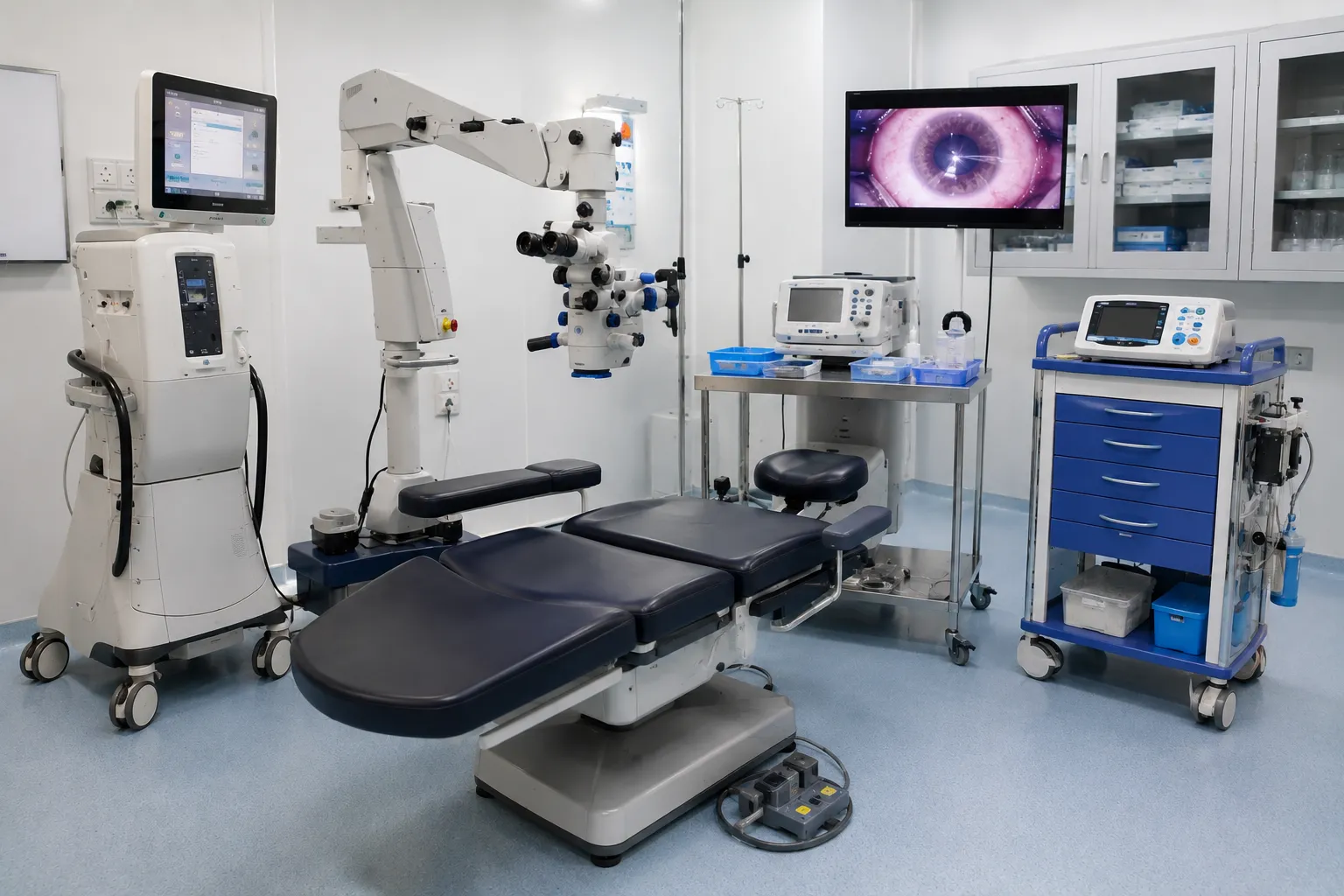
An ophthalmic operating microscope — the visualisation platform every case depends on.
-
Phacoemulsification and vitrectomy systems for cataract and retinal surgery.
-
Surgical lasers, fine microsurgical instruments and matched consumables such as lenses and viscoelastics.
Start with the operating microscope.
Every intraocular procedure begins with seeing clearly, so the operating microscope is the first and most important decision. An ophthalmic microscope provides the magnification, illumination, depth of field and foot-controlled focus and zoom that the surgeon relies on throughout a case. Increasingly, it can carry integrated imaging such as intraoperative optical coherence tomography. Its quality shapes every step that follows.
Because the microscope is the platform on which the whole service is built, it is chosen first and matched to the procedures the theatre will run. Around it, the phaco and vitrectomy systems, lasers and instrument sets are specified to fit the caseload and the microscope's capabilities. Comfortable, stable patient and surgeon positioning is part of the same picture, since micro-scale surgery leaves no room for avoidable movement.
What ophthalmology surgery needs
-
Ophthalmic operating microscope. High magnification, coaxial illumination and foot-controlled focus and zoom.
-
Phacoemulsification system. Ultrasound-driven cataract removal with irrigation and aspiration control.
-
Vitrectomy system. High-speed cutting, illumination and fluid control for retinal surgery.
-
Surgical lasers. Femtosecond, YAG, or photocoagulation lasers, depending on the procedures offered.
-
Microsurgical instruments. Fine forceps, scissors, needle holders and speculae for intraocular work.
-
Intraocular lenses and viscoelastics. Lens ranges and viscoelastic agents matched to cataract surgery.
-
Cryotherapy and diathermy. Retinal cryo and bipolar diathermy where the caseload requires them.
-
Patient positioning. Dedicated chairs or tables with stable head support for micro-scale surgery.
The equipment checklist
|
Equipment |
Role in the theatre |
Key selection point |
|
Operating microscope |
Visualisation |
Optics; illumination; foot control; imaging options |
|
Phaco system |
Cataract removal |
Fluidics; power modulation; reliability |
|
Vitrectomy system |
Retinal surgery |
Cut rate; illumination; fluid control |
|
Surgical laser |
Laser procedures |
Type; wavelength; safety features |
|
Microsurgical instruments |
Intraocular manipulation |
Precision; handling; durability |
|
Intraocular lenses |
Vision restoration |
Range; matched delivery; traceability |
|
Positioning system |
Patient stability |
Head support; comfort; adjustability |
Cataract surgery and the phaco platform
Cataract surgery is the workhorse of most ophthalmology services, and the phacoemulsification system is at its heart. It uses ultrasound to break up the clouded lens while a carefully balanced fluidics system irrigates and aspirates the fragments, after which an intraocular lens is implanted. The fluidics behaviour, power modulation and reliability of a phaco system directly affect efficiency and safety across a high-volume list, so it is chosen with throughput as well as capability in mind. Lenses, viscoelastics and single-use consumables are specified alongside it.
Retinal surgery and lasers
Beyond the front of the eye, vitreoretinal surgery uses a vitrectomy system to remove and replace the vitreous gel and to work on the retina, with high-speed cutters, endo-illumination and precise fluid control. Lasers extend the service further — photocoagulation for retinal disease, YAG for capsular and other procedures, and femtosecond platforms in some cataract and corneal work. Which lasers a service invests in depends on its subspecialty mix, and each brings its own safety, maintenance and training requirements.
Compliance and documentation
Ophthalmic equipment must be genuine, current and fully documented. In the UK,y the MH regulates devices, with clinical guidance from NICE. The ISO maintains international standards for medical devices. Implanted lenses require traceability, and requirements vary by country and market. Confirm current obligations with the relevant authorities before you buy.
Support keeps an ophthalmology service running.
-
Installation, commissioning and clinical familiarisation for microscopes, phaco and vitrectomy systems.
-
Preventive maintenance and calibration for microscopes, surgical systems and lasers.
-
Reliable supply of consumables — phaco packs, lenses, viscoelastics and instruments.
-
Responsive technical support to keep high-volume cataract lists moving.
-
Clear documentation and lens traceability to support governance and audit.
More from Business
-
Buyers — source compliant, fully documented equipment.
-
Suppliers — list your equipment and reach buyers worldwide.
-
Advertise — promote your products and services to a clinical audience.
-
Business overview — explore everything MediGear offers healthcare organisations.
Disclaimer
This article is for general information only. It does not constitute clinical, procurement, legal or regulatory advice. Equipment requirements for ophthalmic surgery vary by service, facility, country and market, and change over time. Laser safety is separately regulated in most countries and requires specialist input. Always confirm current requirements with the relevant authorities, and consult qualified clinical, biomedical engineering, procurement and regulatory professionals for decisions specific to your organisation. medigear.uk accepts no liability for actions taken based on this content.
"Precision you can see" A service equipped for the eye.
We supply medical equipment to healthcare organisations across the UK, Europe, the US, the Gulf and South Africa. Everything is genuine, documented and supported, so your ophthalmology service operates with confidence.
Frequently Asked Questions
Ophthalmic surgery centres on an operating microscope for high-magnification visualisation. Cataract work needs a phacoemulsification system with intraocular lenses and viscoelastics; retinal work needs a vitrectomy system with endo-illumination and fluid control. Services also use surgical lasers, fine microsurgical instruments, cryotherapy and diathermy where required, and stable patient positioning. The exact mix depends on the subspecialties the service offers.
Every intraocular procedure depends on seeing structures measured in fractions of a millimetre. An ophthalmic microscope provides the magnification, illumination, depth of field and foot-controlled focus and zoom the surgeon relies on throughout a case, and can carry integrated imaging such as intraoperative OCT. Its quality shapes every subsequent step, which is why it is chosen first and the rest of the service is matched to it.
A phaco system removes a cataract by using ultrasound to break up the clouded lens while a balanced fluidics system irrigates and aspirates the fragments; an intraocular lens is then implanted. Its fluidics, power modulation and reliability affect the safety and efficiency of high-volume cataract lists, so it is chosen with both capability and throughput in mind, along with matched lenses and consumables.
Vitreoretinal surgery uses a vitrectomy system rather than a phaco system. It combines high-speed cutters, endo-illumination and precise fluid control to remove and replace the vitreous gel and operate on the retina. Services may add cryotherapy, diathermy and specific lasers. The vitrectomy platform is selected for cut rate, illumination quality and fluidics, according to the retinal caseload.
Yes. Surgical lasers carry safety, maintenance and training requirements, and laser safety is separately regulated in many countries. Implanted intraocular lenses require traceability to the patient. In the UK, the MHRA regulates devices, with clinical guidance from NICE and international device standards from ISO. Requirements vary by country and market, so confirm current obligations with the relevant authorities.
Yes. MediGear supplies medical equipment to healthcare organisations across the UK, Europe, the US, the Gulf and South Africa. As a distributor, we provide genuine, documented,d and supported equipment, from operating microscopes and phaco and vitrectomy systems to lasers, instruments and consumables. Requirements differ by service and market, so we work with your team to match equipment to your caseload and regulatory setting.