
Introduction
The immunology laboratory measures the immune system — the antibodies, proteins and cells that defend the body and, when they malfunction, drive autoimmune disease, immunodeficiency and allergy. Its work ranges from measuring immunoglobulins and complement proteins to detecting the autoantibodies behind conditions such as lupus and to counting immune cell populations. Each requires a different technique, so an immunology laboratory is defined by a set of analysers and methods working together, all held to strict quality and accreditation standards.
Equipping an immunology laboratory spans immunoassay and protein analysers, autoantibody detection methods including immunofluorescence, flow cytometry for cell analysis, and the cold chain and quality systems that laboratory work demands. This immunology lab equipment buyer guide sets out what each area needs, how the methods fit into one service, and the accreditation and traceability questions to settle early. It is written for immunologists, biomedical scientists, laboratory managers and procurement across the UK, Europe, the US, the Gulf and South Africa.
What an immunology lab needs — the short version
-
Immunoassay and protein analysers as the workhorses of the everyday test menu.
-
Autoantibody detection, including immunofluorescence, for autoimmune diagnosis.
-
Flow cytometry for cell analysis, supported by cold chain and quality systems.
Start with the analysers and the test menu.
The core of an immunology laboratory is the set of analysers that run its everyday menu. Immunoassay analysers measure specific antibodies and markers, while nephelometry or turbidimetry quantifies immunoglobulins, complement and other proteins. These platforms handle the bulk of the workload, so their throughput, reliability and the breadth of tests they support shape the whole service. They are chosen first and matched to the laboratory's caseload and the information system they must connect to.
Around this core sit the more specialised methods. Autoantibody testing, central to diagnosing autoimmune disease, often uses immunofluorescence microscopy alongside immunoassay, and flow cytometry counts and characterises immune cell populations for immunodeficiency and related work. Because these diagnostic tests are subjectd to accreditation standards, reagents,controls, and calibrators are supplied continuously, and the cold chain that protects them is essential equipment.
What an immunology lab needs
-
Immunoassay analyser. Automated measurement of specific antibodies and markers.
-
Protein analyser. Nephelometry or turbidimetry for immunoglobulins and complement.
-
Autoantibody testing. Immunofluorescence and immunoassay for autoimmune diagnosis.
-
Fluorescence microscopy. Microscopes for reading immunofluorescence patterns.
-
Flow cytometry. Counting and characterising immune cell populations.
-
Cold chain. Refrigeration and freezers with monitoring for reagents and samples.
-
Sample handling: centrifuges, pipetting and preparation equipment.
-
Quality systems. Controls, calibrators and documentation for accreditation.
The equipment checklist
|
Equipment |
Role in the lab |
Key selection point |
|
Immunoassay analyser |
Antibody and marker testing |
Throughput; menu; LIS link |
|
Protein analyser |
Immunoglobulins and complement |
Assay range; turnaround |
|
Immunofluorescence |
Autoantibody detection |
Pattern clarity; imaging option |
|
Flow cytometer |
Cell analysis |
Colour capacity; panels |
|
Cold chain |
Reagent and sample storage |
Temperature control; monitoring |
|
Quality systems |
Accreditation |
Controls; documentation |
Many methods, one service
What characterises an immunology laboratory is the range of methods it must run side by side. Immunoassay, protein quantification, immunofluorescence and flow cytometry each answer different clinical questions, from immunodeficiency to autoimmune disease to allergy, and a rounded service needs them working together. Planning the equipment as a coherent set — rather than a collection of separate instruments — keeps the test menu complete, the workflow efficient and the results connected across a patient's investigation.
Quality and accreditation
Immunology results guide serious diagnoses, so the laboratory works to strict quality and accreditation standards. Controls, calibrators and documented procedures underpin every analyser, and the cold chain that protects reagents and samples is monitored continuously. Accreditation is not a one-off exercise but an ongoing discipline that shapes how equipment is chosen, maintained and recorded. In the UK, UKAS oversees laboratory accreditation, and this framework runs through the whole service.
Compliance and documentation
Immunology laboratory equipment must be genuine, current and fully documented, and diagnostic work carries accreditation obligations. In the UK, the MHRA regulates medical devices, and NICE publishes clinical guidance. Requirements vary by country and market, so confirm current obligations with the relevant authorities before you buy.
Support keeps an immunology lab running.
-
Installation, commissioning and method setup for analysers and flow cytometry.
-
Preventive maintenance and calibration that protect result quality and accreditation.
-
Reliable reagent, control and consumable supply across the test menu.
-
Rapid technical response, because a downed analyser delays diagnosis across the hospital.
-
Clear documentation and traceability for instruments, reagents and samples.
More from Business
-
Buyers — source compliant, fully documented equipment.
-
Suppliers — list your equipment and reach buyers worldwide.
-
Advertise — promote your products and services to a clinical audience.
-
Business overview — explore everything MediGear offers healthcare organisations.
Disclaimer
This article is for general information only. It does not constitute clinical, procurement, legal or regulatory advice. Equipment requirements for an immunology laboratory vary by service, test menu, facility, country and market, and change over time. Laboratory accreditation is separately governed and requires specialist input. Always confirm current requirements with the relevant authorities, and consult qualified clinical, laboratory, biomedical engineering, procurement and regulatory professionals for decisions specific to your organisation. medigear.uk accepts no liability for actions taken based on this content.
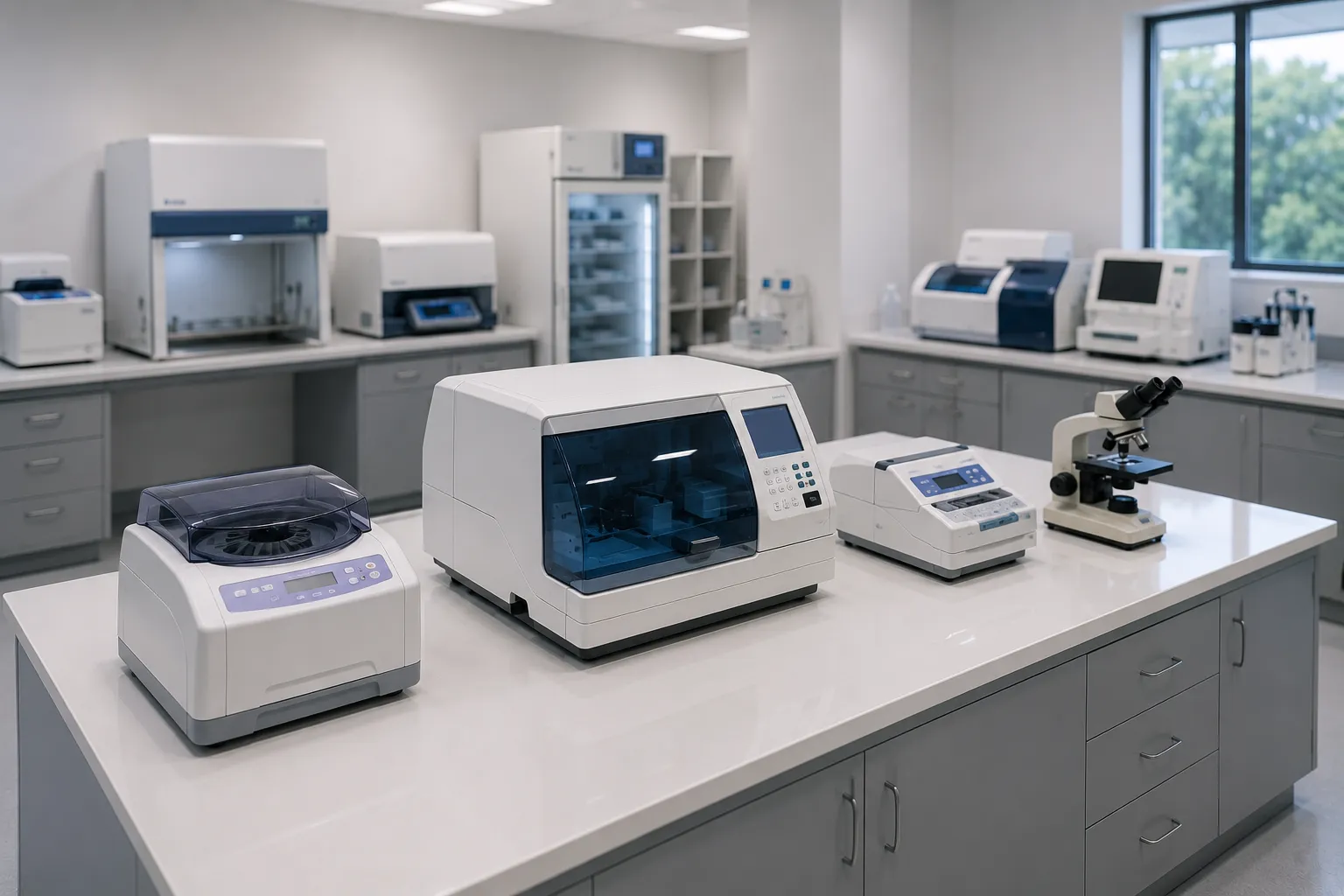
"Reading the immune system." An immunology laboratory equipped for its full menu.
We supply medical equipment to healthcare organisations across the UK, Europe, the US, the Gulf and South Africa. Everything is genuine, documented and supported, so your immunology laboratory runs its full test menu reliably.
Frequently Asked Questions
An immunology laboratory needs immunoassay analysers to measure specific antibodies and markers and protein analysers — nephelometry or turbidimetry — for immunoglobulins and complement. It needs autoantibody detection, including immunofluorescence microscopy; flow cytometry for cell analysis; a monitored cold chain for reagents and samples; sample-handling equipment such as centrifuges; and the controls and documentation accreditation requires.
An immunology laboratory measures the immune system — the antibodies, proteins and cells that defend the body and, when they malfunction, drive autoimmune disease, immunodeficiency and allergy. Its work ranges from measuring immunoglobulins and complement to detecting autoantibodies behind conditions such as lupus and to counting immune cell populations. Each needs a different technique, which shapes the equipment set.
Immunoassay, protein quantification, immunofluorescence and flow cytometry each answer different clinical questions, from immunodeficiency to autoimmune disease to allergy. A rounded service needs them working together. Planning the equipment as a coherent set rather than separate instruments keeps the test menu complete, the workflow efficient and the results connected across a patient's investigation.
Autoantibody testing detects the antibodies that the immune system mistakenly makes against the body's own tissues, which is central to diagnosing autoimmune disease. It often combines immunofluorescence microscopy, where staining patterns are read under a microscope, with immunoassay methods. Because interpretation matters, imaging quality and supporting quality systems are key selection factors.
Yes. Diagnostic equipment, reagents, and samples should be genuine, current, and traceable, and the laboratory should meet accreditation standards. In the UK, the MHRA regulates medical devices; NICE provides clinical guidance; CE and UKAS oversee laboratory accreditation. Requirements vary by country and market, so confirm current obligations with the relevant authorities before purchasing.
Yes. MediGear supplies medical equipment to healthcare organisations across the UK, Europe, the US, the Gulf and South Africa. As a distributor, we provide genuine, documented, and supported equipment, from immunoassay and protein analysers to immunofluorescence, flow cytometry, and cold-chain storage. Requirements differ by service and market, so we work with your team to match equipment to your laboratory and its regulatory setting.