
Introduction
Seen as a hospital service rather than a bench discipline, microbiology does more than identify organisms: it guides antibiotic prescribing across every ward, supports infection prevention and control, and helps the hospital respond to outbreaks. At this level, what matters is not only what the laboratory can test, but how quickly it turns a sample into an answer a clinician can act on, and how well it connects to the wider hospital. Speed, reliability and integration therefore shape a hospital microbiology service as much as the core culture and identification work does.
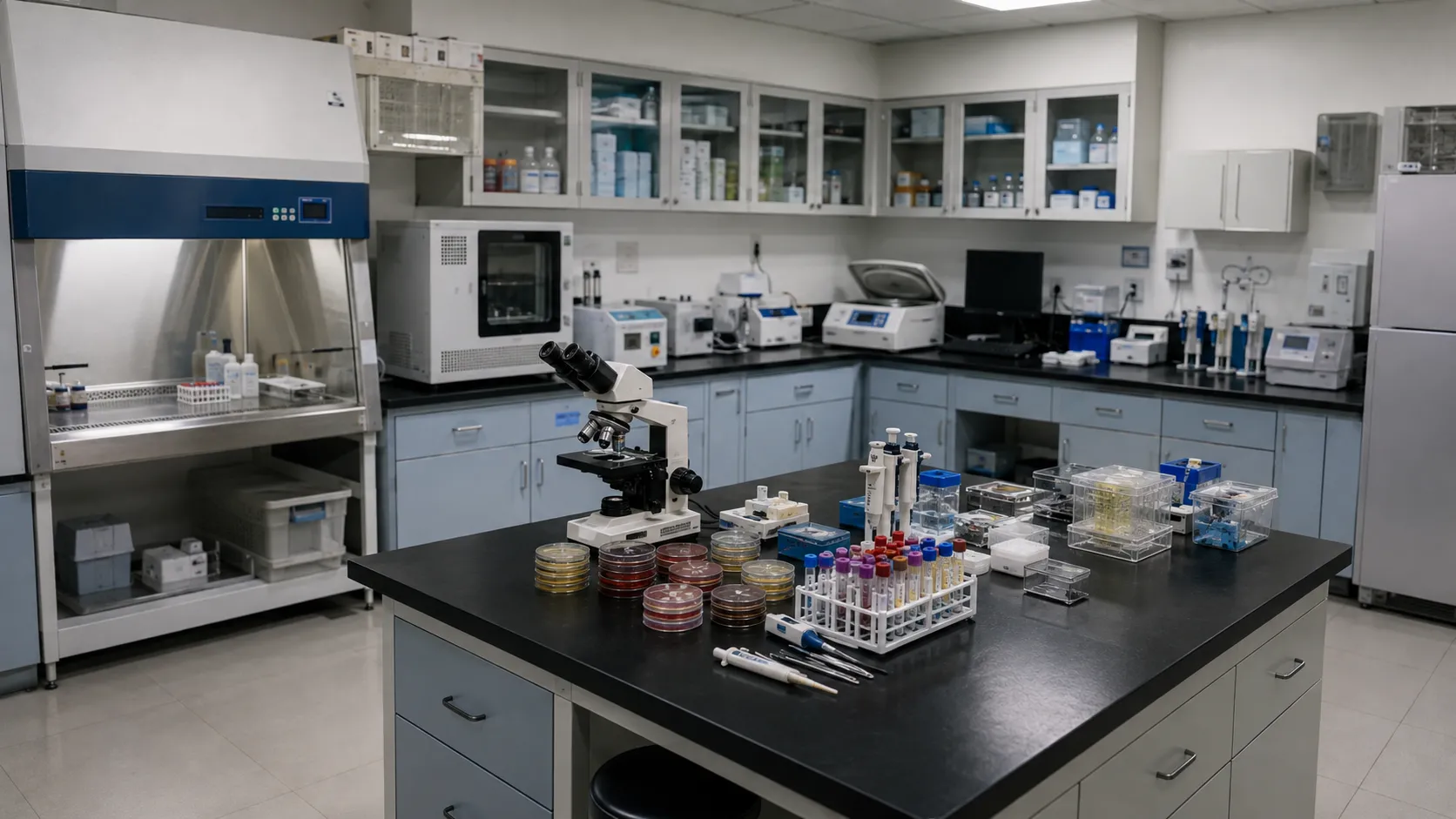
Equipping a hospital microbiology service spans rapid diagnostics that shorten time to result, automated blood culture and identification that underpin serious-infection care, containment that keeps staff safe, and integration and reporting that connect the laboratory to the hospital. This hospital microbiology lab equipment buyer guide sets out what each area contributes at hospital scale, why turnaround and integration matter, and the safety and accreditation questions to settle early. It is written for microbiology and infection control teams, laboratory managers and procurement across the UK, Europe, the US, the Gulf and South Africa.
What a hospital microbiology service needs — the short version
-
Rapid diagnostics that shorten the time from sample to actionable result.
-
Automated blood culture and identification for serious-infection care.
-
Containment for staff safety, with integration and reporting to the hospital.
Start with turnaround and its clinical impact.
At hospital scale, the value of microbiology is closely tied to how fast it works. The sooner an organism is identified and its susceptibilities known, the sooner a patient can be moved from broad, empirical treatment to a targeted one, benefiting the patient and supporting antimicrobial stewardship across the hospital. Rapid diagnostic systems and automated blood culture, which flags a positive as soon as growth is detected, are therefore central, chosen with turnaround firmly in mind alongside the reliability the work demands.
Underpinning the fast answers is the core equipment that makes the service work safely and well. Identification systems name organisms quickly, susceptibility testing guides treatment, and microbiological safety cabinets protect staff handling live pathogens. Because a hospital microbiology service also supports infection control and outbreak response, its equipment is planned to serve the wider hospital, not just the bench. Matching diagnostic speed, capacity and containment to the hospital's needs is the practical core of equipping the service.
What a hospital microbiology service needs
-
Rapid diagnostics. Systems that shorten time to identification and susceptibility.
-
Automated blood culture. Detection of bloodstream infection with fast flagging.
-
Identification systems. Rapid naming of organisms, including mass spectrometry.
-
Susceptibility testing. Testing that guides targeted treatment and stewardship.
-
Incubation and culture. Controlled incubation supporting the workload.
-
Safety cabinets. Containment for staff handling live pathogens.
-
Integration and reporting. Connection to the hospital and infection control.
The equipment checklist
|
Equipment |
Role in the service |
Key selection point |
|
Rapid diagnostics |
Fast answers |
Turnaround; breadth |
|
Blood culture system |
Bloodstream infection |
Time to detection; capacity |
|
Identification system |
Naming organisms |
Speed; database |
|
Susceptibility testing |
Guiding treatment |
Turnaround; standards |
|
Safety cabinet |
Staff protection |
Class; certification |
|
Integration |
Connecting to the hospital |
Reporting; data flow |
Rapid diagnostics and stewardship
The clearest way a hospital microbiology service adds value is by shortening the time to a result that changes treatment. Rapid identification and susceptibility testing let clinicians switch from broad, precautionary antibiotics to a targeted choice sooner, which is better for the patient and central to antimicrobial stewardship — using antibiotics wisely to slow resistance. That is why turnaround time matters so much when choosing equipment. Faster, reliable answers ripple out into better prescribing across the whole hospital, not just a single result on a bench.
Containment and integration
Two things support the service's hospital-wide role. Containment keeps staff safe as they handle live pathogens, with certified microbiological safety cabinets and sound practice, and it remains a core requirement no matter how fast diagnostics become. Integration connects the laboratory to the wider hospital and to infection prevention and control, so that results, alerts and trends reach the people who act on them. Planning containment and integration alongside the diagnostics ensures the service is safe, connected and genuinely useful to the hospital.
Compliance and documentation
Hospital microbiology equipment must be genuine, current and fully documented, and diagnostic work carries accreditation obligations. In the UK, the MHRA regulates medical devices, and NICE publishes clinical guidance. UKAS oversees laboratory accreditation. Requirements vary by country and market, so confirm current obligations with the relevant authorities before you buy.
Support keeps a hospital microbiology service running
-
Installation, commissioning and method setup for rapid diagnostics and culture.
-
Preventive maintenance and cabinet certification that protect results and safety.
-
Reliable supply of media, reagents, controls and consumables.
-
Rapid technical response, because delays affect prescribing across the hospital.
-
Clear documentation and traceability for instruments, reagents and samples.
More from Business
-
Buyers — source compliant, fully documented equipment.
-
Suppliers — list your equipment and reach buyers worldwide.
-
Advertise — promote your products and services to a clinical audience.
-
Business overview — explore everything MediGear offers healthcare organisations.
Disclaimer
This article is for general information only. It does not constitute clinical, procurement, legal or regulatory advice. Equipment requirements for a hospital microbiology service vary by service, workload, facility, country and market, and change over time. Handling of live pathogens and laboratory accreditation are separately governed and require specialist input. Always confirm current requirements with the relevant authorities, and consult qualified clinical, laboratory, biomedical engineering, procurement and regulatory professionals for decisions specific to your organisation. medigear.uk accepts no liability for actions taken based on this content.
"Fast answers that guide treatment and stewardship." A hospital microbiology service well equipped.
We supply medical equipment to healthcare organisations across the UK, Europe, the US, the Gulf and South Africa. Everything is genuine, documented and supported, so your hospital microbiology service supports safe, timely care.
Frequently Asked Questions
A hospital microbiology service needs rapid diagnostics that shorten time to result, automated blood culture for serious-infection care, and identification systems—including mass spectrometry—to identify organisms quickly. It needs susceptibility testing to guide targeted treatment, incubation and culture for the workload, microbiological safety cabinets for staff protection, and integration and reporting that connect the laboratory to the hospital and infection control.
The sooner an organism is identified and its susceptibilities known, the sooner a patient can move from broad, empirical treatment to a targeted one, which benefits the patient and supports antimicrobial stewardship across the hospital. Rapid diagnostics and automated blood culture are therefore central, chosen with turnaround firmly in mind alongside the reliability the work demands.
Rapid identification and susceptibility testing let clinicians switch from broad, precautionary antibiotics to a targeted choice sooner, which is better for the patient and central to using antibiotics wisely to slow resistance. Faster, reliable answers ripple into better prescribing across the hospital, which is why turnaround time is weighed heavily when choosing equipment.
Seen as a hospital service rather than a bench discipline, microbiology guides antibiotic prescribing across every ward, supports infection prevention and control, and helps respond to outbreaks. At this level, what matters is how quickly a sample becomes an actionable answer and how well the laboratory connects to the wider hospital, so speed and integration shape the service alongside the core culture and identification work.
Yes. Diagnostic equipment, reagents, and samples should be genuine, current, and traceable, and the laboratory should meet accreditation standards. In the UK, the MHRA regulates devices; NICE provides clinical guidance; CE marks apply; and UKAS oversees laboratory accreditation. Requirements vary by country and market, so confirm current obligations with the relevant authorities before purchasing.
Yes. MediGear supplies medical equipment to healthcare organisations across the UK, Europe, the US, the Gulf and South Africa. As a distributor, we provide genuine, documented, and supported hospital microbiology lab equipment, from rapid diagnostics and automated blood culture to identification, susceptibility testing, and safety cabinets. Requirements differ by service and market, so we work with your team to match equipment to your service and its regulatory setting.