
Introduction
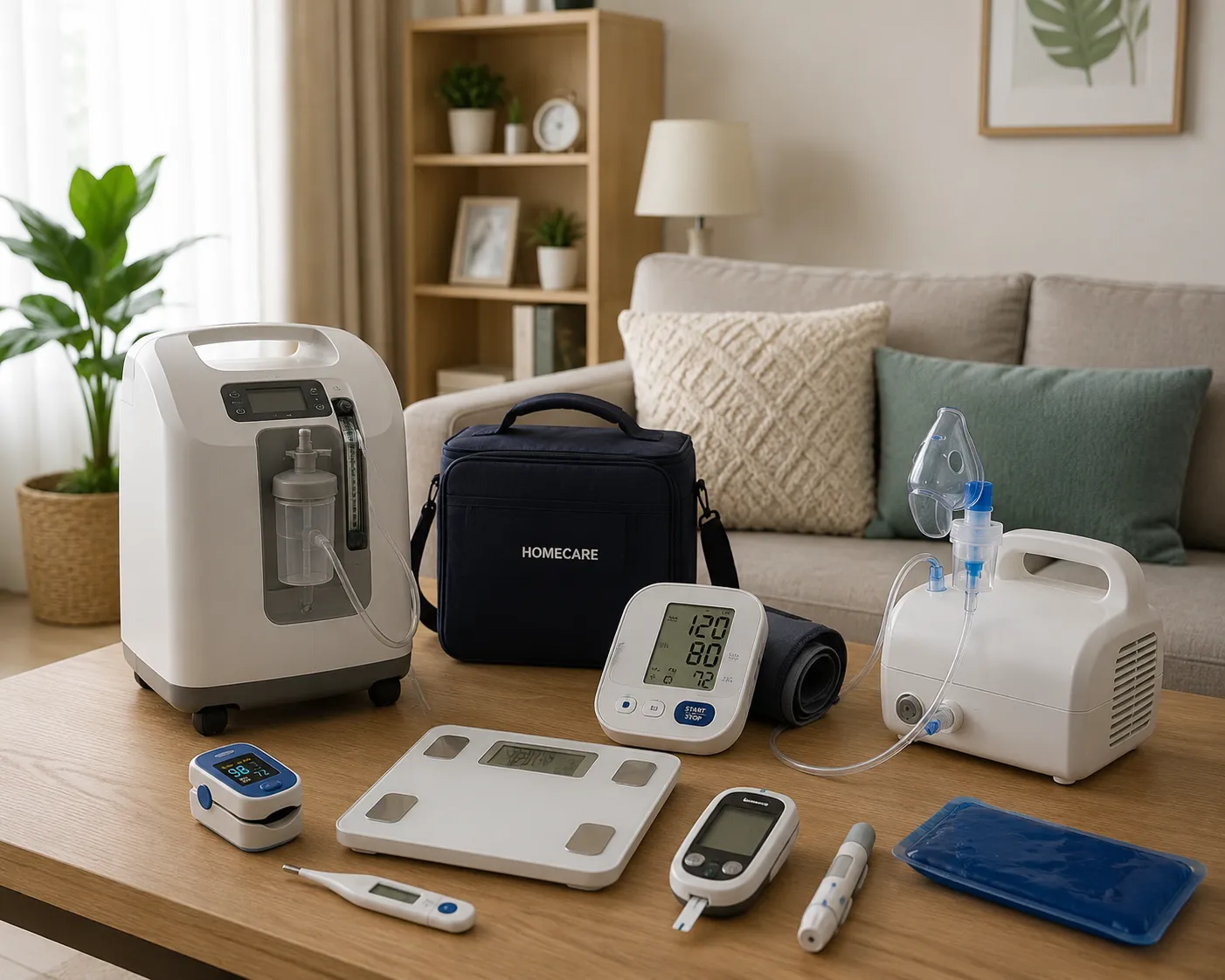
Home healthcare brings treatment and support to where people live, letting them stay at home rather than in hospital while still receiving the care they need. It covers a wide range, from oxygen and breathing support to beds, mobility aids and remote monitoring, and its defining requirement is that equipment must work safely and reliably outside a clinical setting, often operated by patients or families rather than trained staff. That shapes every choice: equipment must be dependable, straightforward to use and well supported in the home.
Home healthcare equipment spans respiratory support such as oxygen and home ventilation, home hospital beds and pressure care, mobility and moving equipment, and remote monitoring that links the home to clinical teams. This home healthcare equipment buyer guide sets out what each area needs, why reliability and ease of use in the home come first, and the safety and traceability questions to settle early. It is written for home care providers, community teams and procurement across the UK, Europe, the US, the Gulf and South Africa.
What a home healthcare provider needs — the short version
-
Respiratory support — oxygen concentrators and home ventilation — that is safe at home.
-
Home hospital beds, pressure care and mobility equipment for daily living.
-
Remote monitoring that links patients at home to their clinical teams.
Start with what makes home care safe.
The first principle of home healthcare equipment is that it must be safe and reliable in a setting with no clinical staff on hand. Respiratory support is a good example: oxygen concentrators and home ventilation must run day and night dependably, be simple enough for patients or families to use, and be backed by responsive support, because people depend on them. Equipment is therefore chosen as much for reliability and ease of use as for its clinical function, since a fault at home carries different risks than one on a ward.
From there, home healthcare provides the equipment that supports daily living with illness or disability. Home hospital beds and pressure care keep patients comfortable and protect their skin;; mobility and moving equipment help them get around and be cared for safely;; and remote monitoring lets clinical teams track patients without a visit. Matching this equipment to each patient's needs and home, and supporting it well once installed, is central to a good home healthcare service.
What home healthcare needs
-
Oxygen concentrators. Reliable home oxygen for patients who need it.
-
Home ventilation. Breathing support suitable for uhome use
-
Home hospital beds. Adjustable beds for comfort, safety and care at home.
-
Pressure care. Mattresses and cushions protecting less mobile patients.
-
Mobility and moving. Hoists, aids and equipment for safe movement at home.
-
Remote monitoring. Equipment linking patients at home to clinical teams.
-
Infusion and treatment. Equipment supporting treatments delivered at home.
The equipment checklist
|
Equipment |
Role at home |
Key selection point |
|
Oxygen concentrator |
Home oxygen |
Reliability; ease of use; support |
|
Home ventilation |
Breathing support |
Suitability for home; backup |
|
Home hospital bed |
Comfort and care |
Adjustment; fit for home |
|
Pressure care |
Protecting skin |
Risk level; comfort |
|
Mobility and moving |
Safe movement |
Suitability; ease of use |
|
Remote monitoring |
Linking to teams |
Reliability; connectivity |
Respiratory support at home
Respiratory equipment is among the most important, and most safety-critical, in home healthcare. Oxygen concentrators and home ventilation allow people with long-term breathing needs to live at home. Still, they must run reliably without clinical staff present, be simple for patients and families to operate, and be backed by prompt support if something goes wrong. Because patients depend on these devices continuously, dependability and responsive service are as important as the equipment's clinical performance when choosing what to provide.
Beds, mobility and monitoring
Beyond breathing support, home healthcare supports daily living and connects patients to clinical care. Home hospital beds and pressure care keep patients comfortable and protect their skin. At the same time, mobility and moving equipment help patients get around and be cared for safely by families and carers. Remote monitoring adds another layer, letting clinical teams monitor patients without a visit and respond sooner to changes. Together, these turn a home into a place where safe, connected care can be delivered.
Compliance and documentation
Home healthcare equipment must be genuine, current, fully documented, and safe to use in the home. In the UK, the MHRA regulates medical devices, and NICE publishes clinical guidance. Requirements vary by country and market, so confirm current obligations with the relevant authorities before you buy.
Support keeps home healthcare running.
-
Delivery, installation and familiarisation for equipment placed in the home.
-
Preventive maintenance and safety checks that keep home equipment reliable.
-
Reliable supply of oxygen, consumables and replacement parts to the home.
-
Rapid technical response, because a fault at home carries direct patient risk.
-
Clear documentation and traceability for equipment placed with each patient.
More from Business
-
Buyers — source compliant, fully documented equipment.
-
Suppliers — list your equipment and reach buyers worldwide.
-
Advertise — promote your products and services to a clinical audience.
-
Business overview — explore everything MediGear offers healthcare organisations.
Disclaimer
This article is for general information only. It does not constitute clinical, procurement, legal or regulatory advice. Equipment requirements for home healthcare vary by provider, patient needs, home setting, country and market, and change over time. Always confirm current requirements with the relevant authorities, and consult qualified clinical, community, biomedical engineering, procurement and regulatory professionals for decisions specific to your organisation. medigear.uk accepts no liability for actions taken based on this content.
"Hospital-grade care, at home." A home healthcare provider equipped for independent living.
We supply medical equipment to healthcare organisations across the UK, Europe, the US, the Gulf and South Africa. Everything is genuine, documented and supported, so care can be delivered safely in people's homes.
Frequently Asked Questions
A home healthcare provider needs safe, reliable respiratory support such as oxygen concentrators and home ventilation; home hospital beds and pressure care for comfort; and mobility and moving equipment for safe daily living. It also needs remote monitoring to link patients to clinical teams and equipment for treatments delivered at home, all chosen for reliability and ease of use outside a clinical setting.
Home healthcare equipment must work safely and reliably in a setting with no clinical staff on hand, often operated by patients or families rather than trained professionals. That makes dependability, ease of use and responsive support as important as clinical function, because a fault at home carries different risks than one on a ward. Equipment is chosen with these home realities firmly in mind.
Oxygen concentrators and home ventilation let people with long-term breathing needs live at home, but patients depend on them continuously. They must run day and night reliably, be simple for patients and families to operate, and have prompt support if something goes wrong. Because of this dependence, reliability and responsive service are central to choosing home respiratory equipment.
Remote monitoring connects patients at home to their clinical teams, letting staff track a patient's condition without a visit and respond sooner to changes. It adds a layer of oversight to home care, helping people stay safely at home for longer. Reliable connectivity and dependable equipment are the key considerations when providing remote monitoring.
Yes. Equipment should be genuine, current and traceable, with safe use in the home supported by familiarisation and maintenance. In the UK, the MHRA regulates devices, and NICE provides clinical guidance. Requirements vary by country and market, so confirm current obligations with the relevant authorities before purchasing.
Yes. MediGear supplies medical equipment to healthcare organisations across the UK, Europe, the US, the Gulf and South Africa. As a distributor,we provide genuine, ddocumented, and supported equipment, from oxygen concentrators and home ventilation to home hospital beds, mobility equipmenttt and remote monitoring. Requirements differ by provider and market, so we work with your team to match equipment to your service and its regulatory setting.