
Introduction
Haematology is unusual in medicine because it spans a busy diagnostic laboratory and a hands-on clinical service in the same breath. One side counts and characterises blood cells, measures clotting and diagnoses blood cancers; the other transfuses, gives chemotherapy and performs procedures such as bone marrow sampling and apheresis. Equipping the speciality well means thinking about both he analysers that generate results and the clinical kit that acts on them.
A haematology service therefore needs laboratory analysers, microscopy, specialised diagnostics such as flow cytometry, the procedural kit for marrow sampling, and treatment equipment for transfusion, cytotoxic infusion and apheresis. This haematology equipment buyer guide sets out what each area needs, how the laboratory and clinic connect, and the accreditation and traceability questions to settle early. It is written for haematologists, biomedical scientists, specialist nurses and procurement across the UK, Europe, the US, the Gulf and South Africa.
What a haematology service needs — the short version
-
Core analysers — a full blood count platform and a coagulation analyser — as the diagnostic backbone.
-
Microscopy and flow cytometry for blood films and the diagnosis of haematological malignancy.
-
Procedural and treatment kit — bone marrow sampling, transfusion, cytotoxic infusion and apheresis.
Start with the core analysers.
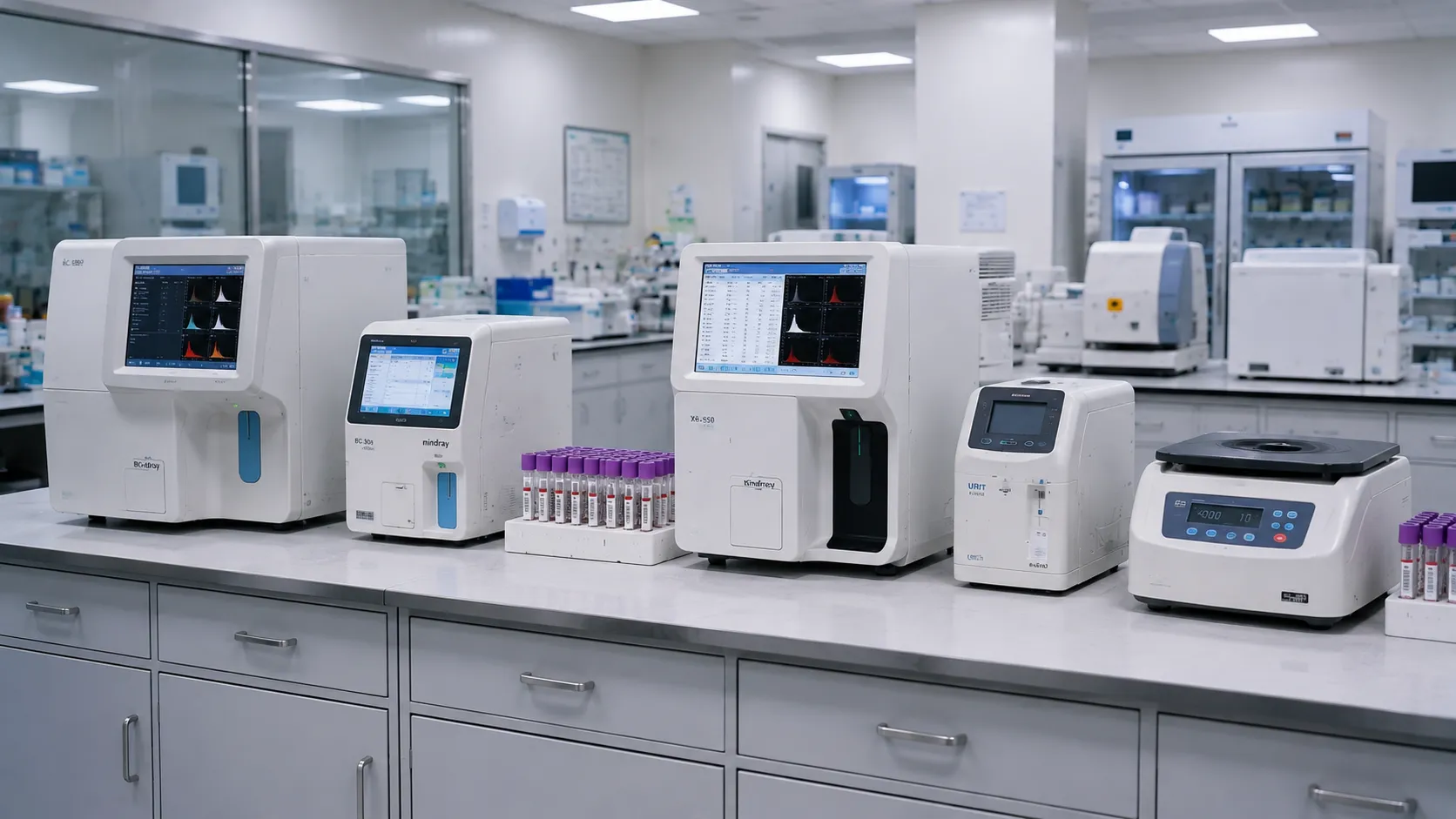
The diagnostic heart of haematology is the automated full blood count. A haematology analyser counts and sizes red cells, white cell,s, and platelets, flags abnormal populations, and drives most of the laboratory's workload. Alongside it, a coagulation analyser measures clotting times and factors that guide anticoagulation, bleeding investigation and surgical safety. These two platforms are chosen first because their throughput, reliability and connectivity shape the whole laboratory.
Analyser choice is matched to workload, the required tests,ed and the laboratory information system it must talk to. From there the service adds the confirmatory and specialist layers — microscopy for blood films, and flow cytometry for immunophenotyping in leukaemia and lymphoma. Reagents, controls and calibrators become the recurring stream, so supply continuity and accreditation support are designed in from the outset.
What haematology needs
-
Haematology analyser. Automated full blood count with differential and abnormal-population flagging.
-
Coagulation analyser. Clotting times, factor assays and platelet function to guide bleeding and thrombosis care.
-
Microscopy. Quality microscopes for blood film and bone marrow review, with imaging where used.
-
Flow cytometry—immunophenotyping for diagnosis and classification of haematological malignancy.
-
Bone marrow sampling. Aspiration and trephine biopsy sets for diagnosis and monitoring.
-
Transfusion support. Blood fridges, warmers and infusion equipment for safe administration.
-
Cytotoxic infusion. Treatment chairs, infusion pumps and safe-handling provision for chemotherapy.
-
Apheresis. Cell separators for therapeutic apheresis and stem cell or cell collection.
-
Sample handling: centrifuges, refrigeration and a monitored cold chain for specimens and products.
The equipment checklist
|
Equipment |
Role in the service |
Key selection point |
|
Haematology analyser |
Full blood count |
Throughput; flagging; LIS link |
|
Coagulation analyser |
Clotting studies |
Assay range; turnaround |
|
Flow cytometer |
Immunophenotyping |
Colour capacity; panels |
|
Microscope |
Film and marrow review |
Optics; imaging option |
|
Marrow sampling set |
Diagnostic biopsy |
Needle range; single use |
|
Cell separator |
Apheresis |
Procedure range; ease of use |
|
Infusion pump and chair |
Transfusion and chemo |
Safe handling; comfort |
The laboratory and the clinic are one service
What sets haematology apart is that its diagnostics and its treatment belong to the same team. A blood film flagged by the analyser can lead directly to a bone marrow biopsy, a flow cytometry panel and, within days, a treatment plan delivered in the same department. Planning equipment across that pathway — rather than as isolated laboratory or clinic purchases — keeps results, sampling and treatment connected, and avoids gaps where a patient waits on a missing link in the chain.
Apheresis and cell therapy
Apheresis is a distinctive part of haematology equipment planning. Cell separators can therapeutically remove a harmful blood component, collect stem cells for transplant, or support emerging cell therapies. These machines bring their own consumables, training and scheduling needs, and they connect the department to transfusion and, increasingly, to advanced therapies. Services planning apheresis consider procedure mix, throughput and the cold chain for the products collected.
Compliance and documentation
Haematology equipment must be genuine, current and fully documented, and diagnostic work carries laboratory quality obligations. In the UK, the MHRA regulates medical devices, and NICE publishes clinical guidance. UKAS oversees laboratory accreditation in the UK. Requirements vary by country and market, so confirm current obligations with the relevant authorities before you buy.
Support keeps a haematology service running.
-
Installation, commissioning and method setup for analysers and flow cytometry, with training.
-
Preventive maintenance and calibration that protect result quality and accreditation.
-
Reliable reagent, control and consumable supply across diagnostics and treatment.
-
Rapid technical response, because a downed analyser delays diagnosis across the hospital.
-
Clear documentation and traceability for instruments, reagents and blood products.
More from Business
-
Buyers — source compliant, fully documented equipment.
-
Suppliers — list your equipment and reach buyers worldwide.
-
Advertise — promote your products and services to a clinical audience.
-
Business overview — explore everything MediGear offers healthcare organisations.
Disclaimer
This article is for general information only. It does not constitute clinical, procurement, legal or regulatory advice. Equipment requirements for haematology vary by service, test menu, facility, country and market, and change over time. Laboratory accreditation, transfusion and cell-therapy activity are separately governed and require specialist input. Always confirm current requirements with the relevant authorities, and consult qualified clinical, laboratory, biomedical engineering, procurement and regulatory professionals for decisions specific to your organisation. medigear.uk accepts no liability for actions takenbased onf this content.
"From full blood count to infusion." A haematology service equipped across the pathway.
We supply medical equipment to healthcare organisations across the UK, Europe, the US, the Gulf and South Africa. Everything is genuine, documented and supported, so your haematology service diagnoses and treats without interruption.
Frequently Asked Questions
Haematology needs core laboratory analysers — a full blood count platform and a coagulation analyser — plus quality microscopy and, for malignancy work, flow cytometry. On the clinical side, it needs bone marrow sampling sets, transfusion support such as blood fridges and warmers, infusion pumps and treatment chairs for chemotherapy, and often apheresis cell separators. Centrifuges and a monitored cold chain support sample and product handling.
The automated full blood count drives most of the laboratory's workload, counting and characterising blood cells and flagging abnormal results for review. A coagulation analyser sits beside it to measure clotting. Because their throughput, reliability and connection to the laboratory information system shape the whole service, these platforms are usually specified first and matched to workload and test menu.
Haematology is unusual in that it owns both diagnosis and treatment. A film flagged by the analyser can lead to a marrow biopsy, a flow cytometry panel and a treatment plan delivered by the same team. Equipment is best planned across the whole pathway so diagnostics, sampling, and treatment stay connected, rather than being purchased as separate laboratory and clinic items.
Apheresis uses a cell separator to remove or collect a specific blood component. Therapeuticall,y it can remove a harmful component; it is also used to collect stem cells for transplant and to support cell therapies. These machines have their own consumables, training and scheduling needs and connect the department to transfusion and advanced therapies, so procedure mix and cold chain are considered when planning.
Yes. Diagnostic equipment, reagents and blood products should be genuine, current and traceable, and laboratory work is subject to accreditation. In the UKthe MHRA regulates devicesRANICE provides clinical guidanceCE, anUKAS oversees d laboratory accreditatiAS. Requirements vary by country and market, so confirm current obligations with the relevant authorities before purchasing.
Yes. MediGear supplies medical equipment to healthcare organisations across the UK, Europe, the US, the Gulf and South Africa. As a distributor,, we provide genuine, documented, and supported equipment, from analysers and flow cytometry to marrow sampling, infusion, and apheresis. Requirements differ by service and market, so we work with your team to match equipment to your pathway and its regulatory setting.