
Introduction
Fertility treatment, and in vitro fertilisation in particular, depends on a laboratory that can keep eggs, sperm and embryos in a stable, tightly controlled environment while highly skilled staff work with them. Small changes in temperature, air quality or handling can affect delicate cells, so the equipment is built around consistency and protection. The clinical side, from monitoring to egg collection, matters too, but the heart of a fertility service is its laboratory, and that is where equipment planning is most demanding.
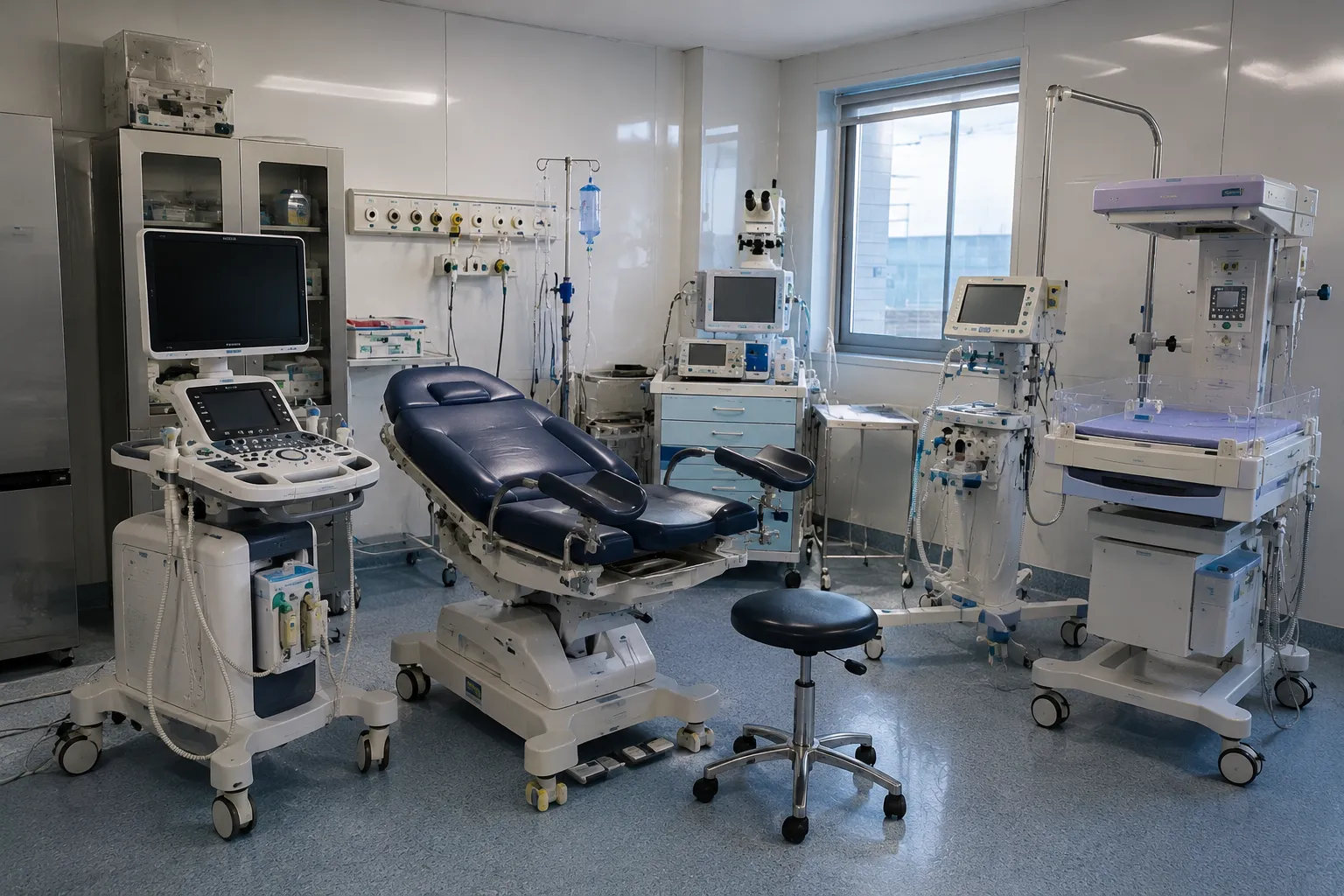
Equipping a fertility service spans the incubators that hold embryos, the microscopes and micromanipulation systems used to work with single cells, the cryostorage that preserves eggs, sperm and embryos, the andrology equipment for preparing samples, and the witnessing and monitoring systems that safeguard the process. This fertility treatment equipment buyer guide sets out what each area needs, why environmental control and traceability are central, and the regulatory questions to settle early. It is written for embryologists, fertility clinicians, clinic managers, and procurement teams across the UK, Europe, the US, the Gulf, and South Africa.
What a fertility service needs — the short version
-
Incubators that hold embryos in a stable, tightly controlled environment.
-
Microscopes and micromanipulation systems for working with single cells.
-
Cryostorage and witnessing to preserve samples and safeguard the process.
Start with the laboratory environment.t
The IVF laboratory is specified first, because the stability of its environment determines the quality of everything done in it. Incubators hold embryos at a precise temperature and in a controlled atmosphere, and many services use benchtop incubators that keep conditions steady even as they are opened and closed. Air quality is protected with laminar-flow work areas and, often, broader clean-air measures. This environmental control is not a background concern; it is the foundation of a fertility laboratory.
Within that environment, embryologists work with individual cells using high-quality microscopes and micromanipulation systems, including for procedures such as intracytoplasmic sperm injection. Andrology equipment prepares sperm samples, and cryostorage preserves eggs, sperm and embryos over long periods.Ann electronic witnessingsystem tracksg samples through everystepe to preventmix-upsp. Matching this equipment set to the clinic's caseload and techniques is central to setting up the service.
What fertility treatment needs
-
Embryo incubators. Stable temperature and controlled atmosphere for embryo culture.
-
Laminar flow work areas. Clean, protected space for handling gametes and embryos.
-
Microscopes. Inverted and stereo microscopes for detailed laboratory work.
-
Micromanipulation. Systems for procedures such as intracytoplasmic sperm injection.
-
Cryostorage. Vitrification and long-term storage with monitoring and alarms.
-
Andrology equipment. Preparation and assessment of sperm samples.
-
Witnessing system. Electronic tracking to prevent sample mix-ups.
-
Ultrasound. Imaging for monitoring and egg collection on the clinical side.
The equipment checklist
|
Equipment |
Role in the service |
Key selection point |
|
Embryo incubator |
Embryo culture |
Stability; recovery; capacity |
|
Laminar flow area |
Clean handling |
Air quality; heated surface |
|
Micromanipulation |
Single-cell procedures |
Precision; microscope match |
|
Cryostorage |
Preserving samples |
Monitoring; alarms; security |
|
Andrology equipment |
Sample preparation |
Consistency; standards |
|
Witnessing system |
Preventing mix-ups |
Coverage; traceability |
The IVF laboratory
Everything in a fertility service comes back to the laboratory. Eggs, sperm,,and embryos are living cells sensitive to their surroundings, so incubators, clean-air handling , nd careful technique pprotecttheir quality and, ultimately, the chance of success. Because conditions must stay steady, equipment is chosen for stability and quick recovery after handling, and the laboratory is designed as a controlled environment throughout. This is why the laboratory, rather than any single clinical device, is the centre of equipment planning.
Cryostorage and witnessing
Two features protect a fertility service in different ways. Cryostorage preserves eggs, sperm and embryos over long periods, so it must be secure, continuously monitored and alarmed, because the samples it holds are irreplaceable. Witnessing guards against the most serious errors — mix-ups between patients' samples — by tracking material through every step, increasingly with electronic systems. Both are core safeguards, and both are specified and maintained with the seriousness the stakes demand rather than treated as optional extras.
Compliance and documentation
Fertility treatment equipment must be genuine, current and fully documented, and fertility services are separately regulated with strict traceability requirements. In the UK, the MHRA regulates medical devices,N ICE publishes clinical guidance, and ISO maintains international standards for medical devices. Requirements vary by country and market, so confirm current obligations with the relevant authorities before you buy.
Support keeps a fertility service running.
-
Installation, commissioning and familiarisation for incubators and micromanipulation.
-
Preventive maintenance and monitoring that protect stable conditions and stored samples.
-
Reliable supply of consumables, media and cryostorage accessories.
-
Rapid technical response, because equipment failure risks irreplaceable samples.
-
Clear documentation and traceability for equipment, storage and witnessing.
More from Business
-
Buyers — source compliant, fully documented equipment.
-
Suppliers — list your equipment and reach buyers worldwide.
-
Advertise — promote your products and services to a clinical audience.
-
Business overview — explore everything MediGear offers healthcare organisations.
Disclaimer
This article is for general information only. It does not constitute clinical, procurement, legal or regulatory advice. Equipment requirements for fertility treatment vary by clinic, techniques offered, facility, country and market, and change over time. Fertility services are separately regulated and require specialist input. Always confirm current requirements with the relevant authorities, and consult qualified clinical, embryology, biomedical engineering, procurement and regulatory professionals for decisions specific to your organisation. medigear.uk accepts no liability for actions takenbased onf this content.
"A stable environment for delicate work." A fertility clinic equipped to a high standard.
We supply medical equipment to healthcare organisations across the UK, Europe, the US, the Gulf and South Africa. Everything is genuine, documented and supported, so your fertility service works to a consistent, high standard.
Frequently Asked Questions
A fertility clinic needs embryo incubators that maintain a stable, controlled environment, laminar-flow work areas for clean handling, and high-quality microscopes with micromanipulation systems for single-cell procedures such as intracytoplasmic sperm injection. It also needs monitored, alarmed cryostorage to preserve eggs, sperm, and embryos; andrology equipment for sample preparation; an electronic witnessing system; and ultrasound for clinical monitoring.
Eggs, sperm, and embryos are living cells sensitive to their surroundings, so small changes in temperature or air quality can affect them. Incubators hold precise conditions, clean-air handling protects samples, and equipment is chosen for stability and quick recovery after handling. The controlled laboratory environment is the foundation of a fertility service and the centre of its equipment planning.
Cryostorage preserves eggs, sperm and embryos at very low temperatures over long periods. Because the samples it holds are irreplaceable, it must be secure, continuously monitored and alarmed so that any problem is detected immediately. It is specified and maintained with the seriousness the stakes demand, and reliable technical support is essential to protect stored samples.
Witnessing guards against the most serious errors in a fertility laboratory — mix-ups between different patients' samples — by tracking material through every step. Electronic witnessing systems increasingly automate this, adding a layer of traceability and safety. It is a core safeguard, planned into the service rather than treated as an optional extra.
Yes. Equipment should be genuine, current and traceable, and fertility services are separately regulated with strict traceability requirements. In the UK,the MHRA regulates devicesA,NICE provides clinical guidanceE, andISO maintains international device standardO. Requirements vary by country and market, so confirm current obligations with the relevant authorities before purchasing.
Yes. MediGear supplies medical equipment to healthcare organisations across the UK, Europe, the US, the Gulf and South Africa. As a distributor,, we provide genuine, documente,d and supported equipment, from incubators and micromanipulation to cryostorage, andrology equipmen,t and witnessing systems. Requirements differ by clinic and market, and fertility services are regulated, so we work with your team to match equipment to your service and its regulatory setting.