
Introduction
Cardiac rehabilitation helps people recover after a heart attack, cardiac surgery or a diagnosis of heart disease. A structured programme combines supervised exercise, education and support to improve fitness, reduce risk and rebuild confidence. Because participants have known cardiac conditions and exercise under supervision, the service sits at an unusual meeting point: part gym, part clinic, with safety running through everything.
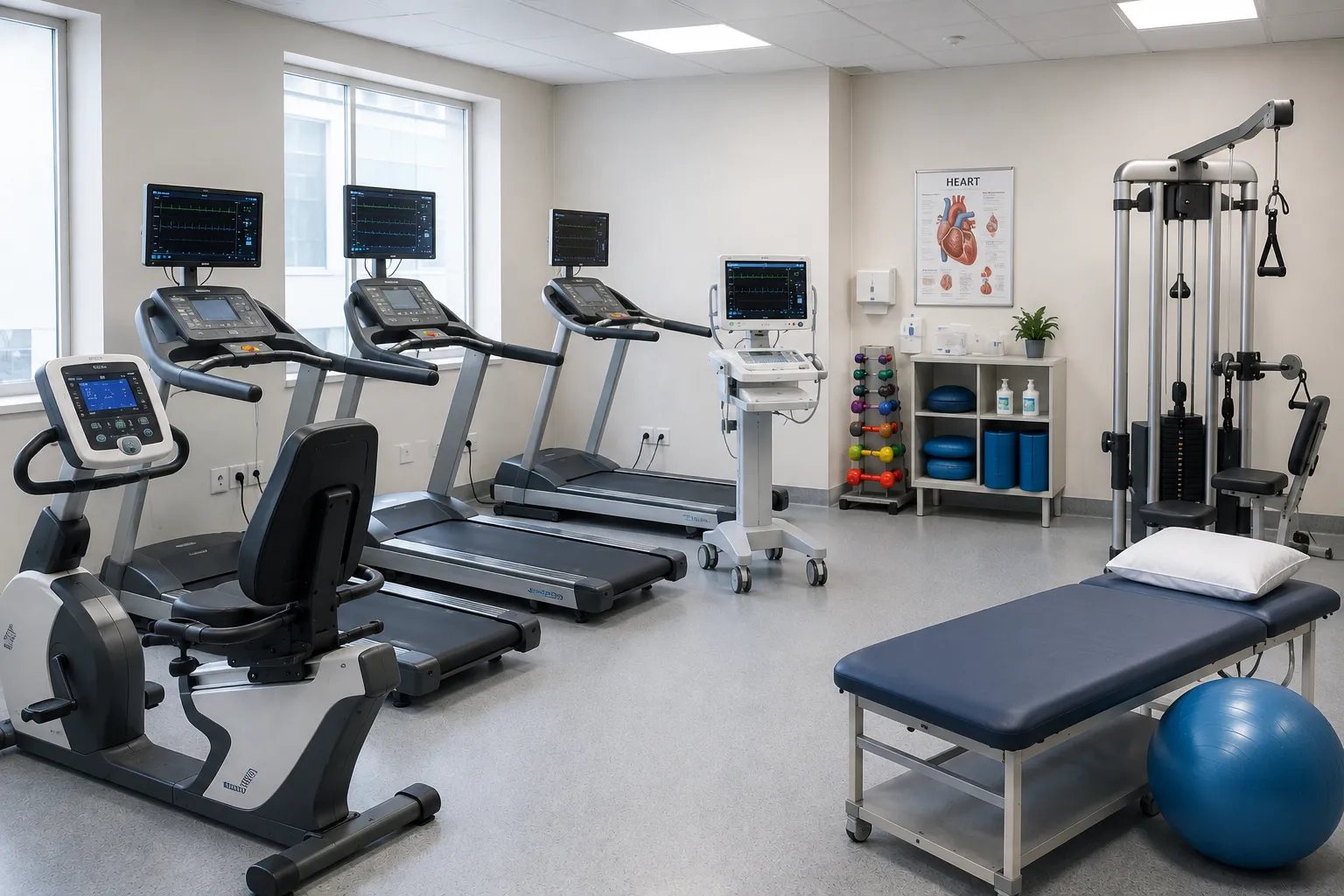
Equipping a cardiac rehabilitation service means bringing together exercise equipment, monitoring appropriate to the level of supervision, assessment tools and a robust safety setup. This cardiac rehabilitation equipment buyer guide sets out what a programme needs, how to plan the purchase, and the compliance and support questions worth settling early. It is written for cardiac rehabilitation teams, physiotherapists, biomedical engineers, and procurement teams across the UK, Europe, the US, the Gulf, and South Africa.
What defines a cardiac rehab service — the short version
-
Supervised exercise equipment suited to a range of fitness levels and mobility.
-
Monitoring matched to the programme — from spot checks to telemetry for higher-risk participants.
-
A strong safety setup, because participants have known cardiac conditions and are exercising.
Start with the safety setup.
Unlike an ordinary gym, a cardiac rehab service exercises people with known cardiac disease, so safety provision is not optional and should be decided first. Every session needs immediate access to a defibrillator and a fully stocked emergency trolley, and staff trained to use them. Resuscitation readiness is the foundation the rest of the service is built on.
From there, the level of monitoring follows from the risk of your participants. Lower-risk groups may need only intermittent blood pressure and heart-rate checks, while higher-risk participants benefit from continuous telemetry during exercise. Deciding the monitoring level early tells you what exercise equipment, space and staffing you actually need, so it is worth settling before buying treadmills or bikes.
What a cardiac rehab service needs
-
Exercise equipment. Treadmills, exercise bikes and other cardiovascular machines at a range of levels.
-
Telemetry or heart-rate monitoring. Continuous monitoring during exercise for higher-risk participants.
-
Blood pressure monitors. For pre-, during- and post-exercise checks.
-
Assessment tools. Exercise ECG or functional tests to set safe, individual exercise levels.
-
Pulse oximetry. Simple oxygen-saturation checks during sessions.
-
Defibrillator and emergency trolley. Immediately available at every session, non-negotiable.
-
Emergency oxygen and suction. Ready to hand for any deterioration.
-
Weighing and measuring. For risk assessment and progress tracking.
The equipment checklist
|
Equipment |
Role in the programme |
Key selection point |
|
Exercise equipment |
Supervised exercise |
Range of levels; durability |
|
Telemetry monitoring |
Cardiac oversight |
Number monitored; clarity |
|
Blood pressure monitors |
Session checks |
Accuracy; ease of use |
|
Exercise ECG |
Assessment |
Set safe exercise levels |
|
Pulse oximeters |
Oxygen checks |
Reliability |
|
Defibrillator and trolley |
Emergency response |
Readiness; staff training |
How to plan the purchase
-
Define your participant risk mix; it drives the level of monitoring you need.
-
Fix the safety setup first — defibrillator, trolley, oxygen and trained staff at every session.
-
Choose monitoring to match risk, from spot checks to telemetry, before buying exercise machines.
-
Select exercise equipment covering a range of fitness levels and mobility.
-
Confirm regulatory approval and documentation for every device before committing.
-
Agree servicing, training and installation with the supplier in writing before the order.
Matching equipment to the programme level
Cardiac rehab is usually described in phases, and the equipment should follow the phases the service actually delivers. A supervised, higher-risk exercise class needs telemetry and close staffing; a maintenance-phase programme for stable, lower-risk participants needs less intensive monitoring but the same exercise equipment and the same non-negotiable emergency provision. Buying to your real programme, rather than the most cautious possible version, keeps the service both safe and workable.
Assessment ties it together. Exercise ECG or functional testing lets the team set an appropriate, individual exercise level for each participant, which is what makes supervised exercise safe in the first place. Resuscitation Council UK guidance informs the emergency provision, and NICE guidance informs the standards a cardiac rehabilitation service is expected to meet.
Compliance and documentation
Every device must be approved for the market where it is used — UKCA, CE marking under the EU MDR, FDA clearance or the relevant national approval — with complete, current documentation. Monitoring and defibrillation devices are higher-risk and carry stricter evidence requirements. Ask suppliers for certification mapped to your market, confirm ISO quality standards sit behind manufacturing, and check current requirements with the MHRA or your national authority before committing.
Support keeps the programme safe.
-
Safety kit must always work. A defibrillator or monitor that fails undermines the whole service, so support has to be reliable.
-
Response times, in writing. Ask what fault response the supplier commits to and whether engineers cover your region.
-
Parts and consumables. Confirm availability of defibrillator pads, telemetry consumables and exercise-machine spares.
-
Training included. Clinical and technical staff both need it, especially on emergency equipment.
-
Software and security. Connected telemetry and ECG systems need update commitments agreed before you order.
Settle each of these before you commit, and get the answers in writing rather than as verbal assurances.
More from Business
-
Buyers — source compliant, fully documented equipment.
-
Suppliers — list your equipment and reach buyers worldwide.
-
Advertise — promote your products and services to a clinical audience.
-
Business overview — explore everything MediGear offers healthcare organisations.
Disclaimer
This article is for general information only. It does not constitute clinical, procurement, legal or regulatory advice. Equipment requirements for a cardiac rehabilitation service vary by programme, facility, country and market, and change over time. Always confirm current requirements with the relevant authorities, and consult qualified clinical, physiotherapy, biomedical engineering, procurement and regulatory professionals for decisions specific to your organisation. medigear.uk accepts no liability for actions taken based on this content.
"Recovery, supervised" Cardiac rehab kit that fits.
We supply medical equipment to healthcare organisations across the UK, Europe, the US, the Gulf and South Africa. Everything is genuine, documented and supported, so your programme runs safely and confidently.
Frequently Asked Questions
A cardiac rehab service needs supervised exercise equipment such as treadmills and exercise bikes at a range of levels, monitoring matched to participant risk — from blood pressure and heart-rate checks to continuous telemetry — and assessment tools such as exercise ECG to set safe individual exercise levels. A defibrillator and fully stocked emergency trolley, emergency oxygen and suction, and trained staff must be available at every session.
Because a cardiac rehab service exercises people with known cardiac disease, safety provisions are not optional. Every session needs immediate access to a defibrillator and a stocked emergency trolley, with staff trained to use them. Fixing this first gives the service a foundation, and the level of monitoring and exercise equipment is planned around it.
It depends on participant risk. Lower-risk groups may need only intermittent blood pressure and heart-rate checks, while higher-risk participants benefit from continuous telemetry during exercise. Deciding the monitoring level early clarifies what exercise equipment, space and staffing the service needs, so it is settled before buying machines.
Exercise ECG or functional testing lets the team set a safe, individual exercise level for each participant, which is what makes supervised exercise appropriate. Blood pressure monitors, pulse oximeters, and weighing and measuring equipment support ongoing risk assessment and progress tracking through the programme.
Yes. Every device must be approved for the market where it is used, correctly classified and fully documented. Monitoring and defibrillation devices are higher-risk and carry stricter evidence requirements. Confirm current requirements with the relevant national authority before committing to any purchase.
Because safety equipment must always work, support has to be reliable. Check the servicing and maintenance offered, the fault response times committed to, and whether engineers cover your region. Ask about availability of consumables such as defibrillator pads and telemetry parts, what training is included on emergency equipment, and what software update commitments apply. Get it in writing.