
Introduction
The world's population is ageing, and healthcare is feeling the effects. More patients with chronic disease, higher procedure volumes, and a shift toward home and community care are all driving demand for medical equipment in directions that buyers and suppliers need to understand.
This guide explains how ageing populations are shaping demand for medical equipment, which categories are growing, how healthcare settings are changing, and what it means in practice — so you can plan for a demographic shift that is already well underway.
Why ageing matters for equipment demand
People aged 65 and over use healthcare services far more intensively than younger populations. As this age group grows — the World Health Organisation projects the share of over-60s will nearly double globally by 2050 — the volume and type of equipment healthcare needs will change with it. More chronic disease, more diagnostic investigations, more procedures, more monitoring and more home-based care all translate into equipment demand.
Which equipment categories are growing
-
Diagnostics and imaging. Higher rates of cancer, cardiovascular and neurological disease drive demand for imaging, laboratory and point-of-care diagnostics.
-
Patient monitoring. Continuous and remote monitoring is growing as more patients live with chronic conditions that require ongoing tracking, both at home and in the hospital.
-
Surgical and interventional. Rising procedure volumes in orthopaedics, ophthalmology, cardiology and other specialities increase equipment utilisation and replacement cycles.
-
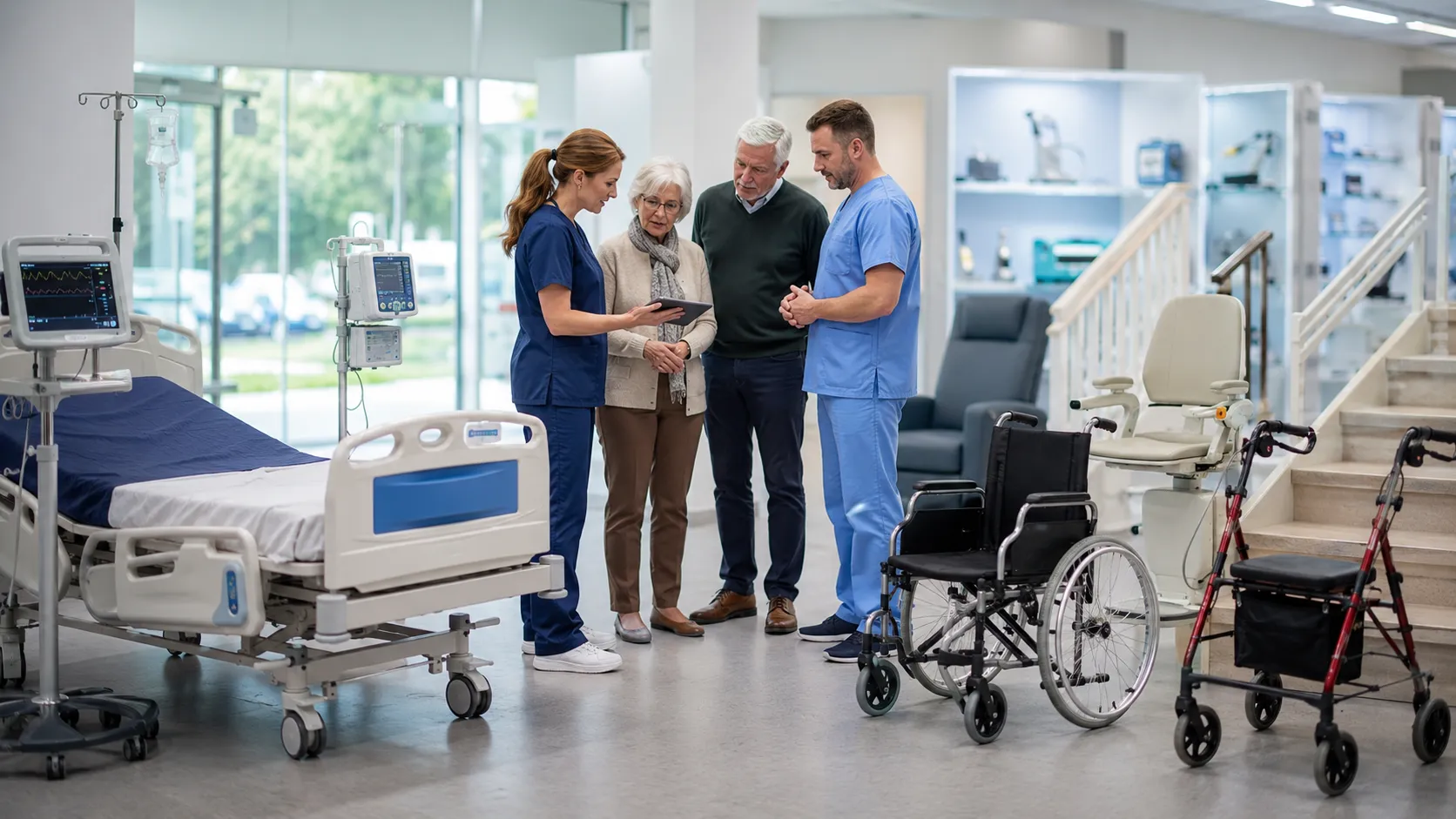
Home and community care. Oxygen therapy, mobility aids, monitoring devices, and home infusion are all growing as care moves out of hospitals and into the home.
-
Rehabilitation. Physiotherapy and rehabilitation equipment demand rises alongside joint replacements, stroke care, falls prevention and geriatric assessment.
How healthcare settings are changing
|
Setting |
What is changing |
|
Hospitals |
Higher acuity, more complex patients, rising procedure volumes and longer equipment run-hours |
|
Outpatient and ambulatory |
Growth in day-case surgery, diagnostic clinics and chronic-disease management |
|
Home and community |
Shift from hospital to home for monitoring, therapy and long-term condition management |
|
Long-term and aged care |
Expanding facilities with a growing need for clinical equipment, monitoring and rehabilitation |
Equipping for changing demographics?
We help hospitals, clinics and suppliers across the UK, Europe, the US, the Gulf and South Africa source compliant, supported equipment for a changing patient demographic.
No pressure, no obligation. → Talk to the team
What it means for buyers and suppliers
-
Plan for volume growth. More patients and more procedures mean greater demand for equipment, consumables, and services in the categories that serve older populations.
-
Invest in home and outpatient settings. Equipment that supports care outside the hospital — remote monitoring, portable devices, home therapy — is where some of the fastest growth in demand is.
-
Watch regional differences. Europe and Japan are ageing fastest, but Asia-Pacific and the Gulf are close behind, each with different demand patterns and growth rates.
-
Think whole-life value. Higher utilisation makes equipment reliability, service support and total running costs more important, not less.
-
Track emerging specialities. Geriatric assessment, fall prevention screening, and rehabilitation are growing areas with specific equipment needs.
The bigger picture
Demographic ageing is not a short-term trend — it is a structural shift that will shape healthcare spending and equipment demand for decades. Buyers who plan for it and suppliers who serve it will be better positioned in a market where the patient population is changing faster than many equipment estates.
More from Business
-
Buyers — source equipment from a worldwide supply base for your facility.
-
Suppliers — reach healthcare buyers in growing markets worldwide.
-
Advertise — promote your products and services to a clinical audience.
-
Business overview — explore everything MediGear offers healthcare organisations.
Disclaimer
This article is for general information only and does not constitute financial, investment, commercial, procurement or regulatory advice. It describes general industry trends and practices, which vary by organisation, market and over time, and any figures mentioned are indicative estimates drawn from publicly available sources. Always confirm the device class and certification for your market, and consult qualified procurement, clinical, biomedical engineering and professional advisers before making commercial decisions. medigear.UK accepts no liability for actions taken based on this content.
Equip for a changing demographic.
From a worldwide supply base to your facility, we help hospitals, clinics and suppliers across the UK, Europe, the US, the Gulf and South Africa source compliant, supported medical equipment for a changing patient demographic.
Frequently Asked Questions
More older patients means more chronic disease, higher procedure volumes, more monitoring and more home-based care, all of which drive demand for diagnostics, imaging, monitoring, surgical, home and rehabilitation equipment. The shift is structural, not short-term.
Categories serving older populations — diagnostics and imaging, patient monitoring, surgical and interventional, home and community care, and rehabilitation — are among the fastest growing, with home and remote monitoring particularly strong.
Hospitals see higher acuity and more procedures; outpatient settings grow for day-case surgery and chronic disease management; home and community care expands for monitoring and therapy; and long-term care facilities need more clinical equipment.
Europe and Japan are ageing fastest, but Asia-Pacific and the Gulf are close behind. Demand patterns differ by region, so buyers and suppliers should watch the demographic trajectory in the markets they serve.
As care shifts from hospital to home for monitoring, therapy, and long-term conditions, demand is growing for home oxygen, mobility aids, remote monitoring devices, home infusion, and portable diagnostics. Home healthcare equipment is one of the fastest-growing segments.
Plan for volume growth in categories serving older populations; invest in home and outpatient equipment; weigh whole-life value and reliability; track emerging specialities such as rehabilitation and geriatric assessment; and monitor regional differences in demand.