
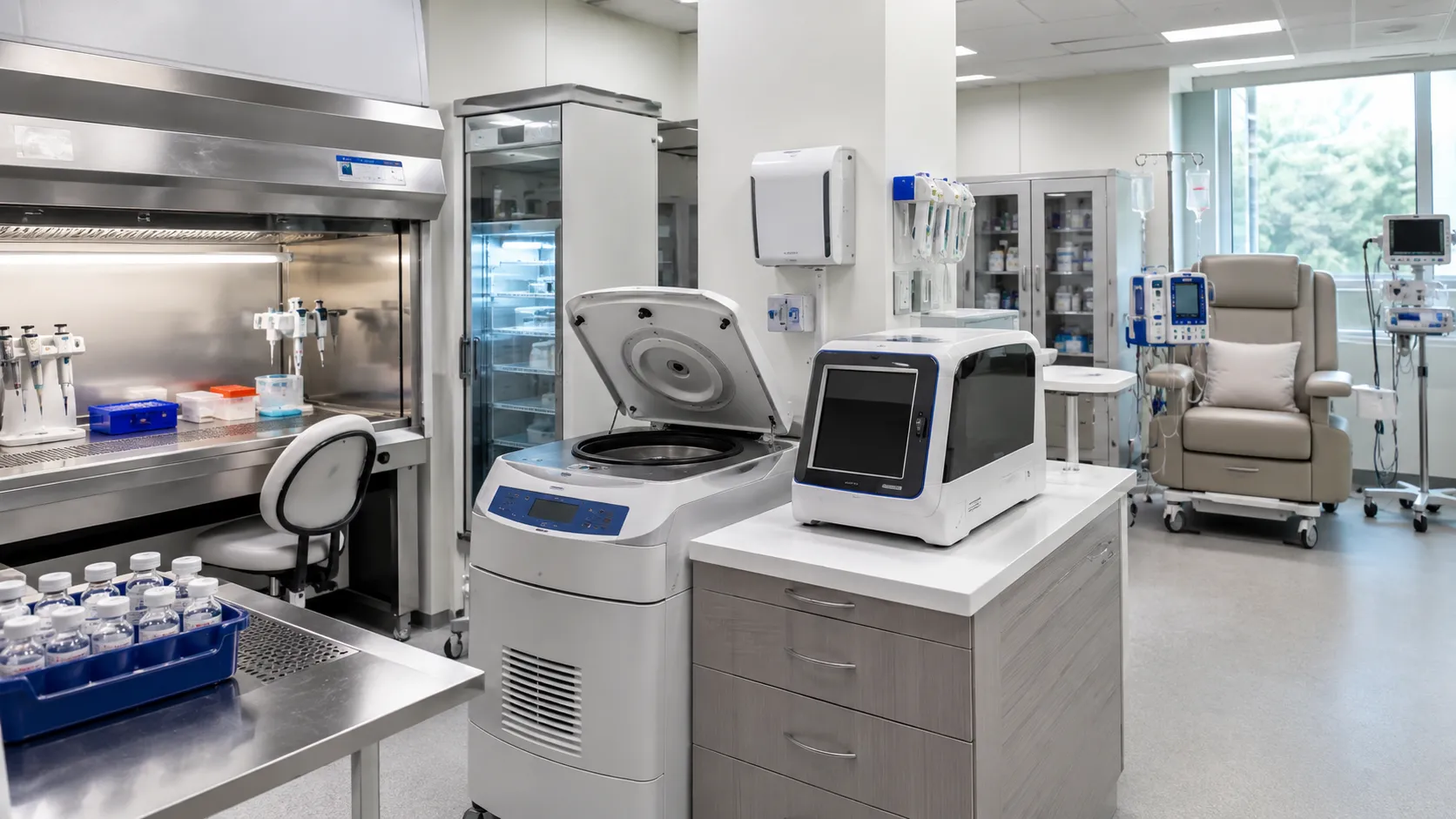
How immunotherapy changes equipment needs
Immunotherapy works with the body's own immune system to treat cancer and other diseases, and it has advanced rapidly. As it becomes a bigger part of care, it changes the equipment hospitals need around it. These treatments often require careful patient selection, precise handling, controlled delivery and close monitoring for the immune reactions they can cause. This article explains how immunotherapy advances are changing equipment needs. It covers the diagnostics that select patients, the handling and infusion equipment involved, and the monitoring and critical-care readiness these therapies demand. The whole pathway is affected. Planning has to start early. Every step needs the right kit. The chain must hold, link by link.
A treatment that reshapes the equipment around it
A conventional medicine usually fits into existing equipment. Immunotherapies are different. Many are biological, sometimes personalised, and they can provoke strong responses in the body. So they place new demands on how equipment selects patients, handles the treatment, delivers it and monitors the person afterwards. The therapy is the headline, but the equipment around it is changing to keep pace. The medicine leads, and the kit follows. Immunotherapy rarely arrives alone. Its demands ripple outward. Every step feels them. The demands run deep across the pathway.
This shift is worth understanding early, because the direction is clear even where the detail is still developing. Health bodies actively track this move in treatment, and the World Health Organisation's foresight work on emerging technologies exists to anticipate it. For a hospital, the useful question is not whether immunotherapy will affect its equipment, but which parts of the equipment picture it changes first. Selection and handling tend to feel it soonest. The direction is already clear.
"Immunotherapy does not just add a treatment. It changes what the equipment around it has to do."
Diagnostics that select the right patients
Immunotherapy often works best when the right patients are chosen for it, so precise diagnostics come first. Equipment that can test accurately, sometimes at the level of a patient's specific biology, helps identify who is likely to benefit. This raises the value of advanced diagnostic equipment as part of the treatment pathway. Testing leads the way. The right match matters. Better tests mean better choices.
For buyers, this means diagnostics move from a supporting role to a central one. The equipment that helps match a patient to an immunotherapy is part of the treatment decision itself. Choosing diagnostic equipment that is accurate, reliable and able to inform these choices becomes more strategic than before. Selection is where the pathway begins. Accuracy shapes everything after. Better tests mean better choices. Selection drives the plan. Testing opens the door.
Careful handling of biological treatments
Many immunotherapies are biological and fragile, and some are made for a single patient. That places new demands on how they are stored and handled. Cold storage, careful temperature monitoring, and closed, sterile handling all become more important, so that a sensitive treatment reaches the patient intact and uncontaminated. Cold and clean are the rules. Care is constant. Storage moves to the mainstream.
The design demand here is reliability and cleanliness. A lapse in storage or handling can compromise a treatment that may be difficult or impossible to replace. So the equipment involved is built around monitoring, control and safe handling. What was once a specialist concern becomes part of mainstream planning for hospitals offering these therapies. The freezer becomes critical kit. Fragile treatments need real care. Nothing can be improvised. Storage is planned ahead.
Controlled delivery and infusion
Delivering an immunotherapy is rarely a routine step. It often requires controlled infusion, careful preparation and close attention during administration. That raises the bar for the delivery and infusion equipment involved, which must be precise, reliable and suited to the treatment. Delivery is part of the therapy. Nothing is routine here. Control protects the patient. Precision is the point. Every dose is exact.
So delivery becomes a considered part of the plan rather than an afterthought. Equipment that can prepare and deliver these treatments safely, and support the staff giving them, fits this world better than generic kit. For a hospital, planning for immunotherapy means thinking about the whole delivery process, not just the moment of infusion. Preparation matters as much. Control protects the patient.
Monitoring for immune reactions
Immunotherapies can provoke strong immune responses, some of which need rapid attention. So monitoring is central to using them safely. Equipment that tracks a patient closely after treatment, and the capacity to respond quickly if a reaction occurs, become an essential part of the picture. Reactions can be serious. Speed is vital. The bedside is the frontline. Fast response is planned for. Teams stay ready.
This connects immunotherapy to the wider monitoring and critical-care equipment a hospital already runs. It also raises the value of connected, intelligent monitoring that can flag a changing pattern early. Responsible routes exist to evaluate emerging tools as evidence grows, such as the NICE Early Value Assessment for promising health technologies. The device story does not end at infusion; it continues at the bedside. Reactions can move fast. Watching stays close.
Critical-care readiness behind the therapy
Because some immune reactions can be serious, offering immunotherapy safely means having the readiness to manage them. That links these therapies to a hospital's critical-care and emergency capability, and to the equipment behind it. The treatment sits within a wider system of care, not on its own. Readiness sits behind it. The system matters as much as the drug.
For a hospital, this means immunotherapy reaches across the equipment list rather than standing apart. Reliable monitoring, responsive critical-care equipment and skilled staff all matter to using it well. A single advance in treatment therefore touches diagnostics, storage, infusion, monitoring and critical care, tying much of the hospital's equipment together around the patient. One advance touches many devices. Readiness sits behind the therapy. The kit works as one. Devices link around the patient.
What immunotherapy is really asking of equipment
-
Select precisely — diagnostics that help match the right patient to the right therapy.
-
Handle carefully — cold storage and closed, sterile handling for fragile biological treatments.
-
Deliver with control — precise, reliable infusion and preparation equipment.
-
Monitor closely — watching for immune reactions, with critical-care readiness behind it.
What buyers should take from this
Immunotherapy is not just a new way to treat disease. It is a force that reshapes equipment needs, from patient-selection diagnostics and careful handling to controlled delivery, close monitoring and critical-care readiness. A hospital preparing for these therapies is really preparing its diagnostics, its handling, its monitoring and its critical care to a higher standard. The patient sits at the centre. Planning ahead is simply sensible. Foresight protects patients. The horizon work that tracks such shifts, including the WHO horizon scan of emerging health technologies, exists to make that foresight ordinary rather than rare.
Underneath every trend sits one unchanging requirement. Selection, handling, delivery and monitoring equipment are only worth having if they are genuine, approved and reliable, and if they do their core job well. The fundamentals of sound equipment outlast every shift in fashion. So the wise approach is to read where immunotherapy is taking equipment needs, and to build on equipment that is dependable in the first place. Curious about what is coming, firm about what has always mattered.
More from Business
-
Buyers — source approved, well-documented equipment.
-
Suppliers — list your equipment and reach buyers worldwide.
-
Advertise — promote your products and services to a clinical audience.
-
Business overview — explore everything MediGear offers healthcare organisations.
Disclaimer
This article is for general information only and does not constitute clinical, procurement, regulatory or legal advice. The examples given are illustrative. Trends in medical equipment are general directions, not certainties, and their pace and relevance vary by market and setting. Requirements and standards change over time and should always be confirmed with the relevant authorities. Always consult qualified clinical, biomedical engineering and procurement professionals for decisions specific to your organisation. medigear.uk accepts no liability for actions taken on the basis of this content.
Buy for the future, built on the basics.
Genuine, approved, fully documented medical equipment — the dependable foundation every future trend still rests on, wherever you work.
Frequently Asked Questions
Immunotherapy changes equipment needs across the whole pathway. It raises the value of precise diagnostics to select patients, careful cold storage and closed handling for fragile biological treatments, controlled infusion and preparation equipment, and close monitoring for immune reactions. Because some reactions can be serious, it also links to a hospital's critical-care readiness. A single treatment advance therefore reaches across diagnostics, handling, delivery, monitoring and critical care.
Hospitals offering immunotherapy typically need accurate diagnostic equipment to help select patients, cold storage with temperature monitoring, closed and sterile handling systems, controlled infusion and preparation equipment, and strong patient monitoring. Behind these sits the critical-care and emergency capability to manage serious immune reactions. The exact needs depend on the therapies offered, but the pattern is more precise, more careful and more closely monitored than routine treatment.
Immunotherapies work by activating or directing the immune system, and this can provoke strong responses, some of which need rapid attention. Close monitoring after treatment allows staff to spot a reaction early and respond quickly. This makes reliable, and increasingly connected and intelligent, monitoring equipment central to using these therapies safely, and links them to a hospital's wider critical-care capability.
Immunotherapy often works best when the right patients are selected for it, so precise diagnostics come first. Equipment that tests accurately, sometimes at the level of a patient's biology, helps identify who is likely to benefit. This makes diagnostics part of the treatment decision rather than a supporting step, and it makes the choice of accurate, reliable diagnostic equipment more strategic than before.
No. Immunotherapy adds new demands rather than replacing core equipment. It connects to existing diagnostic, infusion, monitoring and critical-care equipment, and raises the standard expected of storage and handling. The effect is that a single treatment advance reaches across much of the equipment list, tying diagnostics, handling, delivery, monitoring and critical care together around the patient, rather than swapping one device for another.
The practical steps are to treat patient-selection diagnostics, careful handling, controlled delivery and close monitoring as areas that may need to rise to a higher standard, and to ensure critical-care readiness sits behind them. Above all, hospitals should build on genuine, approved and reliable core equipment, since even the most advanced therapy still depends on accurate diagnostics, dependable storage and monitoring that can be trusted.