
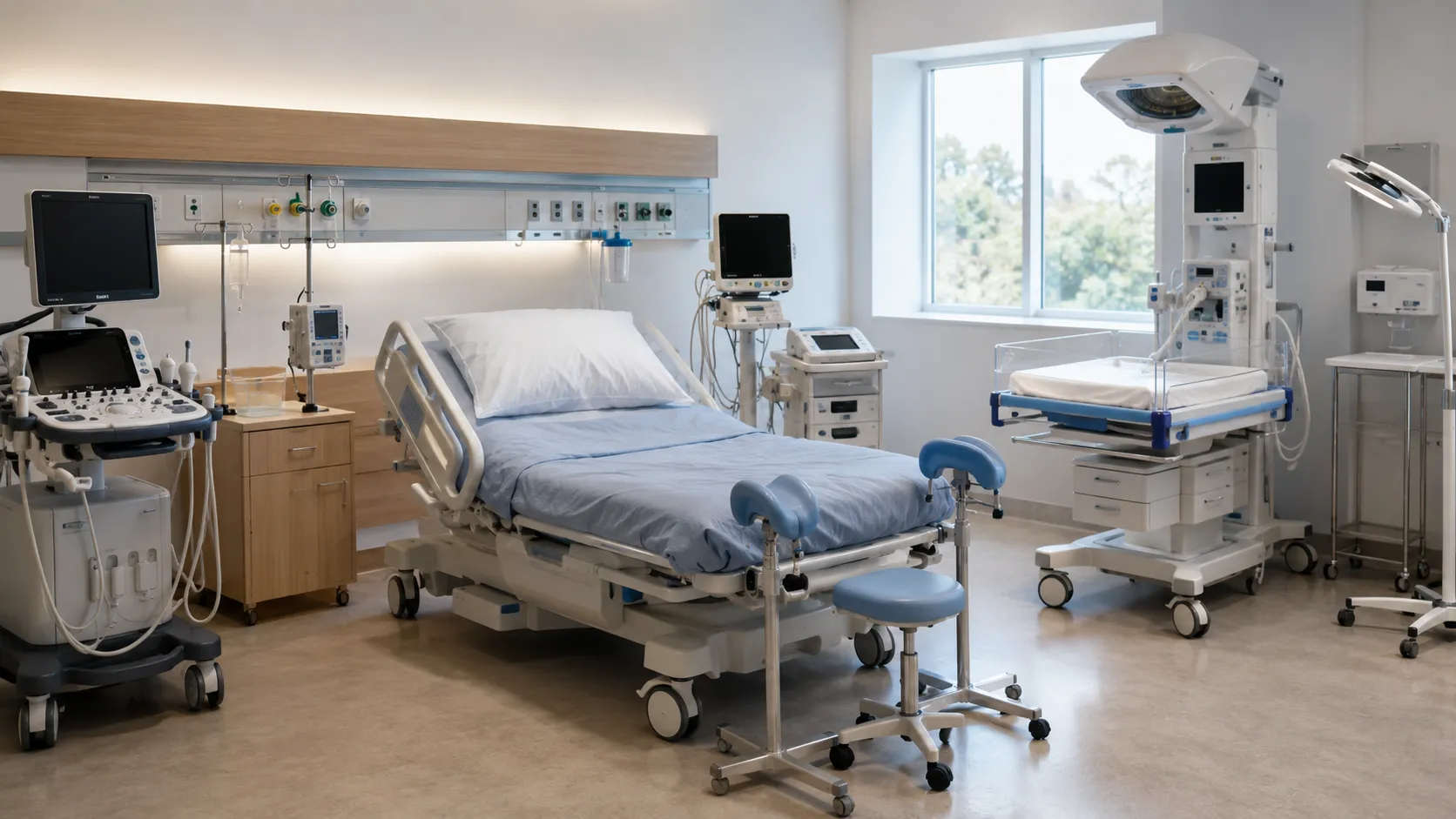
How equipment will support maternal health
Maternal health depends on care that reaches through pregnancy, labour, delivery and the weeks afterwards, and the equipment that supports it is changing to match this journey. Antenatal monitoring is becoming more informative for teams. Labour care equipment is becoming more supportive for mothers. Delivery equipment is being designed for greater safety and reliability in every case. And postnatal support equipment is playing a growing part in maternal care. Throughout, dignity, comfort, and reliable access matter greatly to mothers. This article explains how future equipment will support maternal health, and what buyers should consider. The direction is already clear. Care spans the whole journey of maternal health from start to finish in every case.
Care that reaches from pregnancy to postnatal
It is easy to picture maternal health equipment as delivery-room equipment. In fact, it reaches much further, from antenatal monitoring through labour and delivery to postnatal support, all shaping how mothers and babies are cared for. Equipping maternal health well means thinking about the whole journey, not one moment of it, and choosing equipment for each stage carefully. The direction is towards equipment that supports safer, kinder care at every stage.
None of this replaces the skilled midwifery and obstetric care at the heart of maternal health, or the reliable core equipment they rely on. It supports them. Bodies that scan the horizon for healthcare recognise the importance of equipment across the whole maternal health picture, and the World Health Organisation's foresight work on emerging technologies reflects it. For a hospital, the useful question is how equipment supports every stage of maternal care. Each stage matters greatly to mothers and babies alike everywhere it happens. The pathway holds together as one journey for the mother throughout her care from pregnancy to postnatal life.
"Maternal health equipment supports the whole journey, not just the delivery room — and dignity matters throughout."
Antenatal monitoring and information
Antenatal monitoring is becoming more informative, from imaging to other checks that support mothers through pregnancy and their care teams. Equipment that gives a clearer, more helpful picture, and that fits comfortably into antenatal care, supports better decisions and more reassurance for mothers. This is where much of the equipment picture in maternal health begins.
For buyers, this raises the value of antenatal equipment that is dependable, clear and comfortable to use for both staff and mothers. Equipment that provides useful information without becoming intrusive fits responsible care. Antenatal monitoring is a place where good equipment supports both clinical decisions and the experience of care, which matter together in maternal health. Reassurance helps mothers. Information supports teams together in decisions during care.
Supportive equipment for labour
Labour care equipment is being designed with comfort, mobility and dignity in mind, as well as clinical function, reflecting a wider shift in how labour is supported. Equipment that supports women in labour, giving them options and comfort while allowing safe monitoring, fits how modern maternal care is thought about today. Care in labour is a place where the equipment picture shapes experience deeply.
For buyers, this makes labour care equipment a place where design for the person matters as much as clinical specification. Equipment that supports safer, kinder labour, and that fits the setting and staff, adds real value. This is a place where the tone of equipment matters, not only its function, because how care feels in labour is part of how care is remembered. Comfort matters here. Dignity shapes the experience of labour deeply for mothers.
Safer delivery equipment
Delivery equipment is where reliability comes most sharply into focus. Equipment used in delivery, from monitoring to any interventions, must be genuine, approved and dependable, and used within the standards designed to keep mothers and babies safe. This is not an area for corner-cutting on any dimension.
For buyers, this makes standards and reliability central for delivery equipment. Standards and safety expectations for such equipment are set by bodies such as the Medicines and Healthcare products Regulatory Agency, and choosing well means ensuring equipment meets them and is used within them. Delivery is where the fundamentals of sound equipment matter most, because so much depends on them in the moment.
Postnatal support equipment
Postnatal care is a growing focus for maternal health, and equipment supporting mothers and babies in the days and weeks after birth is part of that broader focus. From monitoring to support for feeding and recovery, equipment that helps postnatal care extends the reach of good maternal health beyond the delivery room. This part of the picture is easier to overlook than delivery, but no less important to lasting outcomes for mothers and babies in the weeks and months after birth.
For buyers, this raises the value of postnatal equipment that is thoughtful, dependable and easy to use in the settings where postnatal care happens. Responsible routes exist to evaluate promising tools as evidence grows, such as the NICE Early Value Assessment for promising health technologies. Postnatal equipment that supports mothers and babies well is part of maternal health care doing its whole job, not just the visible parts of it. Recovery needs support. Feeding help matters greatly for mothers after delivery.
Dignity, comfort and access throughout
Across the whole picture, dignity, comfort and access matter alongside clinical function in every setting where maternal care is delivered. Maternal health is not just a clinical journey but a personal one, so equipment that supports it should reflect this. Equipment that treats mothers as people, not procedures, supports better care and a better experience of the whole journey. And equipment that is accessible in the settings where it is needed spreads the benefits of good maternal care more widely across regions.
For buyers, this makes design for dignity, comfort and access part of choosing well. Equipment that is technically good but treats care as impersonal, or that only reaches well-resourced settings, does less than it could. Maternal health equipment that respects the person and reaches those who need it fits the direction of travel most closely. Dignity guides design. Access spreads the good to more mothers around the world today.
What buyers should really be asking
-
Whole journey? Does equipment support antenatal, labour, delivery and postnatal care together?
-
Standards-based? Does delivery equipment meet recognised standards and fit proper frameworks?
-
Dignified and comfortable? Does design respect the person as well as the clinical need?
-
Accessible? Does the equipment reach the settings where maternal care needs it?
What buyers should take from this
How future equipment will support maternal health comes down to supporting the whole journey: antenatal monitoring, kinder labour care, safer delivery, thoughtful postnatal support, and dignity, comfort and access throughout. A hospital equipping maternal care well is really choosing equipment across the whole picture, shaped around mothers and babies as people. The horizon work that informs this, such as the WHO horizon scan of emerging health technologies, exists to make such foresight ordinary rather than rare.
Underneath every trend sits one unchanging requirement. Maternal health equipment is only worth having if it is genuine, approved and reliable, and does its role dependably when it matters most. The fundamentals of sound equipment outlast every shift in fashion. So the wise approach is to equip the whole journey thoughtfully, on a foundation of dependable equipment. Curious about better maternal care, firm about what has always mattered.
More from Business
-
Buyers — source approved, well-documented equipment.
-
Suppliers — list your equipment and reach buyers worldwide.
-
Advertise — promote your products and services to a clinical audience.
-
Business overview — explore everything MediGear offers healthcare organisations.
Disclaimer
This article is for general information only and does not constitute clinical, procurement, regulatory or legal advice. The examples given are illustrative. Trends in medical equipment are general directions, not certainties, and their pace and relevance vary by market and setting. Requirements and standards change over time and should always be confirmed with the relevant authorities. Always consult qualified clinical, biomedical engineering and procurement professionals for decisions specific to your organisation. medigear.uk accepts no liability for actions taken based on this content.
Buy for the future, built on the basics.
Genuine, approved, fully documented medical equipment — the dependable foundation every future trend still rests on, wherever you work.
Frequently Asked Questions
Future equipment will support maternal health across the whole journey from pregnancy to postnatal care. Antenatal monitoring gives a clearer picture, labour care equipment supports comfort and mobility alongside safety, delivery equipment focuses on reliability and standards, and postnatal equipment supports mothers and babies afterwards in daily life at home and in community care. Throughout, dignity, comfort and access matter alongside clinical function, because maternal health is a personal journey as well as a clinical one.
Because maternal health depends on care that reaches through pregnancy, labour, delivery and the weeks afterwards, equipment that supports it does too, at every stage. Equipping maternal health well means thinking about the whole journey, from antenatal monitoring through labour and delivery to postnatal support, not just one moment of it. The direction is towards equipment that supports safer, kinder care at every stage of the journey, not only in the delivery room.
Labour care equipment supports women in labour, giving them options and comfort while allowing safe monitoring. It is being designed with comfort, mobility and dignity in mind, as well as clinical function, reflecting how modern maternal care is thought about. Care in labour is a place where the equipment picture shapes experience deeply, so how equipment feels matters alongside how it performs, since labour is a memorable part of care.
Delivery is where the fundamentals of sound equipment matter most, because so much depends on them in the moment. Equipment used in delivery, from monitoring to any interventions, must be genuine, approved and dependable, and used within the standards designed to keep mothers and babies safe. This is not an area for corner-cutting on any dimension, so choosing well means ensuring equipment meets recognised standards.
Postnatal support equipment supports mothers and babies in the days and weeks after birth, from monitoring to support for feeding and recovery. It extends the reach of good maternal health beyond the delivery room, and while it is easier to overlook than delivery, it is no less important to lasting outcomes. Postnatal equipment that supports mothers and babies well is part of maternal health care doing its whole job.
Hospitals should ask whether equipment supports the whole journey, whether delivery equipment meets recognised standards and fits proper frameworks, whether design respects the person alongside clinical need, and whether the equipment reaches the settings where maternal care needs it. Because maternal health is a personal journey as well as a clinical one, dignity, comfort and access matter alongside function, so equipment should be chosen with all these in mind.