
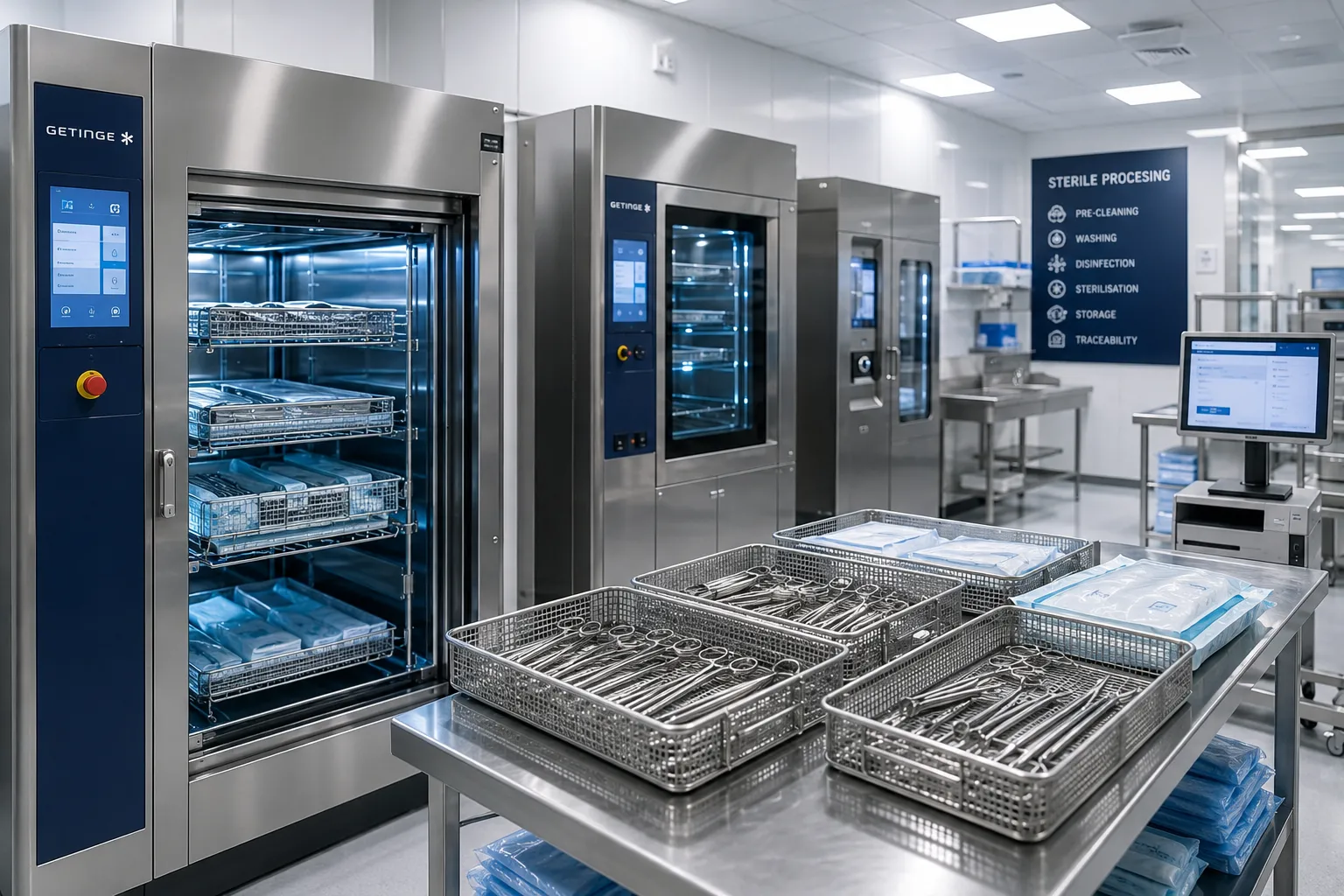
How sterilisation equipment is changing
Sterilisation keeps hospital instruments and equipment safe to use, and it underpins almost every procedure. Its equipment is changing steadily, and in ways that matter for safety and efficiency. Sterilisation is becoming more automated, with less manual handling. It is becoming more traceable, so every item can be tracked through the process. It is becoming more connected to the wider hospital, and more focused on sustainability. This article explains the main trends shaping the future of sterilisation equipment in global hospitals. It sets out what they mean for the people who plan, buy and run it. The direction is clear enough to plan around.
A quiet function under growing expectations
Sterilisation can be easy to overlook, because it happens away from the bedside. Yet it is fundamental to safe care, and expectations of it are rising. Automation is reducing manual handling and improving consistency. Traceability is making it possible to track every instrument through the process. Connection is linking sterilisation into the hospital's wider systems. And sustainability is bringing energy, water and waste into the decision. The function is under scrutiny. These shifts change what a hospital should look for when it equips this function. The standard keeps rising.
None of this removes the need for skilled staff or reliable core equipment. It raises the standard the function is expected to meet. Expectations keep climbing. The bar is higher now, and safety demands it. Bodies that scan the horizon for healthcare broadly agree on the direction of medical technology, and the World Health Organisation's foresight work on emerging technologies exists to make it visible. The trends below are the ones most worth planning around.
"The future of sterilisation equipment is more automated, more traceable and greener — and more tightly connected to the hospital."
Automation and consistency
The clearest trend is automation. Equipment increasingly handles more of the sterilisation process with less manual effort, improving consistency and freeing staff for skilled work. Consistency matters here, because sterilisation must be reliable every time. Automation shapes the equipment a department needs, from automated processing to handling systems. Consistency is the goal. Manual work falls away. Reliability improves, and errors become rarer.
For buyers, this raises questions of scale and reliability. Does the level of automation match the hospital's volume? Is the equipment dependable and well supported, since a failure affects the whole hospital's ability to operate? Automation is a significant investment, so it should fit the workload and be robust enough to run intensively. Robustness is essential, since downtime is costly. Planning it means matching capability to real demand.
Traceability of every instrument
A major trend is traceability: the ability to track each instrument through cleaning, sterilisation and use. This supports safety, quality and accountability, and it is increasingly expected rather than optional. Equipment and systems that record and confirm each step give a hospital confidence that every item has been processed correctly. Nothing goes untracked, and confidence follows.
For buyers, traceability moves from a nice-to-have to a core requirement. It depends on equipment and systems that capture and connect data reliably. Choosing sterilisation equipment that supports full traceability, and links it into the hospital's records, is becoming central to sound practice. Standards for reprocessing and traceability are shaped by regulators such as the Medicines and Healthcare products Regulatory Agency. It turns a quiet function into one that can be demonstrated and trusted. Proof matters as much as process. Every step is logged. Records build trust and make accountability clear.
Connected to the wider hospital
Sterilisation does not work in isolation. The trend is for it to connect into the hospital's wider systems, so that the status of instruments, sets and equipment is visible where it is needed. Equipment that shares its data supports smoother flow between sterilisation, theatres and wards. A function that cannot connect slows the whole chain. Visibility keeps things moving. Status must be seen at each stage of the process.
The question behind this is about standards. Does the equipment connect on open, recognised ones, so its data flows cleanly into hospital systems? Equipment that connects well keeps fitting as the hospital evolves. Equipment that keeps its data to itself becomes a bottleneck. Connection is becoming a core consideration for sterilisation equipment, linking it to the rest of care. Data must flow to help. Open standards make it work. Silos slow the chain, so links matter.
Sustainability, energy and water
Sterilisation uses energy, water and consumables, so sustainability is moving into the decision. Equipment is increasingly judged on how efficiently it uses these resources, alongside its performance. Lower-energy and lower-water processes, and equipment that lasts and can be maintained, ease pressure over the whole life of the kit.
This matters because sterilisation runs constantly and at scale. Resource use adds up, and efficiency has both an environmental and a practical benefit. Durability and repairability are part of judging honestly whether a piece of sterilisation equipment is a sound long-term choice. Resource use adds up fast. What was once an afterthought is moving towards the heart of the decision. Efficiency now counts twice.
Balancing reusable and single-use
Sterilisation sits at the centre of a wider question: how much a hospital relies on reusable instruments versus single-use ones. Each approach has trade-offs in safety, cost and sustainability, and the balance is being reconsidered. Sterilisation equipment is part of how a hospital manages reusable instruments safely and efficiently. The balance is being rethought. Trade-offs are real here. Each choice has costs, and safety guides the balance. Sustainability weighs in too, alongside cost and safety.
For buyers, this means sterilisation cannot be planned in isolation. It connects to decisions about instruments, infection control and sustainability across the hospital. Equipment that supports safe, efficient reprocessing of reusable instruments helps a hospital manage this balance well. The future of sterilisation is tied to the wider choices a hospital makes about the instruments it uses. It cannot be planned alone. Wider choices shape it, from infection control outward.
What buyers should really be asking
-
Right level of automation? Does it match the hospital's volume, and is it dependable?
-
Fully traceable? Can every instrument be tracked and confirmed through the process?
-
Connected? Does its data flow on open standards into the hospital's systems?
-
Sustainable and durable? Is it efficient with energy and water, and built to last?
What buyers should take from this
The future of sterilisation equipment in global hospitals is a steady move towards processes that are more automated, more traceable, better connected and more sustainable, tied to the wider choices a hospital makes about its instruments. A hospital that equips this function with the direction in mind avoids kit that ages quickly, and builds a capability that keeps fitting how care is delivered. The horizon work that informs this, such as the WHO horizon scan of emerging health technologies, exists to make such foresight ordinary rather than rare.
Underneath every trend sits one unchanging requirement. Automated, traceable, connected sterilisation is only as good as the equipment it is built on, and that equipment must be genuine, approved and reliable. The fundamentals of sound equipment outlast every shift in fashion. So the wise approach is to read the trends to buy well, without letting them distract from the basics. The hospitals that do best are curious about what is coming and firm about what has always mattered.
More from Business
-
Buyers — source approved, well-documented equipment.
-
Suppliers — list your equipment and reach buyers worldwide.
-
Advertise — promote your products and services to a clinical audience.
-
Business overview — explore everything MediGear offers healthcare organisations.
Disclaimer
This article is for general information only and does not constitute clinical, procurement, regulatory or legal advice. The examples given are illustrative. Trends in medical equipment are general directions, not certainties, and their pace and relevance vary by market and setting. Requirements and standards change over time and should always be confirmed with the relevant authorities. Always consult qualified clinical, biomedical engineering and procurement professionals for decisions specific to your organisation. medigear.uk accepts no liability for actions taken on the basis of this content.
Buy for the future, built on the basics.
Genuine, approved, fully documented medical equipment — the dependable foundation every future trend still rests on, wherever you work.
Frequently Asked Questions
The future of sterilisation equipment is a move towards processes that are more automated, more traceable, better connected to the wider hospital, and more sustainable. Automation improves consistency and reduces manual handling, traceability lets every instrument be tracked through the process, connection links sterilisation into hospital systems, and sustainability brings energy, water and lifespan into the decision. These shifts raise the standard the function is expected to meet.
Traceability means being able to track each instrument through cleaning, sterilisation and use, with equipment and systems that record and confirm every step. It supports safety, quality and accountability, giving a hospital confidence that each item has been processed correctly. Increasingly it is expected rather than optional, so choosing sterilisation equipment that supports full traceability and links into hospital records is becoming central to sound practice.
Automation means equipment handles more of the sterilisation process with less manual effort, improving consistency and freeing staff for skilled work. Consistency is vital because sterilisation must be reliable every time. For buyers, the level of automation should match the hospital's volume and be dependable and well supported, since a failure affects the whole hospital's ability to operate, so it should be robust enough to run intensively.
Sterilisation does not work in isolation, and connection lets the status of instruments and sets be visible where it is needed. Equipment that shares its data on open standards supports smoother flow between sterilisation, theatres and wards, while equipment that keeps its data to itself becomes a bottleneck. Connection is becoming a core consideration, linking sterilisation into the hospital's wider systems and the rest of care.
Sterilisation uses energy, water and consumables and runs constantly at scale, so sustainability is moving into the decision. Equipment is increasingly judged on how efficiently it uses these resources, alongside performance, and on whether it lasts and can be maintained. Lower-energy and lower-water processes and durable, repairable equipment ease pressure over the whole life of the kit, with both environmental and practical benefits.
Hospitals should ask whether automation matches real volume and is dependable, whether every instrument can be traced through the process, whether data connects on open standards into hospital systems, and whether equipment is efficient with energy and water and built to last. Because sterilisation ties into wider choices about reusable and single-use instruments, it should be planned alongside infection control and sustainability, not in isolation.