
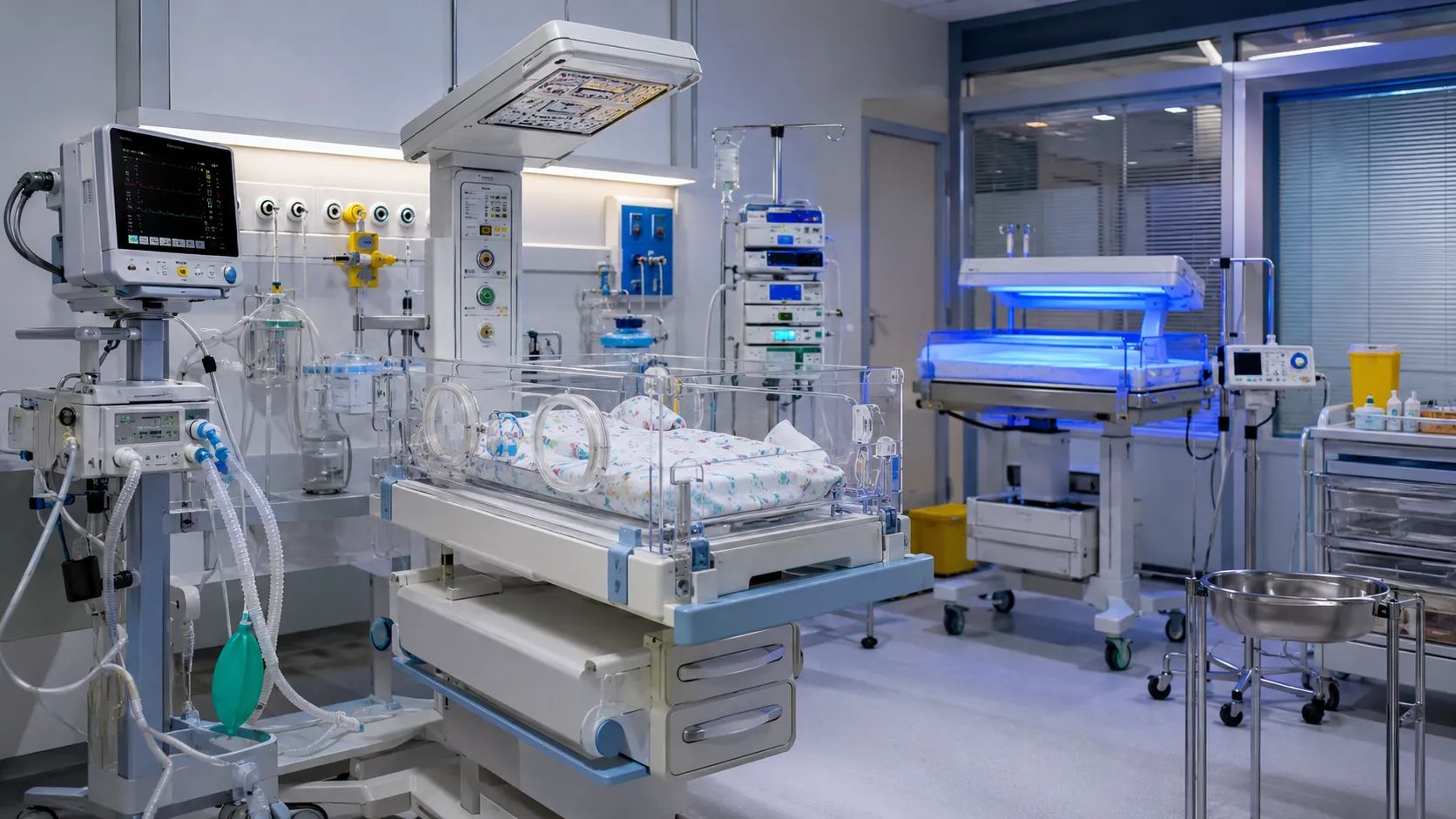
How neonatal care equipment is changing
Neonatal care looks after the smallest and most vulnerable patients, and its equipment is changing to serve them better. The direction is towards care that is gentler on tiny bodies, more connected across the unit, more centred on families, and more able to reach beyond the neonatal unit itself. This article explains the main trends shaping the future of neonatal care equipment worldwide. It sets out what each trend means, and what hospitals should consider when they plan and buy equipment for newborn care. The direction is clear enough to plan around. The smallest patients set the priorities. Their needs shape the kit. Reliability matters most.
Neonatal care evolves around the smallest patients
It is easy to picture the future of neonatal equipment as simply more advanced machines. The deeper change is about how that equipment fits the needs of a newborn. Monitoring is becoming gentler and less intrusive. Equipment is becoming more connected across the unit. Care is becoming more centred on the family, and more able to travel with a fragile baby. These shifts change what a hospital should look for when it equips neonatal care.
None of this replaces the skill of neonatal staff or the core equipment a unit relies on. It changes how that equipment supports very small patients and their families. Each shift changes what good equipment means. Bodies that scan the horizon for healthcare broadly agree on the direction of medical technology, and the World Health Organisation's foresight work on emerging technologies exists to make it visible. The trends below are the ones most worth planning around.
"The future of neonatal equipment is gentler, more connected and more centred on the family — not just more advanced."
Gentler, less intrusive monitoring
A clear trend is towards monitoring that is gentler on a newborn. Very small patients are sensitive, so equipment that watches them closely while disturbing them as little as possible is increasingly valued. Less intrusive sensors and careful design help protect a fragile baby while still giving staff the information they need. Comfort and care go together. Gentle does not mean less watchful.
For equipment, this makes comfort and gentleness part of the specification, not an afterthought. A monitor that is reliable but hard on a tiny patient is less suitable than one that watches just as well while causing less disturbance. The future device is one that supports close observation and the baby's wellbeing at the same time. Gentleness is part of the design. The baby comes first. Comfort guides the choice.
Connected units and flowing information
Neonatal care depends on many devices working around one small patient, and the trend is for them to connect rather than work in isolation. Equipment that shares its data into the record and to a central view lets staff watch closely, coordinate care and spot changes early. A device that cannot connect becomes an island in a unit that increasingly expects everything to work together. Shared data helps the whole team, and coordination improves.
The question behind this is about standards. Does the equipment connect on open, recognised ones, so its data flows cleanly across systems and makers? The World Health Organisation's work on medical devices reflects how important safe, appropriate equipment is in every setting. Equipment that connects well keeps fitting as the unit evolves, while equipment that keeps its data to itself becomes a bottleneck.
Family-centred design
Newborn care increasingly recognises the importance of the family, and equipment is being designed with that in mind. Equipment that supports closeness between a baby and their parents, and that fits a calmer, more human environment, reflects this shift. The unit is not only a technical space but a place where families are part of care. Design reflects that now. Families are not just visitors.
For buyers, this means considering how equipment fits the experience of families, not only its clinical function. Equipment that supports family-centred care, while meeting clinical needs, fits the direction neonatal care is taking. The best neonatal environments hold both together: excellent clinical capability and a setting that supports the baby and their family. Both matter together. Care is human as well as technical. Families belong in the unit. They are part of care.
Care that can travel
Fragile newborns sometimes need to be moved, whether within a hospital or between hospitals, and care increasingly reaches beyond the neonatal unit. So portable, robust equipment that can maintain a baby's care during transport becomes more important. The place where neonatal equipment earns its keep may extend beyond the unit that buys it. Care can travel now. The unit is not the only setting.
That changes what fit for purpose means. Equipment designed only for a fixed space may struggle when a baby has to travel. This matters to smaller hospitals and specialist centres alike, since transport links them together. Neonatal equipment that travels well, and works reliably outside the unit, stays useful as the model of care evolves. Transport links units together. Portability protects fragile babies. Care can follow the baby.
Reliability above all, for the smallest patients
With such vulnerable patients, reliability matters more than almost anything. Neonatal equipment must work dependably, every time, because there is little margin for failure. Standards for device safety, set by bodies such as the Medicines and Healthcare products Regulatory Agency, reflect how much this matters. This raises the value of well-supported, well-maintained equipment, and of planning for service and readiness as much as for features.
So the future of neonatal equipment is not only about new capabilities. It is about capabilities delivered through equipment that can be trusted completely. Gentler monitoring, connection, family-centred design and portability all matter, but only if the equipment behind them is genuine, approved and dependable. For the smallest patients, reliability is the first requirement, not the last. There is little room for failure. Trust in the kit comes first. Dependability is everything.
What buyers should really be asking
-
Gentle enough? Does it watch a newborn closely while disturbing them as little as possible?
-
Connected? Does its data flow on open standards across the unit and into the record?
-
Family-centred? Does it support closeness between baby and family, not only clinical needs?
-
Reliable and portable? Is it dependable every time, and able to travel with a fragile baby?
What buyers should take from this
The future of neonatal care equipment worldwide is a steady move towards care that is gentler, more connected, more family-centred and more able to travel, delivered through equipment that can be trusted completely. A hospital that equips neonatal care with this direction in mind avoids kit that ages quickly, and builds a capability that keeps fitting how newborn care is delivered. The horizon work that informs this, such as the WHO horizon scan of emerging health technologies, exists to make such foresight ordinary rather than rare.
Underneath every trend sits one unchanging requirement. Gentle, connected, family-centred equipment is only worth having if it is genuine, approved and reliable, and for the smallest patients that reliability matters most of all. The fundamentals of sound equipment outlast every shift in fashion. So the wise approach is to read the trends to buy well, without letting them distract from the basics. The hospitals that do best are curious about what is coming and firm about what has always mattered.
More from Business
-
Buyers — source approved, well-documented equipment.
-
Suppliers — list your equipment and reach buyers worldwide.
-
Advertise — promote your products and services to a clinical audience.
-
Business overview — explore everything MediGear offers healthcare organisations.
Disclaimer
This article is for general information only and does not constitute clinical, procurement, regulatory or legal advice. The examples given are illustrative. Trends in medical equipment are general directions, not certainties, and their pace and relevance vary by market and setting. Requirements and standards change over time and should always be confirmed with the relevant authorities. Always consult qualified clinical, biomedical engineering and procurement professionals for decisions specific to your organisation. medigear.uk accepts no liability for actions taken on the basis of this content.
Buy for the future, built on the basics.
Genuine, approved, fully documented medical equipment — the dependable foundation every future trend still rests on, wherever you work.
Frequently Asked Questions
The future of neonatal care equipment is a move towards care that is gentler on tiny patients, more connected across the unit, more centred on families, and more able to travel with a fragile baby. Monitoring becomes less intrusive, devices share data rather than working in isolation, equipment supports family-centred care, and portable equipment maintains care during transport. Above all, reliability remains the first requirement for such vulnerable patients.
Newborns, especially those born early or unwell, are extremely sensitive, so equipment that watches them closely while disturbing them as little as possible is increasingly valued. Less intrusive sensors and careful design protect a fragile baby while still giving staff the information they need. This makes comfort and gentleness part of the equipment specification, not an afterthought, alongside clinical performance.
Neonatal care depends on many devices working around one small patient, and connection lets them work together rather than in isolation. Equipment that shares its data into the record and a central view helps staff watch closely, coordinate care and spot changes early. Equipment that connects on open standards keeps fitting as the unit evolves, while equipment that keeps its data to itself becomes a bottleneck.
Family-centred equipment is designed with the importance of the family in mind, supporting closeness between a baby and their parents and fitting a calmer, more human environment. It reflects a shift towards recognising families as part of newborn care, not only as visitors. For buyers, it means considering how equipment fits the experience of families alongside its clinical function.
Fragile newborns sometimes need to be moved within a hospital or between hospitals, so portable, robust equipment that maintains a baby's care during transport is increasingly important. This means neonatal equipment is judged partly on whether it travels well and works reliably outside the unit, not only on how it performs in a fixed space, since transport links smaller hospitals and specialist centres together.
Hospitals should ask whether equipment is gentle enough for tiny patients, whether it connects on open standards across the unit, whether it supports family-centred care, and whether it is reliable and portable. Because these are the most vulnerable patients, reliability comes first, so service and readiness matter as much as features. Choosing with these questions in mind builds a neonatal capability that keeps fitting how newborn care is delivered.