
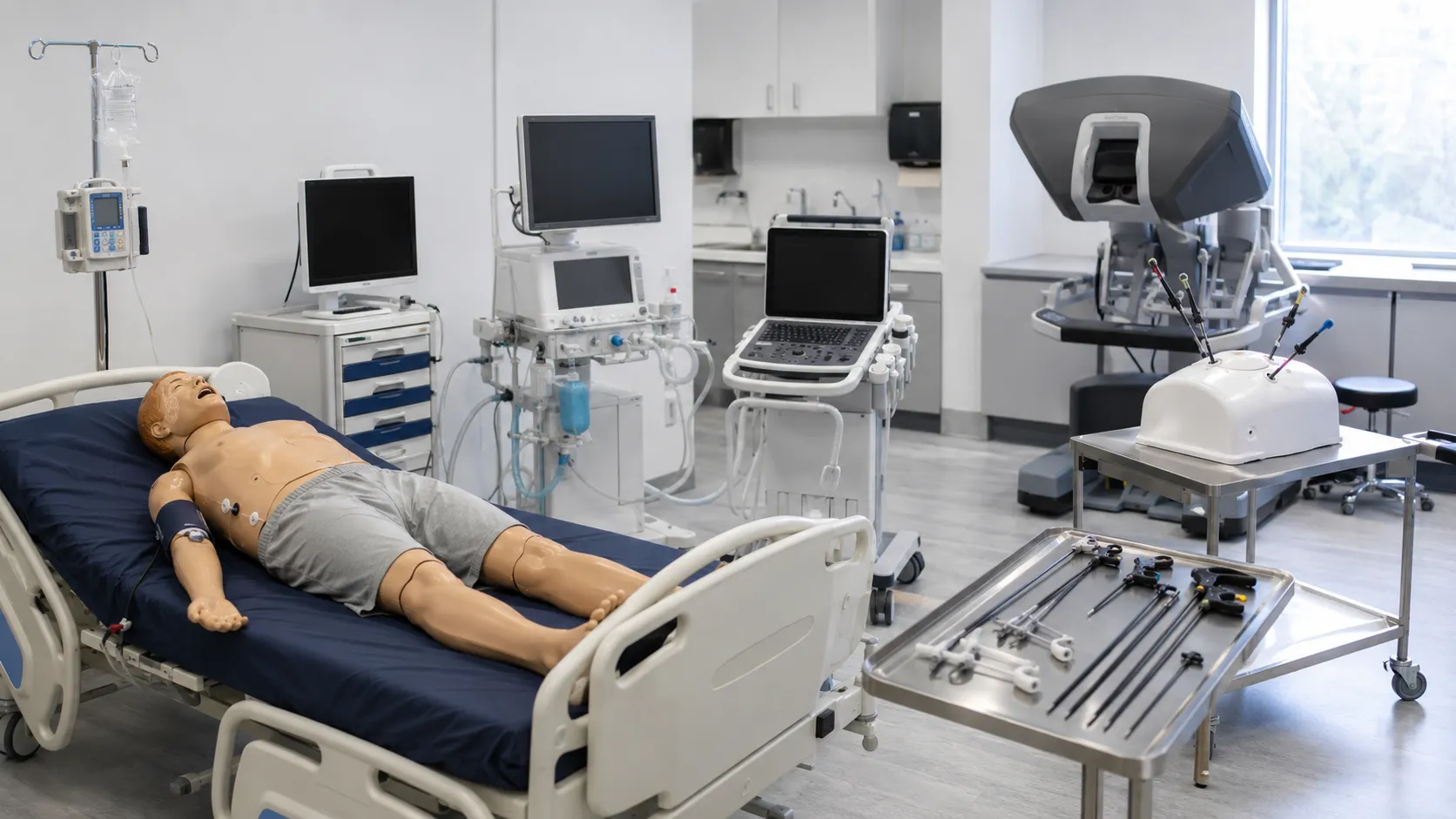
How medical equipment training is changing
Medical equipment is only as good as the people using it, so training and education around equipment matter greatly, and they are changing. The direction is towards more immersive training, drawing on simulation and richer visualisation; more ongoing, keeping skills current as equipment evolves; more standards-based, so what people learn is consistent and recognised; and more integrated into daily work rather than separated from it. This article sets out the main trends shaping the future of medical equipment training and education, and what they mean for buyers. The direction is already clear. People make kit work in real care every day in the hospital, in real settings.
Equipment is only as good as the people using it.
It is easy to see equipment training as a support function, separate from the equipment itself. In reality, it is inseparable. Equipment that no one knows how to use well is not really working, however advanced it is on paper. So training is part of the value of equipment, not an add-on. As equipment becomes more capable and more connected, training becomes more central, not less, over time.
This matters when hospitals plan and buy. Bodies that work on medical devices recognise how important safe, well-supported use is, and the World Health Organisation's work on medical devices reflects it. For a buyer, the useful question is not only which equipment to choose, but how well people will be able to use it safely and effectively over its life. Training is where equipment becomes care. Skill turns kit into value. Learning shapes safety across use of any device in care.
"Equipment training is not a support function. It is what makes equipment actually work in care."
Immersive training and simulation
A clear trend is more immersive training, using simulation and richer visualisation to help people practise in realistic conditions. Simulation lets staff learn and rehearse without risk to patients, and lets them build confidence with equipment before using it in real settings safely. This makes training more effective and better matched to the reality of care today.
For buyers, this raises the value of equipment that supports good simulation and immersive training, whether through built-in modes, dedicated simulators or good documentation. Equipment that is easy to learn well fits this direction, while equipment that is hard to train on adds friction over its life. Immersive training is part of what turns capable equipment into care that is genuinely safe and effective. Practice builds skill. Confidence follows practice with equipment over time.
Ongoing learning, not one-off training
As equipment evolves and updates over time, training needs to be ongoing rather than a one-off event at purchase. The future is not a single training session but a pattern of learning that keeps skills current as equipment changes. This shift recognises that equipment does not stand still, so the people using it should not either in learning.
For buyers, this makes ongoing support for learning part of the value of equipment over its whole life. Equipment backed by continuing training resources and support, not just an initial handover, delivers more over its life. Responsible routes for evaluating promising tools also inform ongoing learning as evidence grows, such as the NICE Early Value Assessment for promising health technologies. Learning that lasts is part of what makes equipment truly useful. Skills must stay current. Updates need training too, as they arrive with equipment and its updates over the years.
Standards-based and recognised training
Training on medical equipment is moving towards standards-based approaches, so what people learn is consistent, recognised and portable. This helps staff move between settings without relearning basics, and gives hospitals confidence in what training actually delivers to staff. It also connects training to the wider standards environment for medical equipment.
For buyers, this makes standards-based training part of a healthier equipment picture across the hospital. Equipment supported by training aligned to recognised standards fits this direction, while training that is bespoke and inconsistent fits it less well over time. Standards support both quality and mobility, and equipment training is starting to benefit from the same approach that has long shaped clinical practice more broadly. Consistency helps staff. Portability supports careers over time in health services.
Integrated into daily work
Training is also moving closer to daily work, so it happens alongside real use of equipment rather than only in separate sessions. Learning built into the flow of work, through good design, prompts and support at the point of use, complements formal training and helps skills stick over time. This makes training a continuing part of using equipment well, not a one-time event at handover of equipment.
For buyers, this raises the value of equipment that supports learning during use, through clear, safe design and helpful guidance at the point of care as well. Equipment that is easy and safe to use as staff learn, and that supports them at the point of use, fits this direction. Design that helps people work safely from the start is part of what modern equipment training and use look like together. Learning happens in use. Design supports it every day in use of equipment.
Training as part of buying equipment
Taken together, these trends make training part of the equipment decision itself, not an afterthought. Choosing equipment that is well supported by training, and easy to learn well, is part of choosing equipment that will deliver its value over time in real hospitals. This is a shift from thinking about training only after purchase, towards thinking about it as part of the purchase itself.
For buyers, this means asking about training and support alongside features and price. Equipment backed by strong, ongoing, standards-based training is often better value over its life than equipment that is capable but hard to learn well. The old habit of buying equipment first and worrying about training afterwards is a poor fit for how future equipment is used. Training is part of the deal. Ask about learning early. Support matters over time in equipment across its life in care.
What buyers should really be asking
-
Well supported by simulation? Can staff learn immersively before using equipment on patients?
-
Ongoing? Is training continuing over the life of the equipment, not a one-off session?
-
Standards-based? Does training align with recognised, consistent standards?
-
Easy to learn well? Does the equipment itself support safe learning during real use?
What buyers should take from this
The future of medical equipment training and education is a move towards learning that is immersive, ongoing, standards-based and integrated into daily work — and towards treating training as part of the equipment decision, not an afterthought. A hospital that buys well is really buying equipment plus the training that makes it work in practice. The horizon work that informs this, such as the WHO horizon scan of emerging health technologies, exists to make such foresight ordinary rather than rare.
Underneath every trend sits one unchanging requirement. However good training becomes, it must sit around equipment that is genuine, approved and reliable, and that does its core job well. The fundamentals of sound equipment outlast every shift in fashion, and good training makes their value real in practice. So the wise approach is to prize equipment and training together. Curious about better learning, firm about what has always mattered.
More from Business
-
Buyers — source approved, well-documented equipment.
-
Suppliers — list your equipment and reach buyers worldwide.
-
Advertise — promote your products and services to a clinical audience.
-
Business overview — explore everything MediGear offers healthcare organisations.
Disclaimer
This article is for general information only and does not constitute clinical, procurement, regulatory or legal advice. The examples given are illustrative. Trends in medical equipment are general directions, not certainties, and their pace and relevance vary by market and setting. Requirements and standards change over time and should always be confirmed with the relevant authorities. Always consult qualified clinical, biomedical engineering and procurement professionals for decisions specific to your organisation. medigear.uk accepts no liability for actions taken based on this content.
Buy for the future, built on the basics.
Genuine, approved, fully documented medical equipment — the dependable foundation every future trend still rests on, wherever you work.
Frequently Asked Questions
The future of medical equipment training and education is a move towards learning that is more immersive, using simulation and rich visualisation; more ongoing, keeping skills current as equipment evolves; more standards-based, so what people learn is consistent and recognised; and more integrated into daily work rather than separated from it. Above all, training is becoming part of the equipment decision itself rather than an afterthought, because equipment is only as good as the people using it.
Equipment that no one knows how to use well is not really working, however advanced it is, so training is part of the value of equipment rather than an add-on. As equipment becomes more capable and more connected, training becomes more central, not less. For buyers, this means the question is not only which equipment to choose but how well people will be able to use it safely and effectively over its life.
Simulation lets staff learn and rehearse with equipment in realistic conditions, without risk to patients, and helps them build confidence before using it in real settings. This makes training more effective and better matched to the reality of care. For buyers, equipment that supports good simulation and immersive training, whether through built-in modes, dedicated simulators or good documentation, is easier to learn well and deliver value from.
Equipment evolves and updates over time, so a one-off training session at purchase does not keep skills current. The future is a pattern of ongoing learning that keeps up with how equipment changes, recognising that equipment does not stand still so the people using it should not either. Equipment backed by continuing training resources and support, not just an initial handover, delivers more over its life.
Standards-based training means learning that is aligned to recognised, consistent standards, so it is portable and gives hospitals confidence in what training actually delivers. It helps staff move between settings without relearning basics, and connects equipment training to the wider standards environment for medical devices. Equipment supported by training aligned to recognised standards fits the direction of travel, while bespoke, inconsistent training fits it less well.
Hospitals should treat training as part of the equipment decision, not an afterthought, asking about training and support alongside features and price. Equipment backed by strong, ongoing, standards-based training that is integrated into daily work is often better value over its life than equipment that is capable but hard to learn. Buying equipment first and worrying about training afterwards is a poor fit for how future equipment is used, so training is part of the deal.