
Introduction
In 2010, the French health authority ordered the withdrawal of breast implants made by Poly Implant Prothese (PIP), a company that had filled them with industrial-grade silicone rather than the medical-grade material they'd been approved for. Around 400,000 women worldwide had received the implants, including tens of thousands in the UK. The scandal exposed something the medical device world had known for a long time but rarely stated plainly: the systems for tracking who has which implant, and for pulling equipment out of circulation when it fails, are less robust than most patients realise.
Since then, both regulatory reform (the EU Medical Device Regulation replacing the older Medical Device Directive, with much stronger post-market surveillance requirements) and journalism (the ICIJ Implant Files investigation in 2018) have kept implantable device safety on the agenda. Any discussion of implantable devices sits in that context. What follows walks through the main categories by body system, noting where the safety and traceability picture matters most.
Cardiovascular implants
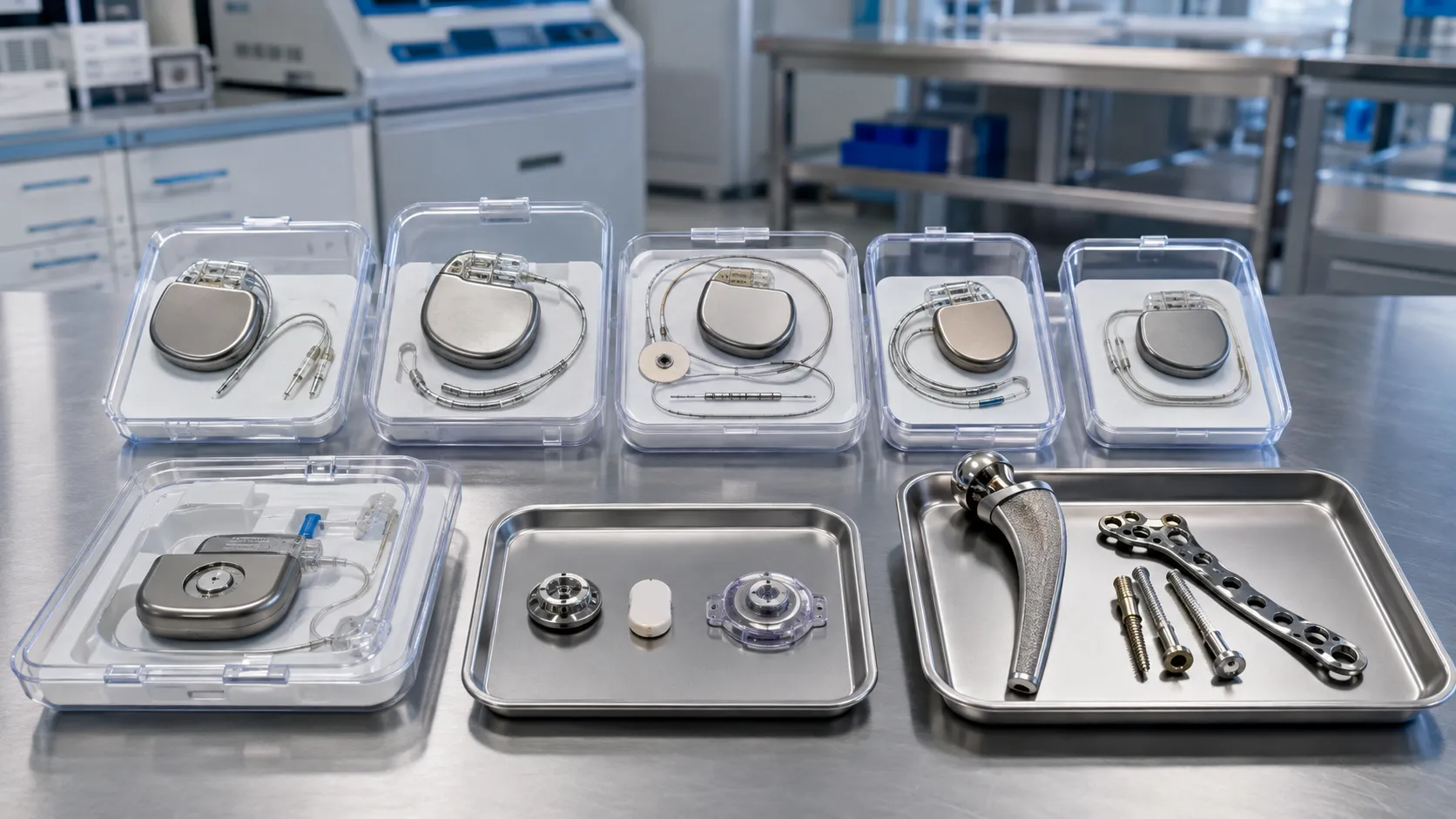
The largest category by volume and one of the oldest. Cardiac pacemakers (single-chamber, dual-chamber, and cardiac resynchronisation therapy or CRT devices) and implantable cardioverter defibrillators (ICDs) are implanted in tens of thousands of UK patients each year. The main manufacturers are Medtronic, Boston Scientific, Abbott, and Biotronik, with pricing running £3,000–£10,000 for pacemakers and £12,000–£30,000 for ICDs including CRT-D devices. Leadless pacemakers (Medtronic Micra, Abbott Aveir) are a newer subclass that avoids the traditional transvenous lead and its associated complications.
Coronary stents are the highest-volume cardiovascular implant. Drug-eluting stents dominate contemporary practice, with polymer coatings that release antiproliferative drugs to prevent restenosis. Bioresorbable stents were briefly promoted as a next-generation category before higher rates of stent thrombosis in trials caused most to be withdrawn from the market. Other cardiac implants include prosthetic heart valves (mechanical and biological), transcatheter aortic valves (TAVR/TAVI), left atrial appendage closure devices, and various structural heart devices for congenital and acquired abnormalities.
Orthopaedic implants
Total hip and knee replacements are among the highest-volume orthopaedic implant procedures in the UK, with the National Joint Registry recording several hundred thousand annually. Major manufacturers include DePuy Synthes (Johnson & Johnson), Stryker, Zimmer Biomet, and Smith & Nephew, with implant costs varying widely by design and material (£500–£3,500 for a hip prosthesis including femoral stem, cup, and bearing surfaces).
The metal-on-metal hip resurfacing controversy of the 2000s and 2010s is the orthopaedic counterpart to the PIP breast implant issue — a class of implants (including the DePuy ASR that was withdrawn in 2010) that showed unexpectedly high failure rates in post-market use, requiring revision surgery in significant numbers of patients. It led to changes in registry reporting, joint follow-up protocols, and metal-ion monitoring practice. The National Joint Registry now provides one of the world's most detailed datasets on implant performance, and consulting it before implant selection is standard practice for UK orthopaedic surgeons.
Other orthopaedic implants include shoulder and elbow replacements, spinal implants (pedicle screws, interbody cages, artificial discs), fracture fixation hardware (plates, screws, intramedullary nails), and ligament reconstruction devices. Spinal implants have their own subspecialty market and their own long-running debates about clinical effectiveness for certain indications.
Ophthalmic implants
Intraocular lenses (IOLs) implanted during cataract surgery are among the highest-volume implant procedures worldwide. Monofocal IOLs are the standard of care in most public health systems, including the NHS; multifocal, toric, and extended-depth-of-focus IOLs are typically private-pay options in the UK. Main manufacturers include Alcon, Johnson & Johnson Vision, Bausch & Lomb, and Zeiss. Standard IOL prices are modest by implant standards (£30–£300 for monofocal), reflecting the extremely high volume.
Other ophthalmic implants include glaucoma drainage devices (Baerveldt, Ahmed, XEN gel stent), corneal onlays and inlays, and retinal prostheses for specific inherited degenerative conditions (Argus II, which has now been discontinued by its manufacturer, illustrating another category of concern — what happens to implanted patients when the manufacturer withdraws support).
Neurological implants
This category overlaps substantially with neurostimulation, covered separately (see our dedicated piece on neurostimulation device types). The main implantable neurological devices are deep brain stimulators, vagus nerve stimulators, spinal cord stimulators, sacral nerve stimulators, cochlear implants, and cerebrospinal fluid shunt systems for hydrocephalus. CSF shunts are worth flagging here specifically because they don't fit neatly into the neurostimulation category — they are mechanical rather than electrical devices, with their own long-running clinical challenges around obstruction, infection, and revision.
Reproductive and gynaecological implants
Intrauterine devices (IUDs), both copper and hormonal (Mirena, Kyleena, Jaydess), are among the highest-volume gynaecological implants. Their safety profile is well-established over decades of use, though mesh implants for pelvic organ prolapse and stress urinary incontinence became the subject of a major UK safety review (the Cumberlege Review, published 2020) that resulted in a pause of certain mesh procedures and significant changes to consent and follow-up practices. This is one of the clearest recent illustrations of what happens when post-market surveillance signals are not acted on promptly.
Contraceptive implants (Nexplanon and predecessors) sit in this category and are implanted in significant numbers in primary care rather than in hospitals. Breast reconstruction implants, which overlap with cosmetic breast augmentation implants, remain under close post-PIP surveillance with mandatory registry reporting.
Other implant categories
Dental implants (Straumann, Nobel Biocare, Dentsply Sirona) are the largest volume outside the categories above, though most are placed in private dental practice rather than in hospitals. Vascular access ports (Port-a-Cath, PowerPort) for chemotherapy and long-term IV therapy are implanted in significant numbers in oncology and haematology. Peritoneal dialysis catheters, biliary stents, ureteric stents, and various drainage devices are used across many specialities.
Emerging categories include neural interfaces (still largely investigational for medical use), continuous glucose monitor sensors (implantable versions like the Eversense from Senseonics), bio-absorbable implants across several specialities, and 3D-printed patient-specific implants (see our separate piece on 3D printing applications). These are areas where the regulatory frameworks are actively evolving.
What UK implantable device oversight looks like now
UK implantable device regulation sits under the UK Medical Device Regulations 2002, with post-Brexit modifications and continuing recognition of CE marking under transitional arrangements. Implantable devices are typically Class IIb or III — the highest risk classifications — and are subject to the strictest conformity assessment routes. Post-market surveillance requirements have strengthened significantly since the PIP scandal, with the MHRA operating adverse incident reporting systems that clinicians and manufacturers are required to use.
Implant identification is now largely standardised through the Global Unique Device Identification (UDI) system, which assigns a unique identifier to each implantable device to support recall management and long-term tracking. For patients, this means the specific implant they have received should be identifiable through their clinical records — something that was patchy before UDI implementation. The MHRA's Yellow Card scheme is the UK adverse incident reporting route for both drug and medical device safety concerns.
The manufacturer withdrawal question
One issue that PIP crystallised and that hasn't been fully resolved: what happens to implanted patients when the manufacturer withdraws support, goes out of business, or is acquired. Retinal prostheses (Argus II) are one clear recent case — hundreds of patients received the device before the manufacturer discontinued the product line, leaving them with an implant no longer supported by upgrades, replacement parts, or ongoing clinical infrastructure. Similar questions have arisen with earlier generations of ventricular assist devices, some hearing implants, and various niche implantable devices.
For hospitals and patients, this is a genuine risk that clinical due diligence should consider before implantation. The manufacturers most likely to be around in 20 years to support the implant they placed today are the large established companies with substantial commercial base; smaller innovative manufacturers may offer superior technology but carry higher long-term support risk. There is no simple answer to this trade-off, but the question deserves explicit consideration rather than being ignored.
Implantable medical devices are among the most highly regulated products in medicine, and this article is for orientation only. Specific implant selection is a specialist clinical decision that must consider individual patient factors, current evidence, and up-to-date post-market surveillance data. Named products reflect UK market presence and are not endorsements. Patients with implanted devices should consult their implanting team about any concerns, and clinicians should report adverse incidents through the Yellow Card scheme.
Take the post-market picture as seriously as the specification
Sourcing implantable devices, working through supplier due diligence, or building an implant governance framework for a hospital service? This is a category where the regulatory documentation, post-market surveillance obligations, and traceability requirements all matter as much as the specification of the device itself. We can help you navigate the supplier landscape and put you in touch with manufacturers and distributors who take the post-market picture seriously. Tell us what you're working on.
Frequently Asked Questions
An implantable medical device is a device intended by the manufacturer to be placed inside the body, either through surgical implantation or by natural orifice, and to remain there for a significant period after the procedure. Categories include cardiovascular (pacemakers, ICDs, stents, valves), orthopaedic (hip and knee replacements, spinal implants), ophthalmic (intraocular lenses), neurological (DBS, cochlear implants, CSF shunts), gynaecological (IUDs, mesh), dental, and vascular access devices. Most are Class IIb or III under UK regulations.
In 2010, French health authorities ordered the withdrawal of breast implants made by Poly Implant Prothese (PIP), which had been filled with industrial-grade silicone rather than the medical-grade material approved. Around 400,000 women worldwide had received the implants, including tens of thousands in the UK. The scandal exposed weaknesses in post-market surveillance and implant traceability, and led to stronger regulatory requirements in subsequent years including the EU Medical Device Regulation.
Implantable device identification is now largely standardised through the Global Unique Device Identification (UDI) system, which assigns a unique identifier to each device to support recall management and long-term tracking. This means the specific implant a patient has received should be identifiable through clinical records — something that was patchy before UDI implementation. The National Joint Registry maintains detailed data on orthopaedic joint replacements as one of the world's largest implant registries.
UK implantable devices sit under the UK Medical Device Regulations 2002 with post-Brexit modifications and continuing recognition of CE marking under transitional arrangements. Implantable devices are typically Class IIb or III (the highest risk classifications) and are subject to the strictest conformity assessment routes. Post-market surveillance is enforced by the MHRA, which operates the Yellow Card adverse incident reporting scheme for both clinicians and manufacturers.
No. Cardiac pacemakers are categorised by chambers stimulated (single-chamber, dual-chamber) and by whether they include cardiac resynchronisation therapy (CRT) or defibrillator function (ICDs, CRT-D). Leadless pacemakers (Medtronic Micra, Abbott Aveir) are a newer subclass that avoids the traditional transvenous lead. Main manufacturers include Medtronic, Boston Scientific, Abbott, and Biotronik. Selection is a specialist cardiology decision based on the patient's specific rhythm disorder and anatomy.
Vaginal mesh implants for pelvic organ prolapse and stress urinary incontinence became the subject of a major UK safety review (the Cumberlege Review, published 2020) after post-market signals of significant complications took too long to be acted on. The review resulted in a pause of certain mesh procedures, significant changes to consent and follow-up practices, and formed one of the clearer recent illustrations of what happens when post-market surveillance signals are not addressed promptly.
UDIs (Unique Device Identifiers) are standardised codes assigned to each medical device that support traceability throughout the supply chain and clinical use. Under the Global Unique Device Identification system, implantable devices carry both a machine-readable identifier and human-readable information about the device, manufacturer, and specific batch or lot. This supports recall management, adverse incident tracking, and long-term follow-up of implant patients — all areas that were weaker before UDI implementation across major markets.