
Introduction
At the 20-week anomaly scan, the sonographer paused longer than usual on the fetal heart, then called the consultant over. The images showed a specific pattern that suggested a significant congenital cardiac anomaly. Within the same afternoon, the parents had a fetal cardiology consultation at a tertiary centre 30 miles away. Within a week they had a detailed fetal echocardiogram, a genetic counselling appointment, and a delivery plan that involved being booked into a hospital co-located with paediatric cardiac surgery. Their baby was born to a team who knew what she needed. She had her first operation at 5 days old. She is now three and starting nursery. Twenty years ago, this same anomaly might have been diagnosed only after birth, with worse outcomes and a much more difficult family journey to navigate. Modern maternal and child health equipment is what supports this pathway from the 20-week scan through the whole journey.
Maternal and child health covers a huge span of clinical activity, from fertility through pregnancy and delivery through the newborn period, infancy, childhood, and adolescence. Equipment across this span is diverse, specific to different phases, and organised around different service structures. What follows walks through the picture chronologically, following the journey rather than by device category, because that framing captures how the equipment is actually deployed and used in UK NHS maternity and child health services.
Preconception and fertility
The equipment picture here divides between fertility investigation and treatment (largely private in the UK with some NHS provision) and preconception genetic screening (increasingly available through the NHS Genomic Medicine Service for high-risk groups). Fertility investigation uses transvaginal ultrasound for follicular assessment, semen analysis equipment (SCA CASA systems, Hamilton Thorne IVOS), and hormonal testing. Treatment covers IVF laboratory equipment (Cook Medical incubators, RI Witness sample tracking, Origio culture media, and increasingly time-lapse embryo monitoring systems like Vitrolife EmbryoScope and Esco Miri).
Preconception genetic screening for carrier status in known-familial conditions uses the same molecular platforms covered in the precision medicine piece. Testing for consanguineous couples, couples with a family history of specific conditions, and specific ethnic groups with elevated carrier frequencies for specific conditions is offered through NHS clinical genetics services. Universal preconception carrier screening remains contested in policy terms and is not currently offered as an NHS programme.
Antenatal care
The most equipment-visible phase for most patients. Obstetric ultrasound anchors antenatal imaging with GE Voluson (E10, Expert 22 and E-series), Samsung HERA W10, Canon Aplio i800, and Philips EPIQ, providing the workhorse fetal medicine capability. The dating scan (around 11-14 weeks) and anomaly scan (around 20 weeks) are universal NHS offerings; additional growth scanning is used in specific indications. Fetal cardiology capability at tertiary centres involves specialist ultrasound with cardiac protocols and dedicated fetal cardiologists.
Antenatal screening equipment covers combined screening (nuchal translucency ultrasound plus maternal biochemistry PAPP-A and free beta-hCG for chromosomal condition risk), quadruple screening at later gestations where combined screening is missed, and non-invasive prenatal testing (NIPT) using cell-free fetal DNA in maternal blood for higher-risk pregnancies. NIPT platforms include Illumina VeriSeq and various commercial services accessed through NHS labs. Invasive testing (amniocentesis, chorionic villus sampling) uses ultrasound guidance with standard obstetric imaging equipment.
Antenatal blood testing, home BP monitoring for gestational hypertension surveillance, gestational diabetes screening with oral glucose tolerance testing, and various infection screens (rubella immunity, syphilis, HIV, hepatitis B, sickle cell and thalassaemia) form the wider antenatal screening picture. Each has its own equipment implications from routine laboratory automation.
Intrapartum care
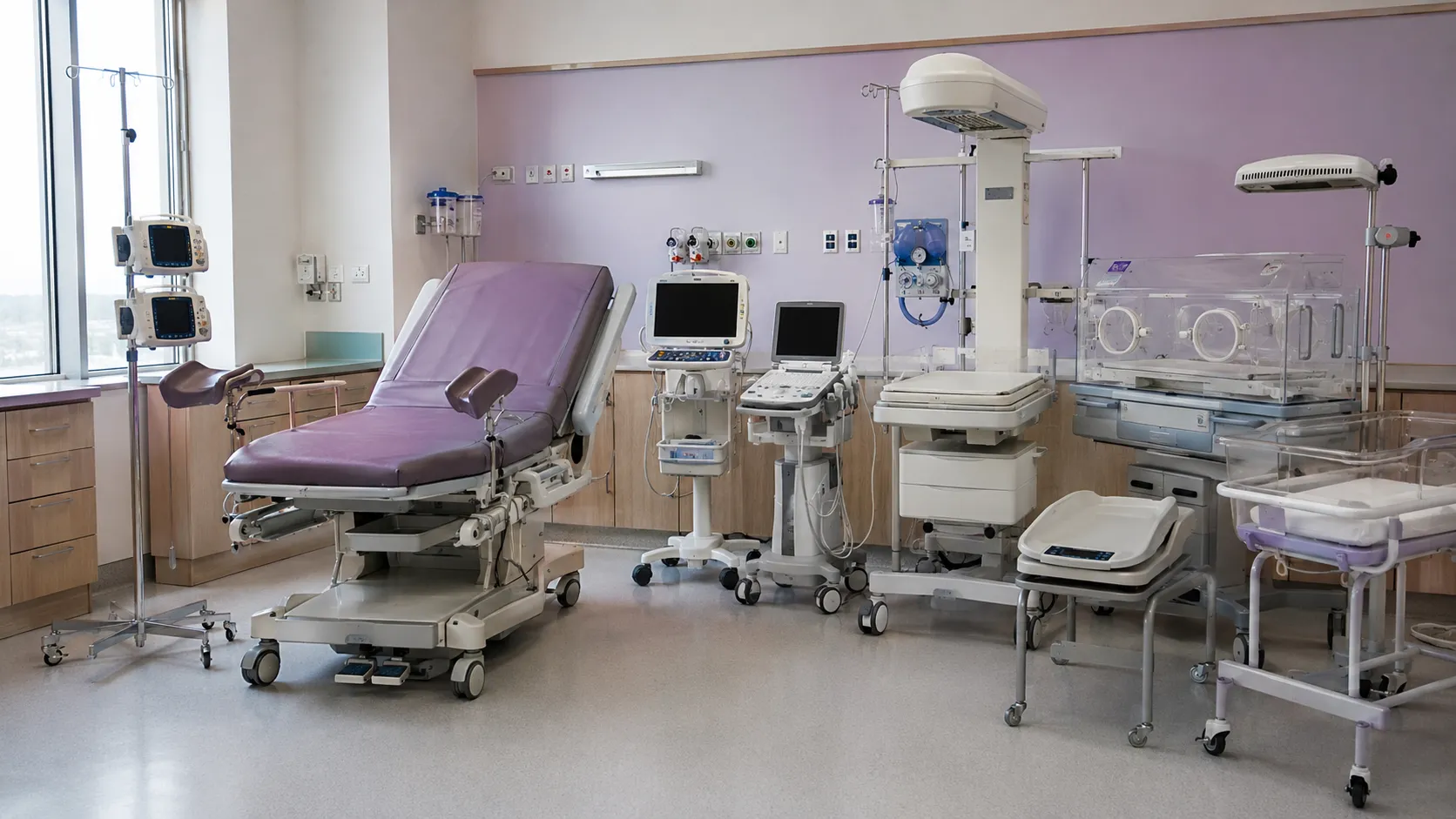
The delivery suite equipment picture includes electronic fetal monitoring via cardiotocography (CTG) with Philips Avalon FM, GE Corometrics, Huntleigh Sonicaid, and specialist wireless systems (Philips Avalon CL) that allow ambulant monitoring for mothers who don't want to be tethered to a bedside machine. Fetal blood sampling equipment for scalp lactate measurement (Lactate Pro, StatStrip Lactate) supports difficult monitoring decisions. Cardiotocography interpretation is one of the specific areas where UK national reviews (Ockenden Review of maternity services, HSSIB investigations) have highlighted training and standardisation gaps that equipment specification alone cannot address.
Delivery equipment includes birthing beds with appropriate features (Hill-Rom Affinity, Stryker Lucent), obstetric ultrasound for intrapartum decisions, forceps and ventouse equipment (Kiwi cup, various forceps designs), and instant access to emergency capability (uterine balloon tamponade devices like the Bakri balloon, uterotonic drugs, and immediate blood availability for postpartum haemorrhage). Obstetric theatres for emergency and elective caesarean section require full theatre equipment plus specialist paediatric resuscitation capability for the newborn.
Newborn resuscitation at delivery uses Neopuff T-piece resuscitators, appropriately sized bag-valve-masks and airways, radiant warmers, pulse oximeters sized for the newborn, and immediate access to endotracheal tubes size 2.0 to 3.5 mm with Miller 0 and 00 laryngoscope blades. Delivery-suite resuscitation equipment is checked and restocked between deliveries; audit of these checks is a specific maternity governance topic.
Postnatal and newborn screening
Every UK newborn is offered a set of screening interventions in the first few days of life, each with specific equipment. The newborn examination includes routine clinical assessment plus pulse oximetry screening for critical congenital heart disease using specific neonatal oximetry equipment (Masimo, Nellcor). Newborn hearing screening uses Otoacoustic Emissions (OAE) equipment (Natus Aurical, Vivosonic Integrity) and Automated Auditory Brainstem Response (AABR) equipment for follow-up of positive OAEs.
The newborn blood spot screening (Guthrie card) at 5 days of age screens for a defined panel of metabolic and other conditions using tandem mass spectrometry in regional newborn screening laboratories (Waters TQD, Sciex, PerkinElmer QSight). The panel has expanded over recent years and includes conditions where early detection enables early treatment that prevents severe disease. Every UK newborn is offered this screening as routine.
Infancy and early childhood
The equipment picture shifts from hospital-heavy to community-heavy after the newborn period. Routine well-child checks in health visitor and GP settings use straightforward equipment: growth measurement (length boards for infants, stadiometers for older children, baby scales), vision assessment tools appropriate to age, and hearing screening for follow-up of any concerns. Immunisation delivery uses vaccine cold chain equipment covered in the preventive healthcare piece; UK immunisation coverage runs at high rates for most childhood vaccines through the community-based programme.
Paediatric-specific hospital equipment for infants and young children has been covered separately in the paediatric equipment piece. What is worth noting here is the equipment for specific conditions that emerge in this age range: paediatric asthma monitoring (age-appropriate spirometers, peak flow meters as children get older), atopic eczema treatment, congenital condition follow-up equipment, and the various specialist paediatric surveillance regimes for children with early-diagnosed conditions.
Childhood and adolescence
School-age paediatric equipment overlaps with adult equipment for many purposes but with paediatric-specific sizes, protocols, and considerations. Adolescent transition to adult services is an equipment challenge as much as a service challenge; specific transition programmes exist for chronic conditions like type 1 diabetes, congenital heart disease, cystic fibrosis, and inflammatory bowel disease, with equipment provision continuity as one of the concerns.
Adolescent-specific equipment considerations include sexual health service equipment (STI testing platforms, contraceptive implant equipment, cervical screening from age 25 in the UK), adolescent mental health service equipment (covered in the mental health treatment piece), and equipment for the specific health needs of the adolescent age group. See Royal College of Paediatrics and Child Health guidance for the specialist framework across paediatric age bands.
The wider service context
UK maternal and child health equipment provision has been shaped by major national reviews in recent years, including the Ockenden Review of maternity services and multiple Healthcare Safety Investigation Branch (HSIB, now HSSIB) investigations. These have highlighted equipment as one element within wider service, staffing, and culture concerns rather than as the primary factor in specific incidents. Equipment specifications continue to develop through the NHS Antenatal and Newborn Screening Programmes, the Better Births implementation programme, and specific service reviews.
Where equipment procurement in maternity and paediatric services works well, it aligns with the specific national programme specifications, integrates with the wider service model (community, hospital, and specialist referral pathways), and involves the multidisciplinary team including midwives, obstetricians, paediatricians, and specialist nurses in specification decisions. Where it doesn't work well, equipment is procured by isolated departmental decisions without the wider clinical and service input that the speciality needs.
Maternal and child health equipment provision involves multiple UK national programmes with specific service specifications, and specific procurement should align with these rather than being made in isolation. This article is an orientation for those approaching the field from a general healthcare equipment background; specific decisions should involve the multidisciplinary maternity and paediatric teams that will use the equipment, along with the relevant national programme leads. Named products reflect UK NHS practice and are not endorsements.
Align with national programmes and the multidisciplinary team
Reviewing maternity or paediatric equipment provision, engaging with the various national screening programme equipment requirements, or working through a specific service redesign in maternal and child health? These are procurement decisions where alignment with national programme specifications and integration with the multidisciplinary team matter substantially. We can point you toward suppliers and consultants who work in the specific maternity, neonatal, or paediatric specialisms. Get in touch about what you're building.
Frequently Asked Questions
The NHS routinely offers a dating scan (around 11 to 14 weeks) and an anomaly scan (around 20 weeks) to all pregnancies. Additional growth scanning is used in specific indications. Fetal cardiology imaging at tertiary centres provides specialist assessment where cardiac anomaly is suspected. Equipment includes GE Voluson (E10, Expert 22, E-series), Samsung HERA W10, Canon Aplio i800, and Philips EPIQ providing the workhorse fetal medicine capability across NHS maternity units.
Every UK newborn is offered pulse oximetry screening for critical congenital heart disease using neonatal oximetry equipment (Masimo, Nellcor), newborn hearing screening using Otoacoustic Emissions (Natus Aurical, Vivosonic Integrity) with Automated Auditory Brainstem Response follow-up, and the newborn blood spot screening (Guthrie card) at 5 days of age using tandem mass spectrometry (Waters TQD, Sciex, PerkinElmer QSight) in regional laboratories. The blood spot panel screens for a defined set of metabolic and other conditions.
Cardiotocography is electronic fetal monitoring during labour, measuring fetal heart rate and uterine contractions simultaneously. UK equipment includes Philips Avalon FM, GE Corometrics, Huntleigh Sonicaid, and specialist wireless systems (Philips Avalon CL) that allow ambulant monitoring. CTG interpretation is one of the specific areas where UK national reviews (Ockenden Review, HSSIB investigations) have highlighted training and standardisation gaps that equipment specification alone cannot address.
Non-invasive prenatal testing analyses cell-free fetal DNA in maternal blood to screen for specific chromosomal conditions with much lower false-positive rates than combined screening. NIPT is available through the NHS for higher-risk pregnancies following combined screening, and privately for lower-risk pregnancies. Platforms include Illumina VeriSeq and various commercial services accessed through NHS labs. NIPT is a screening test; definitive diagnosis still requires invasive testing (amniocentesis or CVS).
The Guthrie card newborn blood spot screening at 5 days of age tests for a defined panel of conditions that has expanded over recent years to include phenylketonuria, congenital hypothyroidism, sickle cell disease, cystic fibrosis, medium-chain acyl-CoA dehydrogenase deficiency (MCADD), and other rare metabolic conditions. All are conditions where early detection enables early treatment that prevents severe disease. Tandem mass spectrometry in regional laboratories processes the samples.
The Ockenden Review was an independent review of maternity services at Shrewsbury and Telford Hospital NHS Trust, published in stages and concluding in 2022. It documented significant patterns of failing in maternity care and made recommendations for national maternity service improvement. Alongside HSSIB (Health Services Safety Investigations Body, formerly HSIB) maternity investigations, it has shaped current UK maternity service equipment and staffing standards, though the primary concerns identified were about staffing, culture, and clinical practice rather than equipment specification alone.
Adolescent transition from paediatric to adult services is a specific challenge for chronic conditions like type 1 diabetes, congenital heart disease, cystic fibrosis, and inflammatory bowel disease. Continuity of equipment provision through transition is one concern (insulin pumps, home monitoring equipment, specialist devices); alignment between paediatric and adult service equipment specifications matters practically; and the specific communication and education needs of adolescents differ from both younger children and adults. Specialist transition programmes address these concerns.