
Introduction
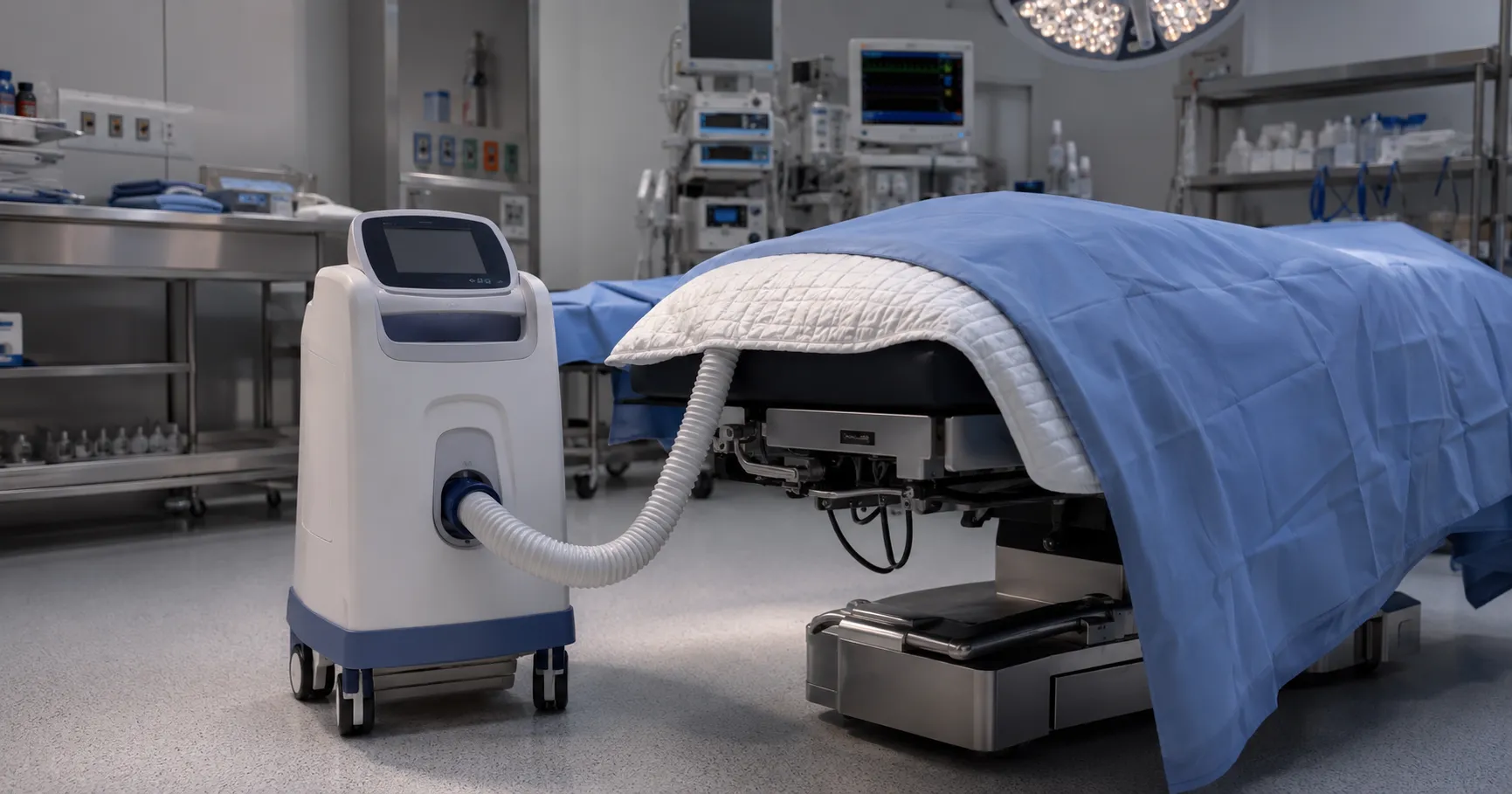
In the perioperative setting, the patient warming system helps maintain normothermia through surgery — so choosing the right one matters. The honest answer to "which is the best patient warming system?" is that it depends on your surgery, your patients and your existing equipment. A system suited to short procedures may differ from one for long or major surgery. What does not change is the set of features and qualities that define a dependable theatre-grade warming system.
This buyer's guide sets out exactly what to look for, the criteria that matter most, how to choose, and what to check before you commit — so you can identify the best patient warming system for your theatres with confidence, wherever your hospital operates.
The short version — what a patient warming system must do
Strip it back, and the best patient warming system does three things well — warms effectively, controls temperature safely, and fits your workflow.
-
Effective warming — reliable warming to help maintain normothermia during surgery.
-
Safe control — temperature control and safety features that protect the patient.
-
Workflow fit — a warming method and consumables that suit your theatres.
What makes a patient warming system theatre-grade
-
Effective warming. Reliable warming to help maintain normothermia across the procedures and patients you treat.
-
Temperature control and safety. Controlled temperature with safety features that protect skin and the patient during warming.
-
Warming method. The warming approach your theatres need — forced-air, conductive or other methods — with appropriate consumables.
-
Coverage and access. Blankets or covers that provide effective coverage while allowing surgical access.
-
Alarms and indicators. Clear alarms and indicators for temperature and safety conditions.
-
Usability and workflow. An intuitive interface and workflow suited to busy perioperative settings.
-
Quiet, mobile design. Acceptable noise and a mobile design suited to theatre and recovery use.
-
Service and consumables. Available blankets, covers, filters, calibration and dependable service support.
The buyer's criteria
|
Criterion |
Why it matters in theatre |
|
Warming |
Effective warming maintains normothermia |
|
Control & safety |
Controlled temperature protects the patient |
|
Method |
Warming method must suit your theatres |
|
Coverage |
Covers must warm while allowing access |
|
Alarms |
Temperature alarms support safe use |
|
Standardisation |
One platform simplifies training & consumables |
|
Support |
Blankets, covers, filters & service |
|
Approval |
UKCA/CE/FDA/SFDA/SAHPRA for your market |
Choosing patient warming systems?
We'll match patient warming systems to your theatres. Tell us your surgery, patients and existing equipment — we'll help you shortlist systems that fit, equip cleanly and are approved for your market.
No pressure, no obligation. → Talk to the team
Choosing the best patient warming system for your theatre
-
Define your surgery and patients' procedure length and the warming each needs.
-
Match the warming method and covers that suit your theatres and access.
-
Plan safety and consumables temperature control, safety and a reliable consumable supply.
-
Decide new or refurbished by weighing feature currency, warranty and support life.
-
Confirm market approval, then plan blankets, covers, filters and service support.
For the wider picture, see our guide to theatre and perioperative equipment and how warming systems fit into a full operating-room setup.
New or refurbished for the theatre?
Patient warming systems are among the categories often available certified refurbished, and certified units are widely supplied. For theatre use, set a sensible bar: insist on certified refurbishment, a warranty, current controls, dependable service and consumable support, and make sure the system warms effectively, has working temperature safety and is approved for your market. New systems bring the latest control and warming and the longest support life with full warranties — often the right call for long or major surgery. Many hospitals mix the two: new for major theatres, certified refurbished for shorter procedures. Whatever you choose, confirm the device class and certification for your market.
The leading patient warming system manufacturers
The patient warming market is served by several established manufacturers — names you'll commonly evaluate include 3M (Bair Hugger), Stryker, Becton Dickinson (Bard), ZOLL, Inspiration Healthcare and Geratherm, among others. Each has strengths across warming method, control, coverage and consumables, and each offers ranges spanning forced-air systems to conductive and other warming. Rather than chasing a single "best brand," the practical approach is to match a manufacturer's method, control and support to your surgery and patients. A good supplier helps you compare like-for-like across manufacturers and source the right fit.
Approval by region
|
Region |
Regulator |
Requirement |
|
United Kingdom |
UKCA mark (CE accepted to 2028–2030) |
|
|
European Union |
CE marking under EU MDR 2017/745 |
|
|
United States |
510(k) clearance or PMA approval |
|
|
Gulf (GCC) |
SFDA & GCC bodies |
National registration / GCC conformity |
|
South Africa |
Medical device licensing |
For clinical guidance, the NICE and World Health Organisation resources are useful references. If you're equipping a theatre, our buyer hub sets out how to purchase with confidence.
More from Business
-
Buyers — source the right patient warming systems for your theatres.
-
Suppliers — list your theatre and perioperative equipment and reach buyers worldwide.
-
Advertise — promote your products and services to a clinical audience.
-
Business overview — explore everything MediGear offers healthcare organisations.
Disclaimer
This article is for general information only and does not constitute clinical, medical, procurement or regulatory advice, nor an endorsement of any particular manufacturer or product. Requirements and device capabilities vary by setting, patient need and country, and change over time. Manufacturer names are mentioned for general orientation only. Always confirm a device suits the intended clinical use, integrates with your systems, and is approved for your market (for example, UKCA, CE under EU MDR, FDA, SFDA/GCC or SAHPRA), and consult qualified clinical, biomedical engineering and procurement professionals for decisions specific to your organisation. medigear.uk accepts no liability for actions taken based on this content.
The right patient warming systems for your theatres.
We supply patient warming systems to hospitals across the UK, Europe, the US, the Gulf and South Africa — helping you compare options, equip cleanly and obtain compliant, supported equipment, new or refurbished.
Frequently Asked Questions
A theatre-grade patient warming system should warm effectively to help maintain normothermia, provide controlled temperature with skin-safety features, use a warming method suited to your theatres with appropriate consumables, offer covers that warm while allowing surgical access, have clear temperature alarms, an intuitive workflow, acceptable noise and a mobile design, and dependable blanket, cover and service support.
Patients can lose heat during surgery, and maintaining normothermia is an important part of perioperative care. Patient warming systems help keep patients warm before, during and after surgery. The clinical approach is a perioperative decision; the system should warm effectively with controlled temperature and safety features, and fit the surgical workflow and access needs.
Forced-air warming circulates warmed air through a blanket placed over or under the patient, distributing heat across a large surface area, and is a widely used warming method. Other methods include conductive warming. The right method depends on your theatres, surgery and access needs. Confirm the warming method, coverage and consumables when choosing a system.
Yes, certified refurbished patient warming systems are widely used. Choose carefully: insist on certified refurbishment, a warranty, current controls, dependable service and consumable support, and confirm the system warms effectively, has working temperature safety and is approved for your market. Long and major surgery often prefers new systems for the latest control and warming performance.
Safety is protected through controlled temperature, skin-safety design, clear alarms and correct use with the right consumables and coverage. A good system makes safe warming straightforward. Plan temperature control, alarm response and the correct consumables as part of safe perioperative warming, and follow the manufacturer's guidance on placement and use.
Patient warming systems must be approved for the market where they're used — UKCA or CE in the UK and EU, FDA clearance in the US, and SFDA or SAHPRA registration in the Gulf and South Africa. Expect proper documentation, and plan for blankets, covers, filters, calibration and ongoing service support.