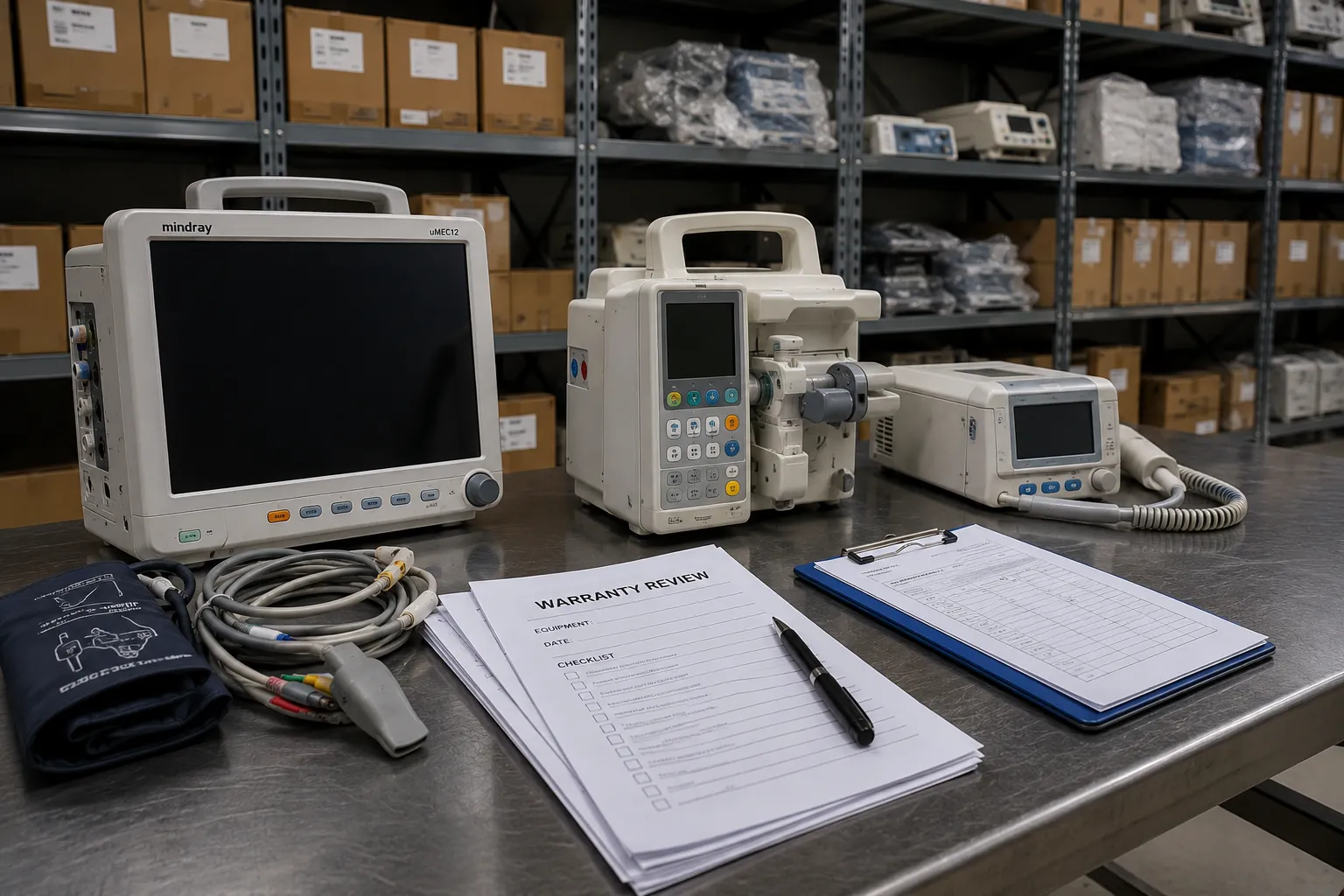
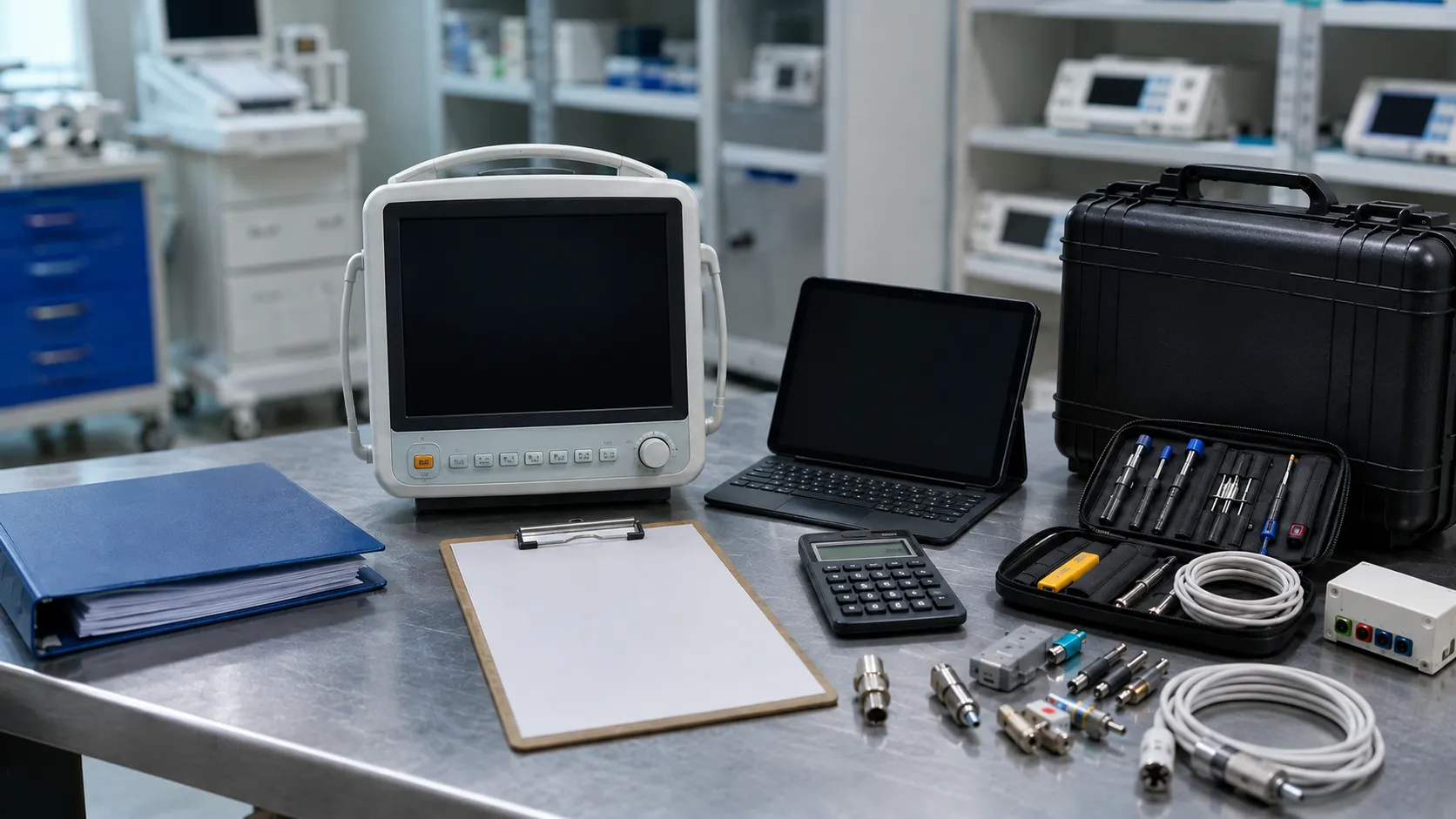
Hospital equipment service agreements define how medical devices will be inspected, maintained and repaired after purchase. Unclear agreements can leave hospitals responsible for unexpected labour, spare parts, travel, software or emergency repair costs.
For hospital equipment buyers and procurement teams, contract review should begin before the original warranty expires or a maintenance provider is appointed. The agreement should identify the exact equipment covered and the service outcomes the supplier must deliver.
Biomedical engineers, clinical managers, procurement specialists, finance personnel and legal or contract teams may each review different clauses. Their findings should be combined before approval.
A structured review helps healthcare organisations compare providers fairly, control lifecycle costs and maintain clearer accountability for equipment availability.
Define the Equipment and Required Service Scope
The agreement should begin with an accurate description of the equipment and the support required.
Equipment schedule — List the manufacturer, model, serial number, asset number, department and location of every covered unit.
Equipment condition — State whether each unit is new, refurbished, demonstration or already in operational service.
Contract period — Record the commencement date, expiry date and any automatic-renewal conditions.
Service level — Define whether the agreement provides preventive maintenance, corrective repair, comprehensive coverage, or only selected support.
Operating environment — Consider equipment usage, operating hours, mobility and clinical criticality when setting service requirements.
Manufacturer status — Confirm whether the provider is the manufacturer, an authorised distributor or an independent service organisation.
Coverage location — State whether service applies at the hospital, an external workshop or both.
Excluded equipment — Identify accessories, modules, batteries, software or connected systems that are outside the agreement.
In practice, healthcare buyers often find that the contract title suggests comprehensive support while the detailed schedule covers only selected units or services.
The equipment schedule should be checked against the hospital asset register before the agreement is signed.
Assign Responsibilities Across Departments and Providers
Service agreements should explain what the hospital and provider must each complete.
Biomedical engineering team — Technical personnel may coordinate fault reporting, engineer access, maintenance records and return-to-service approval.
Clinical department — Users may be responsible for basic checks, correct operation, cleaning and timely reporting of faults.
When assessing specialist medical equipment suppliers and service providers, hospitals should confirm their authority, technical capability and access to appropriate parts and documentation.
Procurement team — Buyers should manage pricing, contract changes, renewals and supplier performance discussions.
Facilities team — Fixed equipment may require coordination of electrical, ventilation, water, drainage or room access.
Digital team — Connected devices may require network access, backups, software testing and cybersecurity coordination.
Service provider — The contract should define the responsibilities for engineers, tools, documentation, parts and technical escalation.
Manufacturer escalation — The agreement should explain how complex or recurring faults are referred to the original manufacturer.
Third-party responsibilities — External calibration, software or specialist repair providers should be identified where relevant.
Experienced hospital equipment managers typically use a responsibility matrix to prevent delays caused by unclear ownership.
Examine Maintenance, Repair and Documentation Terms
The technical clauses should describe how routine and unexpected service work will be completed.
Preventive maintenance frequency — State whether visits are time-based, usage-based or linked to manufacturer instructions.
Maintenance tasks — Require enough detail to show which inspections, tests, adjustments and replacements are included.
Scheduling process — Define who arranges visits and how far in advance departments will be notified.
Corrective repair coverage — Confirm whether diagnosis, labour and repair work are included.
Response acknowledgement — Record how quickly the provider must confirm receipt of a fault report.
Remote support — Clarify whether telephone, video or remote diagnostic assistance is included.
Engineer attendance — Define the maximum period for an engineer to attend the hospital after an eligible fault.
Repair target — Distinguish attendance from the expected time to restore the equipment to service.
Service hours — State whether coverage applies during working hours, extended hours, weekends or continuously.
Calibration coverage — Confirm whether calibration is included and whether suitable certificates will be issued.
Service reports — should identify the equipment, findings, work completed, parts used, and outstanding actions.
Return-to-service approval — Define who confirms that repaired equipment can safely re-enter operation.
One aspect that surprises first-time buyers is that rapid engineer attendance does not necessarily include a commitment to complete the repair within the same period.
Response and restoration targets should therefore be written as separate service measures.
Compare Pricing, Exclusions and Supplier Commitments
Commercial clauses should show the complete cost and limits of the service arrangement.
Agreement price — Confirm whether the amount applies per unit, department, equipment group or complete hospital fleet.
Included labour — Check whether preventive maintenance, diagnosis, repair and travel time are covered.
Accuracy of service claims — Medical equipment companies advertising support services to healthcare buyers should ensure that advertised response times and coverage match their formal agreements.
Spare-parts coverage — Identify whether all parts, selected parts or no parts are included.
Common exclusions — Review exclusions for batteries, probes, cables, sensors, consumables, accidental damage and misuse.
Travel and accommodation — International or remote support agreements should specify who pays for engineers' travel and related costs.
Freight responsibility — Clarify who pays for equipment or parts sent to an external repair centre.
Software charges — Confirm whether updates, licences, subscriptions and interface support are included.
Price adjustment — Review how and when the provider may increase the agreement price.
Payment schedule — Link payments to agreed periods or measurable service stages where appropriate.
Early termination — Check notice requirements, outstanding fees, and implications for equipment support.
Liability and insurance — Review responsibility for service-related damage, delayed repairs and loss of equipment.
Healthcare organisations coordinating multi-site support may benefit from structured international partnerships for medical equipment services.
Each agreement should still define its own equipment schedule, response commitments, exclusions and pricing structure.
Monitor Service Delivery and Equipment Performance
The hospital should use contract data to confirm whether the provider delivers the agreed service.
Maintenance completion — Track planned visits, completed tasks and overdue inspections.
Response-time performance — Compare fault acknowledgement and engineer attendance with contractual targets.
Repair completion — Record how long equipment remains unavailable and why repairs are delayed.
Repeat failures — Review recurring faults that may indicate incomplete repairs or equipment deterioration.
Parts availability — Monitor delays caused by unavailable or discontinued components.
Service-report quality — Check whether reports contain clear findings, actions and recommendations.
Equipment uptime — Measure availability for equipment where operational continuity is critical.
Department feedback — Gather information from users about communication, reliability and unresolved problems.
Invoice verification — Confirm that additional charges are permitted under the agreement before payment.
Corrective-action tracking — Assign owners and deadlines for unresolved technical or supplier issues.
Supplier meetings — Review performance regularly rather than waiting until contract expiry.
Asset-record updates — Add maintenance and repair information to the hospital’s equipment history.
Service monitoring should focus on measurable outcomes rather than the number of engineer visits alone.
Control International Support and Contract Renewal
International equipment support may require additional terms covering logistics, access and escalation.
Local engineer availability — Confirm whether qualified engineers are available near the healthcare facility.
Remote technical access — Connected support should follow the hospital’s approved information-security controls.
Parts location — Identify whether critical parts are held locally, regionally or at the manufacturer.
Customs responsibilities — Record who manages documentation and charges when parts or equipment cross borders for repair.
Replacement equipment — Confirm whether temporary or loan equipment is available during extended repairs.
Language support — Service communication and reports should be suitable for the hospital’s responsible teams.
Contract review date — Begin evaluation early enough to avoid an unintended gap in maintenance coverage.
Renewal evidence — Use fault history, uptime, parts delays, costs and department feedback to assess renewal.
Renegotiation priorities — Strengthen weak response, documentation, software or spare-parts clauses before extending the contract.
Exit arrangements — Require the provider to transfer open service records and return hospital property after termination.
Final approval — Obtain technical, procurement and financial approval for renewal, replacement or contract closure.
Healthcare buyers seeking service agreements, equipment support, or international maintenance coordination can contact the Medigear.uk team for assistance with medical equipment. Enquiries should include the equipment type, manufacturer, model, quantity, location and required service coverage.
Contract renewal should be based on verified performance and future support requirements rather than automatic continuation.
Final thoughts
Hospital equipment service agreements should provide clear, measurable support for preventive maintenance, repairs and technical escalation.
Healthcare buyers should verify the equipment schedule, service frequency, response targets, spare parts coverage, software support, and exclusions. Pricing should be compared against the complete scope rather than the headline contract amount.
Service reports and performance data should be reviewed throughout the agreement period.
A controlled review process helps hospitals reduce unexpected costs, improve supplier accountability and maintain stronger equipment lifecycle records.
Disclaimer
Medigear.uk is a global medical equipment supplier, exporter, and distributor. The content published on this site is intended for educational and product awareness purposes only. Nothing on this page constitutes medical advice, clinical guidance, or treatment recommendations. All healthcare procurement and clinical decisions should be made by qualified medical professionals and compliant procurement teams operating within the regulatory frameworks of their respective countries.