
Introduction
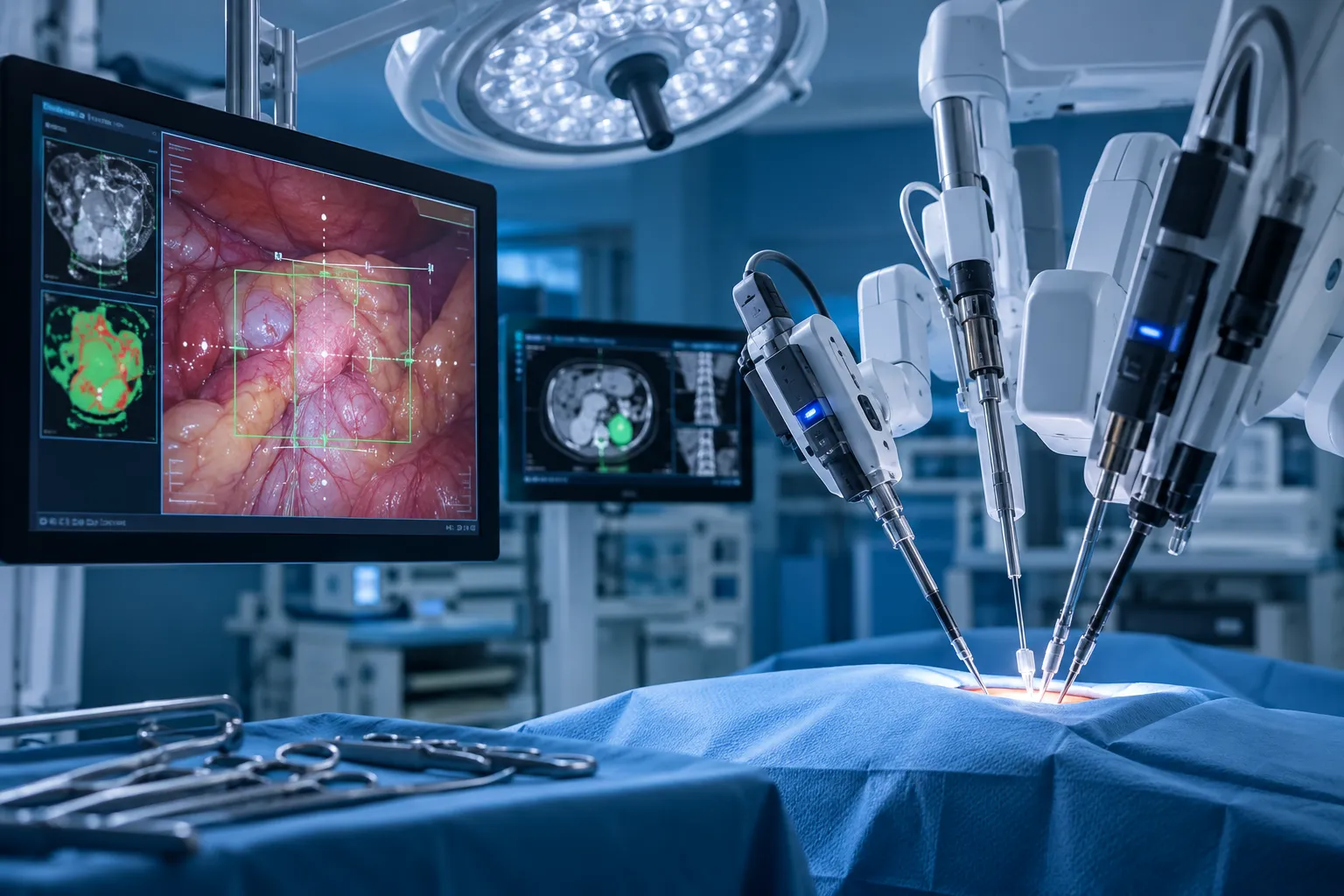
Of all the senses, surgery depends most on sight. The surgeon works from what they can see, and increasingly that view comes through a camera—a laparoscope inside the body, the vision system of a robot. Computer vision, the branch of artificial intelligence that lets software interpret images, is turning that camera from a simple window into something that can genuinely understand what it shows.
This article explains how computer vision is advancing surgical equipment specifically —how it makes sense of the operative image, and what that makes possible. It is written for surgical, procurement and biomedical engineering teams across the UK, Europe, the US, the Gulf and South Africa who want to understand the seeing technology now being built into the tools of the theatre.
The short version
-
Computer vision lets surgical equipment interpret the images, not just display them
-
It can recognise anatomy and instruments in the live surgical view.
-
It enables guidance overlays, measurement and awareness of the procedure's steps.
-
It advises and highlights; the surgeon keeps complete control.
From a window to an understanding
For a long time the camera in surgery was exactly that: a window, faithfully relaying an image for the surgeon to interpret. Computer vision changes what the camera is. By analysing the live image, software can begin to make sense of the scene—telling one tissue from another, recognising an instrument, and tracking how the view changes as the operation proceeds.
This shift, from showing to understanding, is the foundation of everything computer vision brings to surgical equipment. A camera that merely displays is passive; one whose software understands what it is looking at can offer help a passive view never could. Almost every advance in this field flows from that single capability to interpret the operative image.
Recognising anatomy and instruments
The most fundamental skill is recognition. Trained on large numbers of surgical images, computer vision can learn to identify structures in the view—distinguishing tissues, picking out an instrument, recognising landmarks the surgeon navigates by. This is genuinely hard, because the surgical scene is messy, changeable and unlike the tidy pictures software usually deals with, which is why progress here is so significant.
Once equipment can recognise what it is seeing, useful things follow. It can highlight a structure that must be protected, track where an instrument is, and understand the anatomy the surgeon is working within. Recognition turns the raw image into something the equipment can reason about, and that reasoning is what makes it helpful rather than merely decorative.
Drawing guidance onto the view
One of the most striking advances is the ability to add helpful information directly onto the surgical image. Because the software understands the scene, it can overlay guidance where it belongs — marking a structure, indicating a boundary, drawing attention to something of note — so the surgeon sees the help in the context of the operation rather than on a separate screen. This blending of real image and useful overlay is a form of augmented reality, and the FDA recognises augmented and virtual reality as a distinct area of medical devices.
Presented well, such overlays can make an operation clearer and safer, keeping key information in the surgeon's line of sight when it matters. Presented poorly, they clutter and distract, which is why the design of these systems matters as much as the underlying vision. The goal is always a clearer view, never a busier one.
What computer vision enables in surgery
|
Capability |
What it does |
Why it matters |
|
Recognition |
Identifies tissue and tools |
The image becomes meaningful |
|
Overlays |
Draws guidance onto the view |
Helps where the surgeon looks |
|
Measurement |
Gauges size and distance |
Objective, in-view information |
|
Phase awareness |
Tracks the step underway |
Timely, relevant assistance |
Measuring and understanding the operation
Computer vision also lets equipment measure from the image, gauging size or distance directly from what the camera sees —giving the surgeon objective information in the moment rather than an estimate by eye. By following the operation over time, it can recognise which phase of a procedure is underway, opening the door to assistance timed precisely to the step at hand.
Understanding the steps of an operation has value beyond the theatre too. A system that can break a recorded procedure into its phases makes surgical video far easier to review and teach from, turning the ordinary capture of an operation into a resource for training and refining technique. The camera that understands becomes a teacher as well as a guide.
The surgeon still holds the scalpel.
For all its sophistication, computer vision in surgery advises; it does not act. It highlights, measures, overlays and recognises, but every decision and every movement remains the surgeon's. This is not a limitation to be engineered away but a principle to be protected, because the consequences of a wrong action in surgery are immediate and grave.
The safeguards that keep this sound are clear, and worth insisting on:
-
The surgeon decides and acts; the vision system only informs.
-
Overlays and prompts are clear and timely, never cluttering the view.
-
The system was validated on varied, realistic surgical images.
-
Its approved intended use matches exactly how it is being used.
-
Performance is monitored, since a model can falter on the unusual case.
Held to the theatre's standards
Because these tools shape decisions in a high-stakes setting, they are held to real standards. When computer vision software serves a medical purpose, it is a regulated medical device; in Great Britain, the MHRA sets out how it is classified, and the FDA takes a similar approach in the United States. As with any surgical AI, the sensible questions are what it was trained and validated on, how it copes with difficult cases, and how its performance is monitored once it is in use.
Learning from a library of operations
Computer vision doesn't just help during an operation; it helps after many of them. Because it can make sense of surgical video, it opens the door to learning across a large library of recorded procedures, understanding what tends to go smoothly, where difficulty commonly arises, and how technique varies. Analysed carefully, this turns routine surgical recording into a resource for steady improvement.
Used thoughtfully, this feeds back into training and practice. Trainee surgeons can review operations broken into steps, study difficult moments, and let the accumulated experience of many procedures inform how they approach the next. It is a longer-term benefit than the in-the-moment guidance. Still substantial, and much of the research behind doing it responsibly is pursued by institutions devoted to trustworthy AI.
Designed to fit the way surgeons work
The difference between computer vision that helps and computer vision that hinders often comes down to design. In the intense, fast-moving environment of the theatre, a system that presents its understanding clearly and at the right moment is invaluable. At the same time, one that clutters the view or interrupts the flow is quickly switched off. How the technology fits the surgeon's work matters as much as how clever it is.
This is why the surgeons who will use these systems belong in the decisions to adopt them. They will see at once whether a tool genuinely aids the flow of a real operation or merely impresses in a demonstration, in a way no specification reveals. Their judgement, brought in early, is what separates surgical computer vision that becomes trusted from that which gathers dust.
A camera that finally understands
Computer vision is advancing surgical equipment by transforming the camera from a passive window into something that understands what it shows — recognising anatomy and instruments, drawing guidance onto the view, measuring, and following the operation's steps. Kept firmly in a supporting role, with the surgeon always holding the scalpel, that understanding gives the theatre a clearer, better-informed view, which in surgery is worth a great deal.
More from Business
-
Buyers — source approved, well-documented equipment.
-
Suppliers — list your equipment and reach buyers worldwide.
-
Advertise — promote your products and services to a clinical audience.
-
Business overview — explore everything MediGear offers healthcare organisations.
Disclaimer
This article is general information, not clinical or procurement advice. Surgical computer-vision software should be used within its approved intended use and under qualified surgical supervision; confirm current requirements with the relevant authority. medigear.uk accepts no liability for actions taken based on this content.
Surgical equipment you can build on
Genuine, approved, well-documented surgical equipment — the dependable foundation any surgical computer vision is built on, wherever you operate.
Frequently Asked Questions
By letting the surgical camera interpret images rather than display them. Trained on many surgical images, computer vision can recognise anatomy and instruments in the live view, draw guidance onto the image, measure from it, and follow the steps of the operation. It advises and highlights; the surgeon keeps complete control.
It is the ability to identify structures in the operative view — distinguishing tissues, picking out an instrument, recognising landmarks the surgeon navigates by. This is hard, because the surgical scene is messy and changeable. Still, once equipment can recognise what it is seeing, it can help protect structures, track instruments and reason about the anatomy.
Because the software understands the scene, it can overlay helpful information directly onto the surgical image — marking a structure, indicating a boundary, drawing attention to something of note — so the surgeon sees the help in the context of the operation rather than on a separate screen. This blending of real image and overlay is a form of augmented reality.
Yes. It can gauge a size or a distance directly from what the camera sees, giving the surgeon objective information in the moment rather than an estimate by eye. By following the operation over time, it can also recognise which phase is underway, enabling assistance timed precisely to the step at hand.
No. It advises; it does not act. It highlights, measures, overlays and recognises, but every decision and every movement remains the surgeon's. This is a principle to be protected rather than engineered away, because the consequences of a wrong action in surgery are immediate and grave.
Yes. When such software serves a medical purpose, it is a regulated medical device, classified and overseen for its intended use. The sensible questions are what it was trained and validated on, how it copes with the difficult case, and how its performance is monitored in use, with the surgeon always in control.