
Introduction
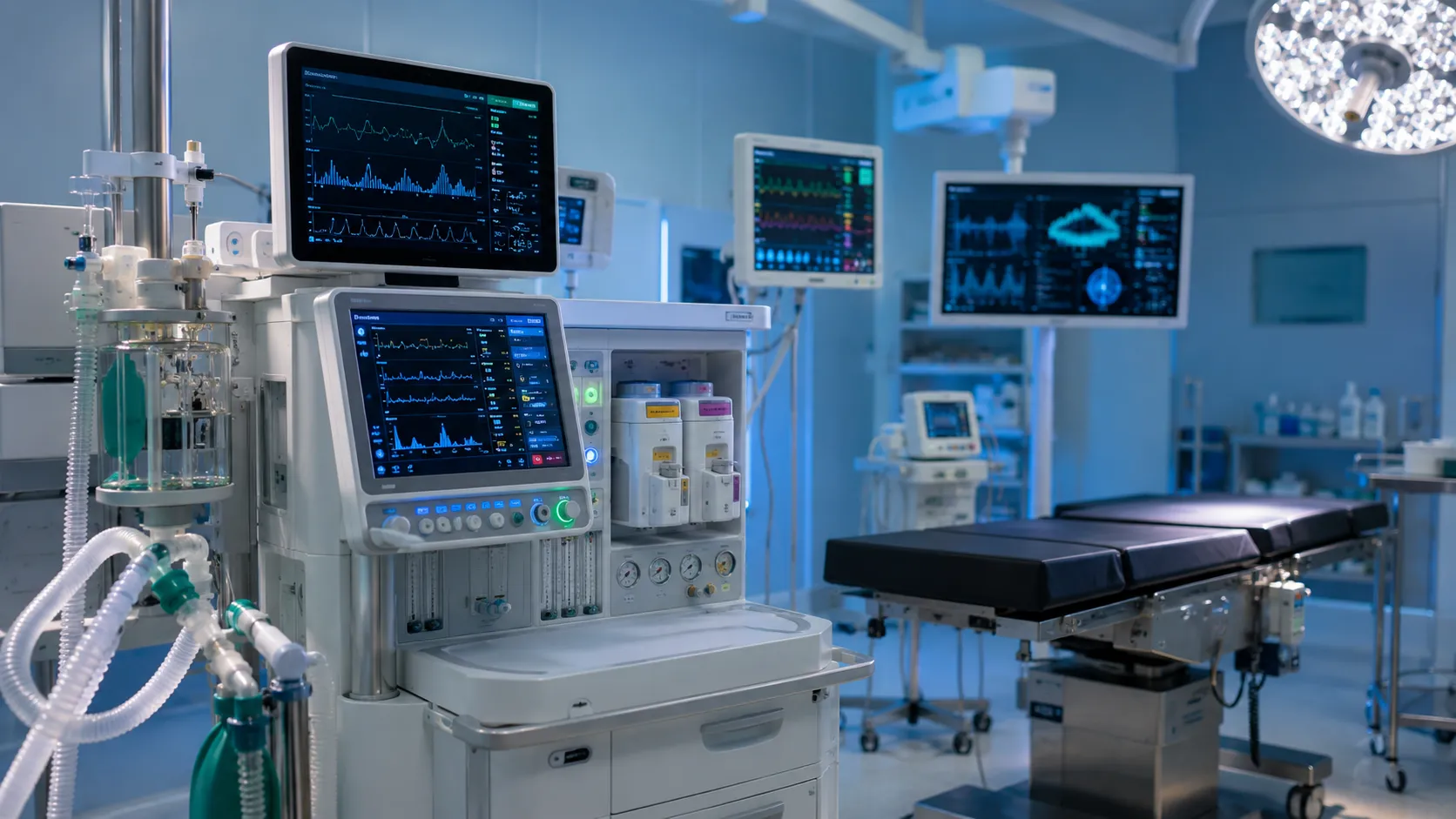
Anaesthesia is a feat of controlled precision: keeping a patient safely unconscious, comfortable and stable through the trauma of surgery, while watching over the most basic functions of life. It demands constant, expert vigilance, and it is into that vigilance — never in place of it — that artificial intelligence is quietly being woven.
This guide explains what artificial intelligence in anaesthesia equipment does, where it helps, and the caution this most safety-critical setting demands. It is written for anaesthesia, procurement and biomedical engineering teams across the UK, Europe, the US, the Gulf and South Africa who want to understand how AI supports the anaesthetist without ever taking the controls.
The short version
-
AI in anaesthesia equipment supports the anaesthetist's watching and steering.
-
It can help judge depth of anaesthesia and predict events before they happen.
-
It can assist in the fine control of drug delivery, always under the anaesthetist.
-
In this safety-critical setting, the human stays firmly and always in control.
A role of relentless vigilance
The anaesthetist's work during an operation is one of unbroken attention: reading a bank of monitors, adjusting the depth of anaesthesia, steadying blood pressure and breathing, anticipating trouble and heading it off. It is demanding precisely because it must be sustained without lapse, often for hours, through the ups and downs of surgery.
This is where artificial intelligence fits in. By watching the same signals continuously and bringing them together, it can support that vigilance—noticing a developing pattern, flagging a concern, and easing the mental load of holding everything in mind at once. It does not relax the anaesthetist's attention; it reinforces it, adding a tireless helper alongside a highly trained human.
Judging the depth of anaesthesia
One established role is helping judge how deeply anaesthetised a patient is. Too light, and a patient may be distressed or aware; too deep, and there are risks of their own. Getting the depth right, and holding it steady, is a central task, and AI-supported monitoring can help interpret the signals that reflect it, giving the anaesthetist a clearer read on where the patient sits.
Better information here translates into steadier, more tailored anaesthesia. With a clearer picture of depth, an anaesthetist can keep a patient in the right zone more precisely, using no more anaesthetic than necessary and reducing the swings that can unsettle a patient during and after surgery. The judgement remains the anaesthetist's; the information supporting it is sitter.
Seeing trouble before it arrives
A particularly valuable role is anticipation. Some of the events an anaesthetist most wants to avoid — a sharp fall in blood pressure, for instance — are often preceded by subtle changes across several signals that build in the minutes beforehand. AI trained on such patterns can warn that an event may be coming, giving the anaesthetist a chance to act before it takes hold rather than after.
Those extra moments matter enormously in a setting where things can change fast. A warning that lets an anaesthetist steady a patient before a problem fully develops is prevention rather than rescue, and prevention is almost always gentler and safer. Here, as elsewhere in anaesthesia, the value of AI is bought in the currency of time.
Where AI helps in anaesthesia
|
Task |
What AI adds |
Why it matters |
|
Depth monitoring |
Clearer read on anaesthetic depth |
Steadier, tailored anaesthesia |
|
Event prediction |
Warns of trouble early |
Prevention, not rescue |
|
Delivery support |
Assists fine drug control |
Precise, responsive dosing |
|
Vigilance |
Draws many signals together |
Eases the mental load |
Helping steer the anaesthetic
Beyond watching, AI can help steer. Modern anaesthesia delivery can be finely and responsively controlled, and intelligent systems can assist that control — helping adjust delivery to keep a chosen target steady, within limits and always under the anaesthetist's supervision. The aim is smoother, more precise anaesthesia, with the technology handling fine, continuous adjustment while the clinician sets the goals and holds the authority.
This kind of assisted control must be bounded with great care. The anaesthetist defines what the system may do, supervises it throughout, and can override or take over instantly. Used within firm limits, such support can relieve the anaesthetist of constant minor adjustments and free their attention for judgement, which is exactly where a human is irreplaceable.
The human must stay in control.
Nowhere is the principle that AI advises while a human decides more absolute than in anaesthesia. The patient is utterly dependent, the margins can be fine, and a wrong action can harm within moments. So every use of AI here is designed around an anaesthetist who remains fully in command, using the technology as an aid and never surrendering control to it.
The principles worth insisting on are clear:
-
The anaesthetist supervises continuously and can override instantly.
-
Any assisted delivery operates only within firm, defined limits.
-
The tool was validated on relevant patients and monitored over time.
-
Its approved intended use matches exactly how it is being used.
-
Alarms and prompts are clear and timely, not cluttering the moment.
Easing the load in a demanding job: a human benefit deserves mention. Anaesthesia demands sustained concentration through long, unpredictable operations, and fatigue is a real and recognised risk in such work. By shouldering part of the continuous watching — tracking trends, flagging concerns — AI can ease some of that mental load, helping an anaesthetist stay fresh for the judgements that truly need a human mind.
This is not about doing less; it is about spending attention where it matters. When a tireless system handles routine monitoring, the anaesthetist is freer to think ahead, notice the things no algorithm would, and care for the whole patient. A well-supported anaesthetist is a safer one, and that is a benefit worth having in every theatre.
Better information, steadier anaesthesia
It is worth adding that this depends, as ever, on the quality of what the equipment measures. Sound monitoring and a well-maintained anaesthetic machine are the bedrock; the intelligence layered on top is only as trustworthy as the signals feeding it, which is one more reason the equipment itself must never be an afterthought.
Much of what AI offers in anaesthesia comes down to better information, presented at the right moment. Anaesthesia is guided by a stream of signals, and drawing them together into a clearer picture — what is happening, what is changing, what may be coming — helps the anaesthetist make better-founded decisions than any single number allows.
Better information tends to translate into steadier anaesthesia: fewer surprises, gentler corrections, a smoother course for the patient. None of it changes who is in charge or what anaesthesia fundamentally is; it simply gives a skilled clinician a sharper view of the patient in front of them, which in a fast-moving, high-stakes setting is genuinely valuable.
Held to the highest standards
Given the stakes, the governance around anaesthesia equipment is exacting, and AI within it inherits that rigour. When such software serves a medical purpose, it is a regulated medical device; in Great Britain, the MHRA sets out how it is classified, and the FDA frames the same ground in the United States. Anaesthesia equipment itself is built to demanding international standards, such as those the ISO sets for anaesthetic workstations, and any intelligence added to it must respect the same safety-first spirit.
Reinforcing vigilance, never replacing .it
Artificial intelligence in anaesthesia equipment is not an autopilot; it reinforces the anaesthetist's vigilance—reading depth more clearly, warning of trouble sooner, and assisting the fine control of a delicate anaesthetic. In the most safety-critical corner of the hospital, kept firmly under human command and held to the highest standards, that support can make already-expert care a little safer and steadier, one operation at a time.
More from Business
-
Buyers — source approved, well-documented equipment.
-
Suppliers — list your equipment and reach buyers worldwide.
-
Advertise — promote your products and services to a clinical audience.
-
Business overview — explore everything MediGear offers healthcare organisations.
Disclaimer
This guide is general information, not clinical or procurement advice. Anaesthesia AI must be used within its approved intended use and under continuous qualified anaesthetic supervision; confirm current requirements with the relevant authority. medigear.uk accepts no liability for actions taken based on this content.
Anaesthesia equipment you can build on
Genuine, approved, well-documented anaesthesia equipment — the dependable foundation any anaesthesia AI is built on, wherever you work.
Frequently Asked Questions
It supports the anaesthetist's watching and steering. AI can help judge how deeply anaesthetised a patient is, warn of events such as a fall in blood pressure before they take hold, and assist the fine control of drug delivery within firm limits. It reinforces the anaesthetist's vigilance rather than replacing it, and the human stays firmly in control.
Keeping a patient neither too light nor too deep, and holding that steady, is a central task. AI-supported monitoring can help interpret the signals that reflect anaesthetic depth, giving the anaesthetist a clearer read on where the patient sits. Better information means steadier, more tailored anaesthesia, using no more anaesthetic than necessary — while the judgement stays the anaesthetist's.
Yes. Some events an anaesthetist most wants to avoid, such as a sharp fall in blood pressure, are often preceded by subtle changes across several signals that build beforehand. AI trained on such patterns can warn that an event may be coming, giving the anaesthetist a chance to act before it takes hold — prevention rather than rescue, which is almost always gentler and safer.
Only as assisted control under strict supervision. Intelligent systems can help adjust delivery to keep a chosen target steady within firmly defined limits. Still, the anaesthetist sets the goals, supervises continuously, and can override or take over instantly. The technology handles fine continuous adjustment; the clinician holds the authority at all times.
It is designed to be, through firm limits and constant human command. Anaesthesia is the most safety-critical of settings, so every use of AI is built around an anaesthetist who remains fully in control, using the tool as an aid. Any assisted delivery operates only within defined limits, and the tool must be validated, monitored and used within its approved intended use.
Rigorously. When such software serves a medical purpose, it is a regulated medical device, classified and overseen on its intended use. Anaesthesia equipment is built to demanding international standards, such as those for anaesthetic workstations, and any intelligence added to it must respect the same safety-first spirit, with continuous qualified supervision in use.