
Introduction
Buying medical imaging equipment used to be a question about hardware — the scanner, its performance, its reliability. It still is, but a second question now sits alongside the first: the artificial intelligence that increasingly comes with the machine. That software carries its own promises, its own evidence and its own rules, and a buyer who assesses the scanner but waves the AI through is only doing half the job.
This buyer guide walks through how to assess AI in medical imaging equipment before you commit — what to check, what to ask a supplier, and how the rules work — so you can tell a genuinely useful tool from a well-marketed one. It is written for procurement, radiology and biomedical engineering teams across the UK, Europe, the US, the Gulf and South Africa who want to buy imaging AI with their eyes open.
The short version
-
AI now comes bundled with imaging equipment and must be assessed, not assumed.
-
Start with its approval and cleared intended use — they define what it may do.
-
Demand real evidence that it works on patients and scanners like yours.
-
Treat the purchase as a long relationship, not a one-off transaction.
What you are actually buying
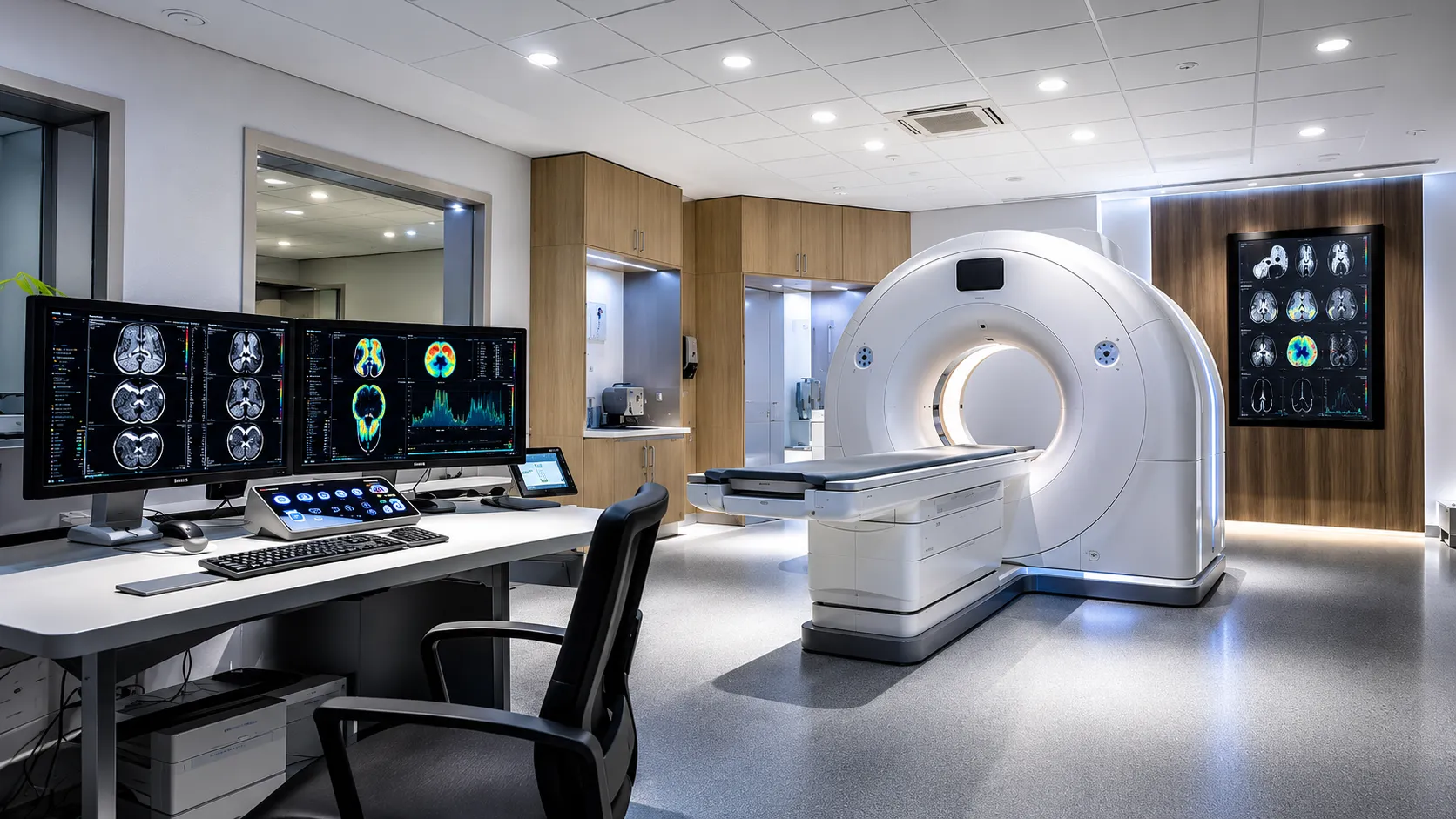
The first step is to be clear about what the AI in a piece of imaging equipment really is. In almost every case it is software that reads what the scanner produces — reconstructing an image, flagging a possible finding, sorting a worklist, measuring a feature — and helps a clinician act on it. It is a layer of interpretation sitting on top of the imaging hardware, not a replacement for the radiologist and not, usually, the thing making the diagnosis.
Understanding this shapes the whole purchase. You are buying two things that must both be sound: a scanner that captures good images, and software that reads them well. They are assessed differently, held to different evidence, and can succeed or fail independently. A mediocre scanner still limits a brilliant algorithm; a fine scanner with an unproven algorithm carries the algorithm's risk. Keep the two clearly separate in your mind, and the decision becomes far easier to reason about.
Start with approval and intended use.
Begin where it is tempting to finish. When software uses AI for a medical purpose, it is a regulated medical device and must hold the appropriate approval for your market before it goes anywhere near a patient. In Great Britain, the MHRA oversees this and sets out how these products are classified; in the United States, the FDA has the same responsibility, and in the EU these tools fall within the wider medical device regime.
Approval alone, though, is not the whole answer. The crucial detail is the cleared intended use, which defines what the tool is actually permitted to do. A tool approved to triage a worklist is a different product from one approved to help interpret a study, even if they look identical in a demonstration. Read that intended use closely and match it against your real plan; if they do not line up, the tool is wrong for you, however impressive it appears.
Demand the evidence
Every imaging AI tool arrives with a claim, and your task is to get behind it. The single most useful question is what data the tool was trained and validated on, and whether those patients and those scanners resemble yours. This is not a technicality. A model learns only from what it has seen, so one validated on a narrow population, or on different equipment, can quietly perform worse for the people and machines outside that experience.
So ask directly, and expect specifics. How large was the validation study? Who was in it? How does the tool perform for the groups you imagine most, and on scanners like yours? How is that performance monitored once the tool is live in the real world? A supplier who has done the work will have this ready. Vague reassurance, or evidence that cannot be produced, is itself the answer — and the answer is caution.
What to confirm before you buy
-
Approval and intended use. Confirm it is approved for your market and cleared to do exactly what you plan.
-
Evidence. Check what data it was validated on and how it performs on your patients and scanners.
-
The scanner underneath. Assess the imaging hardware to your usual standard — the AI depends on it entirely.
-
Integration. Confirm how it joins your systems, records and reading workflow.
-
Whole-life support. Agree how it is monitored, updated and secured, and who is accountable if it slips.
The scanner underneath still matters most.
It is worth stating plainly, because AI marketing can obscure it: no algorithm rescues a poor scan. The AI can only read the data the scanner produces, so poor input gives poor output,t whatever the software. This means the imaging hardware matters more once AI is involved, not less, because everything the clever software does rests upon it.
In practice, then, do not let an impressive AI demonstration distract you from assessing the scanner itself as rigorously as you always have. Buy a genuinely good imaging device first, and treat the AI as a valuable but separate layer on top of a sound foundation. Get that order right, ht and the whole purchase stands on firm ground.
Questions worth putting to a supplier
|
Ask about |
The question |
A good sign |
|
Approval |
Which market approval, and for what intended use? |
A clear, documented answer |
|
Evidence |
What data was it validated on, and does it fit our patients and scanners? |
Specifics, not slogans |
|
Integration |
How does it join our systems and reading workflow? |
A concrete, tested route |
|
Monitoring |
How is performance tracked after we go live? |
A defined process |
|
Support |
What updates, security and accountability come with it? |
Written into the deal |
Fit and the working day
A capable tool that no one can slot into the working day will sit idle, so integration and training deserve as much weight as accuracy. Ask how the tool connects to your existing imaging equipment and records, how its findings reach the radiologist, and how much retraining the team needs to trust and use it. Bring the people who will actually use it into the decision early — they will spot a workflow problem a demonstration hides.
This is not a soft consideration. Many perfectly good tools fail not because they don't work, but because they don't fit — they add a click, a detour, a separate screen, and busy people quietly stop using them. A tool that lands cleanly inside the existing workflow will earn its keep; one that fights the workflow will not, no matter how clever it is.
A long-term relationship, not a transaction
Because the intelligence lives in software, an imaging AI purchase is really the start of a long relationship. These tools can drift, meaning their performance shifts as real-world data moves away from what they trained on, so buying one is a commitment to watching it over its life. Confirm how it is monitored, how updates are handled and signed off, and what the security and data-protection commitments are, since patient images are involved.
Pin down, too, who is accountable if performance slips. Good machine learning practice, agreed by regulators internationally, treats this whole-life view as part of doing the job properly, and so should your contract. The FDA maintains guidance on medical imaging that helps frame these judgements, and the questions it raises are exactly the ones a careful buyer should be asking anyway.
Who should be in the room?
One last point quietly decides whether any of this works: buying AI imaging equipment is not a solo procurement task. It needs more voices than a standard purchase — the radiologists who will read with the tool, a biomedical engineering or IT view so it fits the systems, and someone who can read the regulatory and information-governance side so it meets the rules. Get those perspectives together early, and you avoid the classic outcome: a capable, valuable tool that no one quite trusts, quietly gathering dust in a corner of the department.
Buy the AI as carefully as the scanner.
The arrival of AI has not changed the fundamentals of buying imaging equipment so much as added a second, equally serious question alongside the first. Assess the scanner as rigorously as ever, then assess the AI on its approval, its evidence, its fit and its whole-life support, and insist on the same honesty from suppliers for both. Do that, and you will buy imaging AI that genuinely helps your patients, rather than imaging AI that merely demonstrated well.
More from Business
-
Buyers — source approved, well-documented equipment.
-
Suppliers — list your equipment and reach buyers worldwide.
-
Advertise — promote your products and services to a clinical audience.
-
Business overview — explore everything MediGear offers healthcare organisations.
Disclaimer
This buyer guide provides general information, not clinical, procurement, or regulatory advice. AI imaging software is used only within its approved intended use and under qualified supervision; always confirm current requirements with the relevant authority. medigear.uk accepts no liability for actions taken based on this content.
Imaging equipment you can build on
Genuine, approved, well-documented imaging equipment — the dependable foundation any good imaging AI is built on, wherever you work.
Frequently Asked Questions
Start with the tool's regulatory approval and its cleared intended use. When software uses AI for a medical purpose, it is a regulated medical device and must be approved for your market; the intended use defines what it is allowed to do. A tool cleared to triage a worklist is not the same as one cleared to help interpret a study, so confirming this first stops you building a plan around a tool that is not permitted to do the job.
Ask what data the tool was trained and validated on, how large and representative it was, and how the tool performs on patients and scanners like yours. Ask for the regulatory documentation, the intended use statement, and how performance is monitored after sale. A credible supplier will have this ready; if the answers are vague or the evidence cannot be produced, treat that as a warning.
No — if anything,g the scanner matters more. The AI can only read the data the scanner produces, so poor input gives poor output, whatever the algorithm. Assess the imaging hardware to your usual rigorous standard first, then assess the AI as a separate regulated product on top of a sound foundation. Do not let an impressive AI demonstration distract from the scanner.
A capable tool that no one can slot into the working day will sit idle. Many good tools fail not because they don't work, but because they add a click, a detour, or a separate screen, and busy people quietly stop using them. Ask how findings reach the radiologist and how much retraining is needed, and bring the actual users into the decision early to spot workflow problems a demo hides.
Because the intelligence lives in software, it can drift — its performance shifts as real-world data moves away from what it trained on. So buying one is a commitment to monitoring it over its life. Confirm how it is monitored, how updates are handled and signed off, what the security and data-protection commitments are, and who is accountable if performance slips.
More voices than a standard purchase. Bring in the radiologists who will read with the tool to confirm it fits the workflow, a biomedical engineering or IT view to ensure it fits the systems, and someone who can speak to the regulatory and information-governance side to ensure it meets the rules. Getting those perspectives together early avoids buying a capable tool that no one quite trusts.