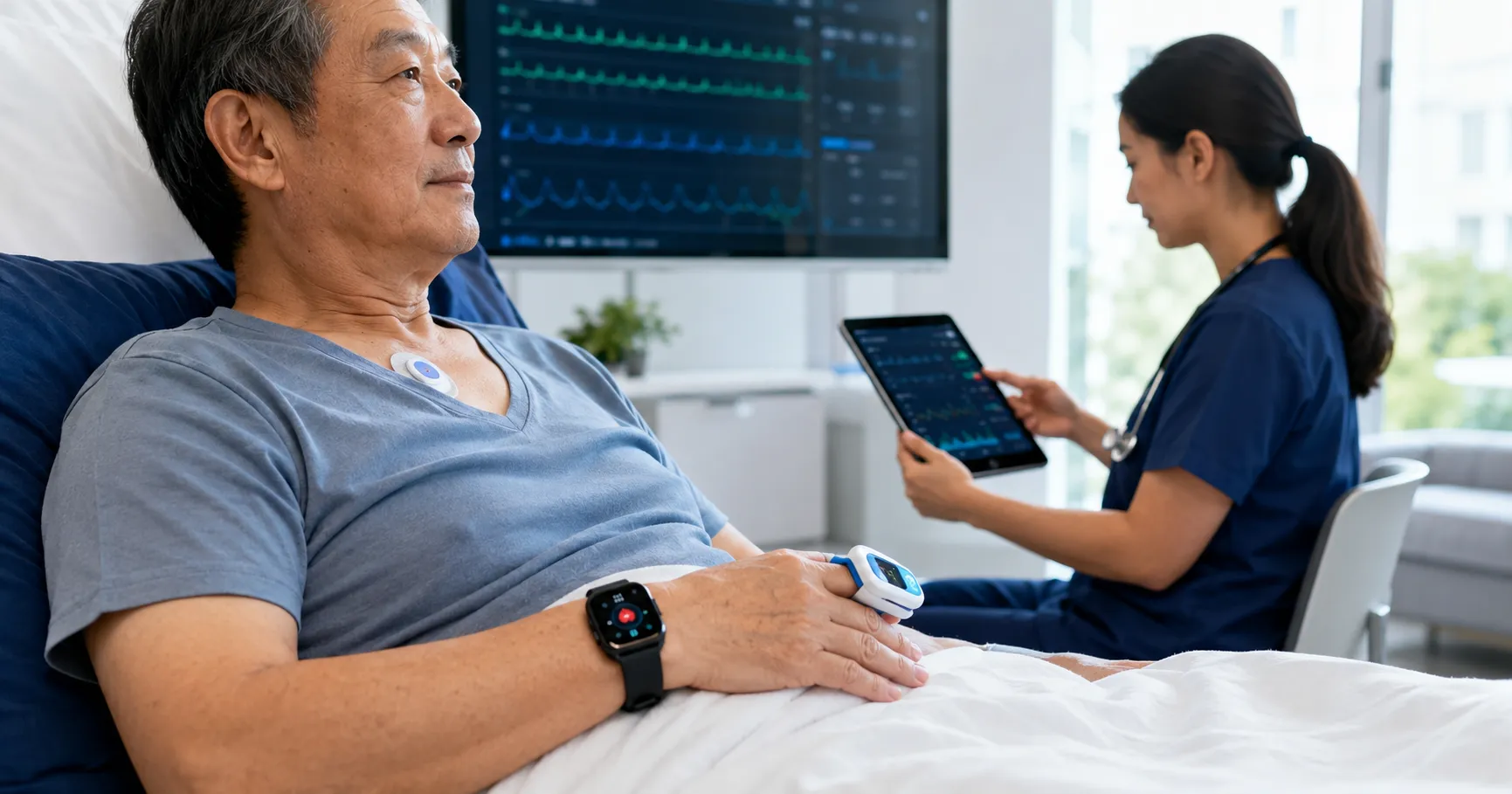
Wearable medical devices are becoming an important part of continuous patient monitoring. These devices are designed to be worn on the body. They may collect selected health data such as heart rate, oxygen saturation, ECG activity, temperature, movement, respiratory patterns, sleep-related information, glucose trends, or activity levels. In healthcare settings, wearable devices may support hospitals, clinics, home care teams, rehabilitation centres, remote monitoring programmes, and chronic disease management pathways.
For healthcare buyers, wearable medical devices should not be treated like normal consumer gadgets. Buyers need to review intended medical use, measurement accuracy, regulatory status, sensor quality, patient comfort, data security, connectivity, battery life, platform support, clinical workflow, service model, and compliance with applicable local regulatory standards. The FDA defines digital health technologies as systems that use computing platforms, connectivity, software, and sensors for healthcare and related uses, a definition that closely matches the structure of many wearable medical devices.
How Wearable Medical Devices Support Continuous Monitoring
Wearable medical devices support continuous monitoring by helping care teams collect patient data beyond a single bedside reading or clinic visit. Instead of measuring vital signs only at fixed intervals, wearable devices may provide repeated or continuous data that can reveal trends over time.
Continuous Data Collection — Some wearables collect data throughout the day or during specific monitoring periods. This can help clinicians review patterns rather than isolated readings.
Remote Visibility — Wearable devices may send data to a mobile app, a hospital dashboard, a cloud platform, or a remote monitoring team. This can support care outside the hospital when the programme is properly managed.
Earlier Trend Recognition — Repeated data may help identify changes in patient condition. Wearable wireless sensors may enable vital-sign monitoring with fewer staff interruptions and support home monitoring in selected care pathways.
Better Patient Engagement — Some patients may become more aware of their own health trends when wearable devices are part of a guided care plan. However, patients need education to understand what the readings mean and when to contact a healthcare professional.
Where Wearable Medical Devices Are Used
Wearable medical devices can be used in several healthcare environments. The right use depends on patient risk, monitoring goal, data quality, staff capacity, and clinical pathway design.
Hospital Wards — Wearable sensors may support selected vital-signs monitoring, mobility tracking, fall-risk awareness, or early-warning workflows. They should not replace direct clinical assessment.
Critical Care Step-Down Units — Patients leaving higher-acuity areas may still need close observation. Wearable devices can help support transition monitoring when escalation rules are clear.
Home Healthcare — Homecare teams may use wearables to monitor selected patients after discharge or during long-term care. Devices should be simple, comfortable, and reliable for patients and caregivers.
Chronic Disease Programmes — Cardiology, respiratory, diabetes, rehabilitation, neurology, and elderly care services may use wearable monitoring in selected patients. Reviews of wearable devices for chronic disease monitoring describe their roles across several clinical areas while also noting challenges with accuracy, integration, and patient engagement.
Remote Patient Monitoring Services — Wearable sensors may support virtual care models by sending readings to clinicians, care coordinators, or monitoring centres. Facilities sourcing through regulated and certified equipment suppliers worldwide should verify medical-device documentation, data-handling practices, platform compatibility, and support arrangements before procurement.
Common Types of Wearable Medical Devices
Wearable medical devices come in many forms. Some are designed for hospital use, while others support remote care or outpatient monitoring.
Wearable ECG Patches — ECG patches can collect heart rhythm data over a defined monitoring period. Buyers should review recording duration, data quality, report format, adhesive quality, software platform, and clinical review workflow.
Wearable Pulse Oximetry Sensors — These devices may track oxygen saturation and pulse rate. They may be used in respiratory care, post-discharge monitoring, sleep-related pathways, or selected home care programmes.
Wearable Blood Pressure Devices — Some wearable systems support blood pressure trend monitoring. Buyers should confirm validation, cuff design, patient comfort, and measurement accuracy.
Continuous Glucose Monitoring Devices — These devices help track glucose trends and support diabetes care pathways. Buyers should review sensor life, app compatibility, data sharing, patient education, and support needs.
Wearable Temperature Sensors — Temperature patches and sensors may support selected monitoring use cases. They should be evaluated for accuracy, attachment method, and clinical relevance.
Movement and Mobility Sensors — These devices may support rehabilitation, fall-risk monitoring, mobility assessment, and recovery tracking. They can be useful in rehabilitation centres and elderly care pathways.
Multi-Parameter Wearable Sensors — Some wearable devices combine heart rate, respiratory rate, temperature, oxygen saturation, ECG, movement, and other signals. These systems require more rigorous review because they generate more data and may trigger more alerts.
Key Features Healthcare Buyers Should Review
Wearable medical device procurement should focus on clinical usefulness, not only on technology appeal. A device may look advanced but fail if it is uncomfortable, inaccurate, difficult to connect to, or hard for staff to manage.
Measurement Accuracy — Buyers should request validation information, intended use, limitations, and accuracy data. Clinical monitoring devices require stronger evidence than general wellness devices.
Patient Comfort — Wearable devices must be comfortable enough for real use. Adhesive irritation, bulky sensors, tight straps, skin sensitivity, heat, sweat, and movement can affect adherence.
Battery Life — Continuous monitoring depends on reliable power. Short battery life can interrupt monitoring and increase staff workload.
Data Transmission — Devices may use Bluetooth, Wi-Fi, cellular connectivity, gateways, mobile apps, or cloud platforms. The transmission method should match the patient setting.
Clinical Dashboard Quality — Dashboards should clearly present useful trends, alerts, and patient status. Too much raw data can overwhelm care teams.
Device Cleaning and Reuse — Some sensors are single-use, while others are reusable. Buyers should confirm cleaning instructions, infection control requirements, and consumable costs.
Patient Training Needs — Home-use wearables should be easy to apply, charge, sync, and troubleshoot. Clear patient instructions are essential.
Benefits of Wearable Medical Devices
Wearable medical devices can provide value when they are part of a well-designed monitoring programme.
Better Trend Visibility — Continuous or repeated monitoring can help care teams see patterns over time. This can be more useful than a single reading taken during a short appointment.
Support for Remote Care — Wearable devices can help selected patients remain connected to care teams from home or community settings.
Improved Care Coordination — Nurses, physicians, technicians, and remote-monitoring staff can use wearable data to determine which patients may need follow-up.
Reduced Manual Recording — Connected wearables may reduce the need for repeated manual documentation when data flows accurately into dashboards or clinical systems.
Support for Rehabilitation and Recovery — Movement, activity, and mobility sensors may help rehabilitation teams review patient progress and adjust care plans.
Chronic Care Support — Wearables can help track selected physiological trends in long-term care pathways. Researchers describe wearable and mobile technologies as changing clinical care and research by enabling monitoring beyond traditional settings.
Risks and Limitations
Wearable medical devices should be adopted carefully. Continuous monitoring does not automatically mean better care unless data is accurate, reviewed, and acted on properly.
False Alerts — Poor alert settings can create too many notifications. This may lead to alert fatigue and reduce the quality of staff responses.
Missed Alerts — Connectivity loss, poor sensor contact, low battery, or incorrect device placement can cause missed data.
Data Overload — Wearables can generate large amounts of information. Healthcare teams need clear rules on which readings matter and who reviews them.
Patient Misuse — Patients may remove the device, wear it incorrectly, forget to charge it, or misunderstand alerts. Training and support are important.
Skin Irritation and Comfort Issues — Adhesive sensors and straps may cause discomfort, irritation, or poor adherence in some patients.
Consumer vs Medical Device Confusion — Not every wearable is suitable for clinical use. Buyers should distinguish medical devices from general fitness or wellness products.
Workflow Integration Problems — Wearable data may be difficult to use if it does not integrate with clinical dashboards, electronic systems, or staff routines.
Procurement Guidance for Wearable Medical Devices
Procurement of wearable medical devices should include clinical teams, biomedical engineers, IT teams, cybersecurity staff, data protection officers, finance teams, procurement staff, and care pathway leaders. Wearables should be selected based on real clinical need and operational readiness.
Total Cost of Ownership — Buyers should include device cost, disposable sensors, adhesive patches, batteries, chargers, gateways, software licences, cloud fees, training, replacements, data storage, integration, cybersecurity review, and support fees.
Clinical Purpose Review — The facility should define exactly why the wearable is needed. Monitoring heart rhythm, oxygen saturation, mobility, glucose trends, or temperature all require different device specifications.
Supplier Transparency — Suppliers and manufacturers advertising to global healthcare buyers should provide clear information on intended use, sensor accuracy, data transmission, software platform, cybersecurity controls, warranty, cleaning instructions, replacement parts, and training support.
Compliance and Documentation — Procurement teams should request product specifications, intended use, conformity documents, regulatory information where applicable, user manuals, cleaning instructions, cybersecurity documents, privacy information, software version details, and service policies. Compliance should be checked against applicable local regulations and standards, as well as CE, FDA, ISO, IEC, or their regional equivalents, where relevant.
Pilot Testing Before Scale-Up — Hospitals should test wearable devices with a small group of patients before wide deployment. A pilot can reveal comfort issues, data gaps, false alerts, app problems, charging issues, and staff workload concerns.
Healthcare groups managing several hospitals, clinics, or home care services may benefit from structured distribution and reseller partnership arrangements. Standardising wearable devices, dashboards, accessories, training, and support can reduce confusion across multiple sites.
Data Security and Cybersecurity Planning
Wearable medical devices often collect sensitive patient data. This makes data security and cybersecurity planning essential before purchase.
Access Control — Healthcare providers should define who can view wearable data, change alert settings, export reports, and manage patient accounts.
Secure Data Transmission — Buyers should ask whether data is encrypted during transfer and storage. The supplier should provide clear documentation.
Cloud and App Review — Many wearable systems use mobile apps or cloud dashboards. Buyers should review data hosting, retention, and backup, as well as user permissions and supplier access.
Remote Access Rules — Suppliers may need remote access for support or troubleshooting. This access should be controlled, logged, and approved.
Software Updates — Wearable devices and apps may need updates. The updated policy should be clear so changes do not disrupt monitoring.
Cybersecurity Documentation — FDA cybersecurity information states that its final guidance provides recommendations on medical device cybersecurity considerations and information to include in premarket submissions. This supports the need to review cybersecurity before connected wearable monitoring devices are deployed.
Implementation Planning for Healthcare Facilities
Wearable medical devices should be implemented as part of a clear clinical programme. Buying devices without a workflow can lead to unused technology, staff confusion, and a poor patient experience.
Select the Right Patient Group — Facilities should begin with patients where wearable monitoring supports a defined care goal.
Define Monitoring Parameters — Care teams should decide which readings matter, how often to review them, and what thresholds trigger action.
Create Alert Escalation Rules — Staff should know who receives alerts, who reviews them, how quickly they respond, and when to contact a patient.
Train Staff — Nurses, doctors, biomedical engineers, and remote monitoring teams should understand how to use the device, review dashboards, troubleshoot, a nd document procedures.
Train Patients and Caregivers — Patients should know how to use the device, charge it, sync data, prevent damage, and report any problems.
Review Early Performance — After launch, teams should review adherence, alert volume, data quality, device returns, support requests, and the impact on the clinical workflow.
Maintenance and Lifecycle Management
Wearable devices may look small, but they need proper maintenance planning. Sensors, batteries, chargers, straps, gateways, and software all affect performance.
Battery Checks — Battery health should be monitored, especially for reusable devices. Weak batteries can interrupt monitoring.
Accessory Replacement — Adhesives, straps, clips, chargers, cables, and sensor covers may need regular replacement.
Cleaning and Infection Control — Reusable devices should be cleaned according to the manufacturer's guidance and the facility's infection prevention policy.
Software Version Control — Apps, firmware, and dashboards should be updated according to a controlled process.
Device Return and Reissue Workflow — Facilities using wearable devices across multiple patients need a process for return, cleaning, inspection, charging, and reassignment.
End-of-Life Planning — Wearable devices may become unsupported when software, mobile apps, sensors, or cloud platforms change. Buyers should ask suppliers about the expected support life before purchase.
Wearables in Homecare and Remote Monitoring
Wearable medical devices can support home care and remote monitoring when the programme is well-designed. These devices may help patients remain connected to care and eams while reducing unnecessary travel. However, home use creates extra challenges.
Patient Digital Confidence — Some patients may struggle with apps, pairing, charging, or troubleshooting. Support must be available.
Connectivity Gaps — Weak mobile signal, poor Wi-Fi, app failure, or gateway issues can interrupt data flow.
Caregiver Involvement — Some patients may need caregiver support to apply sensors, charge devices, or respond to messages.
Device Loss or Damage — Home-use devices may be misplaced, dropped, exposed to moisture, or returned late.
Clear Clinical Boundaries — Patients should understand that wearable monitoring does not replace emergency care or direct clinical review when needed.
International Sourcing Considerations
Wearable medical devices can be sourced internationally when buyers clearly define clinical use, monitoring parameter, patient setting, sensor type, connectivity needs, software support, data policy, language requirements, documentation, warranty, replacement accessories, and service support. This is especially important for hospitals, clinics, home care providers, and remote monitoring programmes buying wearables at scale.
Buyers should confirm whether they need ECG patches, wearable pulse oximeters, temperature patches, glucose monitoring systems, mobility sensors, multi-parameter wearable monitors, gateway devices, cloud dashboards, or full remote monitoring kits. For project-based sourcing, buyers can contact the Medigear.uk team for supply support to discuss availability, documentation, export needs, and procurement requirements.
Future Role of Wearable Medical Devices
Wearable medical devices are likely to become more important as healthcare shifts toward connected care, remote monitoring, home-based services, and data-supported clinical workflows. Their future role will depend on accuracy, comfort, battery performance, cybersecurity, integration, clinical validation, and staff adoption.
The best wearable monitoring programmes will not focus only on device features. They will focus on patient selection, clinical workflow, data review, escalation, training, maintenance, and supplier accountability.
Wearable medical devices can support smarter care when carefully selected and used responsibly. They should help healthcare teams understand patient trends, support follow-up, reduce manual work, and improve care coordination without overwhelming staff or patients.
Final Thoughts
Wearable medical devices for continuous patient monitoring can help healthcare teams collect useful patient data beyond traditional bedside readings and clinic visits. They can support hospice wards, home care, chronic disease programmes, rehabilitation, remote monitoring, and post-discharge care when carefully selected.
The right wearable device should match the clinical purpose, patient group, sensor accuracy, comfort needs, data workflow, cybersecurity policy, maintenance capacity, staff training, and local compliance standards. Buyers should review documentation, total cost of ownership, platform support, accessories, supplier transparency, and service planning before ordering.
Disclaimer
Medigear.uk is a global medical equipment supplier, exporter, and distributor. The content published on this site is intended for educational and product awareness purposes only. Nothing on this page constitutes medical advice, clinical guidance, cybersecurity advice, data protection advice, legal advice, or treatment recommendations. All healthcare procurement, technology, data, legal, and clinical decisions should be made by qualified professionals and compliant procurement teams operating within the regulatory frameworks of their respective countries.