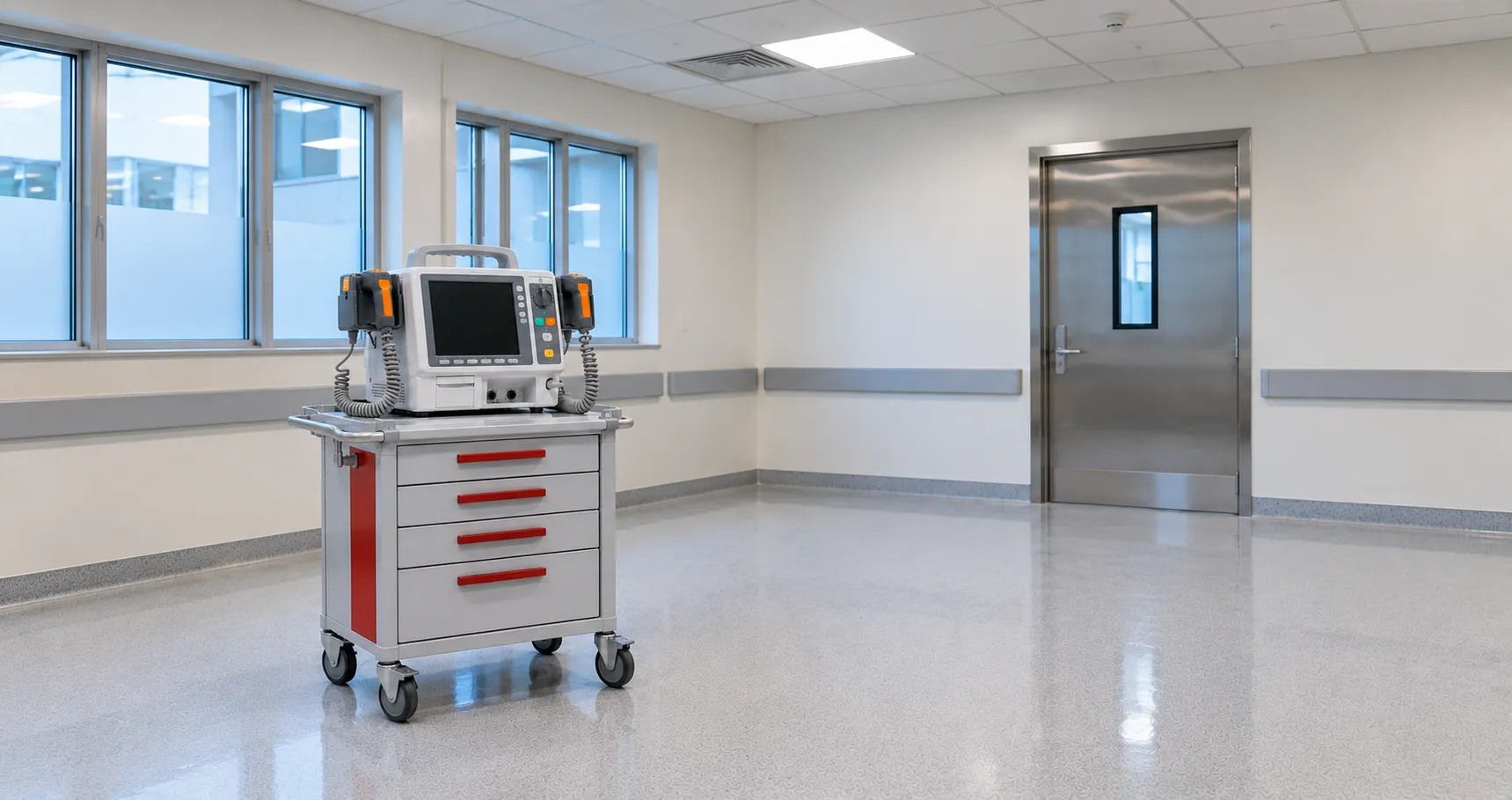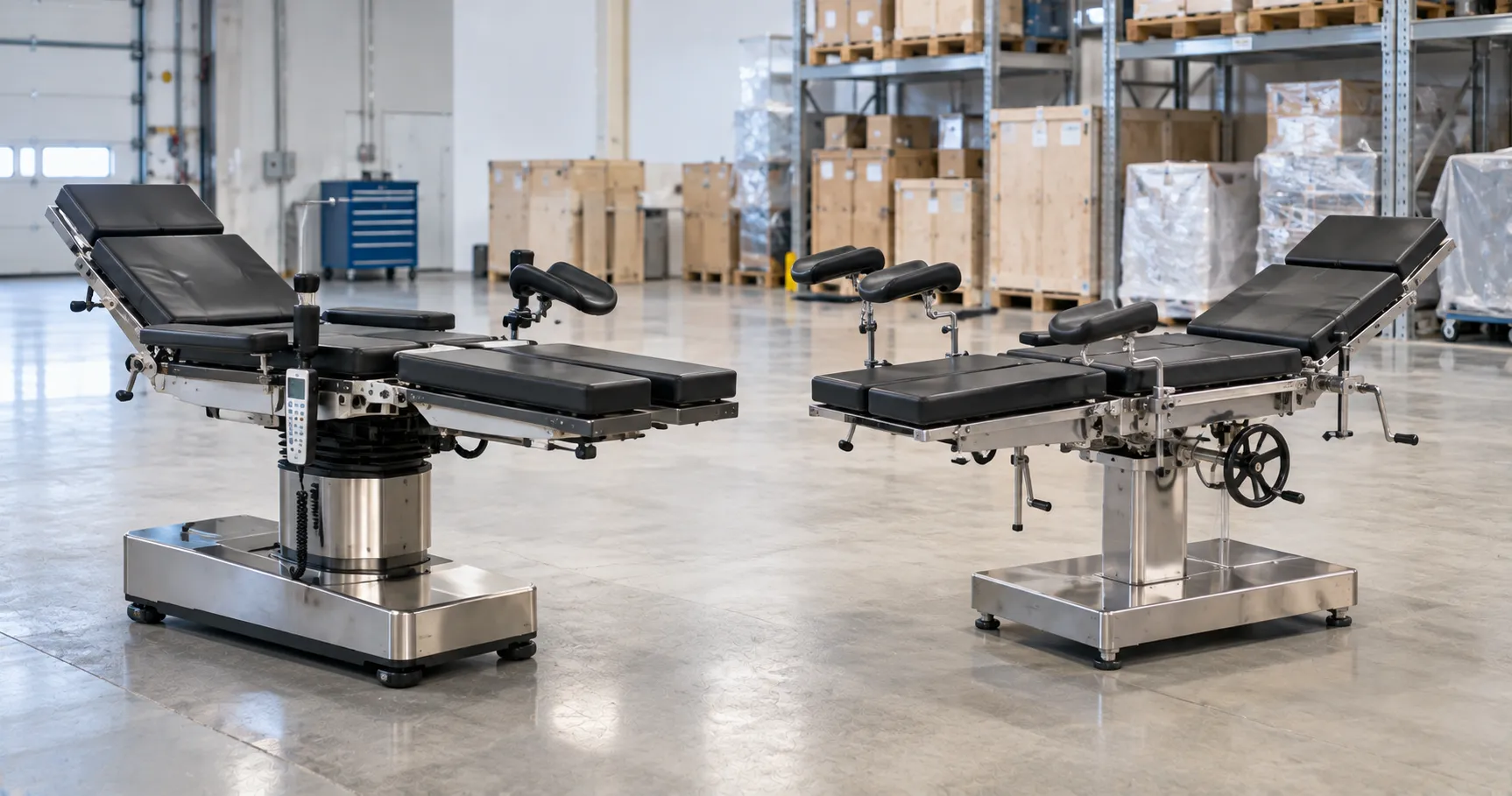

Equipment lifecycle management for hospitals is the structured process of planning, selecting, purchasing, installing, using, maintaining, replacing, and decommissioning medical equipment. It helps healthcare facilities manage equipment safely, control costs, reduce downtime, improve procurement decisions, and maintain better visibility across departments.
For healthcare buyers, lifecycle management is not only a biomedical engineering task. It affects clinical workflow, patient care readiness, equipment availability, staff training, maintenance budgets, spare parts, supplier performance, compliance records, and long-term hospital planning.
Medical equipment requires calibration, maintenance, repair, user training, and decommissioning, and these activities are usually managed with clinical engineering or biomedical support. WHO guidance also explains that a maintenance strategy includes inspection, preventive maintenance, and corrective maintenance, with preventive maintenance helping extend equipment life and reduce failure rates.
What Equipment Lifecycle Management Means
Equipment lifecycle management means viewing medical equipment as a complete journey, not a one-time purchase. A device enters the hospital through planning and procurement, then moves through installation, daily use, maintenance, repair, upgrades, replacement, and eventual removal from service.
A strong lifecycle approach helps hospitals answer important questions:
Which equipment should be purchased?
Which supplier provides reliable long-term support?
How should equipment be installed and commissioned?
Who will train the users?
How often should maintenance be done?
Which devices are creating repeated downtime?
When should equipment be replaced?
How should old equipment be decommissioned safely?
Without lifecycle management, hospitals may buy equipment without considering service support, spare parts, calibration, warranty, software updates, consumables, training, and replacement planning. This can create hidden costs and operational problems later.
Main Stages of Medical Equipment Lifecycle
Medical equipment lifecycle management typically involves several interconnected stages. Each stage affects the next one.
Planning — Hospitals identify clinical needs, department requirements, patient volume, infrastructure needs, budget limits, and equipment priorities.
Procurement — Procurement teams compare suppliers, specifications, documentation, warranty terms, training, service support, consumables, and total cost of ownership.
Installation and Commissioning — Equipment is delivered, installed, tested, checked, and approved for use. Staff training should happen before routine clinical use.
Operation and Daily Use — Clinical teams use equipment according to manufacturer instructions and hospital policy. User handling strongly affects device life.
Maintenance and Repair — Biomedical teams manage inspection, preventive maintenance, calibration, corrective repair, service records, and spare parts.
Performance Review — Hospitals review uptime, repair frequency, cost, supplier response, user feedback, and clinical usefulness.
Replacement Planning — Older, unreliable, unsafe, unsupported, or high-cost equipment is identified for replacement.
Decommissioning — Equipment is removed from service safely when it is no longer suitable, supported, compliant, or cost-effective. WHO decommissioning guidance is designed to support decisions about why, when, and how medical devices should be decommissioned.
Why Lifecycle Management Matters in Hospitals
Hospitals depend on medical equipment every day. Imaging systems, ICU devices, operating room equipment, laboratory analysers, sterilisation systems, monitors, beds, trolleys, oxygen systems, dental equipment, rehabilitation devices, and diagnostic tools all need proper management.
Better Equipment Availability — Lifecycle planning helps reduce unexpected breakdowns and improves device readiness across departments.
Lower Hidden Costs — Poor planning can increase repair costs, emergency purchases, downtime, consumable waste, and urgent shipping of spare parts.
Improved Procurement Decisions — Lifecycle records help buyers understand which devices perform well and which suppliers provide reliable support.
Stronger Maintenance Planning — Biomedical teams can use service history, usage records, and fault patterns to plan maintenance more effectively.
Better Compliance Documentation — Lifecycle records support audits, inspections, warranty claims, calibration records, and internal quality review.
Safer Decommissioning — Removing old equipment safely helps reduce risks from outdated, unsupported, damaged, or unreliable devices.
Equipment Planning Before Purchase
The lifecycle begins before the equipment is purchased. A good planning process helps hospitals avoid buying devices that do not fit clinical workflow, infrastructure, or maintenance capacity.
Clinical Need Review — The hospital should define why the equipment is needed, which department will use it, how many patients it will support, and whether it replaces or adds capacity.
Infrastructure Review — Some devices need specific power, water, drainage, ventilation, network, medical gas, room size, shielding, or floor-loading requirements.
User Requirement Review — Nurses, doctors, technicians, biomedical engineers, and department managers should help define the practical requirements.
Budget Planning — Buyers should consider the total cost of ownership, not only the purchase price. This includes accessories, installation, training, maintenance, consumables, software, spare parts, and replacement planning.
Technology Assessment — Health technology assessment evaluates clinical, economic, ethical, and social implications of health technologies and supports decisions on whether a technology should be adopted or reimbursed.
Procurement and Supplier Selection
Procurement is one of the most important stages in the lifecycle because supplier choice affects service quality, spare parts, warranty, training, documentation, and long-term usability.
Facilities sourcing through regulated and certified equipment suppliers worldwide should review supplier capability beyond product price. A low-cost device can become expensive if service is weak, spare parts are unavailable, or documentation is incomplete.
Specification Matching — The device should align with clinical needs, departmental workload, patient groups, accessories, and infrastructure.
Documentation Review — Buyers should request product specifications, user manuals, service manuals where applicable, warranty terms, conformity documents, calibration requirements, installation requirements, and training materials.
Warranty and Service Terms — The warranty should clearly define what is covered, how to request service, response timelines, spare parts support, and excluded items.
Consumables and Accessories — Some devices depend on proprietary consumables, sensors, probes, filters, cartridges, tubing, batteries, or software licences.
Supplier Experience — Hospitals should review whether the supplier understands healthcare procurement, export requirements, documentation, installation support, and after-sales service.
WHO procurement guidance states that effective health technology procurement supports safe, equitable, and high-quality healthcare, which is why hospitals should treat procurement as a structured decision-making process rather than a price-only exercise.
Installation and Commissioning
After purchase, the equipment should be properly installed and commissioned. This step confirms that the device is ready and safe for clinical use.
Delivery Inspection — Teams should check the packaging condition, accessories, manuals, serial numbers, and visible damage.
Installation Check — Equipment should be installed in accordance with the manufacturer's instructions and site requirements.
Safety Testing — Biomedical teams may need to perform electrical safety checks, functional testing, calibration verification, and acceptance testing.
User Training — Clinical users should be trained before routine use. Training should include operation, cleaning, alarms, troubleshooting, safety precautions, and escalation steps.
Asset Registration — The device should be added to the hospital asset register with model number, serial number, location, supplier, warranty, purchase date, and maintenance schedule.
Documentation Storage — Manuals, certificates, installation reports, warranty documents, and service contacts should be stored in a central system.
Daily Use and User Responsibility
The way staff use equipment has a major effect on lifecycle performance. Equipment that is misused, poorly cleaned, improperly stored, or moved roughly may fail sooner.
Correct Operation — Staff should use equipment according to manufacturer guidance and hospital policy.
Cleaning and Disinfection — Devices should be cleaned according to infection-prevention guidelines and manufacturer instructions.
Safe Storage — Equipment should be stored under suitable conditions, with proper protection from moisture, dust, heat, impacts, and cable damage.
Reporting Faults Early — Users should report unusual sounds, alarms, errors, battery issues, physical damage, or performance problems quickly.
Avoiding Unauthorised Repair — Staff should not attempt repairs unless trained and authorised. Unapproved repair can create safety and warranty issues.
Preventive and Corrective Maintenance
Maintenance is central to medical equipment lifecycle management. Hospitals need planned inspection, preventive maintenance, calibration, and corrective repair workflows.
Preventive Maintenance — Planned work intended to reduce failures and extend equipment life. It may include inspection, cleaning, calibration, lubrication, software checks, battery tests, and parts replacement.
Corrective Maintenance — Corrective maintenance happens after a fault, failure, or performance issue. It includes troubleshooting, repair, part replacement, and safety verification.
Calibration — Equipment that measures clinical parameters may need calibration or accuracy checks. This is important for monitors, analysers, infusion devices, imaging systems, scales, pressure devices, and diagnostic tools.
Service Records — Every inspection, repair, calibration, fault, part replacement, and warranty action should be recorded.
Risk-Based Maintenance — Critical equipment may need stricter maintenance planning than low-risk equipment. Hospitals should classify equipment by risk, use intensity, and clinical importance.
Spare Parts and Consumables Management
Spare parts and consumables can determine whether equipment stays usable. Hospitals should not wait until a device fails before checking part availability.
Critical Spare Parts — Biomedical teams should identify high-use and high-risk components such as batteries, probes, sensors, cables, filters, fuses, valves, boards, tubing, and lamps.
Consumable Planning — Some equipment needs reagents, cartridges, electrodes, cuffs, paper rolls, test strips, filters, sterilisation packs, or disposable accessories.
Supplier Lead Times — Imported parts may require longer lead times. Procurement teams should plan for this in maintenance budgets.
Compatibility Checks — Spare parts and accessories should be compatible with the exact model and approved for use.
Stock Control — A spare-part inventory helps reduce downtime and enables faster repairs.
Software, Connectivity and Cybersecurity
Modern equipment may include software, network connectivity, cloud dashboards, remote service, AI tools, and digital data exchange. This means lifecycle management must include IT and cybersecurity planning.
Software Updates — Software and firmware updates should be documented and controlled. Updates should not be installed without understanding their effect on device performance and workflow.
Interoperability — FDA describes medical device interoperability as the ability to safely, securely, and effectively exchange and use information among devices, products, technologies, or systems. This is important for connected monitors, imaging systems, laboratory devices, digital dashboards, and cloud platforms.
Cybersecurity Review — Connected equipment should be reviewed for access control, encryption, remote access, patching, audit logs, and vulnerability management.
Remote Support Control — Supplier remote access should be approved, logged, limited, and managed in accordance with facility policy.
Cybersecurity Documentation — FDA cybersecurity guidance provides recommendations on medical device cybersecurity design, labelling, and documentation for devices with cybersecurity risk, supporting the need for security review across the equipment lifecycle.
Equipment Performance Review
Hospitals should review equipment performance regularly. Lifecycle management is stronger when decisions are based on data rather than assumptions.
Downtime Tracking — Teams should record how often equipment is unavailable and why.
Repair Frequency — Repeated failures may indicate poor device quality, heavy use, user-handling issues, or ageing equipment.
Service Cost Review — High repair costs may indicate that replacement is more practical than continued repairs.
Supplier Response Review — Hospitals should track how quickly suppliers respond, provide parts, complete service, and support warranty claims.
User Feedback — Staff feedback can reveal usability issues, alarm problems, slow workflows, difficult cleaning, or frequent accessory damage.
Utilisation Review — Some devices may be underused, while others are overused. Usage data supports smarter redistribution and purchasing.
Replacement Planning
Equipment replacement should be planned before devices fail. A structured replacement plan helps hospitals avoid emergency purchases and service interruptions.
Age and Condition — Equipment age matters, but it should not be the only factor. Condition, usage, repair history, support status, and clinical need also matter.
Repair Cost — If the repair cost exceeds the replacement value, replacement may be more reasonable.
Spare Part Availability — A device may need to be replaced if parts are no longer available or supplier support has ended.
Clinical Performance — Equipment that no longer meets clinical requirements may need to be replaced, even if it still works.
Safety and Compliance — Devices that cannot meet safety, documentation, or regulatory expectations should be reviewed for replacement.
Technology Fit — Older devices may not connect with current digital systems, reporting platforms, or maintenance workflows.
Decommissioning and Disposal
Decommissioning is the controlled process of removing equipment from service. It should be planned carefully to protect patients, staff, data, and the facility.
Reasons for Decommissioning — Equipment may be decommissioned due to repeated failures, high repair costs, lack of spare parts, safety concerns, outdated technology, compliance issues, or end of support.
Data Removal — Connected devices, imaging equipment, monitors, tablets, and software-enabled devices may store patient or operational data. Data should be removed securely before disposal, transfer, or resale.
Safe Disposal — Batteries, electronics, radiation components, chemicals, and contaminated parts may require special handling.
Asset Register Update — The asset record should be updated when equipment is removed from service.
Replacement Coordination — Decommissioning should be coordinated with replacement planning so departments are not left without needed equipment.
Sustainable Equipment Lifecycle Management
Lifecycle management also supports sustainability. Hospitals can reduce waste by properly maintaining equipment, extending its useful life where safe, standardising accessories, reusing approved equipment, and decommissioning it responsibly.
Preventive Maintenance — Good maintenance can reduce premature equipment failure.
Standardisation — Standardising models and accessories can reduce duplicate parts, training variation, and procurement waste.
Repair Before Replacement — Repair may be appropriate when equipment is safe, supported, and cost-effective.
Responsible Decommissioning — Disposal should follow safety, environmental, and data protection requirements.
Smarter Purchasing — Buying reliable equipment with service support can reduce waste over the full lifecycle.
Procurement Guidance for Lifecycle Management
Equipment lifecycle management should be considered during every procurement decision. Buyers should involve clinical users, biomedical engineers, IT teams, finance teams, compliance staff, and procurement teams.
Total Cost of Ownership — Buyers should calculate the full cost, including purchase, installation, training, consumables, software, maintenance, spare parts, warranty, downtime, and replacement.
Supplier Transparency — Suppliers and manufacturers advertising to global healthcare buyers should provide clear specifications, documentation, service support, spare parts information, warranty terms, and lifecycle expectations.
Service Support Review — Buyers should confirm whether support is available locally, regionally, or remotely.
Training Plan — Training should be included for clinical users and biomedical teams where required.
Documentation Quality — Poor documentation can create service delays, compliance gaps, and user confusion.
Exit Planning — Buyers should ask how data, software, accessories, and service records will be managed when the device reaches the end of life.
Healthcare groups managing several hospitals, clinics, or diagnostic centres may benefit from structured distribution and reseller partnership arrangements. Standardising equipment models, accessories, service contracts, and lifecycle records can reduce operational variation across sites.
Equipment Lifecycle Management Checklist
Hospitals can use a lifecycle checklist to improve equipment control.
Before Purchase
Define clinical need
Review infrastructure
Compare specifications
Check supplier support
Calculate total cost
Review compliance documents
Confirm spare parts and consumables
Plan training
After Purchase
Inspect delivery
Install correctly
Commission safely
Register asset
Store documents
Train users
Assign maintenance schedule
During Use
Monitor performance
Record faults
Perform preventive maintenance
Track service cost
Review user feedback
Manage spare parts
Update software carefully
Before Replacement
Review downtime
Review the repair cost
Check part availability
Confirm safety and compliance
Compare replacement options
Plan budget
Coordinate department transition
At Decommissioning
Remove from service
Clear stored data
Update asset records
Handle disposal safely
Document final status
International Sourcing Considerations
Equipment lifecycle management becomes especially important when hospitals source equipment internationally. Buyers should confirm documentation, warranty, spare parts, power compatibility, language requirements, software support, shipping needs, installation support, training, and after-sales service before ordering.
Buyers should confirm whether they need full equipment packages, replacement devices, spare parts, service support, lifecycle documentation, asset-tracking tools, maintenance platforms, or supplier-comparison support. For project-based sourcing, buyers can contact the Medigear.uk team for supply support to discuss availability, documentation, export needs, and procurement requirements.
Future Role of Lifecycle Management in Hospitals
Equipment lifecycle management will become more important as hospitals use more connected devices, cloud-based maintenance platforms, predictive maintenance tools, software-enabled equipment, and digital dashboards. Hospitals that manage equipment data well will be better prepared for replacement planning, downtime reduction, procurement control, and service quality review.
The future of hospital equipment management will depend on strong asset records, reliable suppliers, trained biomedical teams, cybersecurity planning, data-supported decisions, and responsible decommissioning. A hospital that understands the full lifecycle of its equipment can make better purchasing decisions and reduce avoidable operational problems.
Final Thoughts
Equipment lifecycle management helps hospitals control the full journey of medical equipment from planning and procurement to maintenance, replacement, and decommissioning. It supports better equipment availability, stronger biomedical workflow, safer clinical operations, and smarter procurement decisions.
The right lifecycle strategy should include clinical need review, supplier evaluation, installation checks, user training, preventive maintenance, service records, replacement planning, cybersecurity review, and responsible decommissioning. Hospitals that manage the full equipment lifecycle can reduce avoidable downtime, improve long-term value, and strengthen care delivery.
Disclaimer
Medigear.uk is a global medical equipment supplier, exporter, and distributor. The content published on this site is intended for educational and product awareness purposes only. Nothing on this page constitutes medical advice, clinical guidance, cybersecurity advice, legal advice, data protection advice, or treatment recommendations. All healthcare procurement, technology, legal, data, and clinical decisions should be made by qualified professionals and compliant procurement teams operating within the regulatory frameworks of their respective countries.