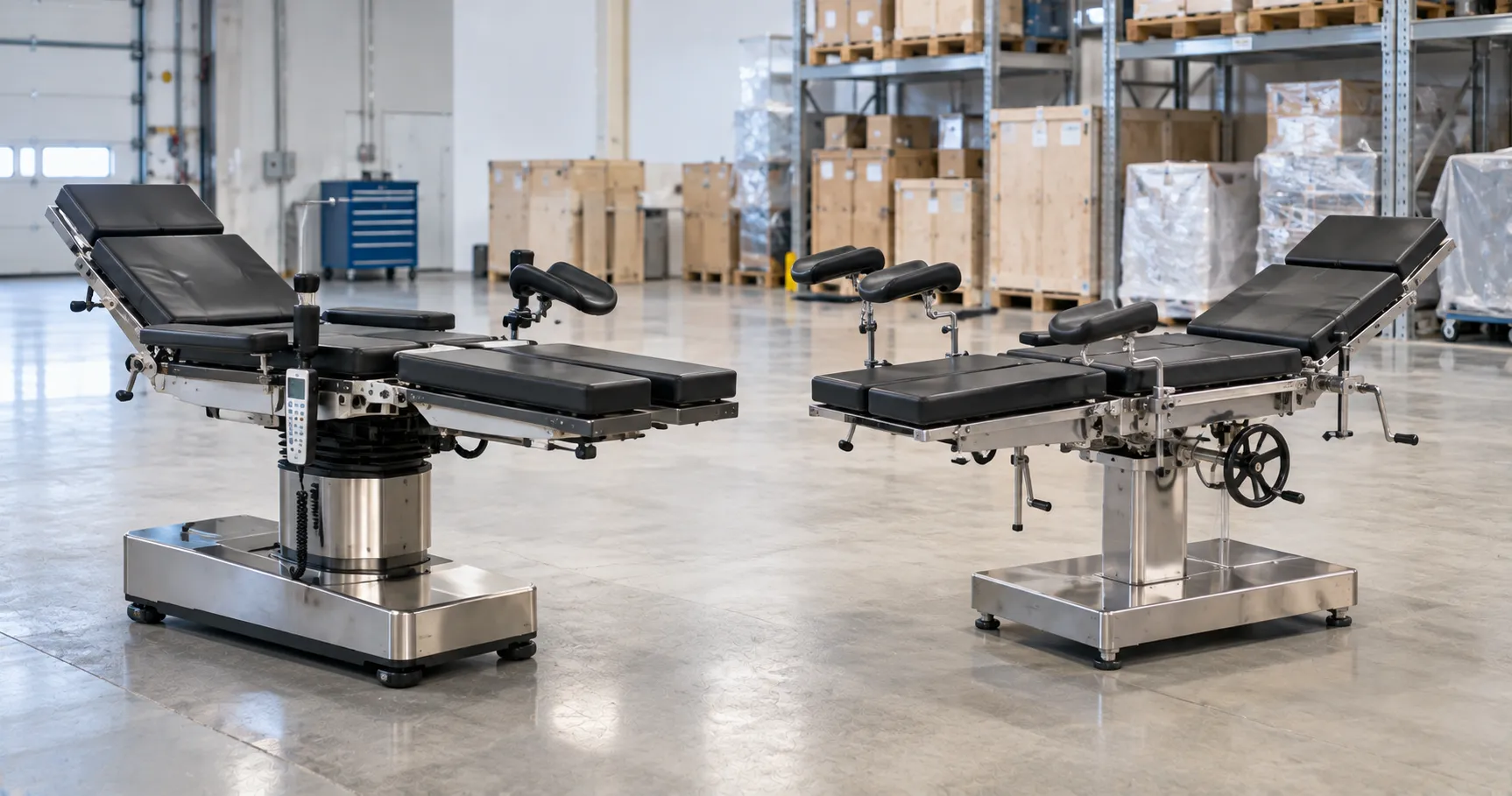

Intelligent ICU equipment supports critical care units by integrating advanced medical hardware with connectivity, sensors, software, digital dashboards, alarm systems, and equipment data management. These devices may include patient monitors, ventilators, infusion pumps, syringe pumps, central monitoring stations, smart ICU beds, anaesthesia support systems, point-of-care diagnostic devices, connected oxygen systems, and biomedical equipment management platforms.
For healthcare buyers, intelligent ICU equipment should be selected with more care than standard hospital equipment. ICU devices are used in high-acuity environments where reliability, speed, accuracy, alarms, uptime, cybersecurity, clinical workflow, service support, and user training are extremely important. FDA explains that digital health technologies use computing platforms, connectivity, software, and sensors for healthcare and related uses, reflecting how many intelligent ICU systems operate in modern critical care environments.
How Intelligent ICU Equipment Supports Critical Care
Intelligent ICU equipment helps critical care teams monitor patients, respond to changes, manage therapy delivery, and coordinate equipment workflow. The purpose is not only to add technology. The purpose is to support safer, faster, and more organised care in high-pressure clinical units.
Continuous Patient Monitoring — ICU patient monitors can track vital signs, waveforms, oxygen saturation, blood pressure, temperature, respiratory parameters, and other clinical data. Smart monitoring systems may send readings to central stations or digital dashboards for wider visibility.
Connected Ventilation Support — Modern ventilators may include advanced modes, alarm functions, oxygen monitoring, data logs, remote review features, and connectivity with monitoring systems. Buyers should review clinical capability, service support, accessory availability, and training needs.
Infusion and Medication Safety Support — Smart infusion pumps and syringe pumps may support dose libraries, alarms, usage records, and centralised monitoring. These features can help teams manage complex medication delivery when configured correctly.
Alarm and Alert Management — Intelligent ICU equipment can generate alarms for patient changes, device faults, therapy interruptions, battery status, and connection issues. Alarm design must be carefully managed to avoid staff overload.
Where Intelligent ICU Equipment Is Used
Intelligent ICU equipment is used in several critical care environments. Each area has different clinical demands, patient risk levels, staffing patterns, and equipment requirements.
Adult Intensive Care Units — Adult ICUs commonly require patient monitors, ventilators, infusion systems, suction equipment, oxygen support, critical care beds, and central monitoring stations. Intelligent systems can help staff review changing patient trends and device status.
High-Dependency Units (HDUs) may use connected monitors, oxygen devices, infusion pumps, and early-warning dashboards for patients who need close observation but not full ICU-level support.
Neonatal and Paediatric Critical Care — Neonatal and paediatric critical care units require equipment designed for smaller patients, sensitive monitoring, precise infusion delivery, warming support, and specialised alarms. Procurement teams should confirm patient-size compatibility before purchase.
Emergency Critical Care Areas — Emergency departments may use ICU-level monitors, transport ventilators, infusion pumps, defibrillators, and mobile ultrasound systems for unstable patients before transfer.
Post-Operative Recovery and Step-Down Care — Some facilities use connected monitoring and smart therapy devices after surgery or after ICU discharge. Facilities sourcing through regulated and certified equipment suppliers worldwide should confirm device documentation, compatibility, service support, and training before procurement.
Common Types of Intelligent ICU Equipment
Critical care units require a carefully selected equipment ecosystem. Each device should work reliably on its own and, where needed, connect safely with other systems.
Patient Monitors — ICU patient monitors track vital signs and may connect to central monitoring stations. Buyers should review waveform quality, parameter options, alarm settings, battery support, display clarity, and integration features.
Central Monitoring Stations — These systems allow staff to review multiple patients from a central point. They can improve visibility when configured correctly, but they must not replace bedside assessment.
Ventilators — ICU ventilators support respiratory care for critically ill patients. Buyers should check ventilation modes, oxygen blending, humidification compatibility, alarm functions, service support, disposables, and maintenance requirements.
Infusion Pumps and Syringe Pumps — These devices enable controlled delivery of fluids and medications. Intelligent models may include libraries, alerts, logs, and network connectivity.
Smart ICU Beds — ICU beds may include height adjustment, weight measurement, pressure-injury prevention support, bed-exit alerts, positioning features, and nurse-call connectivity.
Point-of-Care Diagnostic Devices — Blood gas analysers, portable ultrasound systems, ECG systems, lactate testing devices, and other near-patient diagnostic tools can support faster decision-making in critical care settings.
Connected Oxygen and Suction Systems — Oxygen flow equipment, suction systems, regulators, and wall outlets must support reliable ICU workflow. Intelligent monitoring may help track system performance in some facilities.
Equipment Management Dashboards — Biomedical teams may use connected dashboards to monitor equipment status, service needs, asset location, and downtime trends.
Benefits of Intelligent ICU Equipment
Intelligent ICU equipment can support improved workflow when carefully selected and implemented with strong clinical governance.
Improved Clinical Visibility — Connected monitors and dashboards can help staff review patient status, therapy devices, alarms, and equipment availability more clearly.
Faster Response to Changes — Alarms and trend displays can help teams identify changes earlier, but they must be clinically meaningful and reviewed by trained staff.
Reduced Manual Documentation — Connected devices may reduce repeated manual entry when data flows accurately into hospital systems.
Better Equipment Uptime — Intelligent equipment may provide service logs, error codes, battery status, and maintenance alerts. WHO maintenance guidance explains that inspection, preventive maintenance, and corrective maintenance are part of an equipment maintenance strategy, with preventive maintenance helping extend equipment life and reduce failure rates.
Stronger Biomedical Planning — Device usage data, service records, fault history, and downtime reports help biomedical teams plan maintenance, spare parts, and replacement cycles.
Alarm Management in Critical Care Units
Alarm management is one of the most important parts of intelligent ICU equipment planning. ICU devices can generate many alarms, and not every alarm has the same clinical urgency.
Clinical Alarm Configuration — Alarm thresholds should align with patient condition, departmental policy, and clinical workflow. Default settings may not always be suitable.
False Alarm Reduction — Excessive false alarms can lead to alarm fatigue. Buyers should review alarm logic, customisation options, signal quality, and staff training requirements.
Central Alarm Visibility — Central monitoring systems can help teams see multiple alarms, but clear response responsibilities must support them.
Escalation Rules — Facilities should define who responds to alarms, how quickly they respond, and when to escalate alarms.
Device Fault Alarms — Not all alarms are patient alarms. Equipment may also alert for battery failure, sensor disconnection, blocked tubing, low oxygen pressure, or system errors.
Interoperability and Data Flow
Interoperability matters because ICU equipment often needs to share information with other devices and hospital systems. The FDA describes medical device interoperability as the ability to safely, securely, and effectively exchange and use information among devices, products, technologies, or systems.
Central Monitoring Integration — Patient monitors, ventilators, and other ICU devices may connect with central stations for bedside and unit-level visibility.
Electronic System Connectivity — Some devices can connect with electronic medical records, hospital information systems, or clinical documentation tools. Buyers should confirm compatibility before purchase.
Data Accuracy and Mapping — Device data must be mapped correctly. Incorrect units, incorrect patient matching, missing timestamps, or incomplete data can pose clinical risk.
Downtime Workflow — ICU equipment should support safe use when networks fail. Staff should know how to continue care manually or through backup processes.
Vendor Collaboration — ICU integration often requires cooperation between device suppliers, IT teams, biomedical engineers, software vendors, and clinical leaders.
Cybersecurity and Data Security
Intelligent ICU equipment may connect to hospital networks, central monitoring stations, cloud systems, remote service tools, or software platforms. This creates cybersecurity responsibility.
Access Control — Facilities should define who can change device settings, access dashboards, approve remote service, update software, and export data.
Secure Transmission — Buyers should ask whether patient data and equipment data are encrypted during transfer and storage.
Remote Service Management — Remote diagnostics can support faster troubleshooting, but supplier access should be approved, logged, and limited.
Software Patch Planning — ICU equipment may need software or firmware updates. Updates should be planned so they do not disrupt critical care workflow.
Cybersecurity Documentation — FDA cybersecurity guidance provides recommendations on device design, labelling, and documentation for devices with cybersecurity risk, which supports the need to review cybersecurity during procurement.
Procurement Guidance for Intelligent ICU Equipment
Procurement of intelligent ICU equipment should include ICU clinicians, nurses, biomedical engineers, IT teams, cybersecurity staff, procurement teams, finance teams, facility planners, and compliance staff. The equipment must fit the care model, staffing level, infrastructure, and maintenance capacity.
Total Cost of Ownership — Buyers should include device price, accessories, disposables, sensors, batteries, mounts, software licences, integration costs, service contracts, calibration, spare parts, training, cybersecurity review, and replacement planning.
Clinical Need Review — The ICU should define whether it needs advanced patient monitoring, ventilators, infusion systems, smart beds, central stations, remote review, equipment tracking, or data integration.
Supplier Transparency — Suppliers and manufacturers advertising to global healthcare buyers should provide clear specifications, intended use, supported parameters, alarm features, software details, cybersecurity documentation, service terms, user manuals, warranty information, and spare part availability.
Compliance and Documentation — Procurement teams should request conformity documents, product registrations where relevant, user manuals, cleaning instructions, service manuals, calibration requirements, cybersecurity documentation, software version details, and warranty terms. Compliance should be checked against applicable local regulatory standards, as well as CE, FDA, ISO, IEC, or their regional equivalents, where relevant.
Demo and Clinical Evaluation — ICU teams should test usability, screen readability, alarm clarity, device response time, battery performance, accessory quality, and workflow fit before bulk procurement.
Healthcare groups managing multiple hospitals or critical care units may benefit from structured distribution and reseller partnership arrangements. Standardising ICU equipment models, accessories, training, and service support can reduce variation across sites.
Key Questions Buyers Should Ask Suppliers
Intelligent ICU equipment requires a deeper supplier review because these devices affect critical workflows.
What patient group is the device designed for? — Adult, paediatric, and neonatal use may require different specifications and accessories.
What parameters are supported? — Patient monitors and critical care systems should clearly list supported measurements, modules, and optional upgrades.
How are alarms configured? — Buyers should review alarm settings, customisation, escalation options, and central station behaviour.
What systems can the device connect with? — Suppliers should explain compatibility with central monitoring, EMR, HIS, nurse call, asset tracking, and maintenance systems.
What happens during a power or network failure? — Devices should support safe backup operation, battery use, and manual workflows.
What training is included? — ICU staff, nurses, biomedical teams, and IT teams may all require different training.
How long will software and spare parts be supported? — ICU devices need reliable long-term support because replacement can be expensive and disruptive.
Maintenance and Biomedical Engineering Planning
ICU equipment requires strong maintenance planning because downtime can affect critical care readiness. Biomedical teams should be involved from the earliest stage of procurement.
Preventive Maintenance — Devices should follow manufacturer-recommended maintenance schedules, inspection routines, calibration checks, and safety testing.
Corrective Maintenance — Faults should be logged, repaired, and documented quickly. Backup equipment should be available for critical devices.
Calibration and Accuracy Checks — Monitors, pressure sensors, flow systems, infusion devices, and diagnostic tools may require verification or calibration.
Battery Management — ICU devices often rely on battery backup during transfers or power interruptions. Battery health should be tracked.
Accessory Management — Cables, sensors, probes, cuffs, tubing, humidifiers, filters, mounts, and disposables should be stocked and compatible with each other.
Service Documentation — Service records, fault logs, maintenance reports, calibration certificates, and warranty claims should be organised for audit readiness.
ICU Equipment Uptime and Backup Planning
Critical care units need backup plans because essential equipment must remain available during emergencies, peak demand periods, and maintenance work.
Backup Ventilators — Facilities should plan spare ventilator capacity based on patient load and risk profile.
Replacement Monitors — Backup monitors and modules help reduce downtime when devices need repair.
Infusion Pump Pooling — Centralised pump management can improve availability and reduce hidden shortages.
Emergency Power Readiness — ICU equipment should be supported by suitable power infrastructure and backup power systems.
Rapid Service Escalation — Service agreements should define response times for critical equipment failures.
Staff Training and Workflow Integration
Intelligent ICU equipment can only support care when staff understand how to use it properly. Training should be practical and role-specific.
Clinical User Training — Nurses and doctors should understand the operation, alarms, trend review, device limitations, and escalation processes.
Biomedical Training — Biomedical engineers should understand inspection, calibration, troubleshooting, service logging, and spare-part replacement.
IT and Cybersecurity Training — IT teams should understand network requirements, access control, update processes, and data flows.
Simulation and Scenario Training — ICU teams can practise responding to alarms, equipment failures, patient transfers, power loss, and emergency device replacements.
Ongoing Refresher Training — Staff turnover and device updates mean training should not be limited to installation day.
International Sourcing Considerations
Intelligent ICU equipment can be sourced internationally when buyers clearly define clinical requirements, patient group, device category, power specifications, accessory needs, software support, documentation, warranty, service availability, cybersecurity expectations, and compliance requirements. This is especially important for hospitals planning new ICUs, expanding critical care capacity, or replacing older equipment fleets.
Buyers should confirm whether they need patient monitors, ventilators, infusion pumps, syringe pumps, central monitoring stations, smart ICU beds, point-of-care diagnostic equipment, suction systems, oxygen support devices, defibrillators, asset tracking, or complete ICU packages. For project-based sourcing, buyers can contact the Medigear.uk team for supply support to discuss availability, documentation, export needs, and procurement requirements.
Future Role of Intelligent ICU Equipment
Intelligent ICU equipment will continue to shape critical care through better monitoring, connected data, smarter alarms, predictive maintenance, remote review, and digital workflow support. However, success depends on planning, not just technology.
The best ICU equipment strategies focus on clinical need, reliable devices, staff training, cybersecurity, maintenance support, and long-term equipment lifecycle planning. Hospitals should avoid buying intelligent equipment only because it sounds advanced. Every feature should support a clear clinical or operational purpose.
Intelligent ICU equipment can help critical care units improve visibility, reduce manual work, support faster coordination, and improve equipment readiness when selected and implemented responsibly.
Final Thoughts
Intelligent ICU equipment helps critical care units manage patient monitoring, ventilation, infusion delivery, alarms, equipment availability, and digital workflow more effectively. These systems can support better visibility and stronger coordination when selected carefully.
The right ICU equipment should align with clinical requirements, patient population, departmental workload, connectivity infrastructure, cybersecurity policy, maintenance capacity, staff training, and local compliance standards. Buyers should review specifications, documentation, total cost of ownership, service support, spare parts, software lifecycle, and supplier reliability before ordering.
Disclaimer
Medigear.uk is a global medical equipment supplier, exporter, and distributor. The content published on this site is intended for educational and product awareness purposes only. Nothing on this page constitutes medical advice, clinical guidance, cybersecurity advice, data protection advice, legal advice, or treatment recommendations. All healthcare procurement, technology, data, legal, and clinical decisions should be made by qualified professionals and compliant procurement teams operating within the regulatory frameworks of their respective countries.