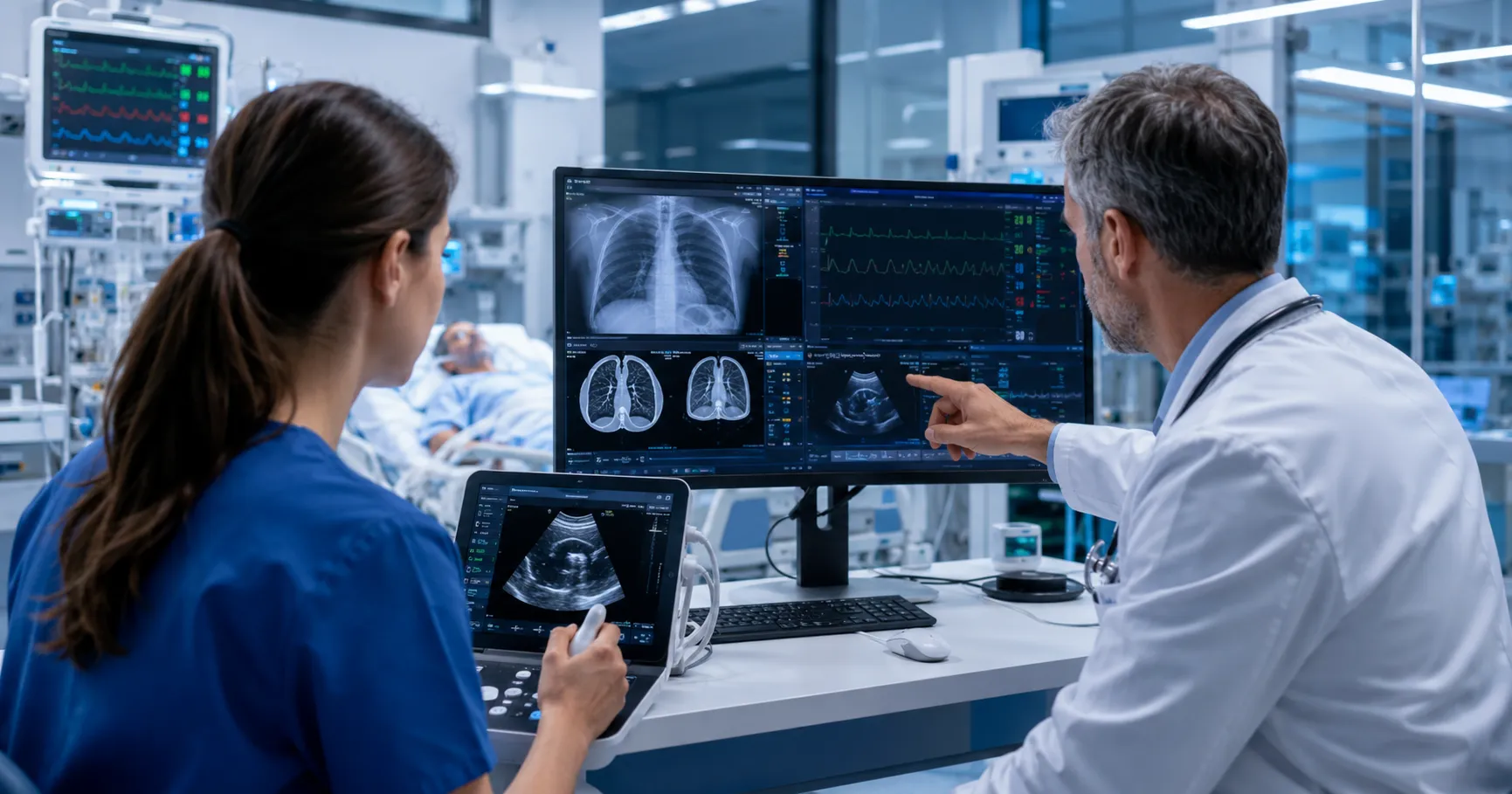
Smart diagnostic devices help healthcare teams collect, process, analyse, and share diagnostic information more efficiently. These devices may include digital imaging systems, laboratory analysers, point-of-care testing devices, AI-supported diagnostic tools, smart ultrasound systems, connected ECG devices, automated pathology equipment, wearable diagnostic sensors, and software-enabled reporting platforms.
For healthcare buyers, smart diagnostic devices should be selected carefully because they influence clinical workflow, test accuracy, reporting speed, data security, equipment uptime, service support, and compliance documentation. WHO defines medical devices as instruments, machines, software, reagents, or related articles intended for medical purposes and notes the wide global range of medical device categories used in healthcare.
How Smart Diagnostic Devices Support Faster Decisions
Smart diagnostic devices support faster clinical decision-making by improving the way diagnostic information is captured, processed, reviewed, and communicated. They do not replace qualified clinical judgement, but they can help healthcare teams access useful information sooner.
Faster Data Capture — Digital diagnostic devices can collect test results, images, waveforms, measurements, and patient readings more quickly than manual systems. This can reduce delays in departments that depend on rapid information flow.
Better Result Visibility — Connected diagnostic equipment can send data to dashboards, laboratory systems, imaging platforms, or electronic records. This helps teams review results without waiting for paper records or manual transfer.
Improved Workflow Coordination — Smart diagnostic systems may support worklists, patient matching, report routing, remote review, result alerts, and quality checks. These features help diagnostic teams manage high workloads.
Decision-Support Features — Some smart diagnostic devices include software, AI tools, or automated analysis. FDA explains that digital health technologies use computing platforms, connectivity, software, and sensors for healthcare and related uses, which describes the foundation of many modern diagnostic tools.
Where Smart Diagnostic Devices Are Used
Smart diagnostic devices are used across hospitals, diagnostic centres, laboratories, outpatient clinics, emergency departments, and specialist care units. The correct device mix depends on clinical service type, patient volume, staff capacity, infrastructure, and reporting workflow.
Radiology and Imaging Departments — Smart diagnostic imaging devices include digital X-ray, CT, MRI, ultrasound, mammography, C-arm systems, and AI-supported image review tools. These systems help clinicians capture and review diagnostic images more efficiently.
Clinical Laboratories — Laboratories may use automated analysers, digital microscopes, immunoassay systems, haematology analysers, biochemistry analysers, molecular testing systems, and connected quality-control platforms. These tools support faster testing and structured result management.
Emergency Departments — Emergency teams may use point-of-care ultrasound, ECG devices, blood gas analysers, rapid testing systems, portable X-ray units, and connected vital-signs tools. Faster diagnostics can support triage and urgent care workflows.
Outpatient and Specialist Clinics — Cardiology, respiratory, ophthalmology, gastroenterology, neurology, fertility, orthopaedic, and dental clinics may use smart diagnostic devices to support faster evaluation and follow-up.
Remote and Community Care Settings — Some diagnostic devices support remote review, mobile testing, or connected community health services. Facilities sourcing through regulated and certified equipment suppliers worldwide should confirm device documentation, connectivity, software support, service access, and compliance requirements before procurement.
Common Types of Smart Diagnostic Devices
Smart diagnostic devices vary by department and clinical purpose. Buyers should understand whether the smart feature improves accuracy, workflow, data access, reporting speed, or equipment management.
Smart Imaging Systems — Digital imaging systems may include automated exposure settings, image enhancement, cloud storage, PACS connectivity, AI-supported image review, and structured reporting tools.
AI-Supported Diagnostic Tools — AI diagnostic tools may assist with image analysis, pattern detection, measurement support, triage prioritisation, or quality review. The FDA maintains a public AI-enabled medical device list to identify devices authorised for marketing in the United States.
Point-of-Care Testing Devices — These devices allow selected tests to be performed near the patient. Examples may include blood gas analysers, glucose meters, cardiac marker testing, coagulation testing, infectious disease testing, and portable chemistry testing.
Connected ECG and Cardiology Devices — Smart ECG systems, Holter monitors, wearable ECG patches, and digital rhythm review platforms can help cardiology teams access and review patient data faster.
Digital Laboratory Analysers — Automated laboratory devices can process samples, manage quality control, send results to laboratory systems, and reduce manual transcription.
Smart Ultrasound Devices — Portable and connected ultrasound devices may support faster bedside assessment, emergency use, outpatient review, and remote consultation.
Digital Pathology and Microscopy Tools — Smart pathology systems may support slide scanning, image management, remote review, AI-supported analysis, and structured reporting.
Wearable Diagnostic Sensors — Some wearable devices collect ECG, oxygen saturation, temperature, glucose trends, movement, or other parameters. Buyers should distinguish medical-grade wearable diagnostics from consumer wellness products.
Benefits for Healthcare Facilities
Smart diagnostic devices can improve clinical and operational workflows when selected for real diagnostic needs.
Faster Reporting Pathways — Digital systems can reduce delays between testing, image capture, result review, and report sharing.
Improved Data Accuracy — Connected devices can reduce manual entry errors when patient matching and system integration are configured correctly.
Better Department Efficiency — Automation can help laboratories, imaging centres, and emergency departments process work more smoothly during busy periods.
Support for Remote Review — Digital images and results can be reviewed by authorised specialists when remote reporting or multi-site collaboration is part of the care model.
Stronger Quality Control — Smart systems may include calibration alerts, quality-control checks, error logs, and performance records. This helps diagnostic departments maintain reliable workflows.
Improved Equipment Planning — Usage logs, downtime records, service alerts, and performance dashboards can help biomedical teams plan maintenance and replacements.
Accuracy and Validation Considerations
Accuracy is one of the most important factors in diagnostic equipment selection. A fast result is not useful if the device is unreliable, poorly validated, or unsuitable for the intended patient group.
Intended Use — Buyers should confirm exactly what the device is designed to diagnose, measure, detect, or support. The intended use should match the facility’s clinical workflow.
Performance Evidence — Procurement teams should request accuracy data, validation information, sensitivity and specificity where relevant, quality-control requirements, and known limitations.
Patient Population Suitability — Diagnostic performance may vary depending on age group, clinical condition, sample type, imaging quality, body habitus, or local patient population.
Operator Dependence — Some devices, such as ultrasound or point-of-care testing systems, depend heavily on user skill. Training must be included in procurement planning.
Quality-Control Requirements — Laboratory and point-of-care diagnostic devices may require calibration, controls, reagent management, sample handling rules, and documented quality checks.
Interoperability and Diagnostic Data Flow
Smart diagnostic devices are most useful when they connect safely with existing clinical systems. The FDA describes medical device interoperability as the ability to safely, securely, and effectively exchange and use information among devices, products, technologies, or systems.
PACS and Imaging Integration — Imaging systems should support smooth image transfer, storage, worklists, reporting, and specialist review.
LIS and Laboratory Integration — Laboratory devices should connect with laboratory information systems for orders, results, quality control, and reporting.
Electronic Record Connectivity — Diagnostic results may need to flow into electronic medical records or hospital information systems. Buyers should confirm integration options before purchase.
Patient Matching — Incorrect patient matching can create serious workflow and safety problems. Systems should support barcode scanning, worklists, identifiers, and verification steps where relevant.
Data Export and Reporting — Facilities should confirm whether results can be exported in usable formats. A closed system may create long-term limitations.
Cybersecurity and Data Security
Smart diagnostic devices may connect to hospital networks, cloud platforms, remote reporting tools, vendor portals, or AI systems. This creates cybersecurity and data protection responsibilities.
Access Control — Facilities should define who can access results, change settings, approve software updates, export reports, and use remote service features.
Secure Transmission — Buyers should ask whether diagnostic images, reports, and patient data are encrypted during transfer and storage.
Remote Service Management — Suppliers may request remote access for troubleshooting or software support. Access should be approved, logged, and limited.
Software Updates — Smart diagnostic devices may require updates to software, firmware, or AI models. Updates should be documented and should not disrupt diagnostic workflow.
Cybersecurity Documentation — FDA cybersecurity guidance provides recommendations on device design, labelling, and documentation for devices with cybersecurity considerations, which supports the need for security review during procurement.
Procurement Guidance for Smart Diagnostic Devices
Procurement of smart diagnostic devices should include clinicians, diagnostic department leaders, biomedical engineers, laboratory managers, radiology teams, IT teams, cybersecurity staff, finance teams, compliance staff, and procurement teams.
Total Cost of Ownership — Buyers should include device price, software licences, cloud fees, reagents, consumables, sensors, accessories, installation, calibration, training, integration, cybersecurity review, service contracts, spare parts, and replacement planning.
Clinical Requirement Review — The facility should define whether it needs faster imaging, laboratory automation, point-of-care testing, AI-supported review, remote reporting, or connected diagnostic workflows.
Supplier Transparency — Suppliers and manufacturers advertising to global healthcare buyers should provide clear specifications, intended use, performance evidence, software details, cybersecurity documentation, training support, warranty, service terms, and spare part availability.
Compliance and Documentation — Procurement teams should request conformity documents, product registrations where relevant, user manuals, service manuals, calibration requirements, quality-control documents, cybersecurity information, software version details, warranty terms, and training materials.
Pilot Testing Before Scale-Up — Diagnostic devices should be tested in a real workflow before bulk purchase. A pilot can reveal usability issues, integration gaps, false alerts, reporting delays, staff training needs, and service concerns.
Healthcare groups managing multiple hospitals, clinics, or diagnostic centres may benefit from structured distribution and reseller partnership arrangements. Standardising diagnostic devices, software platforms, accessories, reagents, and service support can reduce variation across sites.
Key Questions Buyers Should Ask Suppliers
Smart diagnostic equipment requires a deeper supplier review because it affects clinical decisions, data flow, and reporting accuracy.
What is the intended diagnostic use? — The supplier should explain what the device is designed to detect, measure, analyse, or support.
What evidence supports device performance? — Buyers should request validation data, accuracy information, quality-control requirements, and known limitations.
What systems does the device connect with? — Suppliers should confirm compatibility with PACS, LIS, HIS, EMR, reporting platforms, cloud tools, or AI software.
What consumables are required? — Laboratory and point-of-care devices may depend on reagents, cartridges, controls, sensors, strips, or sample containers.
How are software updates managed? — Buyers should know whether updates are automatic, controlled, tested, documented, and supported by the supplier.
What training is included? — Diagnostic accuracy depends on correct use. Staff training should be part of the purchase plan.
How long are spare parts and software supported? — Buyers should confirm lifecycle support before investing in diagnostic equipment.
Maintenance and Biomedical Engineering Planning
Smart diagnostic devices require planned maintenance to maintain reliable results and reduce downtime. WHO maintenance guidance explains that maintenance strategies include inspection, preventive maintenance, and corrective maintenance, with preventive maintenance helping extend equipment life and reduce failure rates.
Preventive Maintenance — Devices should follow manufacturer-recommended maintenance schedules, inspection routines, calibration checks, and safety testing.
Calibration and Quality Control — Diagnostic devices often require calibration or quality-control checks to maintain reliable performance.
Consumable Management — Reagents, cartridges, sensors, probes, controls, printer rolls, cables, batteries, and sample accessories should be stocked properly.
Software Version Control — Biomedical and IT teams should record software versions and update the history.
Downtime Planning — Facilities should have backup workflows when key diagnostic equipment is unavailable.
Service Documentation — Maintenance reports, calibration certificates, quality-control logs, repair records, and warranty claims should be stored to ensure audit readiness.
Diagnostic Workflow Implementation
Smart diagnostic devices should be implemented through a clear workflow plan. Buying advanced equipment without planning the workflow can lead to delays, unused features, or staff frustration.
Map the Current Workflow — Facilities should review how patients, samples, images, reports, and results currently move through the department.
Define the New Workflow — Teams should decide who uses the device, who reviews results, where data is stored, and how reports are shared.
Train Users Properly — Clinical users, laboratory staff, radiology teams, nurses, biomedical engineers, and IT staff may each need different training.
Test Connectivity — Integration with PACS, LIS, EMR, HIS, dashboards, or reporting platforms should be tested before full rollout.
Monitor Early Performance — Teams should review turnaround time, report quality, user feedback, device errors, repeat tests, service issues, and downtime after launch.
Smart Diagnostics in Emergency and Critical Care
Emergency and critical care areas often need diagnostic information quickly. Smart diagnostic devices can support faster evaluation when they are reliable, accessible, and supported by trained staff.
Point-of-Care Blood Testing — Blood gas, lactate, electrolytes, glucose, coagulation, and cardiac marker testing may support faster review in urgent settings.
Portable Imaging — Portable X-ray, ultrasound, and other mobile imaging tools can help clinicians assess patients without unnecessarily moving them.
Connected ECG Devices — Digital ECG and rhythm analysis tools can support faster cardiology review and documentation.
Bedside Ultrasound — Point-of-care ultrasound may support emergency, ICU, anaesthesia, and procedural workflows when users are trained properly.
Result Routing — Smart diagnostic platforms can send urgent results to the right team faster when alert rules and reporting pathways are configured correctly.
International Sourcing Considerations
Smart diagnostic devices can be sourced internationally when buyers clearly define diagnostic purpose, department type, patient volume, required parameters, software needs, connectivity requirements, consumables, language support, power specifications, service access, documentation, warranty, and compliance expectations.
Buyers should confirm whether they need smart imaging systems, laboratory analysers, point-of-care testing devices, AI-supported diagnostic tools, connected ECG devices, digital pathology systems, portable ultrasound, smart sensors, or full diagnostic department packages. For project-based sourcing, buyers can contact the Medigear.uk team for supply support to discuss availability, documentation, export needs, and procurement requirements.
Future Role of Smart Diagnostic Devices
Smart diagnostic devices will continue to support faster clinical decision-making as hospitals and clinics adopt connected equipment, AI tools, digital reporting, remote review, and automated workflows. However, faster decisions must still be based on reliable data, trained users, clinical governance, and proper quality control.
The future of smart diagnostics will depend on interoperability, cybersecurity, diagnostic accuracy, responsible AI use, service support, and practical workflow design. Healthcare facilities should avoid buying smart diagnostic devices only because they sound advanced. Every feature should support a clear diagnostic or operational purpose.
When selected carefully, smart diagnostic devices can help healthcare teams reduce delays, improve visibility into results, support departmental efficiency, and make better use of diagnostic data.
Final Thoughts
Smart diagnostic devices help healthcare teams collect, review, share, and act on diagnostic information more efficiently. They can support faster clinical decision-making across imaging, laboratory testing, emergency care, outpatient services, and specialist departments when carefully selected.
The right smart diagnostic device should align with the clinical purpose, accuracy requirements, patient group, departmental workflow, connectivity infrastructure, cybersecurity policy, maintenance capacity, staff training, and local compliance standards. Buyers should review documentation, total cost of ownership, service support, consumables, software lifecycle, and supplier reliability before ordering.
Disclaimer
Medigear.uk is a global medical equipment supplier, exporter, and distributor. The content published on this site is intended for educational and product awareness purposes only. Nothing on this page constitutes medical advice, clinical guidance, cybersecurity advice, data protection advice, legal advice, or treatment recommendations. All healthcare procurement, technology, data, legal, and clinical decisions should be made by qualified professionals and compliant procurement teams operating within the regulatory frameworks of their respective countries.