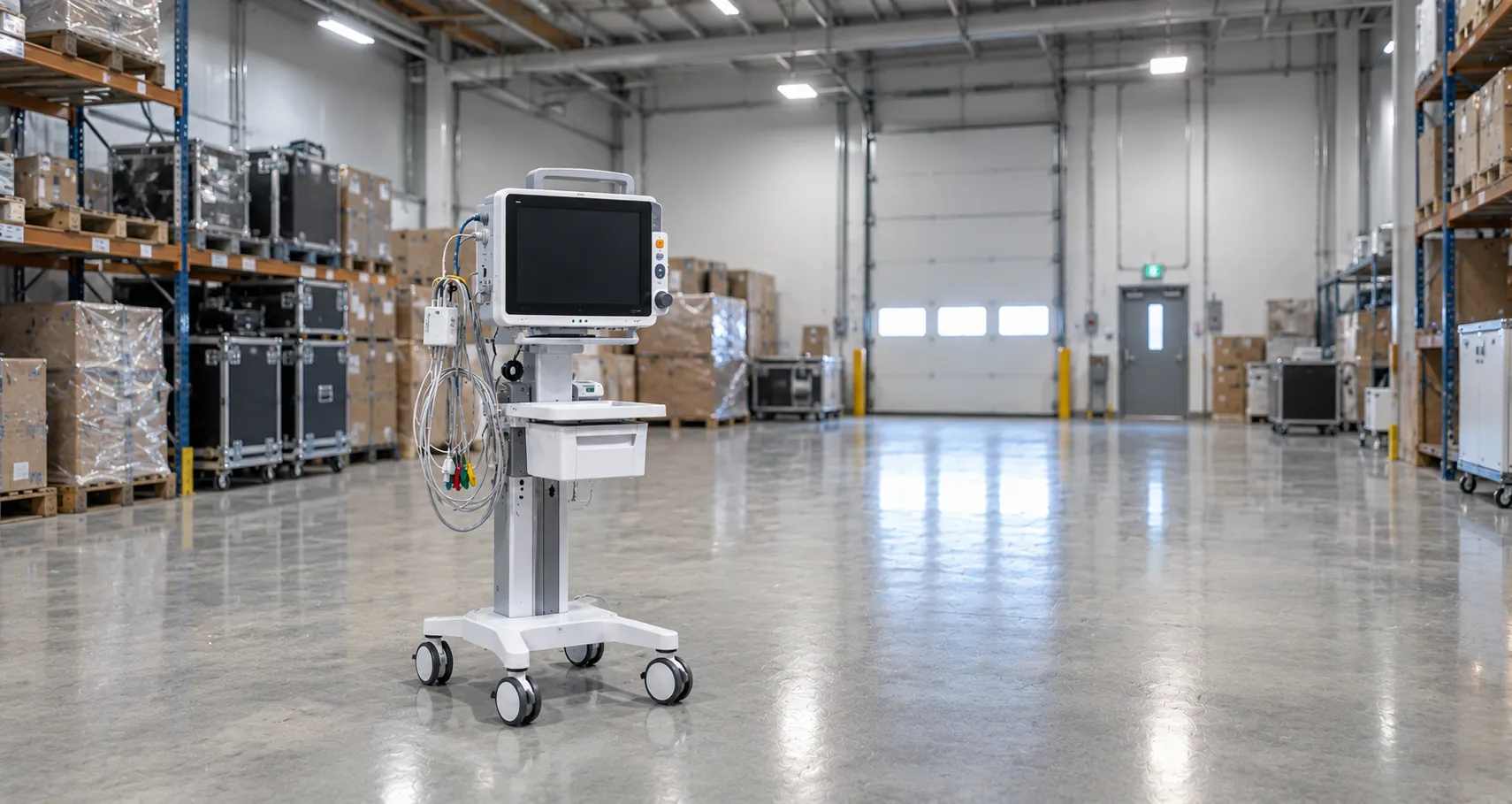
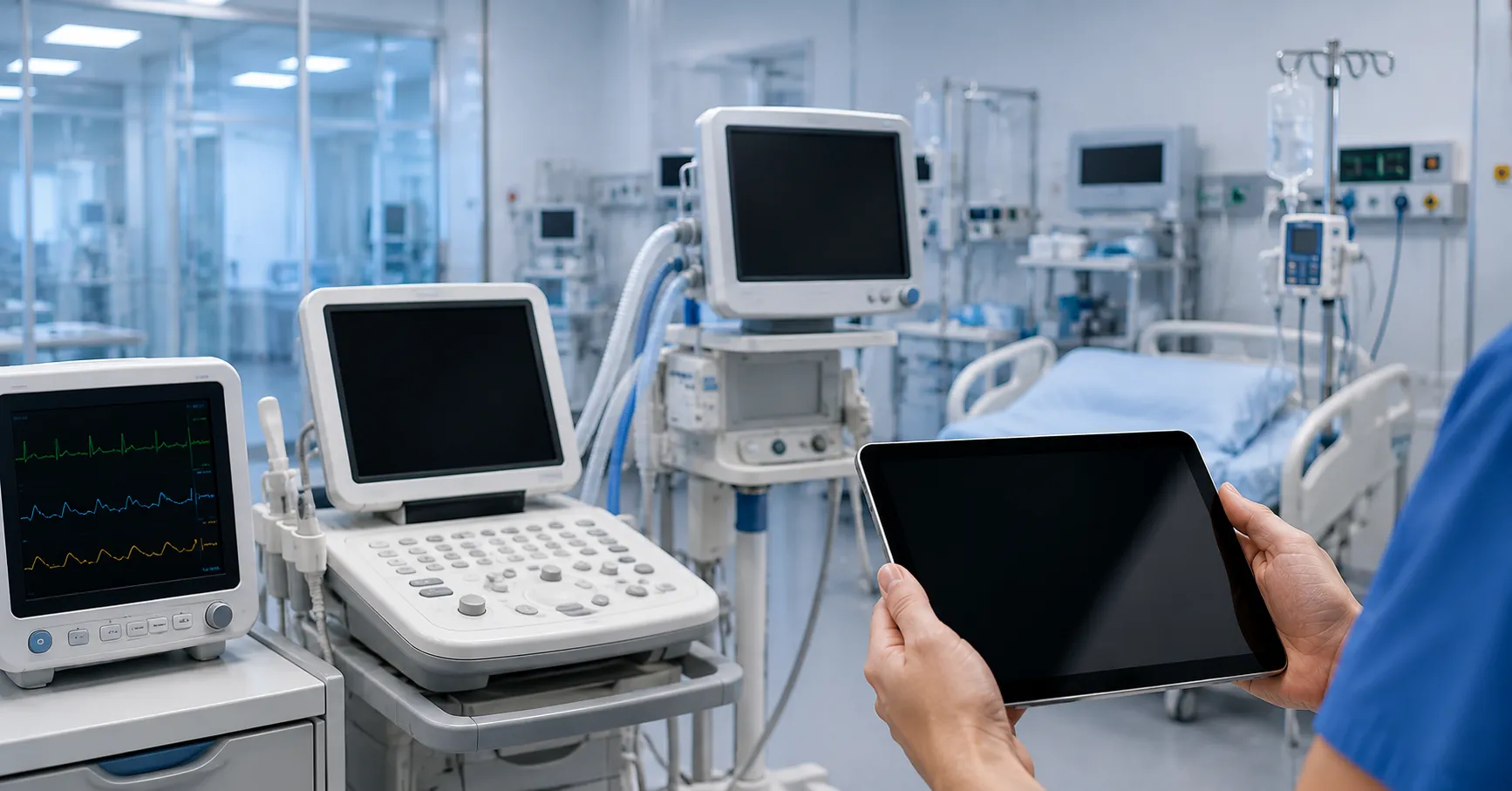
Digital health equipment supports modern care delivery by combining medical devices, software, sensors, connectivity, data systems, mobile platforms, cloud dashboards, and clinical workflows. These technologies may include connected patient monitors, wearable sensors, smart diagnostic devices, telehealth equipment, remote patient monitoring kits, digital imaging systems, cloud-based equipment platforms, smart infusion systems, and software-supported clinical tools.
For healthcare buyers, digital health equipment should not be selected only because it looks modern. Buyers need to review clinical value, device accuracy, connectivity, interoperability, cybersecurity, data privacy, regulatory documentation, staff training, service support, software lifecycle, and total cost of ownership. WHO states that digital health can help health systems become more efficient and sustainable while supporting quality, affordable, and equitable care when implemented properly.
How Digital Health Equipment Supports Modern Care Delivery
Digital health equipment helps healthcare teams move from isolated devices toward connected care workflows. The strongest value comes when equipment data supports faster communication, better visibility, and more organised clinical decisions.
Connected Patient Information — Digital health equipment can collect patient readings, images, waveforms, test results, and device status data. When this information is integrated with the appropriate dashboard or clinical system, staff can review it more efficiently.
Better Care Coordination — Digital devices can support coordination between hospitals, clinics, diagnostic centres, home care teams, remote monitoring teams, and specialist services. This is especially useful when patients move between departments or care settings.
Support for Remote and Hybrid Care — Remote patient monitoring devices, telehealth tools, wearable sensors, and connected home care equipment can help selected patients remain connected to care teams outside traditional hospital visits.
Improved Operational Visibility — Cloud-based dashboards and connected equipment platforms can help biomedical teams track maintenance, uptime, device location, service history, and equipment lifecycle
FDA defines digital health technologies as systems that use computing platforms, connectivity, software, and sensors for healthcare and related uses. This description fits many categories of modern digital health equipment used in hospitals, clinics, diagnostics, home care, and remote monitoring.
Where Digital Health Equipment Is Used
Digital health equipment can be used across many healthcare environments. The correct technology mix depends on clinical services, patient group, infrastructure, staffing, data policy, and budget.
Hospitals and Critical Care Units — Hospitals may use connected patient monitors, ventilators, infusion pumps, central monitoring systems, digital beds, point-of-care testing devices, and cloud-based equipment platforms to support clinical and operational workflows.
Diagnostic Centres — Digital X-ray, ultrasound, CT, MRI, laboratory analysers, ECG systems, and AI-supported reporting platforms can help diagnostic centres improve data handling, reporting speed, and quality-control visibility.
Outpatient Clinics — Clinics may use digital examination devices, connected vital signs equipment, teleconsultation tools, smart diagnostic devices, and digital documentation systems to support faster patient assessment.
Home Healthcare Services — Homecare providers may use remote patient monitoring kits, connected pulse oximeters, blood pressure monitors, glucose monitors, ECG patches, smart scales, and wearable sensors to support selected care pathways.
Rehabilitation and Long-Term Care — Rehabilitation centres and long-term care providers may use mobility sensors, activity trackers, digital therapy equipment, patient monitoring tools, and connected support devices.
Facilities sourcing through regulated and certified equipment suppliers worldwide should confirm medical-device documentation, software support, data policies, cybersecurity information, service access, and compliance requirements before procurement.
Common Types of Digital Health Equipment
Digital health equipment covers many product categories. Buyers should understand whether a device is mainly used for monitoring, diagnostics, therapy, communication, asset management, or clinical workflow support.
Connected Patient Monitors — These devices collect vital signs and may send data to central stations, dashboards, or electronic systems. Buyers should review accuracy, alarm settings, supported parameters, battery life, and integration options.
Wearable Medical Devices — Wearable ECG patches, oxygen sensors, glucose monitors, temperature sensors, and movement sensors can support continuous or scheduled monitoring in selected patient groups.
Remote Patient Monitoring Kits — RPM kits may include multiple connected devices, patient instructions, mobile apps, hubs, and clinical dashboards. They require strong patient training and support workflows.
Smart Diagnostic Devices — Digital imaging systems, laboratory analysers, point-of-care testing devices, and AI-supported diagnostic tools can help healthcare teams capture and review diagnostic information more efficiently.
Telehealth Equipment — Telehealth equipment may include video consultation systems, digital stethoscopes, examination cameras, connected diagnostic tools, and patient-side communication devices.
Cloud-Based Equipment Management Platforms — These systems help biomedical teams manage asset records, work orders, preventive maintenance, service documents, spare parts, and equipment lifecycle information.
Software as a Medical Device — Some digital health tools are software-based and may perform medical purposes without being part of a physical hardware device. FDA references the IMDRF definition of Software as a Medical Device as software intended for one or more medical purposes that is not part of a hardware medical device.
Benefits of Digital Health Equipment
Digital health equipment can improve care delivery when it is selected carefully and matched with the right workflow.
Faster Access to Information — Connected devices can reduce delays caused by manual recording, paper files, or disconnected systems. This can help clinical teams review patient data sooner.
Improved Monitoring Between Visits — Remote and wearable devices can support selected patient monitoring outside hospitals and clinics. This can be useful in chronic care, post-discharge follow-up, and home care pathways.
Better Diagnostic Workflow — Digital diagnostic systems can support image transfer, result reporting, quality-control checks, and remote specialist review.
Stronger Equipment Management — Cloud platforms and connected devices can help biomedical teams track service needs, downtime, maintenance schedules, and device usage.
Improved Multi-Site Coordination — Healthcare groups with multiple hospitals, clinics, or diagnostic centres can use digital equipment platforms to standardise data management, maintenance, training, reporting, and procurement decisions.
Support for Sustainable Operations — Better equipment visibility and maintenance planning can reduce unnecessary purchases, downtime, and waste when facilities use data properly.
Interoperability and Data Flow
Interoperability is central to digital health equipment planning. A device may collect useful data, but that data has limited value if it cannot move safely and correctly into clinical workflows.
System Compatibility — Buyers should confirm whether equipment can connect with electronic medical records, hospital information systems, laboratory systems, imaging platforms, nurse call systems, asset platforms, or cloud dashboards.
Safe Data Exchange — FDA explains medical device interoperability as the ability to safely, securely, and effectively exchange and use information among devices, products, technologies, or systems.
Patient Matching — Systems should support accurate patient identification. Wrong patient matching can create serious clinical and documentation risks.
Data Format and Export — Buyers should ask whether data can be exported in usable formats. Closed systems may create long-term vendor lock-in.
Downtime Planning — Digital systems should have a backup workflow in place. Staff must know what to do if the network, cloud platform, app, or dashboard becomes unavailable.
Cybersecurity and Data Protection
Digital health equipment often connects to networks, mobile apps, cloud systems, remote service tools, or patient data platforms. This makes cybersecurity a major procurement and operational concern.
Access Control — Healthcare facilities should define who can access patient data, device settings, dashboards, software updates, and service tools.
Secure Data Transmission — Buyers should ask whether data is encrypted during transfer and storage. The supplier should provide clear documentation.
Remote Access Management — Some vendors use remote access for support or troubleshooting. Access should be approved, logged, time-limited, and controlled by facility policy.
Software Updates — Digital health equipment may need firmware, software, app, or cloud platform updates. Updates should be documented and planned to avoid workflow disruption.
Cybersecurity Documentation — FDA cybersecurity guidance provides recommendations on device design, labelling, and documentation for devices with cybersecurity risk. This supports the need for cybersecurity review before purchasing connected or software-enabled equipment.
Procurement Guidance for Digital Health Equipment
Procurement of digital health equipment should involve clinical users, biomedical engineers, IT teams, cybersecurity staff, data protection officers, finance teams, legal teams, compliance staff, and procurement teams. Digital equipment affects more than one department, so the buying process must be cross-functional.
Total Cost of Ownership — Buyers should include equipment price, software licences, cloud fees, integration, training, installation, accessories, data storage, cybersecurity review, maintenance, spare parts, updates, service contracts, and replacement planning.
Clinical Need Review — The facility should define the real problem the equipment must solve. A digital feature is only valuable if it improves patient care, workflow, monitoring, diagnostics, communication, or equipment management.
Supplier Transparency — Suppliers and manufacturers advertising to global healthcare buyers should provide clear information on specifications, intended use, connectivity, software support, data storage, cybersecurity controls, warranty, training, spare parts, and service terms.
Compliance and Documentation — Procurement teams should request conformity documents, product registrations where relevant, user manuals, service manuals, cybersecurity documents, software version details, privacy information, data handling policies, warranty terms, and training materials.
Procurement Quality — WHO states that effective health technology procurement practices support safe, equitable, and high-quality healthcare. This is especially important when buying digital health equipment that affects data, workflow, maintenance, and clinical decision support.
Healthcare groups managing several facilities may benefit from structured distribution and reseller partnership arrangements. Standardising digital health equipment, accessories, training, service contracts, and platform workflows can reduce operational variation across sites.
Key Questions Buyers Should Ask Suppliers
Digital health equipment requires a deeper supplier review than many traditional devices.
What is the intended medical use? — The supplier should explain whether the device is for monitoring, diagnostics, therapy support, workflow management, asset tracking, or patient communication.
What data does the equipment collect? — Buyers should know which patient, device, service, or operational data is collected and why.
Where is the data stored? — Facilities should understand whether data is stored locally, in the cloud, on a mobile device, or through a third-party platform.
What systems can it integrate with? — Suppliers should explain compatibility with EMR, HIS, LIS, PACS, dashboards, monitoring stations, and maintenance systems.
How are updates managed? — Buyers should confirm whether updates are automatic, controlled, validated, documented, and supported.
What happens during downtime? — The equipment should support safe fallback workflows if connectivity, power, software, or cloud access fails.
What training is included? — Training should cover clinical users, biomedical teams, IT teams, and administrators where relevant.
Maintenance and Lifecycle Management
Digital health equipment needs both physical and software lifecycle management. Biomedical engineering and IT teams should work together from installation to decommissioning.
Preventive Maintenance — Devices should follow manufacturer-recommended inspection, calibration, cleaning, and service schedules.
Software Version Control — Facilities should record software and firmware versions. Updates should be tested and documented in accordance with facility policy.
Battery and Accessory Management — Wearables, mobile devices, monitors, sensors, hubs, tablets, chargers, probes, cuffs, cables, and gateways need planned replacement and inspection.
Service Records — Maintenance reports, downtime records, fault logs, warranty claims, update history, calibration certificates, and cybersecurity actions should be documented.
End-of-Life Planning — Digital health equipment may become unsupported when software, cloud platforms, mobile apps, or operating systems change. Buyers should ask suppliers about lifecycle support before purchase.
WHO defines medical equipment as medical devices that require calibration, maintenance, repair, user training, and decommissioning, which clinical engineers usually manage. This is highly relevant to digital health equipment because both hardware and software require lifecycle planning.
Implementation Planning for Healthcare Facilities
Digital health equipment should be implemented through a clear plan. Poor implementation can create unused dashboards, disconnected devices, staff frustration, data gaps, and hidden costs.
Map Existing Workflow — Facilities should understand how data, patients, samples, images, reports, equipment requests, and clinical decisions currently move.
Define the New Workflow — Teams should decide who uses the equipment, who reviews data, who responds to alerts, who maintains the system, and where records are stored.
Pilot Before Scaling — A small pilot can reveal usability issues, connectivity problems, training gaps, alert overload, and integration challenges before a larger investment.
Train Staff by Role — Clinical staff, biomedical engineers, IT teams, administrators, and remote monitoring teams may each need different training.
Review Early Performance — Facilities should track uptime, user feedback, alert volume, data quality, service tickets, patient experience, and workflow impact after launch.
Digital Health Equipment in Homecare and Remote Care
Modern care delivery increasingly extends beyond hospital walls. Digital health equipment can support selected patients in home care, remote monitoring, chronic care, rehabilitation, and follow-up programmes.
Remote Patient Monitoring — Connected blood pressure monitors, pulse oximeters, glucose devices, ECG patches, and smart scales can help care teams review selected readings from outside the clinic.
Telehealth Equipment — Video systems, digital examination tools, connected diagnostic devices, and patient-side communication equipment can support remote consultations.
Patient Usability — Home-use devices must be simple, durable, easy to charge, and easy to troubleshoot. Patients and caregivers need clear instructions.
Connectivity Planning — Home monitoring depends on Wi-Fi, Bluetooth, cellular connection, mobile apps, or hubs. Poor connectivity can interrupt data flow.
Clinical Boundaries — Patients should understand that digital monitoring does not replace emergency care or direct clinical review when needed.
International Sourcing Considerations
Digital health equipment can be sourced internationally when buyers clearly define clinical use, device category, software needs, language requirements, power specifications, connectivity, data hosting, cybersecurity expectations, documentation, warranty, service access, spare parts, and compliance requirements.
Buyers should confirm whether they need connected patient monitors, wearable sensors, digital diagnostic systems, telehealth equipment, remote patient monitoring kits, cloud-based equipment management platforms, AI-supported devices, smart infusion systems, or full digital care packages. For project-based sourcing, buyers can contact the Medigear.uk team for supply support to discuss availability, documentation, export needs, and procurement requirements.
Future Role of Digital Health Equipment
Digital health equipment will continue to support modern care delivery through connected monitoring, digital diagnostics, remote care, cloud platforms, smart sensors, and better equipment management. However, successful adoption depends on planning, governance, infrastructure, training, and supplier accountability.
The best digital health equipment strategy starts with the clinical problem, not the technology. Facilities should choose tools that improve care coordination, reduce manual work, support accurate information flow, protect patient data, and strengthen equipment readiness.
Digital health equipment can help healthcare providers deliver more flexible, connected, and data-supported care when selected responsibly and supported by strong workflows.
Final Thoughts
Digital health equipment helps modern healthcare facilities integrate devices, patient data, diagnostic systems, monitoring systems, telehealth tools, maintenance records, and care workflows. These technologies can support faster communication, better visibility, remote care, and stronger operational planning when selected carefully.
The right digital health equipment should match clinical needs, patient workflows, data policies, cybersecurity requirements, interoperability plans, maintenance capacity, staff training, and local compliance standards. Buyers should review documentation, total cost of ownership, supplier support, software lifecycle, and service reliability before ordering.
Disclaimer
Medigear.uk is a global medical equipment supplier, exporter, and distributor. The content published on this site is intended for educational and product awareness purposes only. Nothing on this page constitutes medical advice, clinical guidance, cybersecurity advice, data protection advice, legal advice, or treatment recommendations. All healthcare procurement, technology, data, legal, and clinical decisions should be made by qualified professionals and compliant procurement teams operating within the regulatory frameworks of their respective countries.