Nobody wants to talk about catheters. Not patients. Not families. Not even clinicians, if they are being honest. It is one of those medical realities that sits in the corner of healthcare conversations — necessary, sometimes life-changing, but wrapped in enough embarrassment and anxiety to keep most people from asking the questions they desperately need answered.
So let's answer them. Plainly. Without the clinical detachment that makes people feel like a diagnosis rather than a person.
Understanding different catheter types matters because the right choice affects comfort, dignity, independence, infection risk, and quality of life in ways that go far beyond plumbing. Whether you are a patient exploring catheter types for the first time, a caregiver learning to manage one at home, or a clinician advising someone on their options, this guide was written for the conversation that is usually rushed in a three-minute appointment.
Medigear supplies certified catheter products to patients, carers, and clinical teams across the UK. Every recommendation here reflects genuine clinical understanding and the practical experience of supporting people through one of healthcare's most personal decisions.
What Is a Urinary Catheter
When exploring catheter types, the starting point is simple: a urinary catheter is a thin, flexible tube inserted into the bladder to drain urine when the body cannot do so naturally. That sounds simple enough on paper. In practice, the reasons behind catheter use are varied and deeply personal — post-surgical recovery, neurological conditions, spinal injury, prostate enlargement, urinary retention, incontinence management, and end-of-life care all bring patients to this point through very different doors.
Indwelling Catheters
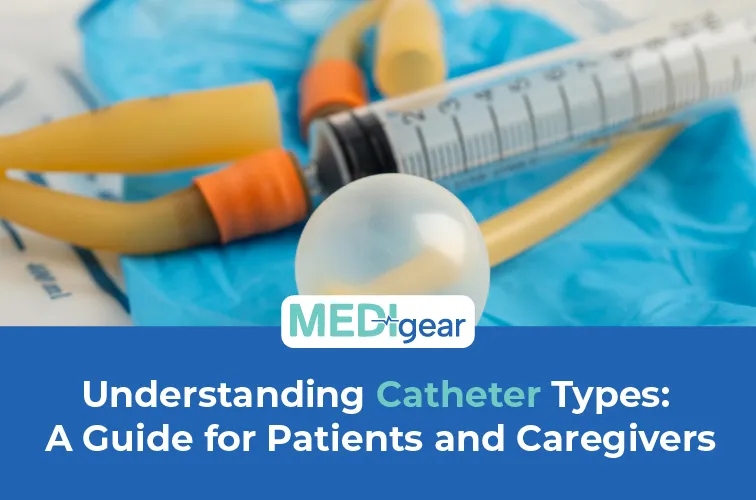
Indwelling catheters — also called Foley catheters — remain inside the bladder continuously, held in place by a small inflated balloon. These catheters connect to a drainage bag that collects urine either in a leg bag during the day or beside the bed at night. Indwelling catheters suit patients who cannot self-catheterise, those recovering from surgery, and individuals with severe retention or mobility limitations. They require regular changing — typically every twelve weeks — by a trained nurse or clinician. The trade-off is convenience against infection risk, which increases the longer any indwelling device remains in place.
Intermittent Catheters
Intermittent catheters are inserted to drain the bladder and then removed immediately afterwards. The patient or carer performs this several times a day — typically four to six times — replicating the natural emptying cycle. This approach carries a significantly lower risk of infection than indwelling catheters and preserves bladder function better over time. Intermittent self-catheterisation gives patients genuine independence and control. It sounds daunting at first, but most people master the technique quickly with proper training and the right catheter design.
Among intermittent catheter types, several varieties stand out. Uncoated catheters require separate lubrication before insertion. Pre-lubricated catheters arrive ready to use, with a hydrophilic coating that activates when exposed to water. Closed-system catheters include an integrated collection bag for situations where a toilet is not available. Compact, discreet catheters — shorter and discreet — suit patients who want something that fits in a pocket or handbag without announcing itself to the world. The choice between them comes down to dexterity, lifestyle, skin sensitivity, and personal preference.
External Catheters
External catheters offer a non-invasive alternative for men with urinary incontinence. Condom-style sheaths fit over the penis and connect to a drainage bag — no insertion, no infection risk from internal devices, and no need for sterile technique. They suit men with incontinence who have good skin integrity and enough dexterity to apply and remove the sheath. Female external catheters are newer to the market and evolving — adhesive devices that sit over the urethral opening are gaining traction, but are not yet as widely available or as well-established as male external options.
Suprapubic Catheters
Suprapubic catheters enter the bladder through a small surgical opening in the lower abdomen rather than through the urethra. They suit patients who cannot use urethral catheters due to injury, stricture, or anatomical complications. Suprapubic access is more comfortable for long-term use, reduces urethral trauma, and makes intimate relationships easier to navigate — a consideration that clinical guides rarely mention but patients consistently raise as important.
Choosing Between Catheter Types
Choosing between catheter types starts with an honest conversation between patient and clinician. What caused the need? How long will catheterisation last? What does the patient's daily life look like? How much dexterity do they have? What matters most to them — independence, discretion, comfort, or simplicity? There is no single right answer. The best catheters are the ones that fit the person, not just the anatomy.
Infection Prevention
Infection prevention sits at the centre of every catheter decision. Catheter-associated urinary tract infections are among the most common healthcare-acquired infections in the UK. Good hand hygiene before and after handling catheters, proper cleaning of the catheter site, timely bag emptying, and regular catheter changes all significantly reduce risk. Intermittent catheterisation carries the lowest infection risk of all methods — one of its strongest clinical advantages. Patients managing catheters alongside other medical devices — such as prosthetic limbs, mobility aids, or rehabilitation equipment — face compounded hygiene demands that require structured daily routines. Our complete guide to prosthetics, covering types, fitting, and maintenance, explores how patients living with long-term medical devices build sustainable care routines that protect skin integrity, prevent infection, and maintain quality of life across all the equipment they depend on.
Living With a Catheter at Home
Living with a catheter at home changes daily routines in ways nobody fully prepares you for. Showering requires planning. Clothing choices shift. Sleeping positions adapt. Intimacy becomes a conversation that many couples avoid until it becomes unavoidable. Bag management — leg bags during the day, night bags beside the bed — becomes a quiet skill that patients and carers develop together. The right catheters and supplies make these adjustments smoother. The wrong ones make every day harder than it needs to be.
Supplies and Accessories
Catheter supplies and accessories deserve the same attention as the catheter itself. Drainage bags, leg bag straps, catheter valves, adhesive removers, cleansing wipes, and night bag stands all contribute to comfort, hygiene, and dignity. Skimping on accessories to save a few pounds creates discomfort and complications that cost far more in the long run — both clinically and emotionally.
Caregiver Guidance
Caregivers carry an enormous load when managing catheter care for someone they love. Learning sterile technique, managing bag changes, monitoring for signs of infection, and handling the emotional weight of providing such intimate care — all of this falls to people who often had no medical training before last Tuesday. Good catheter supplies, clear instructional guidance, and responsive supplier support make the difference between a caregiver who copes and one who burns out.
Paediatric Catheterisation
Paediatric catheterisation presents its own challenges. Children need age-appropriate catheter sizes, gentler materials, and clinical teams who understand that a child's fear is not an obstacle to overcome but an experience to be handled with patience and creativity. Parents managing intermittent catheterisation for a child at home need clear, calm training and ongoing access to support when things feel difficult. The equipment must be right — but the human approach matters just as much.
Compliance and Certifications
Before purchasing catheter supplies, always confirm CE marking, ISO compliance, and full MHRA registration. Check that products are latex-free where allergies exist, that packaging supports sterile technique, and that your supplier offers reliable delivery schedules. Running out of catheters is never just an inconvenience — for patients who depend on them, it is a clinical emergency.
Disposal and Hygiene
Disposal of used catheter supplies requires care and common sense. Single-use catheters and items — gloves, wipes, uncoated intermittent devices — go into clinical waste bags provided by your local authority or healthcare trust. Used catheters and drainage bags should be emptied, sealed, and disposed of in accordance with local guidelines. Never flush any component. Setting up a simple disposal station at home — a small pedal bin with appropriate bags in the bathroom — keeps the process hygienic, discreet, and manageable for both patients and caregivers without turning the bathroom into something that feels clinical.
Diet and Hydration
Hydration and diet play an underappreciated role in successful long-term management. Drinking enough water keeps urine dilute and reduces the risk of sediment blocking the drainage pathway. Cranberry products are often recommended, but clinical evidence for their effectiveness remains mixed. Avoiding excessive caffeine and alcohol reduces bladder irritation. Simple dietary awareness — not dramatic lifestyle change — supports better outcomes alongside good equipment and proper technique.
Travel With a Catheter
Travel with a drainage device demands practical preparation rather than avoidance. Pack extra catheters and supplies — always more than you think you will need. Carry a letter from your GP or specialist confirming your medical requirement, especially for air travel, where security screening may raise questions about bags or equipment. Compact intermittent options and travel-sized night bags make journeys more manageable. The goal is adaptation, not restriction — and the right catheters and supplies turn a stressful prospect into a solvable problem.
Emotional Wellbeing
For patients living with catheters long-term, support groups, counselling services, and honest conversations with clinical teams all help — and the right catheters and equipment reduce enough daily friction to allow emotional recovery to happen alongside physical management. Patients describe feelings of embarrassment, loss of control, frustration, and isolation — particularly in the early weeks. Partners and family members experience their own adjustments, sometimes struggling with changes in intimacy or the practicalities of shared living spaces. Acknowledging these feelings openly, rather than brushing them aside with reassurance, is the first step toward genuine adjustment.
Latest Innovations
Technology across all catheter types is evolving steadily. Antimicrobial-coated catheters aim to further reduce infection rates. Smart drainage systems with volume tracking help clinicians monitor output remotely. Softer, more flexible materials improve comfort across catheters during insertion and wear. And app-based reminders help catheter users maintain consistent schedules without relying on memory alone.
Why Choose Medigear for Catheter Supplies
Medigear supplies certified catheter products and accessories to patients, carers, and clinical teams across the UK — backed by discreet delivery, transparent pricing, and the kind of genuine support that makes understanding catheter types and managing daily care feel less overwhelming. Whether you are a patient navigating this for the first time, a caregiver learning to help, or a clinician advising on the right product, our team is here to make the process clearer, simpler, and more dignified. Reach out to our team directly for guidance on catheter types shaped around your situation — not a product catalogue.
CONCLUSION
Catheters are deeply personal medical devices — and the type, quality, and support behind them shape daily comfort, dignity, and health in ways that deserve honest conversation rather than awkward silence. From indwelling and intermittent to external and suprapubic options, every catheter decision should be guided by the patient's real life, not just their clinical notes. Medigear stands alongside patients, carers, and clinicians with certified supplies, discreet delivery, and guidance that treats every person's needs with the respect they deserve. Ready to find the right catheter solution? Speak to our team today for support tailored to your comfort, lifestyle, and dignity.