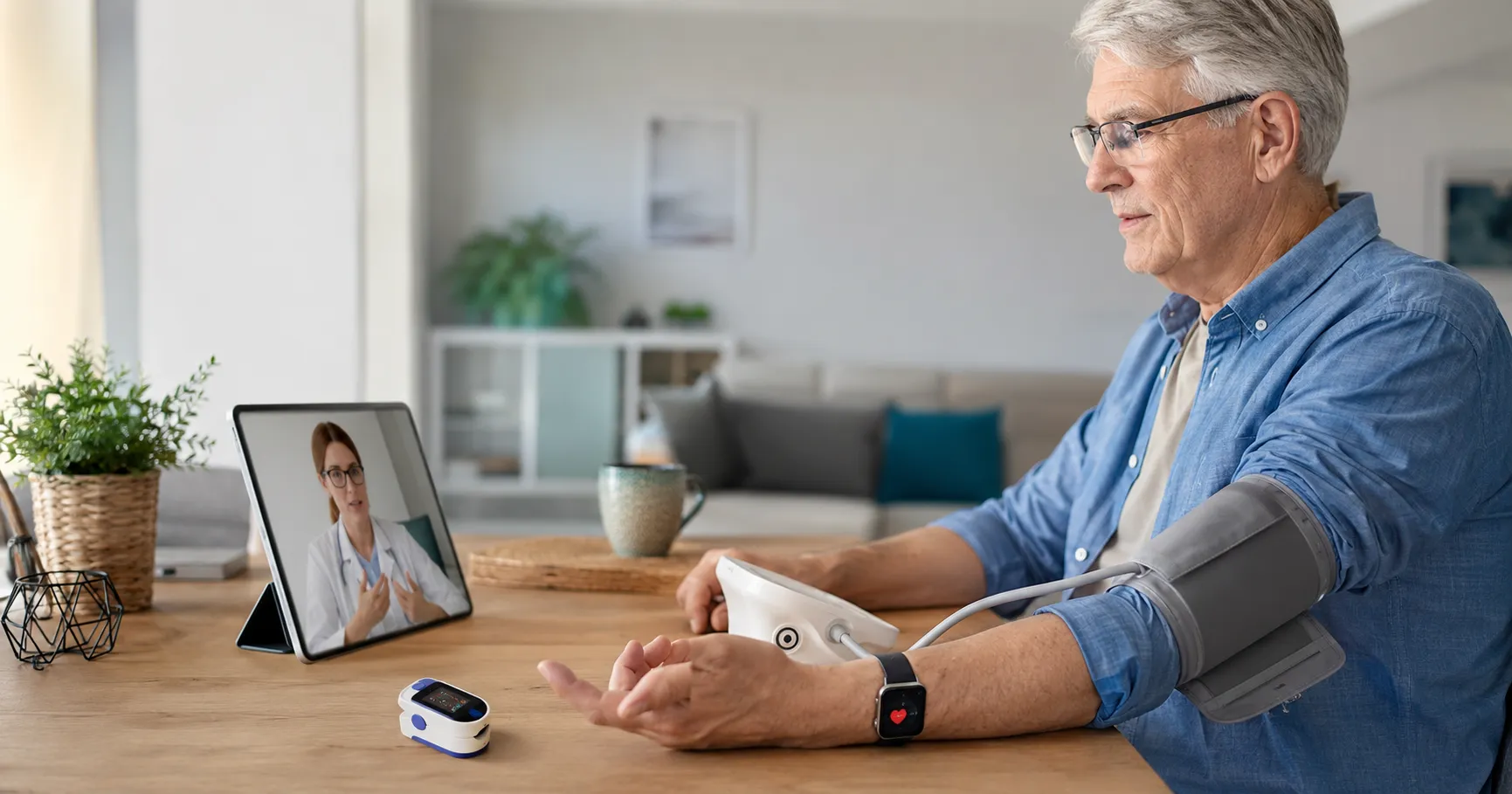
Remote patient monitoring devices help healthcare providers observe selected patient health data outside traditional clinical settings. These devices may be used in homes, community care programmes, outpatient follow-up, chronic disease management, post-discharge monitoring, rehabilitation support, and virtual care pathways. They can collect information such as blood pressure, oxygen saturation, heart rate, ECG data, glucose trends, weight, temperature, respiratory patterns, or activity levels.
For healthcare buyers, remote patient monitoring should not be treated as only a digital add-on. Buyers need to review device accuracy, connectivity, data security, patient usability, clinical workflow, alert management, service support, software updates, training, and compliance with applicable local regulatory standards. Digital Health Australia describes remote patient monitoring as a system that allows healthcare professionals to assess, monitor, and care for patients virtually using software and medical devices outside traditional clinical settings.
How Remote Patient Monitoring Supports Smarter Care
Remote patient monitoring devices support care by keeping healthcare teams connected to patient data between clinic visits. They can help clinicians identify trends, follow recovery, review long-term conditions, and support earlier intervention when data suggests a problem.
Continuous or Scheduled Data Collection — Some devices collect data continuously, while others require patients to take readings at planned times. The right choice depends on the condition being monitored and the clinical workflow.
Better Visibility Between Appointments — Traditional care often depends on data collected during clinic visits. Remote monitoring can provide additional information in the patient’s natural environment, which may help clinicians better understand trends.
Support for Chronic Care — Patients with long-term conditions may need regular monitoring. RPM devices can support care plans for selected cardiovascular, respiratory, metabolic, rehabilitation, and post-discharge needs under clinical direction.
Smarter Care Coordination — Data from RPM devices can help nurses, physicians, care coordinators, and remote monitoring teams identify which patients may need follow-up. Research literature describes RPM as a means for healthcare practitioners to monitor physiological parameters remotely and intervene when abnormalities arise.
Where Remote Patient Monitoring Devices Are Used
Remote patient monitoring devices are used across many healthcare settings. The correct device mix depends on patient group, clinical goal, connectivity access, staff capacity, and data governance.
Hospital Discharge Programmes — Hospitals may use RPM devices to monitor selected patients after discharge. This can support recovery follow-up and reduce unnecessary travel when a remote check is suitable.
Chronic Disease Clinics — Cardiology, respiratory, diabetes, renal, rehabilitation, and elderly care programmes may use remote devices to track patient readings over time. Facilities sourcing through regulated and certified equipment suppliers worldwide should verify medical-device status, data accuracy, platform compatibility, service support, and documentation before procurement.
Home Healthcare Services — Homecare providers may use connected devices for patient monitoring, nurse follow-up, or caregiver support. Devices must be easy for patients and caregivers to operate.
Rural and Community Care — RPM can improve healthcare access for patients living far from clinics. However, successful use depends on device reliability, network availability, staff workflow, and patient training.
Specialist Virtual Care Pathways — Some providers use remote monitoring within virtual clinics. These services need clear escalation rules, alert-review responsibilities, and data-documentation processes.
Common Types of Remote Patient Monitoring Devices
Remote patient monitoring systems can include many types of devices. Some are connected devices, while others are part of wider monitoring platforms.
Connected Blood Pressure Monitors — These devices collect blood pressure readings and may transmit data to a mobile app or clinical dashboard. They are commonly used in cardiovascular and hypertension follow-up programmes.
Pulse Oximeters — Connected pulse oximeters can measure oxygen saturation and pulse rate. They may be useful in selected respiratory, post-discharge, or home oxygen monitoring pathways.
Wearable ECG and Heart Rhythm Devices — ECG patches, wearable monitors, and rhythm devices can help collect cardiac trend data. Buyers should review the monitoring duration, data quality, report format, and clinical review workflow.
Connected Glucose Monitoring Devices — Glucose monitoring systems may support diabetes care by helping clinicians and patients review trends. Buyers should check sensor life, data access, compatibility, and patient support needs.
Smart Weight Scales — Connected weight scales may support selected cardiac, renal, maternity, or chronic care programmes where weight trend matters.
Temperature and Respiratory Monitoring Devices — Some RPM systems track temperature, respiratory rate, or sleep-related patterns. Buyers should confirm intended use and clinical relevance before purchase.
Multi-Parameter Home Monitoring Kits — Some providers use kits that include multiple devices, such as a blood pressure monitor, pulse oximeter, thermometer, weight scale, and a tablet or mobile app. These kits need strong patient instructions and support channels.
Key Features Healthcare Buyers Should Review
Remote patient monitoring devices should be selected for accuracy, usability, data flow, and service reliability. A device may look modern but fail in practice if patients cannot use it consistently or if staff cannot manage the data.
Measurement Accuracy — Buyers should request accuracy information, validation data, calibration needs, and intended use. Devices used for clinical decisions need stronger documentation than general wellness tools.
Connectivity Options — Devices may use Bluetooth, Wi-Fi, cellular networks, hubs, mobile apps, or cloud platforms. The best option depends on patient location, internet access, and support capacity.
Patient Usability — Patients may be elderly, visually impaired, anxious, or unfamiliar with technology. Devices should have simple instructions, clear displays, easy pairing, and reliable power.
Clinical Dashboard — Healthcare teams need dashboards that show useful trends, not just raw data. The system should support alerts, review notes, escalation, export, and integration where required.
Battery and Charging — Battery life matters in home monitoring. Devices that need frequent charging may reduce adherence.
Data Security and Privacy — Connected devices may transmit sensitive patient information. FDA digital health information explains that digital health technologies use computing platforms, connectivity, software, and sensors for health care and related uses.
Benefits of Remote Patient Monitoring Devices
Remote patient monitoring can support smarter care when it is matched with the right clinical pathway. The device alone is not enough; the programme must include trained staff, reliable data review, patient education, and escalation protocols.
Earlier Review of Concerning Trends — RPM data can help care teams see changes between visits. This may support earlier review when readings move outside the agreed-upon ranges.
Reduced Unnecessary Visits — Some stable patients may not need every in-person follow-up if remote data is properly reviewed. This can reduce travel burden and improve convenience.
Improved Patient Engagement — When patients can see their own readings, they may become more aware of health patterns. However, education is needed so patients do not misinterpret data or panic over minor changes.
Better Resource Planning — Remote monitoring data can help healthcare providers prioritise patients who need attention. This can support smarter use of nursing, physician, and care coordination resources.
Support for Home-Based Care Models — RPM can help healthcare systems expand selected care beyond hospital walls. Published reviews describe benefits and challenges, including the need to carefully manage workflow, technology, access, and patient engagement.
Risks and Limitations to Consider
Remote patient monitoring has real value, but it also creates operational and clinical risks if poorly planned.
Data Overload — Monitoring programmes can generate large amounts of data. Without clear alert thresholds and staff responsibility, important readings may be missed.
False Alerts and Alert Fatigue — Poorly configured alerts can overwhelm clinical teams. Too many alerts may reduce the quality of staff responses.
Patient Misuse or Non-Adherence — Devices may be used incorrectly, readings may be skipped, or patients may forget to charge and sync. Training and support are essential.
Connectivity Gaps — Remote monitoring depends on data transmission. Poor internet, mobile coverage, app errors, or device pairing issues can interrupt monitoring.
Cybersecurity Risk — Connected medical devices can create cybersecurity exposure. The FDA has issued safety communications about cybersecurity vulnerabilities in certain patient monitors, underscoring the need for procurement teams to review connected-device security before deployment.
Equity and Access Challenges — Some patients may not have smartphones, internet access, digital confidence, or caregiver support. Remote monitoring should not exclude patients who need alternative care pathways.
Procurement Guidance for RPM Devices
Procurement of remote patient monitoring devices should include clinical teams, IT teams, biomedical engineers, data protection officers, cybersecurity teams, finance, legal, and care pathway leaders. The device must fit the clinical programme, not the other way around.
Total Cost of Ownership — Buyers should include device cost, sensors, cuffs, patches, batteries, chargers, mobile hubs, platform fees, cloud storage, software licences, support staff, replacement units, training, data integration, cybersecurity review, and maintenance.
Clinical Evidence and Intended Use — Suppliers should explain what the device is designed to monitor and what decisions it can support. Buyers should request validation information and product documentation.
Supplier Transparency — Suppliers and manufacturers advertising to global healthcare buyers should provide clear details on device specifications, accuracy, connectivity, platform features, data storage, cybersecurity, software updates, warranty, service response, and replacement process.
Compliance and Documentation — Procurement teams should request conformity documents, product registration where relevant, user manuals, cleaning instructions, cybersecurity documentation, privacy information, software version details, and support policies. Compliance should be checked against applicable local regulatory standards, as well as CE, FDA, ISO, IEC, or their regional equivalents, where relevant.
Patient Support Model — Buyers should confirm who helps patients install apps, pair devices, troubleshoot errors, replace batteries, and understand readings. A strong support model improves adherence.
Healthcare groups managing multiple hospitals, clinics, or home care programmes may benefit from structured distribution and reseller partnership arrangements. Standardising RPM devices, platform workflows, accessories, training, and service support can reduce confusion across sites.
Data Security and Cybersecurity Planning
Remote patient monitoring depends on data movement, so cybersecurity planning must happen before purchase.
Access Control — Healthcare providers should decide who can view patient data, change settings, respond to alerts, and export reports.
Encryption and Secure Transmission — Buyers should ask whether data is encrypted during transmission and storage. The answer should be clear and documented.
Software Updates — Devices and platforms should have a defined update process. Updates should not disrupt clinical monitoring or change functionality without review.
Audit Logs — Systems should record who accessed data, when alerts were reviewed, and what changes were made.
Vendor Risk Review — The supplier should explain data hosting, remote access, breach response, vulnerability management, and device security support. FDA cybersecurity guidance provides recommendations on cybersecurity device design, labelling, and documentation for medical device submissions, reinforcing the importance of security throughout the device lifecycle.
Implementation Planning for Remote Monitoring
Remote monitoring programmes should be implemented in phases. A strong launch plan helps avoid device returns, patient confusion, staff overload, and poor data quality.
Select the Right Patient Group — Not every patient needs remote monitoring. Programmes should start with groups for which monitoring data support a clear care pathway.
Define Alert Rules — Alerts should be clinically meaningful and manageable. Teams should decide who reviews alerts, how quickly they respond, and when to escalate.
Train Patients and Caregivers — Patients should know how to use the device, when to take readings, how to charge it, and who to contact for help.
Train Clinical Staff — Staff should understand dashboards, alert rules, documentation steps, and escalation policies.
Pilot Before Scaling — A small pilot can reveal device issues, workflow gaps, connectivity problems, and patient support needs before wider rollout.
Review Outcomes — Providers should monitor adherence, data quality, alert volume, patient feedback, staff workload, and device performance after launch.
Maintenance and Service Life
Remote patient monitoring devices need planned maintenance and replacement. Home-use devices may experience drops, battery wear, moisture exposure, user error, and connectivity issues.
Device Condition Checks — Providers should inspect devices upon return, reissue, or service. Cracked screens, worn cuffs, damaged sensors, missing chargers, or weak batteries should be addressed.
Cleaning Between Users — Shared devices must be cleaned in accordance with the manufacturer's instructions and the infection prevention policy.
Calibration and Accuracy Checks — Some devices may require periodic checks to maintain accuracy. Buyers should confirm calibration requirements before purchase.
Accessory Replacement — Cuffs, probes, patches, straps, chargers, batteries, sensors, and cases may need replacement. Procurement teams should ensure supplies are available.
End-of-Life Planning — Software support, app compatibility, battery life, and cloud platform access may end before the hardware fully fails. Buyers should ask suppliers about product lifecycle support.
International Sourcing Considerations
Remote patient monitoring devices can be sourced internationally when buyers clearly define clinical use, device type, connectivity requirements, data storage location, language support, app compatibility, power needs, documentation, warranty, service support, and cybersecurity expectations. This is especially important for healthcare groups buying RPM devices for home care programmes, virtual clinics, or multi-site chronic care services.
Buyers should confirm whether they need blood pressure monitors, pulse oximeters, ECG patches, glucose monitors, weight scales, multi-parameter home kits, wearable sensors, cloud platforms, mobile hubs, or clinical dashboards. For project-based sourcing, buyers can contact the Medigear.uk team for supply support to discuss availability, documentation, export needs, and procurement requirements.
Future Role of RPM in Smarter Care
Remote patient monitoring devices are becoming part of broader digital healthcare planning. Their value increases when they connect with clinical workflows, electronic records, telehealth services, home care teams, and predictive analytics.
Hospitals and clinics should focus on RPM systems that solve real care problems. A device should not be purchased only because it is connected or fashionable. It should support a defined patient pathway, produce reliable data, reduce avoidable workload, and improve care coordination.
Smarter care depends on more than technology. It requires clinical governance, staff training, patient education, secure systems, data review, maintenance planning, and supplier accountability.
Final Thoughts
Remote patient monitoring devices support smarter care by helping healthcare teams review patient data beyond traditional clinic and hospital visits. They can support chronic care, home healthcare, discharge follow-up, virtual clinics, and care coordination when used within a clear clinical pathway.
The right RPM solution should align with patient needs, device accuracy, connectivity, data security, staff workflow, alert management, maintenance planning, and local compliance standards. Buyers should review documentation, supplier support, cybersecurity, patient training, and total cost of ownership before ordering.
Disclaimer
Medigear.uk is a global medical equipment supplier, exporter, and distributor. The content published on this site is intended for educational and product awareness purposes only. Nothing on this page constitutes medical advice, clinical guidance, or treatment recommendations. All healthcare procurement and clinical decisions should be made by qualified medical professionals and compliant procurement teams operating within the regulatory frameworks of their respective countries.