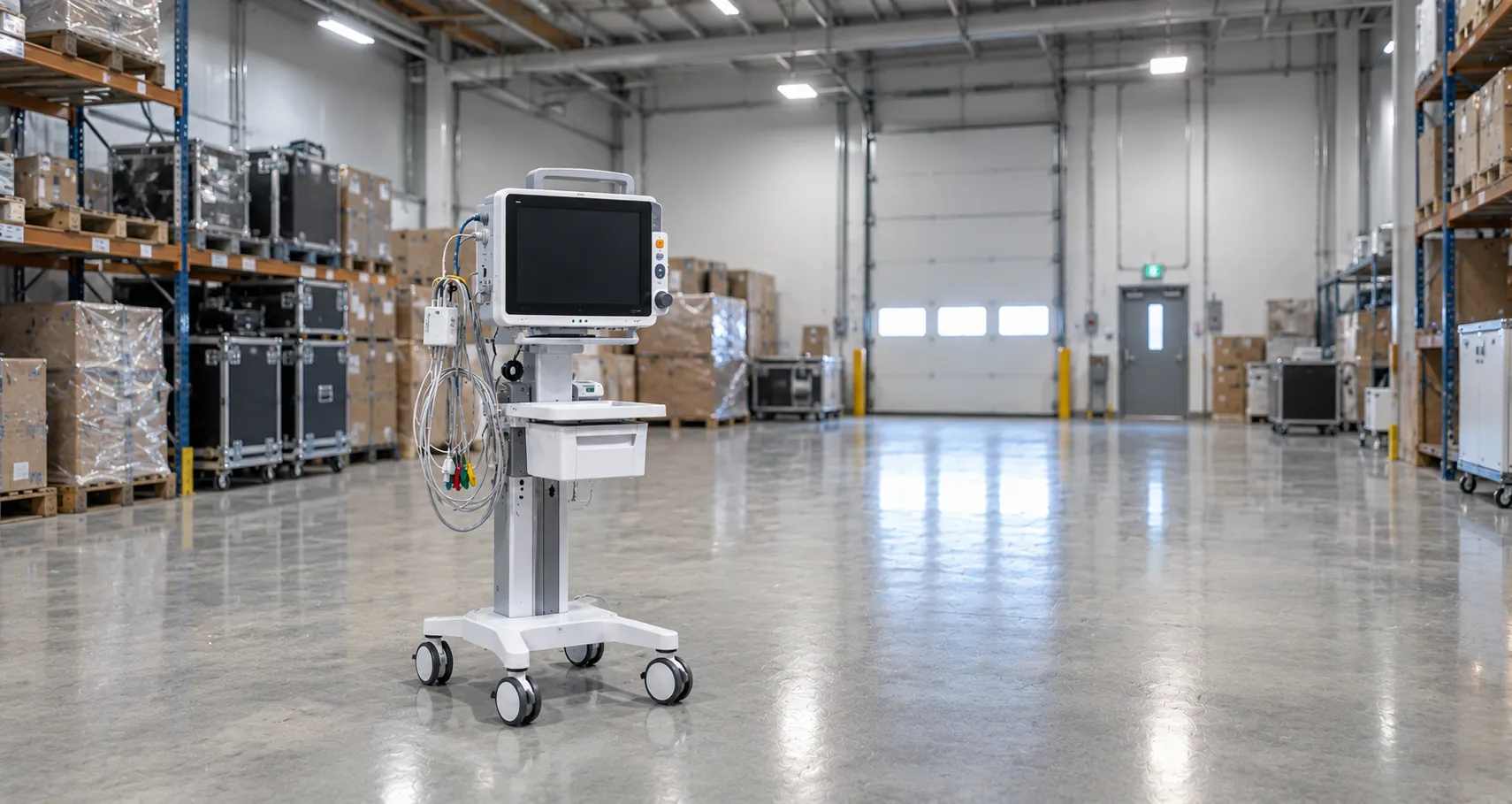

AI-enabled medical equipment is becoming an important part of modern hospital planning. These devices use artificial intelligence, machine learning, software algorithms, data analytics, or automated decision-support features to help healthcare teams improve workflows, support diagnostics, monitor patients, manage equipment, and organise clinical information more efficiently.
For healthcare buyers, AI-enabled equipment should not be treated as a normal device with an added digital feature. Buyers need to review clinical purpose, regulatory status, algorithm performance, data requirements, cybersecurity, interoperability, user training, service support, update policy, and compliance with applicable local regulatory standards. WHO has published regulatory considerations for artificial intelligence in health, highlighting the need to consider safety, effectiveness, data quality, privacy, transparency, and risk management across AI health technologies.
How AI-Enabled Medical Equipment Supports Hospitals
AI-enabled medical equipment can support hospitals in several ways. It may assist with image review, patient monitoring, workflow automation, triage support, equipment management, predictive maintenance, and clinical documentation. The goal is not to replace trained healthcare professionals, but to support better use of data and improve decision-making workflows under qualified clinical oversight.
Faster Information Review — AI systems can help process large volumes of data from imaging systems, monitors, laboratory systems, and connected devices. This can support faster review, although final clinical decisions should remain with qualified professionals.
Workflow Support — Some AI-enabled systems help prioritise cases, flag abnormal patterns, reduce repetitive tasks, or support documentation. This can help hospitals manage workload more efficiently.
Smarter Monitoring — AI-enabled patient monitoring may help detect patterns in vital signs, alarms, or patient risk indicators. These tools should be validated, monitored, and used in accordance with clinical policy.
Equipment Management — AI and analytics tools may help biomedical and operations teams review device usage, maintenance needs, downtime patterns, and replacement planning.
Where AI-Enabled Medical Equipment Is Used
AI-enabled equipment may be found in many hospital departments. The best use depends on clinical workflow, data quality, staff readiness, and integration with existing systems.
Radiology and Imaging Departments — AI is commonly discussed in imaging because scans generate large volumes of visual data. AI-enabled imaging tools may support detection, image reconstruction, workflow prioritisation, quality checks, or reporting assistance. The FDA maintains an AI-enabled medical device list to identify devices authorised for marketing in the United States, and many of the listed devices are related to radiology and imaging.
Critical Care and Patient Monitoring — ICUs, high-dependency units, emergency departments, and recovery areas may use smart monitoring systems that analyse trends and alert staff to possible changes in patient status. Buyers should confirm alarm logic, validation evidence, data inputs, and clinical governance before adoption.
Laboratory and Diagnostics — AI may support sample analysis, abnormal result flagging, pattern recognition, quality control, or workflow automation. Facilities sourcing through regulated and certified equipment suppliers worldwide should confirm intended use, software version, update method, data handling, and documentation before procurement.
Operating Rooms and Procedure Areas — AI-enabled surgical platforms, imaging tools, navigation systems, video analytics, or workflow systems may support planning and precision. These systems require strong training and clear responsibility for clinical decisions.
Hospital Operations and Biomedical Engineering — AI-enabled dashboards may help analyse equipment utilisation, maintenance schedules, failure patterns, and asset location. This can support procurement and lifecycle planning.
Common Types of AI-Enabled Medical Equipment
AI-enabled technology can be built into hardware, software, or connected systems. Buyers should understand whether AI is central to the device’s clinical function or only supports a secondary workflow.
AI Imaging Systems — These may include AI-supported CT, MRI, X-ray, mammography, ultrasound, or image analysis software. They may help with image quality, lesion detection, workflow prioritisation, segmentation, or measurement support.
AI Patient Monitoring Systems — These systems may analyse vital signs, waveforms, alarms, and patient trend data. Buyers should review how alerts are generated, whether the system is explainable, and how false alarms are managed.
AI Laboratory Devices — Laboratory systems may use algorithms for sample analysis, quality control, slide interpretation, or workflow optimisation. Compatibility with LIS systems and data validation are important.
AI-Enabled Clinical Decision Support Tools — Some tools provide recommendations, risk scores, or alerts based on patient data. These require careful clinical governance because poor implementation can affect decision-making.
AI Equipment Management Platforms — These tools may help biomedical teams track device status, predict maintenance needs, or analyse usage. They are often useful for large hospitals with many assets.
AI Documentation and Workflow Tools — Some systems assist with clinical documentation, transcription, scheduling, reporting, and administrative workload management. Buyers should review privacy, consent, data storage, and whether the tool falls under medical device rules in the relevant region.
Key Benefits for Modern Hospitals
AI-enabled medical equipment can help hospitals improve efficiency when the technology is carefully selected and responsibly implemented.
Improved Workflow Efficiency — AI can help teams manage repetitive tasks, review data faster, and prioritise urgent work. This can be useful in radiology, diagnostics, emergency care, and patient monitoring.
Better Use of Clinical Data — Modern hospitals generate large amounts of data. AI-enabled systems can help identify patterns that may be difficult to detect manually. Still, the quality of the result depends on the quality of the data and the suitability of the algorithm.
Support for Equipment Planning — AI and analytics can help hospitals understand utilisation, downtime, service frequency, and replacement needs. This supports stronger procurement and maintenance planning.
Enhanced Standardisation — When used properly, AI-enabled systems can support consistent measurement, documentation, and workflow steps. This can help multi-site healthcare groups reduce variation.
Potential for Early Risk Identification — AI-supported monitoring and decision-support systems may help flag risk patterns earlier. However, hospitals must carefully manage false positives, false negatives, and alert fatigue.
Risks and Limitations Hospitals Should Understand
AI-enabled medical equipment should be adopted with realistic expectations. These tools can support care, but they also introduce new risks related to data, validation, bias, cybersecurity, and accountability.
Algorithm Bias — AI performance can vary if the training data does not reflect the patient population for which the device is used. Hospitals should ask suppliers how the algorithm was validated and whether performance varies across patient groups.
Data Quality Problems — AI tools depend on accurate inputs. Poor imaging quality, missing patient data, wrong labels, device noise, or incomplete records can affect outputs.
Over-Reliance Risk — Staff should not treat AI outputs as final clinical decisions. AI should support qualified professionals, not replace clinical judgement.
Cybersecurity and Data Privacy — Connected AI devices may process, transmit, or store sensitive data. WHO guidance on AI governance for health highlights data protection, privacy, security, transparency, and accountability as important considerations.
Software Update Risks — AI-enabled devices may change through software updates. Buyers should understand update approval, validation, version control, and whether performance changes after updates.
Integration Challenges — AI devices may need to connect to PACS, LIS, HIS, EMR, cloud systems, or hospital networks. Poor interoperability can limit value.
Procurement Guidance for AI-Enabled Medical Equipment
Procurement of AI-enabled equipment should include clinical users, biomedical engineers, IT teams, data protection officers, cybersecurity teams, finance, legal, compliance, and hospital leadership. The technology must fit the hospital’s clinical workflow and governance model.
Total Cost of Ownership — Buyers should include hardware, software licence, cloud fees, integration cost, cybersecurity review, staff training, validation work, maintenance, service contracts, software updates, data storage, and downtime planning. A device may look affordable at purchase, but it becomes expensive due to recurring software and support costs.
Clinical Evidence and Validation — Buyers should request performance data, validation studies, intended population, limitations, and clinical use boundaries. IMDRF guidance on good machine learning practice for medical device development highlights principles for the responsible development of machine learning-enabled medical devices.
Supplier Transparency — Suppliers and manufacturers advertising to global healthcare buyers should provide clear information on intended use, algorithm function, input data, output type, validation, regulatory status, update policy, cybersecurity features, interoperability, and service support. Buyers should avoid vague claims such as “AI-powered accuracy” without measurable evidence.
Regulatory and Compliance Review — Procurement teams should request conformity documents, product registrations where relevant, software version records, data handling policies, cybersecurity documentation, user manuals, and training materials. Compliance should be checked against applicable local regulatory standards, such as CE, FDA, ISO, IEC, and IMDRF guidance, or their regional equivalents, where relevant.
User Training and Governance — Staff must understand what the AI system can and cannot do. Training should explain alerts, outputs, limitations, escalation rules, documentation steps, and when to ignore or question the system.
Healthcare groups managing multiple hospitals, clinics, or diagnostic centres may benefit from structured distribution and reseller partnership arrangements. Standardising AI-enabled equipment models, software versions, training processes, and data governance can reduce confusion across sites.
Questions Buyers Should Ask Suppliers
AI-enabled equipment requires deeper supplier questioning than many traditional devices. Buyers should ask questions that cover clinical use, data, safety, software, and support.
What is the intended use? — The supplier should clearly explain what the AI feature is designed to support and what it is not designed to do.
Is the AI feature regulated as part of the device? — The answer may vary by region. Buyers should request the relevant documents for their market.
What data was used for validation? — Suppliers should explain whether validation included diverse patient groups, device settings, imaging conditions, and clinical environments.
How does the system handle uncertain results? — The output should not create false confidence. Systems should explain limits, confidence levels, or review needs where applicable.
How are software updates managed? — Buyers should understand whether updates are automatic, optional, validated, documented, and approved by the facility.
Where is data stored? — Hospitals should know whether data stays on site, moves to the cloud, or is processed by third parties.
What happens during downtime? — Facilities need fallback workflows if software, network, or cloud access fails.
Data Governance and Cybersecurity Planning
AI-enabled medical equipment often depends on data movement. This makes cybersecurity and privacy planning essential before purchase.
Data Access Control — Hospitals should decide who can access AI outputs, patient data, dashboards, and system settings.
Network Security — IT teams should review firewalls, encryption, user authentication, and audit logs, and update controls as needed.
Cloud and Remote Access — If the device uses cloud processing or remote support, buyers should review where data is hosted, who can access it, and how it is protected.
Audit Trails — AI systems should support traceability. Hospitals should be able to review software version, user activity, output history, and update records.
Vendor Risk Review — Supplier cybersecurity policies, incident response process, data retention rules, and service access procedures should be checked before deployment.
Health Canada guidance for machine learning-enabled medical devices covers the information expected in pre-market submissions for ML systems in regulated devices, including details on the machine learning system and its lifecycle.
Implementation Planning in Hospitals
Even strong AI-enabled equipment can fail if implementation is rushed. Hospitals should plan deployment in phases.
Workflow Mapping — The hospital should map how the device will fit into existing clinical steps. This includes who uses the system, who reviews outputs, and who is responsible for final decisions.
Pilot Testing — A controlled pilot can help identify false alerts, integration problems, staff confusion, and training gaps before wider rollout.
Clinical Governance Approval — relevant committees or leadership teams should review AI tools. The hospital should decide how outputs are documented and audited.
Performance Monitoring — After deployment, hospitals should monitor accuracy, alert burden, user feedback, downtime, and the impact on clinical workflow.
Change Management — Staff may resist AI tools if they do not trust them or if they add extra work. Clear communication and training are important.
Maintenance and Lifecycle Management
AI-enabled medical equipment needs both physical and software maintenance. Biomedical engineering and IT teams should work together.
Hardware Maintenance — Sensors, monitors, imaging systems, servers, batteries, cables, displays, and accessories should follow preventive maintenance schedules.
Software Version Control — Hospitals should record which software version is in use. Updates should be checked before clinical deployment.
Model Performance Review — AI performance may change if the patient population, workflow, device inputs, or data quality change. Hospitals should monitor whether outputs remain useful and safe.
Service Contracts — Service agreements should define hardware repair, software support, update frequency, cybersecurity response, training, and escalation timelines.
End-of-Life Planning — AI systems may become unsupported if software updates stop. Buyers should ask about expected support life and replacement planning before purchase.
International Sourcing Considerations
AI-enabled medical equipment can be sourced internationally when buyers clearly define clinical use, regulatory requirements, data policies, language needs, power requirements, software support, integration needs, training, warranty, and cybersecurity expectations. This is especially important for hospitals buying imaging systems, laboratory platforms, monitoring networks, or cloud-connected devices.
Buyers should confirm whether they need AI imaging equipment, AI patient monitoring, AI diagnostic systems, AI workflow platforms, predictive maintenance tools, connected hospital devices, or software-enabled medical devices. For project-based sourcing, buyers can contact the Medigear.uk team for supply support to discuss availability, documentation, export needs, and procurement requirements.
Future Role of AI in Hospital Equipment Planning
AI-enabled medical equipment is likely to become more common in hospitals, but adoption should remain disciplined. The strongest results will come from systems that solve real clinical and operational problems, not from devices purchased only because they include AI branding.
Hospitals should prioritise AI tools that are validated, explainable where possible, secure, interoperable, and supported by trained staff. Procurement teams should work with clinical, biomedical, IT, legal, finance, and governance teams before selecting these systems.
Good AI equipment planning can help hospitals improve workflow, reduce avoidable delays, support diagnostic confidence, and improve equipment lifecycle management. Poor planning can create data risks, unused software, staff frustration, and hidden costs.
Final Thoughts
AI-enabled medical equipment can help modern hospitals improve diagnostics, monitoring, workflow, asset management, and operational planning. These systems can be valuable when they are selected for real clinical needs and supported by strong governance.
The right AI-enabled equipment should align with hospital workflows, data systems, clinical requirements, cybersecurity policies, staff training needs, and local compliance standards. Buyers should review validation evidence, software lifecycle, supplier transparency, integration requirements, and total cost of ownership before ordering.
Disclaimer
Medigear.uk is a global medical equipment supplier, exporter, and distributor. The content published on this site is intended for educational and product awareness purposes only. Nothing on this page constitutes medical advice, clinical guidance, legal advice, cybersecurity advice, data protection advice, or treatment recommendations. All healthcare procurement, technology, data, legal, and clinical decisions should be made by qualified professionals and compliant procurement teams operating within the regulatory frameworks of their respective countries.