
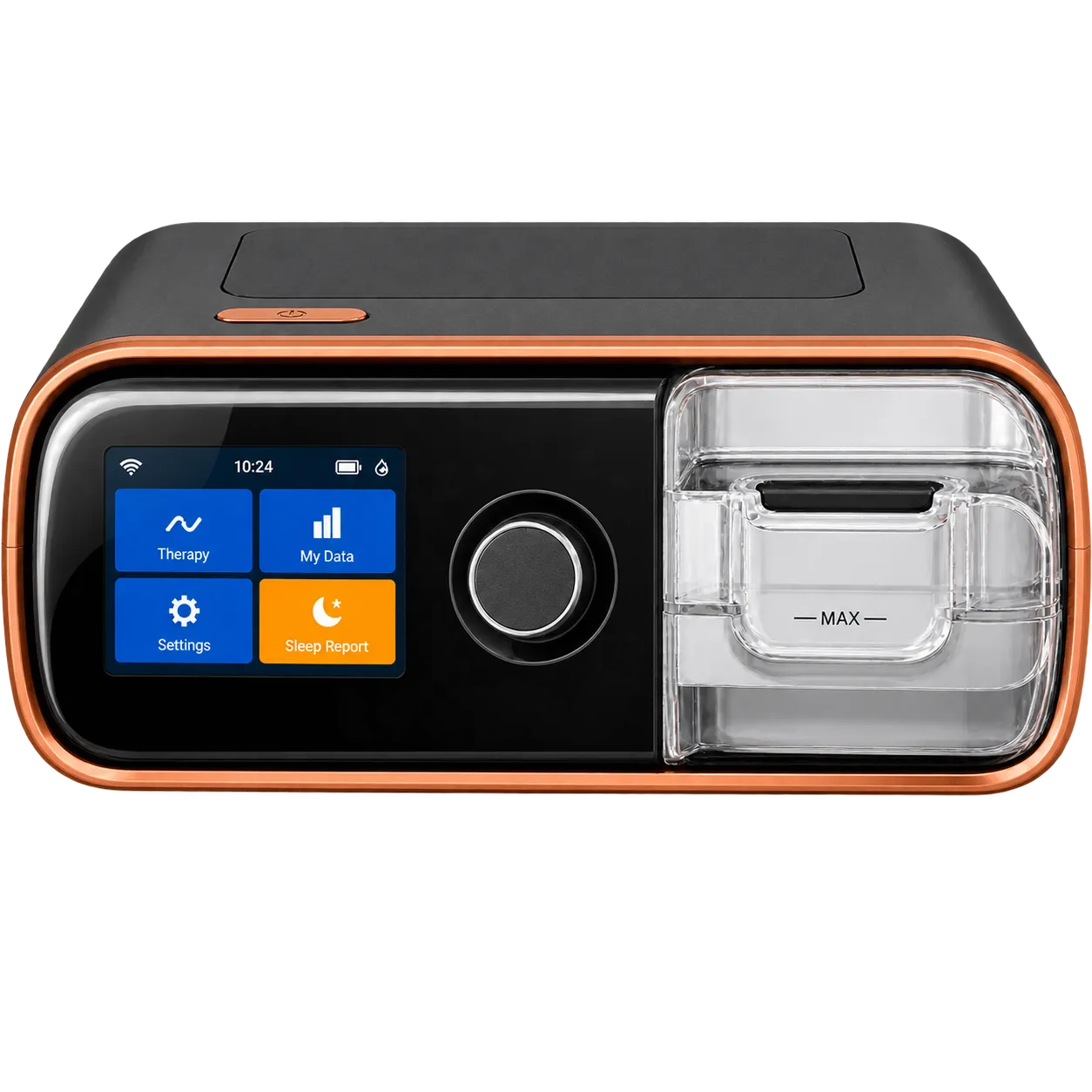
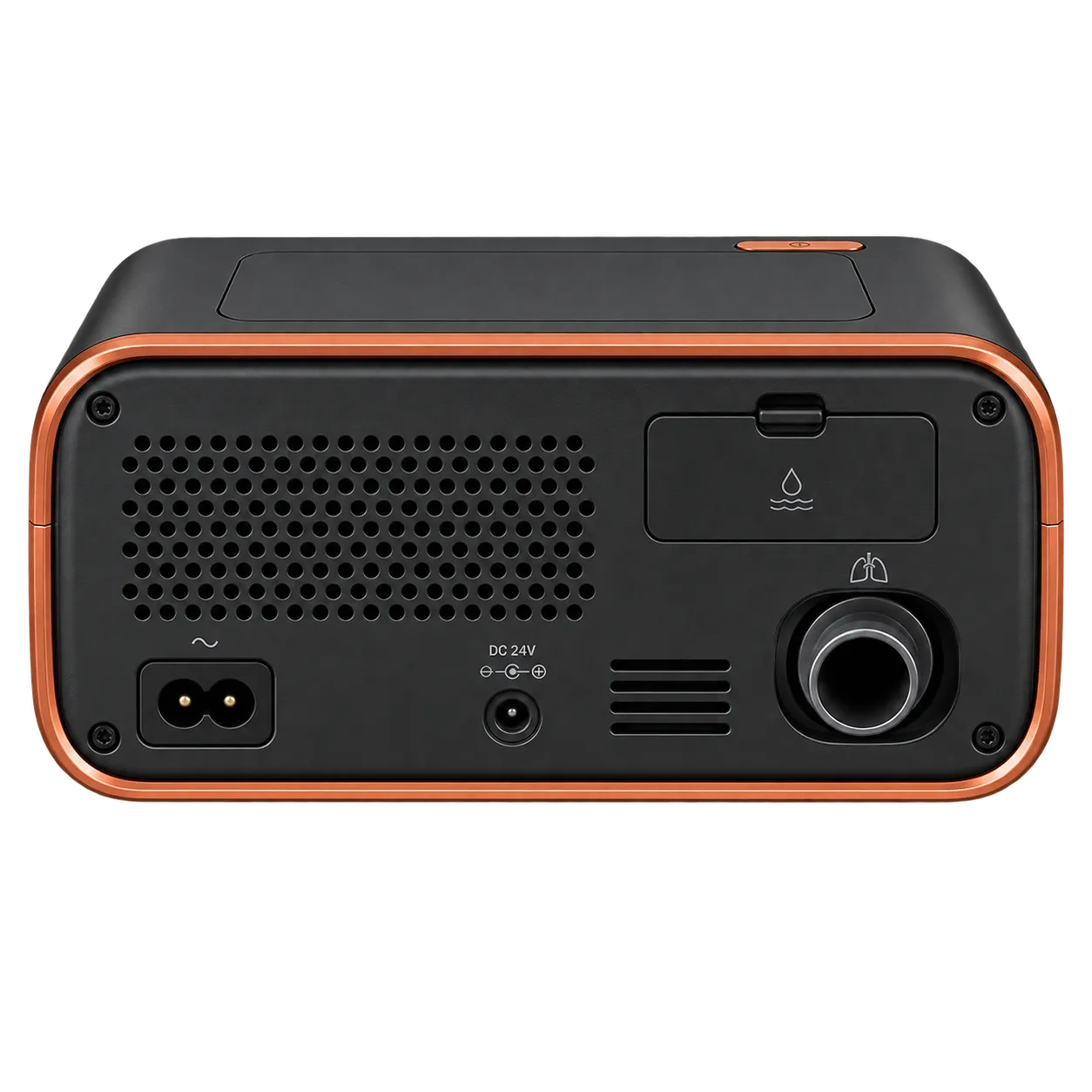
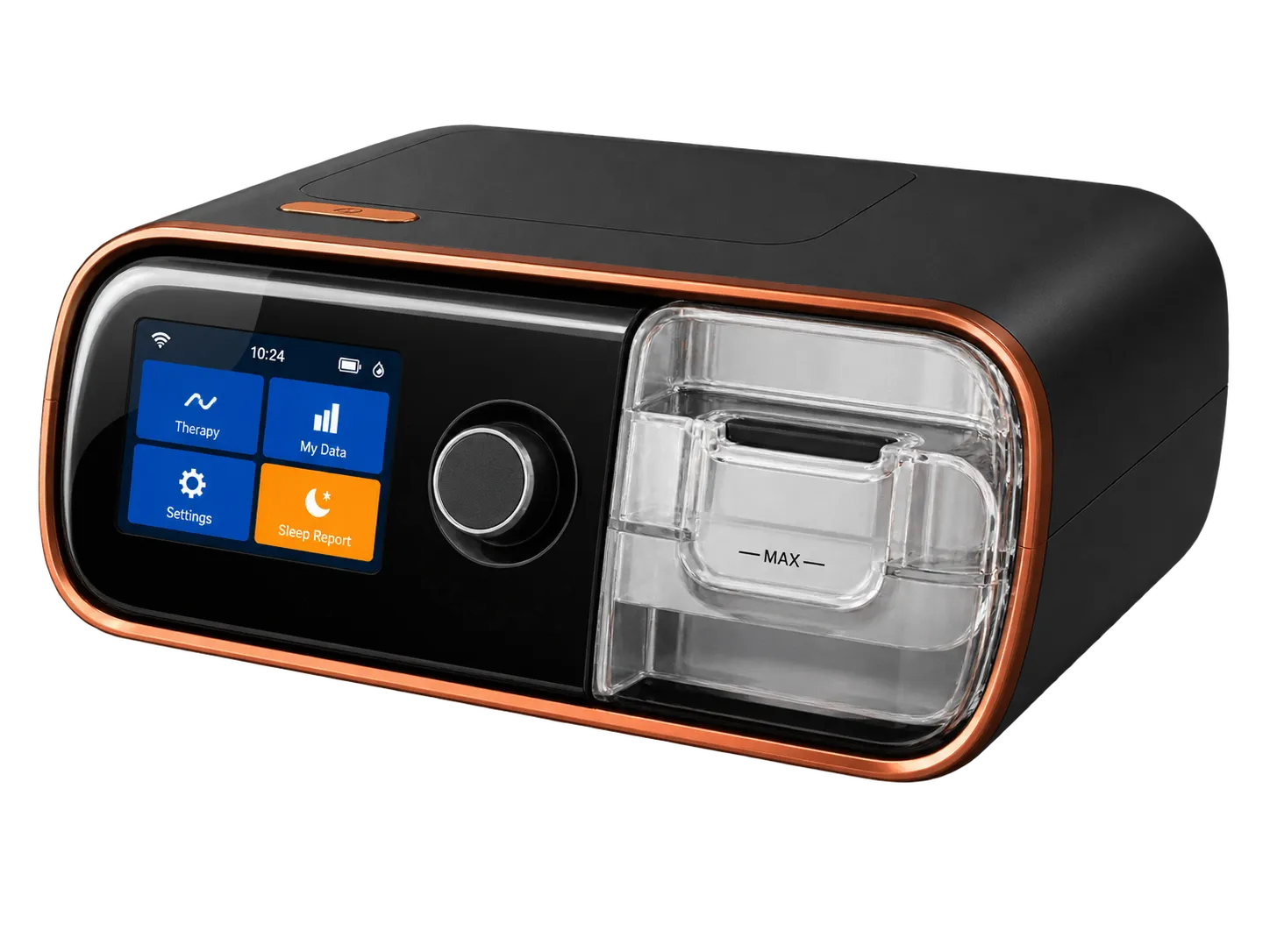
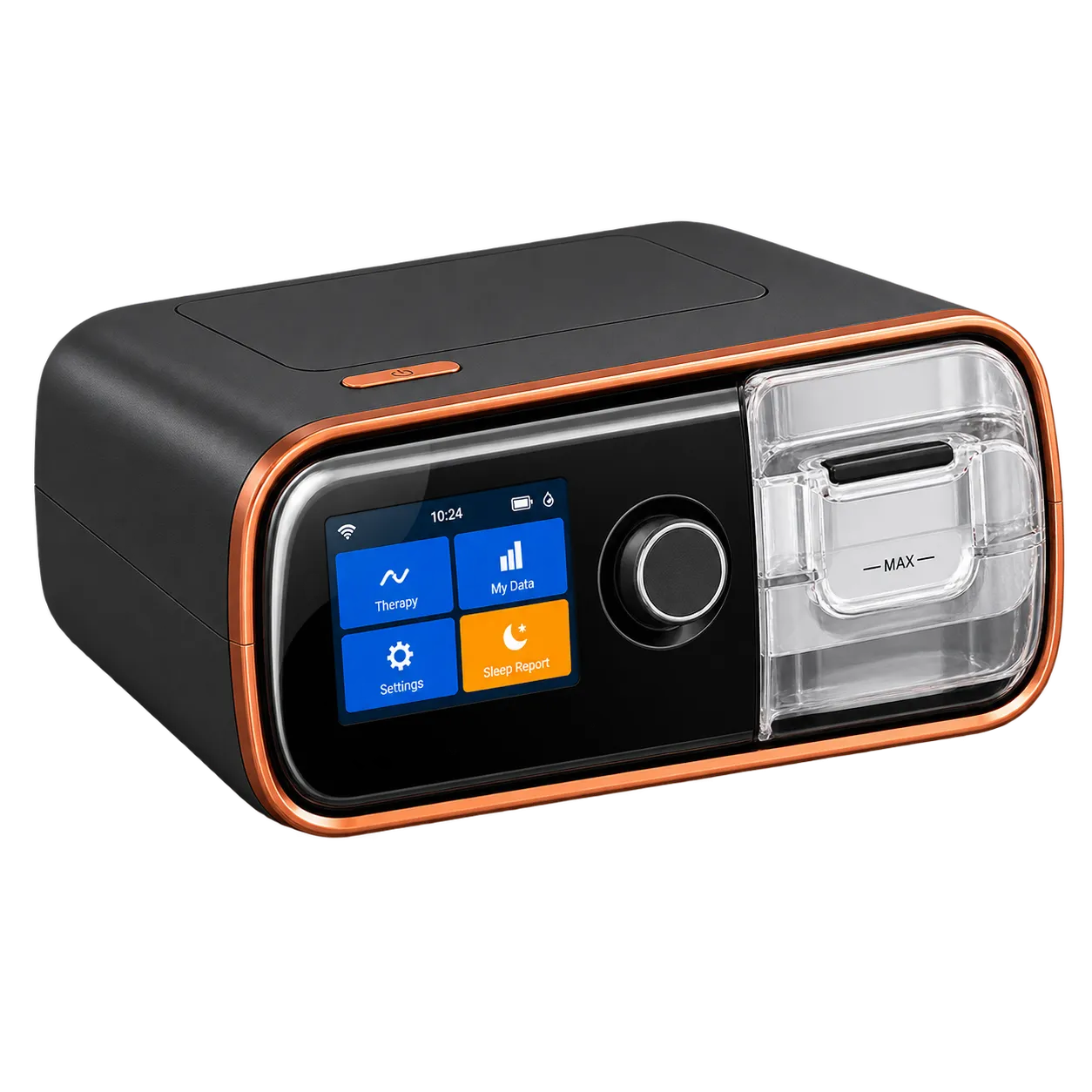
The VENTMED DF-30V-HM BiPAP is specified where respiratory support must go beyond holding an airway open. Bilevel delivery gives a higher pressure on inhalation and a lower one on exhalation. What the patient feels as support is the gap between them.
Obstructive sleep apnoea requiring high therapeutic pressure is one indication. Central and mixed breathing patterns are another, since effort cannot be relied on and timed breaths become necessary. Chronic hypoventilation forms a third group. Here the problem is carbon dioxide clearance rather than airway collapse. Pressure support with a tidal volume target addresses that directly.
The 30 cmH2O inspiratory ceiling matters for patients who would otherwise exceed the DF-25W-HM range. APCV extends the device furthest towards controlled ventilation. VENTMED positions this mode for critical patients with rapid, shallow breathing and low tidal volume, and states it is mainly for hospital use.
The manufacturer recommends moving to ST mode after discharge and advises against prolonged APCV use, so the mode should be treated as an acute-phase tool rather than a home setting.
Hospital respiratory wards therefore form the primary setting for the full mode range. Sleep laboratories use the device for bilevel titration, working through pressures, trigger, rise time, and rate against recorded response.
Home ventilation follows, typically in ST or Auto S rather than APCV. Optional cloud upload supports review between appointments. Where the optional oximeter is paired, oxygen saturation can be tracked alongside pressure during ward assessment.
All settings require prescription and periodic review by a qualified clinician, and Medigear.uk supplies the full instructions for use with each unit.