
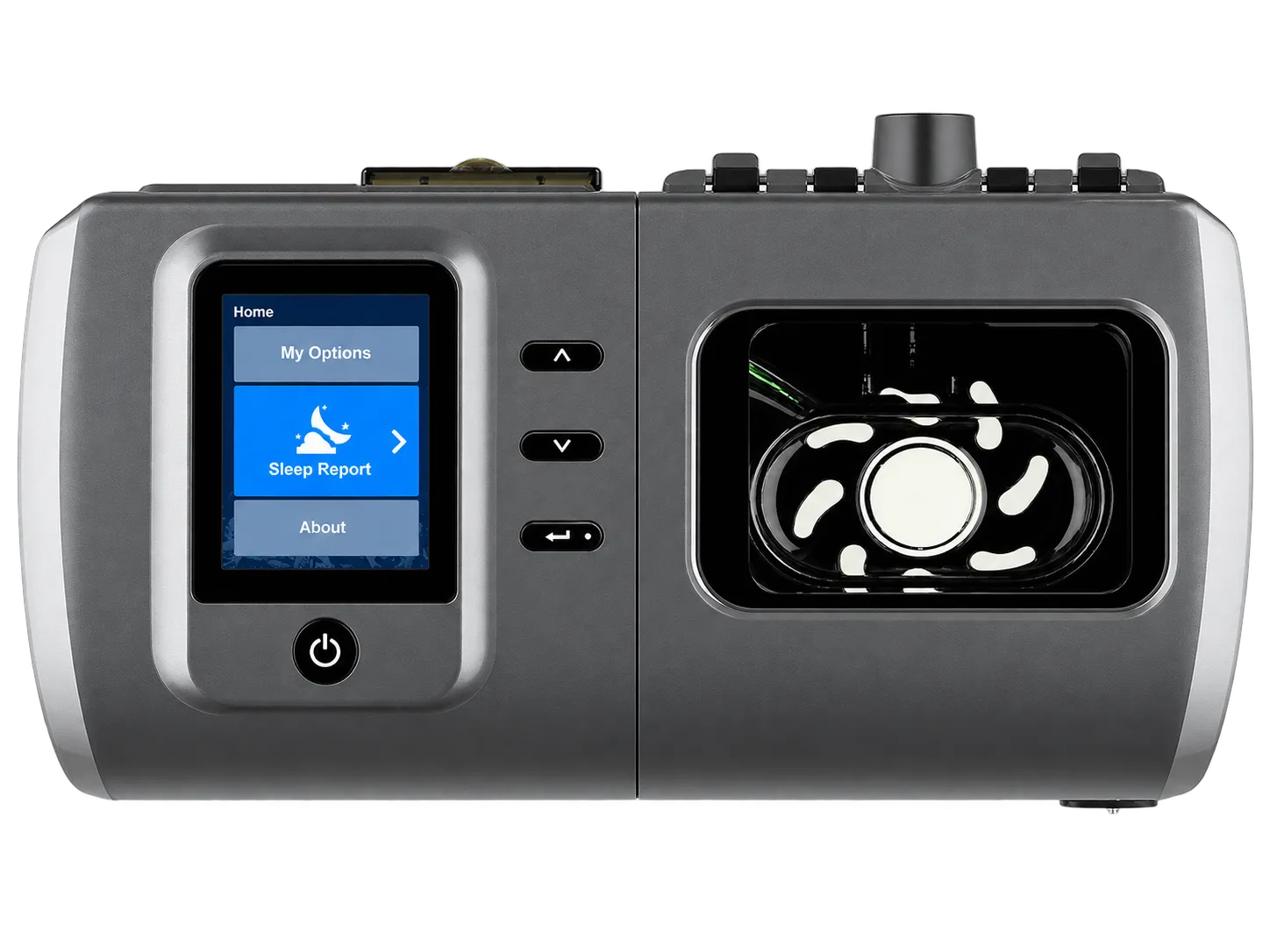
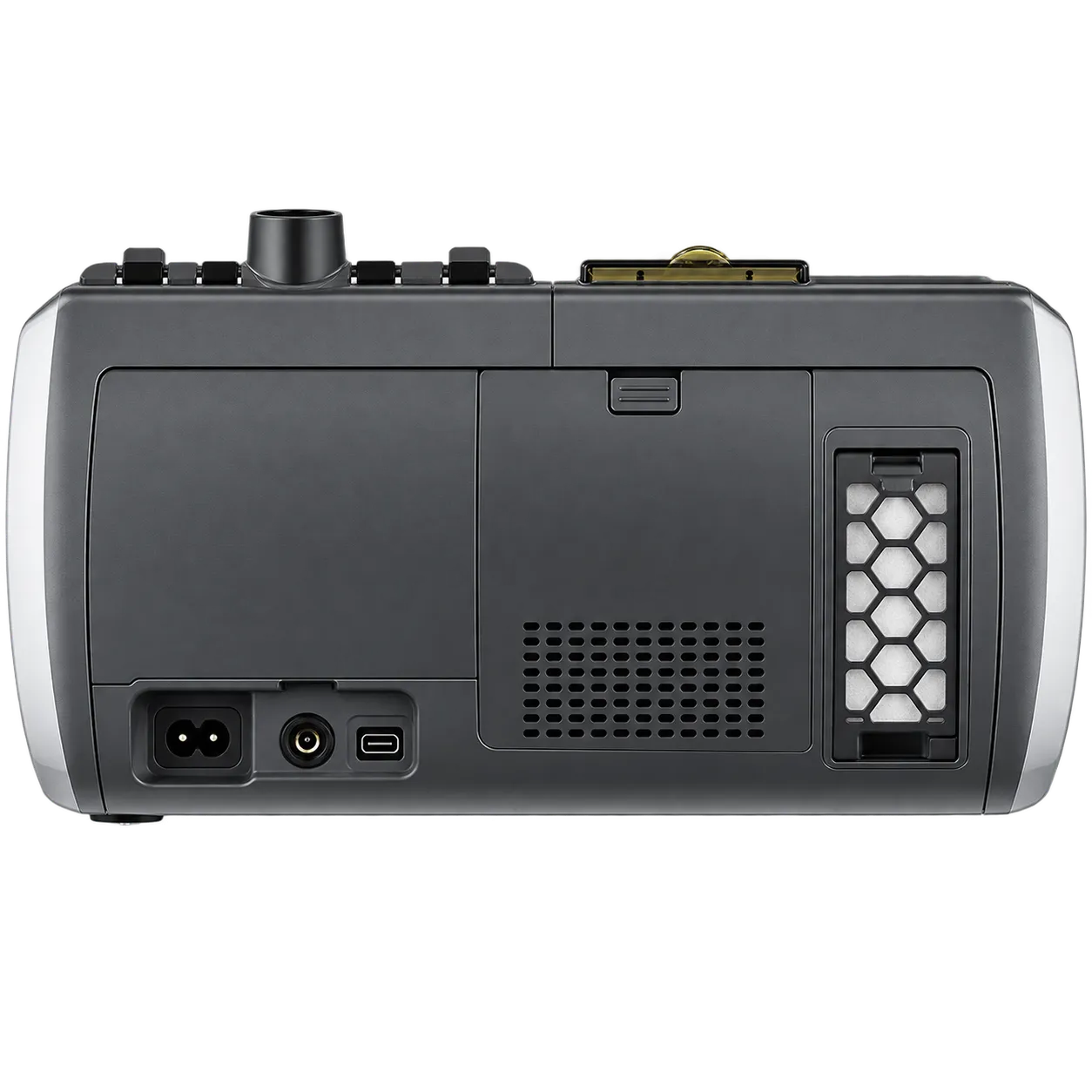
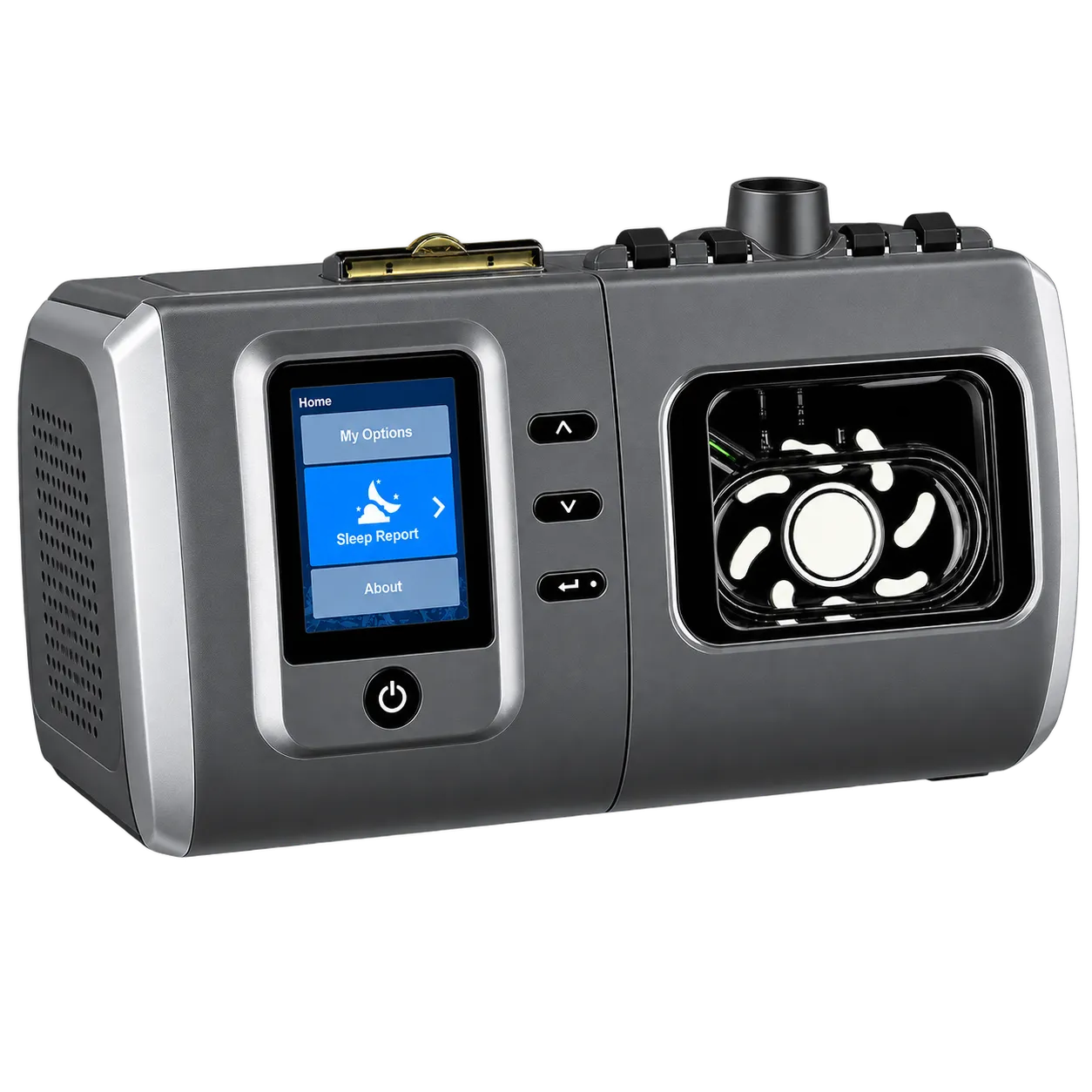
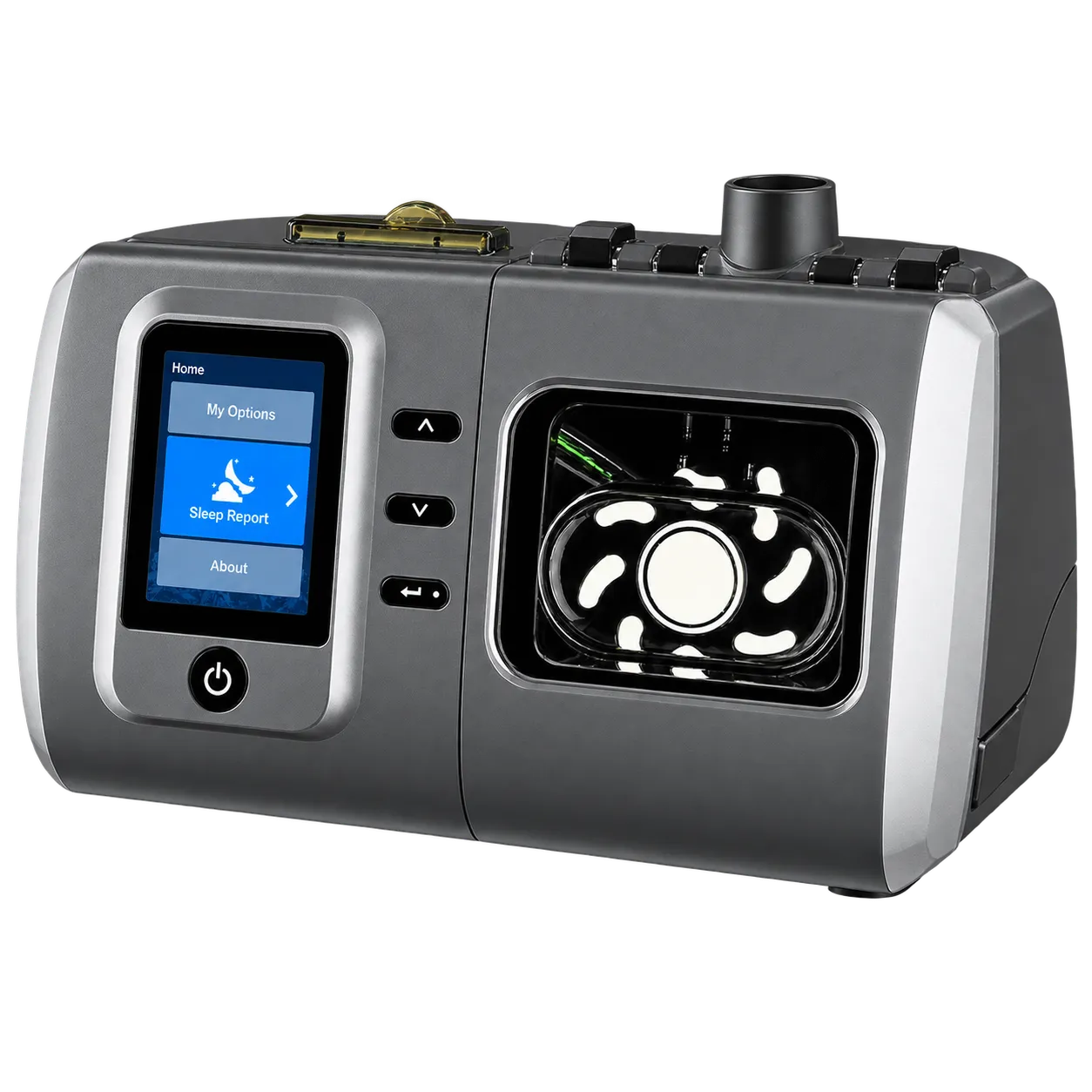
Bilevel devices are chosen when a single fixed pressure will not manage a patient safely or comfortably. The DS-8 answers that need at the higher end of the pressure scale. Its 30 cmH2O inspiratory ceiling widens the gap available between IPAP and EPAP, and that gap is the pressure support each breath receives.
Patients requiring substantial support therefore stay within the device's range. Obstructive sleep apnoea needing high therapeutic pressure is one indication. Complex and central patterns are another, since patient effort cannot be relied upon and timed breaths become necessary.
T and ST modes handle this by delivering a breath whenever the backup rate is reached without patient triggering. Conditions involving chronic hypoventilation form a third group, where the clinical concern is carbon dioxide clearance rather than airway collapse.
APCV extends the device further towards ventilation. Pressure-targeted breath delivery gives more control than spontaneous modes alone, which suits patients whose breathing pattern is unstable.
Hospital respiratory wards apply the DS-8 during non-invasive ventilation episodes and step-down from acute care. Sleep laboratories use it for bilevel titration studies, working through IPAP, EPAP, trigger, cycling, and rate against recorded response.
Long-term home ventilation is the third setting, supported by more than five years of stored data and a Sleep Report summary.
VENTMED states that the device is not intended for life support. It should not be deployed where an interruption would place a patient at immediate risk.
Every setting requires prescription and periodic review by a qualified clinician, and Medigear.uk provides the full instructions for use with each unit.