
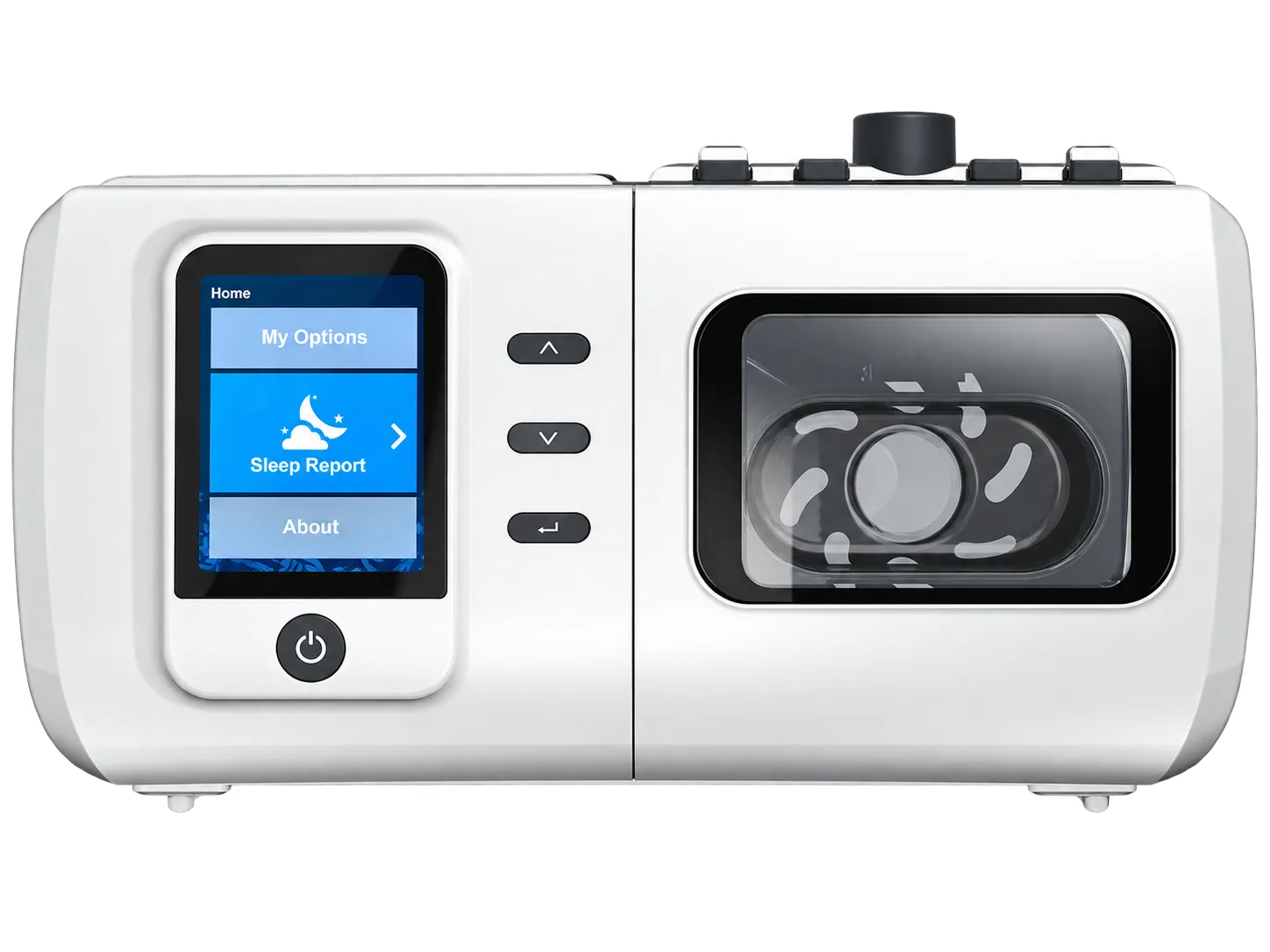
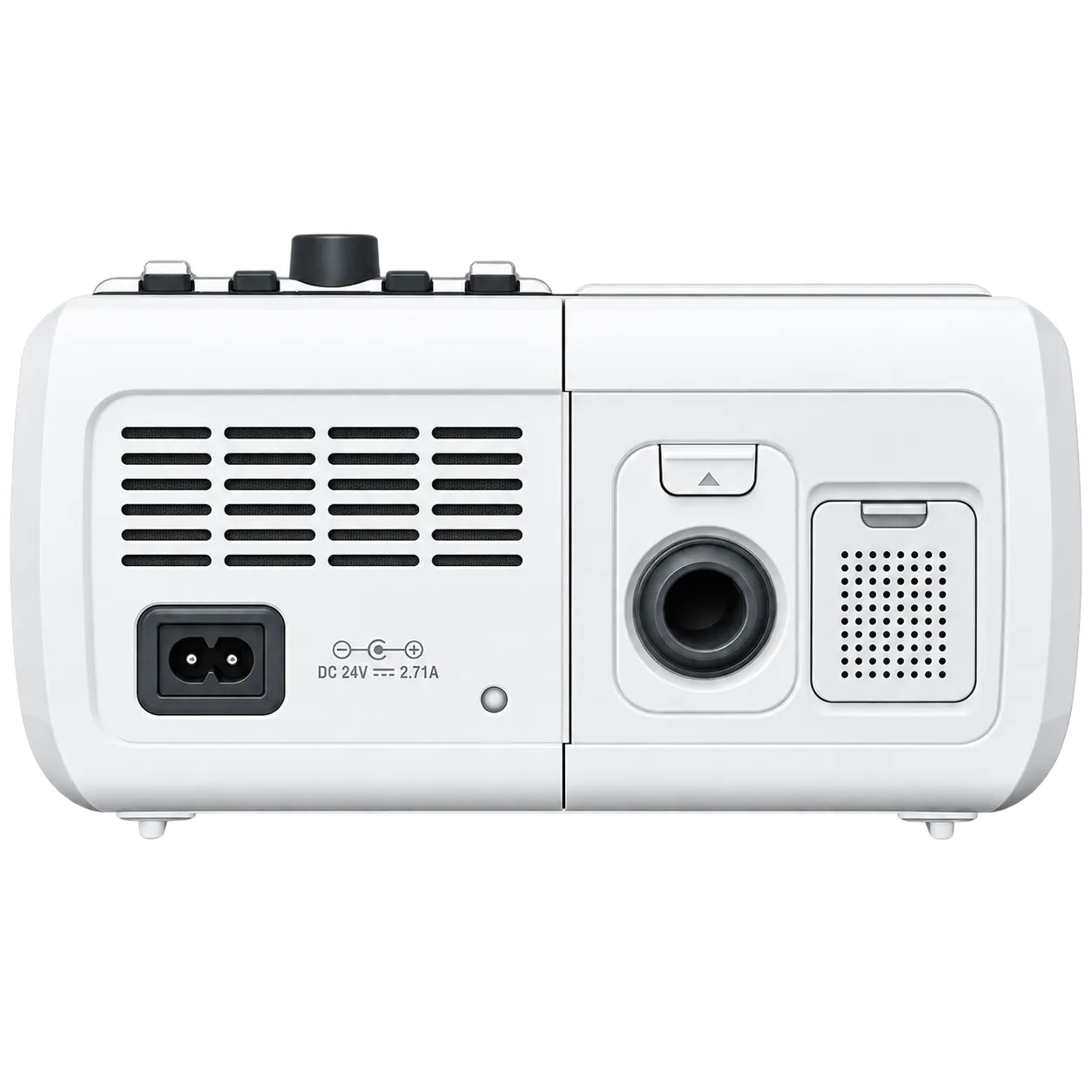
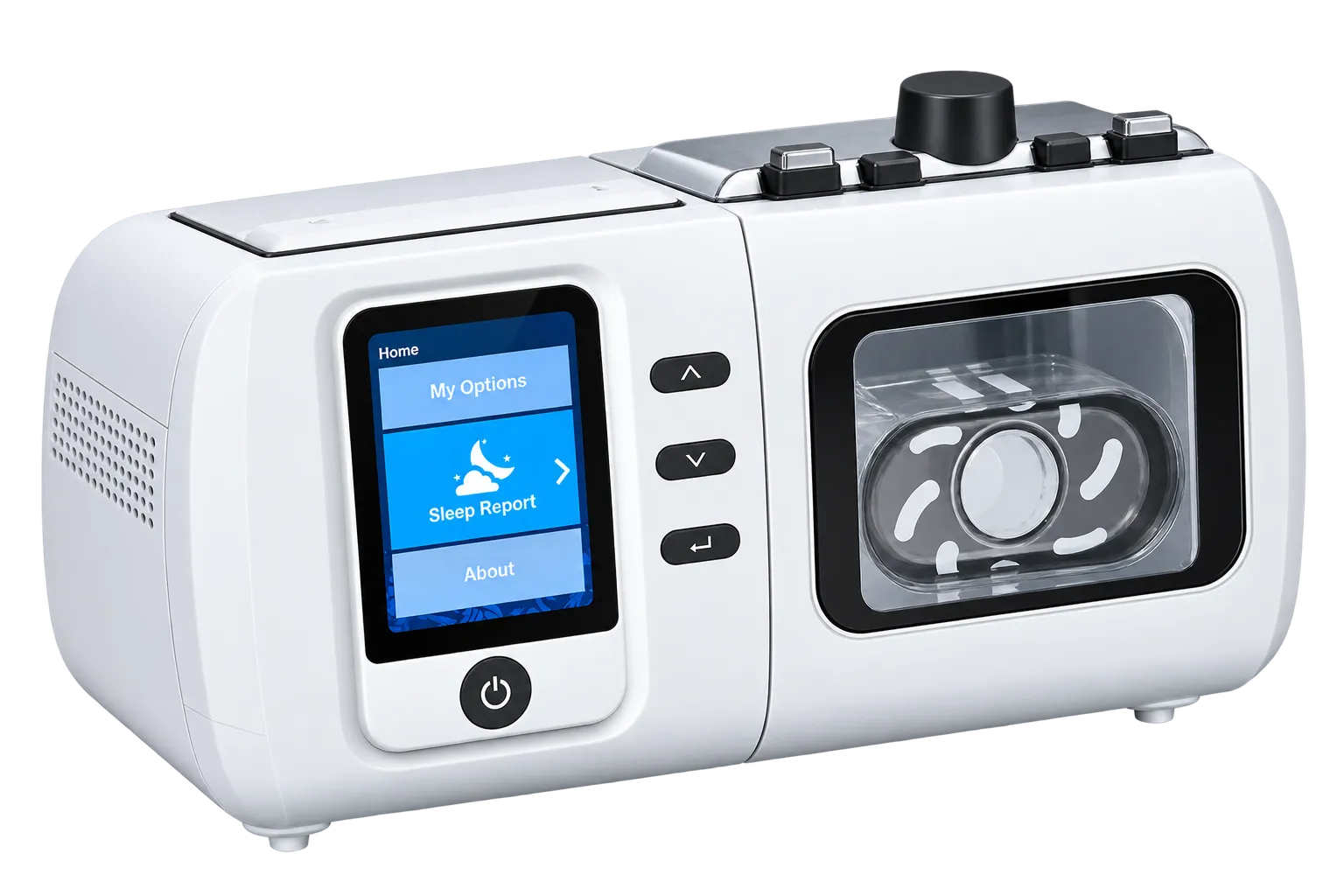
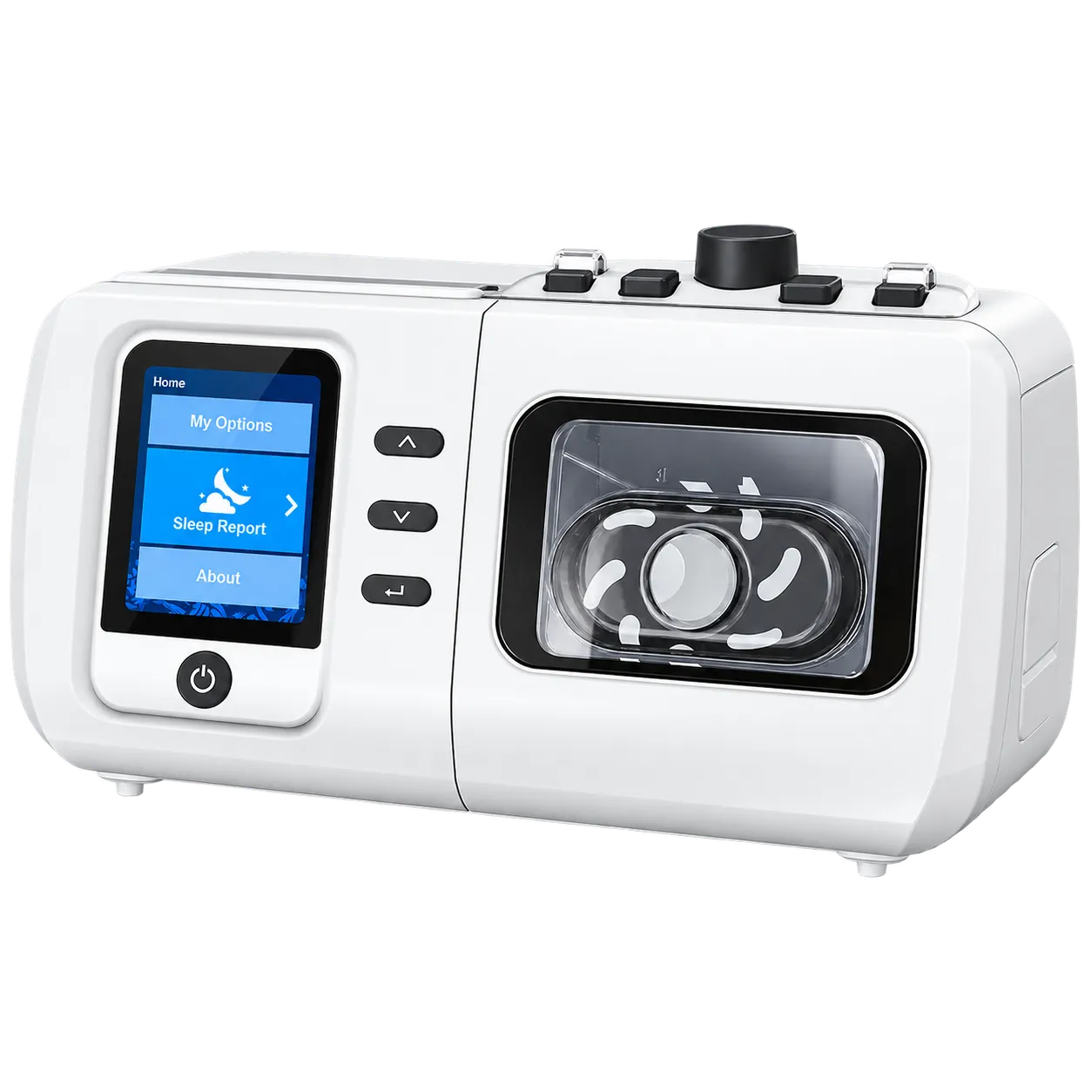
The DS-6 is used to treat obstructive sleep apnoea in adults. VENTMED states the device is for patients over 30 kg. In this condition, the upper airway narrows or closes during sleep. That breaks the breathing pattern and lowers blood oxygen. A steady column of pressurised air holds the airway open. Breathing then carries on through the night. Auto mode is often chosen at the start of therapy. This is before a fixed pressure has been settled on.
The unit records how pressure demand shifts across the night. A clinician uses that record to set a long-term prescription. Fixed CPAP mode is then used once the pressure is known. Sleep services also use auto mode where needs change over time. Weight change, nasal congestion, alcohol, and sleep position all alter how much pressure an airway needs. Home use is the main setting, and the built-in humidifier matters here.
Dry air from a CPAP machine causes nasal irritation and a dry throat. These are common reasons patients stop therapy. Warm, moist air reduces that problem. The auto-altitude function helps patients who travel, since ambient pressure falls as height rises. Hospital wards and sleep laboratories use the DS-6 for overnight titration studies and short inpatient stays. The doctor software supports this work. It turns stored data into a report a clinician can read quickly.
VENTMED also lists contraindications for the device. These include pneumothorax, dehydration, and severe bullous lung disease. They also cover pathologically low blood pressure, cerebrospinal fluid leak, and recent trauma or cranial surgery. All pressure settings must be prescribed and reviewed by a qualified clinician.