
Swedish AI Tool Flags Melanoma Risk Years Before Diagnosis, Study Finds
Swedish scientists have built an AI tool that flags people most likely to develop melanoma. The tool draws only on data already sitting in hospital records.
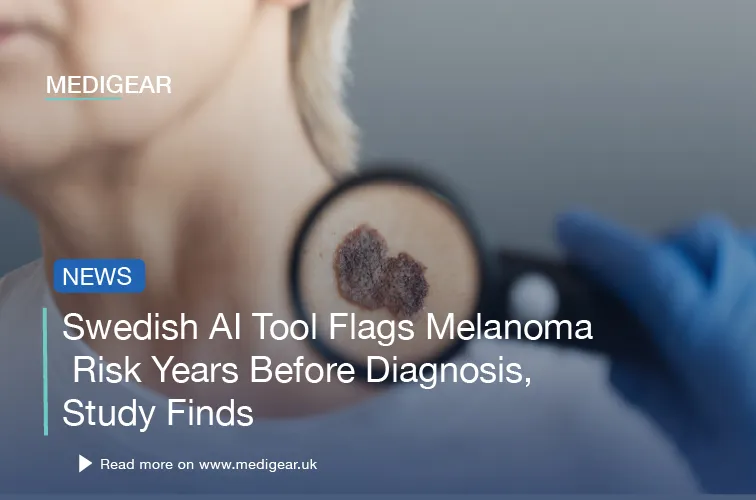
A new study describes how AI melanoma risk prediction can sort people by their five-year risk of skin cancer. The work came from the University of Gothenburg in Sweden. Early results suggest AI melanoma risk prediction could change how patients are screened.
How the model was built
The team studied records from every Swedish adult who lived in the country during 2005 to 2014. That dataset covered about 6 million people. The models drew on more than age and gender. They also used past medicines, prior diagnoses, and social data. This broader input is what powers AI melanoma risk prediction at scale.
The strongest model spotted future melanoma cases in about 73% of test pairs. Age and gender alone reached only 64%. By blending diagnoses, drugs, and social data, the team also found small high-risk subgroups. Their odds of melanoma over five years sat near 33%. That precision is what makes AI melanoma risk prediction useful for screening.
"Our study shows that data which is already available within healthcare systems can be used to identify individuals at higher risk of melanoma," said Martin Gillstedt, a doctoral student at the University of Gothenburg.
"This is not a form of decision support that is currently available in routine healthcare, but our results give a clear signal that registry data can be used more strategically in the future," Gillstedt explained.
Why early detection matters
Melanoma is driven mainly by ultraviolet light. It comes from the sun and from sunbeds. Tumours can travel beyond the skin to other organs. Once that happens, survival drops sharply. So catching the disease early matters a lot.
Skin melanoma made up about 4% of new cancer diagnoses in the EU in 2020. It also caused 1.3% of cancer deaths that year, per the European Commission's Joint Research Centre. Those figures rank it the sixth most common cancer. They also place it among the top 20 leading causes of cancer death.
What it means for screening
By flagging higher-risk people, doctors can focus on follow-up. They can invite these people for screening through letters or digital outreach, the authors wrote.
"Our analyses suggest that selective screening of small, high-risk groups could lead to both more accurate monitoring and more efficient use of healthcare resources," said lead author Sam Polesie.
The findings show AI models trained on big registry datasets could play a major role in tailored risk scoring. AI melanoma risk prediction could also shape how future screening is run. The tool is a strong fit for that goal, but it will not become part of routine healthcare overnight. The researchers stress that more work and policy choices are needed first.
Coverage on Medigear.uk shows why hospital teams, distributors, and clinic operators should track how registry-driven AI tools may reshape preventive dermatology in the years ahead.
Source: Euronews Health — "AI can identify people at risk of melanoma years before diagnosis, study finds" — https://www.euronews.com/health/2026/04/16/ai-can-identify-people-at-risk-of-melanoma-years-before-diagnosis-study-finds
Sourcing medical equipment?
Tell us the model and destination — our sourcing team will respond within one business day.

As a Product Catalogue Specialist at MediGear, I manage product listings, specifications, images and categories to ensure all information is accurate, consistent and professionally presented for hospitals, clinics, distributors and healthcare buyers.
View all articles
MiniMed Smart MDI System: 8.1pp TIR Lift at EASD 2026
Type 1 diabetes patients who responded to more MiniMed Smart MDI alerts hit better glucose numbers i…
Corcym Memo 4D Curve Mitral Ring: First-in-Human US Implant
The Corcym Memo 4D Curve mitral repair ring has landed its first-in-human implant. The news comes so…
Myrava 3D-Printed Bolus Wins FDA 510(k) for Radiotherapy
The Myrava 3D-printed bolus has cleared the US Food and Drug Administration (FDA). The 510(k) nod co…
Medical device news, once a week.
Approvals, trials, recalls and market moves — the essentials for procurement and clinical teams.