
GLP-1 Oral Side Effects: Why "Ozempic Mouth" Is a Real Clinical Issue
A new look at GLP-1 oral side effects shows "Ozempic mouth" is more than a tabloid label. Dentists track dry mouth, halitosis, taste shifts, sulfur burps, and enamel erosion in patients on semaglutide (Ozempic, Wegovy).
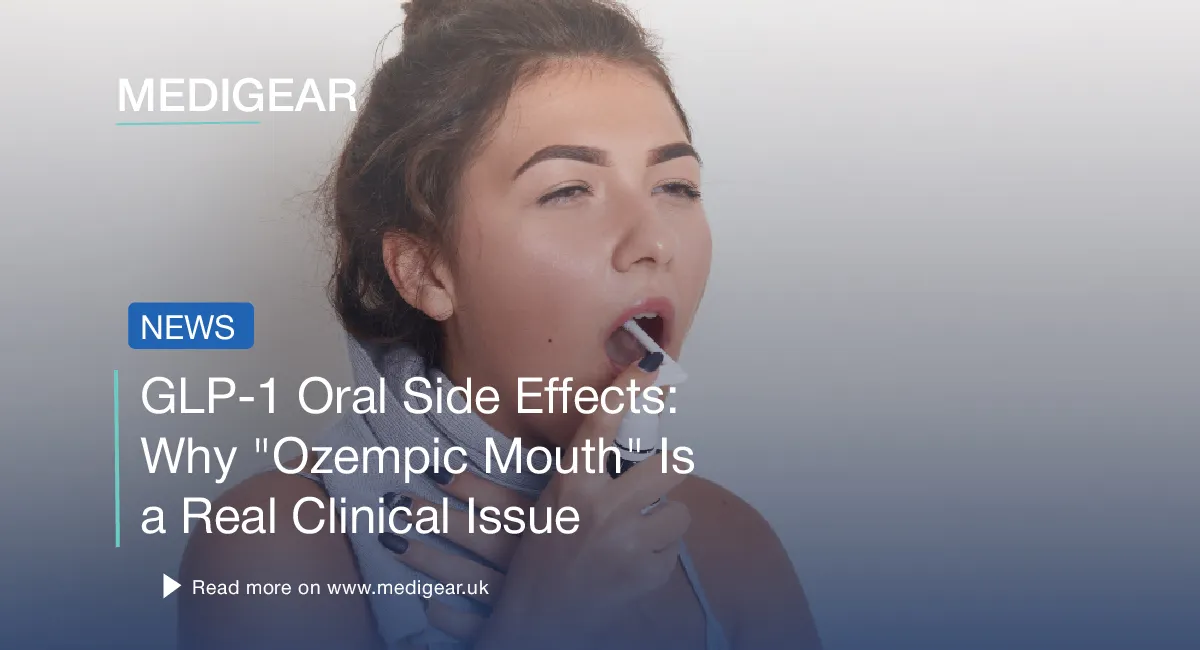
A new look at GLP-1 oral side effects shows "Ozempic mouth" is more than a tabloid label. Dentists track dry mouth, halitosis, taste shifts, sulfur burps, and enamel erosion in patients on semaglutide (Ozempic, Wegovy). Most mechanisms can be traced back to delayed gastric emptying.
Why "Ozempic mouth" became a thing
Dry mouth (xerostomia) leads the GLP-1 oral side effects list. Jennifer L. Thompson, DDS, chair of the American Dental Association Council on Dental Practice, said dry mouth "can contribute to other challenges like bad breath, changes in taste such as a metallic or bitter sensation, tooth sensitivity, and an increased risk of cavities and gum disease."
Up to 24% of GLP-1 users report vomiting as part of GLP-1 oral side effects. Acid in the mouth can cause tooth decay and bad breath. Semaglutide appears to be associated with worse gastrointestinal effects and dry mouth than other GLP-1 receptor agonists.
How delayed gastric emptying drives the symptoms
Most GLP-1 oral side effects trace to slowed motility. Aviv Ouanounou, DDS, co-authored a forthcoming preprint on the oral health effects of semaglutide. He is an associate professor at the University of Toronto Faculty of Dentistry in Toronto, Ontario, Canada. GLP-1 therapy "can lead to prolonged retention in the stomach, in the intestines," Ouanounou said.
He added: "That creates an environment which is conducive to bacterial overgrowth, to fermentation, causing odour perceived as bad breath."
That overgrowth also drives hydrogen sulfide buildup, the source of so-called sulfur burps.
"Studies are limited with direct links to GLP-1s," Ouanounou said, "but the mechanism, the pathways of the slow motility, leads to all these things, consistent with GI [gastrointestinal] physiology."
The reflux and GERD link
A new in-press paper analysed International Classification of Diseases codes from more than 200,000 GLP-1 users. Patients were 32.9% more likely to have gastroesophageal reflux disease (GERD). Reflux and regurgitation feed bad odor and erode enamel. The study found no documented association with dry mouth or halitosis, but these symptoms may go undetected.
Dry mouth and the salivary gland connection
Dry mouth may also be a direct effect. A recent review found GLP-1 drugs may interact with the salivary glands. Semaglutide again appears worse than other agents.
Saliva flows through a calcium and cyclic adenosine monophosphate signalling balance. If semaglutide keeps the GLP-1 receptor active for too long, that signalling can break down. The result: reduced secretion. Over time, glands can desensitise.
"Saliva plays an especially important role in protecting teeth by washing away food and neutralising acids produced by plaque," Thompson said. "When saliva is reduced, these bacteria can grow more easily, increasing the risk of tooth decay, gum inflammation, and bad breath."
Taste changes are still being mapped
Taste shifts are real but not fully defined. Naturally occurring GLP-1 has a role in taste mechanisms. A 2026 literature review found GLP-1 mutes certain flavours in the taste buds. In the brain, GLP-1 dampens the reward response to sweet foods. It may also make bitter tastes feel more unpleasant.
Whether oral changes in a healthy GLP-1 user signal something more serious is not yet clear. "Oral changes alone do not diagnose gastroparesis, SIBO [small intestinal bacterial overgrowth], or another gastrointestinal condition," Thompson cautioned.
She added: "However, persistent or worsening oral symptoms, especially when paired with gastrointestinal symptoms, may prompt further discussion."
How clinicians can help patients manage
Most patients will not stop a life-changing drug for the GLP-1 oral side effects. Good oral hygiene is the baseline: twice-daily brushing and daily flossing. The American Dental Association and Ouanounou also offer this guidance.
- Dry mouth: water or unsweetened herbal tea; sugar-free xylitol gum or pastilles; OTC moisturising rinses, sprays, gels, or lozenges; pilocarpine in severe cases.
- Reflux/vomiting: smaller, more frequent meals; sugar-free antacids; trigger food identification. Do not brush right after vomiting; swish with water and wait 30 minutes. Use toothpaste for sensitive teeth. Consider dose adjustment.
- Sulfur burps/halitosis: fluoride antibacterial toothpaste with zinc; tongue scraping; daily flossing; fluoride mouth rinse; swish after eating.
- Taste shifts: smaller, more frequent meals; nutritional counselling; monitor for deficiencies.
Patients with dry mouth, vomiting, or reflux face a higher risk of tooth decay. If they cannot follow advice, dentist visits should move to every 3 or 4 months.
Coverage on Medigear.uk tracks GLP-1 oral side effects in clinical care.
Source: Originating coverage based on Medscape Medical News reporting by Debbie Koenig (June 12, 2026) on emerging oral health effects of GLP-1 receptor agonists, with commentary from Jennifer L. Thompson, DDS, chair of the American Dental Association Council on Dental Practice, and Aviv Ouanounou, DDS, associate professor at the University of Toronto Faculty of Dentistry, Toronto, Ontario, Canada.
Sourcing medical equipment?
Tell us the model and destination — our sourcing team will respond within one business day.

As a Product Catalogue Specialist at MediGear, I manage product listings, specifications, images and categories to ensure all information is accurate, consistent and professionally presented for hospitals, clinics, distributors and healthcare buyers.
View all articles
MiniMed Smart MDI System: 8.1pp TIR Lift at EASD 2026
Type 1 diabetes patients who responded to more MiniMed Smart MDI alerts hit better glucose numbers i…

Corcym Memo 4D Curve Mitral Ring: First-in-Human US Implant
The Corcym Memo 4D Curve mitral repair ring has landed its first-in-human implant. The news comes so…
Myrava 3D-Printed Bolus Wins FDA 510(k) for Radiotherapy
The Myrava 3D-printed bolus has cleared the US Food and Drug Administration (FDA). The 510(k) nod co…
Medical device news, once a week.
Approvals, trials, recalls and market moves — the essentials for procurement and clinical teams.