
Scientists Develop Breakthrough Biomaterial That Heals Tissue from Inside
A new intravascular ECM biomaterial may calm inflammation. It could rebuild injured tissue from inside the bloodstream.
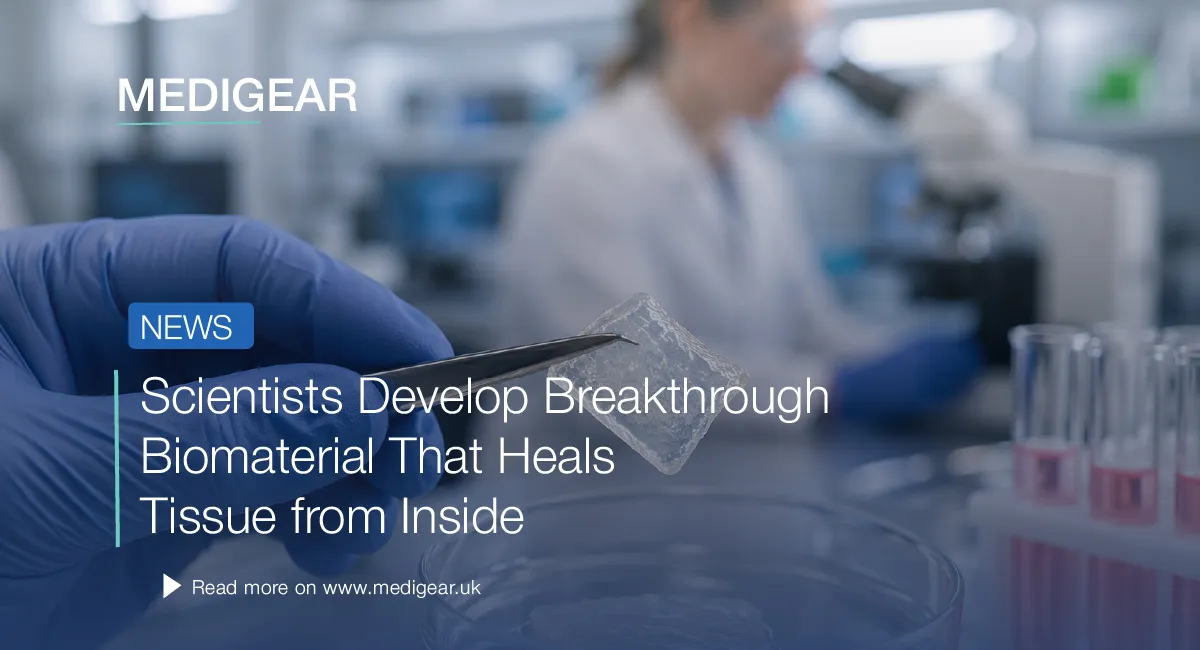
A new intravascular ECM biomaterial may calm inflammation. It could rebuild injured tissue from inside the bloodstream. In animal trials, it reduced damage from heart attacks in rats and pigs. Early tests also hinted at uses in traumatic brain injury and pulmonary arterial hypertension.
The work, in Nature Biomedical Engineering (2022), was led by Karen Christman at UC San Diego.
"This biomaterial allows for treating damaged tissue from the inside out," said Karen Christman, bioengineering professor at UC San Diego.
A fresh delivery route for heart repair
About 785,000 Americans suffer a heart attack each year. Blocked blood flow can kill cardiac muscle. Scar tissue forms. It will not contract like healthy muscle. The heart weakens. It can drift into congestive heart failure.
No therapy today repairs heart muscle after an attack. For coronary artery disease, current care restores blood flow, limits injury, and manages future risk.
"Coronary artery disease, acute myocardial infarction, and congestive heart failure continue to be the most burdensome public health problems affecting our society today," said Dr. Ryan R. Reeves. He is a physician in the UC San Diego Division of Cardiovascular Medicine.
Hydrogel roots, IV reach
The intravascular ECM biomaterial builds on earlier Christman lab work. The team first made a cardiac ECM hydrogel, delivered by catheter into damaged heart muscle.
A phase 1 VentriGel trial reported results in 2019. Transendocardial injection was feasible in heart attack patients with left ventricular dysfunction.
Direct injection has a limit. It cannot be used right after a heart attack. The needle risks fresh damage. That pushed the team toward an IV-friendly version.
"We sought to design a biomaterial therapy that could be delivered to difficult-to-access organs and tissues, and we came up with the method to take advantage of the bloodstream -- the vessels that already supply blood to these organs and tissues," said Martin Spang, first author and PhD graduate of the Shu Chien-Gene Lay Department of Bioengineering.
How it's built and where it goes
The injectable intravascular ECM biomaterial is made from decellularized, enzymatically digested, fractionated ventricular myocardium. The first hurdle was particle size. The gel had particles too big for leaky vessels.
Spang spun the liquid hydrogel precursor in a centrifuge. That filtered larger particles. Only nano-sized ones remained. The material was dialyzed, sterile filtered, and freeze-dried. Add water and it becomes injectable. Delivery is by IV or by direct coronary infusion. It degraded within three days.
The team expected the intravascular ECM biomaterial to slip through leaky vessels into damaged tissue. After a heart attack, gaps form between endothelial cells lining the vessels. The intravascular ECM biomaterial latched onto those cells. It sealed the gaps and sped vessel healing. That cut inflammation.
A pig model showed similar results. Following induced acute myocardial infarction and intracoronary infusion, the material cut left ventricular volumes and improved wall motion scores. Gene-expression shifts were linked to repair and inflammation.
Beyond cardiac use
The biomaterial may not stop at the heart. In rats, the team found proof-of-concept for traumatic brain injury and pulmonary arterial hypertension.
Many organs are hard to reach. All are fed by vessels. Using those vessels could let regenerative medicine reach injuries beyond current care.
Spang said treating hard-to-reach organs could open biomaterials to new diseases.
Where the research stands now
A 2025 Nature Communications paper from Christman's group used spatial transcriptomics and single-nucleus RNA sequencing. It mapped how injectable ECM biomaterials reshape heart tissue post-myocardial infarction. Pro-repair signals appeared in rat tissue. These included immune modulation, blood vessel and lymphatic development, fibroblast activation, myocardial salvage, and neurogenesis.
Ventrix Bio, Inc., cofounded by Christman, is moving cardiac ECM tech forward. ClinicalTrials.gov lists a phase 1 VentriGel trial for pediatric patients with hypoplastic left heart syndrome, sponsored by Emory University. The trial had not begun recruiting at last check.
Toward human trials
Christman and Ventrix Bio plan to seek FDA authorisation. If cleared, the therapy must prove safety and better outcomes. For now, it is experimental. But its appeal is clear: it could reach injured tissue through existing vessel procedures or a routine IV.
Reeves added the easy-to-administer therapy could play a major role once trials clear.
The intravascular ECM biomaterial could reshape heart attack care. Coverage on Medigear.uk shows why teams must follow how these findings shape the field of cardiology.
Source: Originating coverage based on University of California San Diego materials on Spang et al., "Intravascularly infused extracellular matrix as a biomaterial for targeting and treating inflamed tissues," Nature Biomedical Engineering, 2022 (DOI: 10.1038/s41551-022-00964-5). Karen Christman, PhD, professor of bioengineering at UC San Diego, lead researcher; Martin Spang, PhD, first author, Shu Chien-Gene Lay Department of Bioengineering; Dr. Ryan R. Reeves, UC San Diego Division of Cardiovascular Medicine. Related 2025 follow-up published in Nature Communications.
Sourcing medical equipment?
Tell us the model and destination — our sourcing team will respond within one business day.

As a Product Catalogue Specialist at MediGear, I manage product listings, specifications, images and categories to ensure all information is accurate, consistent and professionally presented for hospitals, clinics, distributors and healthcare buyers.
View all articles
MiniMed Smart MDI System: 8.1pp TIR Lift at EASD 2026
Type 1 diabetes patients who responded to more MiniMed Smart MDI alerts hit better glucose numbers i…
Corcym Memo 4D Curve Mitral Ring: First-in-Human US Implant
The Corcym Memo 4D Curve mitral repair ring has landed its first-in-human implant. The news comes so…
Myrava 3D-Printed Bolus Wins FDA 510(k) for Radiotherapy
The Myrava 3D-printed bolus has cleared the US Food and Drug Administration (FDA). The 510(k) nod co…
Medical device news, once a week.
Approvals, trials, recalls and market moves — the essentials for procurement and clinical teams.