
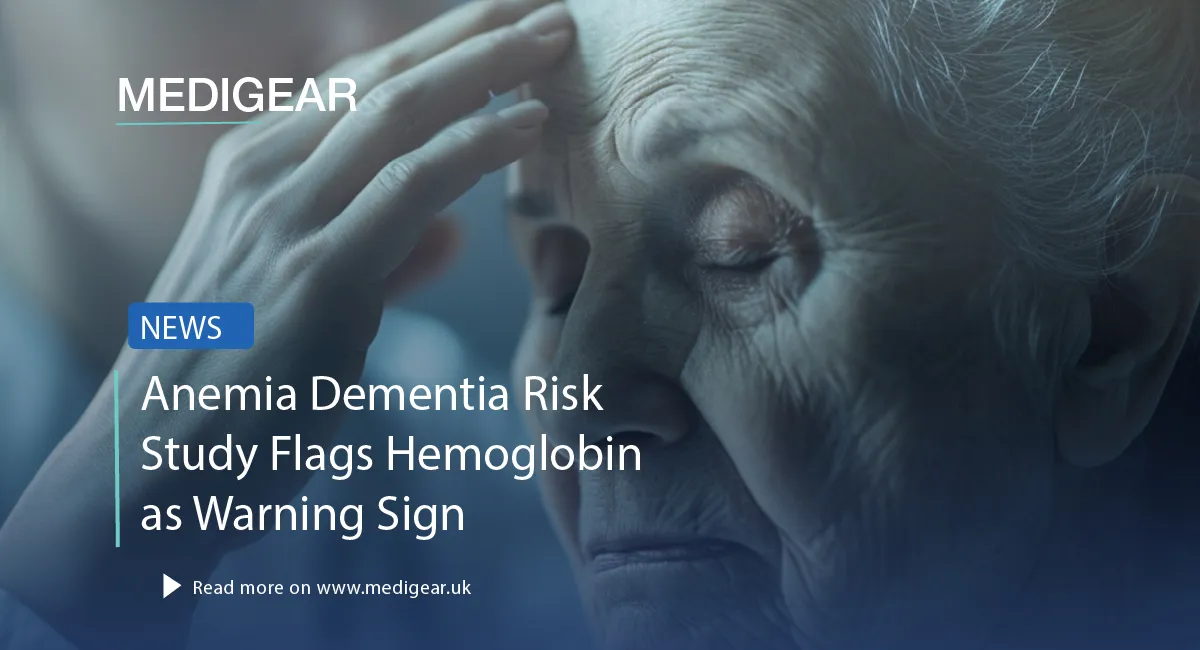
Anemia Dementia Risk Study Flags Hemoglobin as Warning Sign
A new anaemia dementia risk study has flagged low haemoglobin as a warning sign. Older adults with anaemia had a 66% higher dementia risk than those with normal haemoglobin.
Anaemia Dementia Risk Study Flags Haemoglobin as Warning Sign
A new anaemia dementia risk study has flagged low haemoglobin as a warning sign. Older adults with anaemia had a 66% higher dementia risk than those with normal haemoglobin.
The findings, in JAMA Network Open, also tied anaemia to higher Alzheimer's blood biomarkers. The two together pushed dementia risk to its highest.
What the anaemia dementia risk study measured
Researchers drew on the Swedish National Study on Ageing and Care in Kungsholmen. The team analysed 2,282 participants, all aged 60 or older. None had dementia at baseline.
The team checked blood biomarkers for Alzheimer's disease. They screened for anaemia using World Health Organisation criteria, based on haemoglobin level. Haemoglobin is a protein in red blood cells that carries oxygen. They also pulled records on dementia and mild cognitive impairment.
At baseline, 8.7% had anaemia. Those with anaemia were more often male, older, less educated, and burdened with chronic disease. They also had higher Alzheimer's blood biomarkers. Two ran higher in men than women.
Long follow-up, clear signal
Follow-up ran 16 years, averaging 9.3 years per participant. During that time, 15.9% developed dementia.
The headline: anaemia tied to a 66% higher dementia risk vs normal haemoglobin. The signal held when researchers excluded those with mild cognitive impairment or diagnosed within six years.
The anaemia dementia risk study showed dementia risk rose as Alzheimer's biomarkers rose and haemoglobin fell. Low biomarkers and normal haemoglobin were associated with the lowest dementia risk.
One biomarker in the anaemia dementia risk study stood out: NfL — neurofilament light chain, a marker of brain cell death. Elevated NfL plus anaemia produced an additive risk pattern. Among APOE ε4 carriers, anaemia was not tied to higher dementia risk. The haemoglobin link plateaued just above the anaemia threshold. That pattern held in men, not women.
Expert reactions
Courtney Kloske, PhD, of the Alzheimer's Association, was not in the study. Kloske said: "While previous research has linked anaemia to an increased risk of dementia, this study adds new insight by examining that relationship with Alzheimer 's-related blood biomarkers."
Kloske added that anaemia plus higher pTau217 and elevated NfL meant higher dementia risk. Those without anaemia and with lower Alzheimer's biomarkers had the lowest risk.
Dung Trinh, MD, of MemorialCare Medical Group and Chief Medical Officer of Healthy Brain Clinic, Irvine, CA, said: "Anaemia may not just be a background health issue in older adults, but part of the biologic context that makes the brain more vulnerable to neurodegenerative disease. At the same time, this is an observational study, so it shows a strong association, not proof that anaemia causes Alzheimer's disease or dementia."
What this could mean for prevention
The anaemia dementia risk study findings could open a prevention door. Anaemia is cheap to detect and often easy to treat.
Martina Valletta, MD, PhD candidate at Karolinska Institutet and first author, said: "Our findings suggest that anaemia is a relevant risk factor for dementia. Because anaemia is relatively easy to detect with routine blood tests and, in many cases, treatable, it could represent a potentially modifiable target in dementia prevention strategies."
Valletta added that her team cannot conclude that treating anaemia will prevent dementia. The design was observational. That remains an open question.
Trinh said anaemia in older adults with memory concerns deserves a closer look. Low haemoglobin could be a useful risk marker. It could help clinicians flag patients for a more comprehensive cognitive evaluation.
What the anaemia dementia risk study cannot prove
The cohort was Swedish and mostly white. Findings may not generalise. The team tested biomarkers in serum, not plasma. That lowers readings. Over 90% of those with anaemia had normal-sized red blood cells. That was a limited study of extreme cases. Some haemoglobin and biomarker data were missing. Excluded people were likely sicker. Authors say this "may have led to an underestimation of the associations." Biomarkers were measured only at baseline. Three authors reported conflicts of interest.
Trinh stressed that anaemia is not diagnostic for Alzheimer's: "However, the findings do not mean that anaemia is diagnostic of Alzheimer's disease, nor do they prove that treating anaemia will prevent dementia."
Still, the anaemia dementia risk study builds a case for taking low haemoglobin seriously. Coverage on Medigear.uk shows why hospital teams must follow the anaemia dementia risk study as it reshapes neurology and primary care.
Source: Originating coverage based on Medical News Today reporting on the anaemia dementia risk study published in JAMA Network Open — first author Martina Valletta, MD, PhD candidate at Karolinska Institutet, with commentary from Courtney Kloske, PhD, Alzheimer's Association, and Dung Trinh, MD, MemorialCare Medical Group and Healthy Brain Clinic, Irvine, CA. Cohort drawn from the Swedish National Study on Ageing and Care in Kungsholmen.
Sourcing medical equipment?
Tell us the model and destination — our sourcing team will respond within one business day.

As a Product Catalogue Specialist at MediGear, I manage product listings, specifications, images and categories to ensure all information is accurate, consistent and professionally presented for hospitals, clinics, distributors and healthcare buyers.
View all articles
MiniMed Smart MDI System: 8.1pp TIR Lift at EASD 2026
Type 1 diabetes patients who responded to more MiniMed Smart MDI alerts hit better glucose numbers i…
Corcym Memo 4D Curve Mitral Ring: First-in-Human US Implant
The Corcym Memo 4D Curve mitral repair ring has landed its first-in-human implant. The news comes so…
Myrava 3D-Printed Bolus Wins FDA 510(k) for Radiotherapy
The Myrava 3D-printed bolus has cleared the US Food and Drug Administration (FDA). The 510(k) nod co…
Medical device news, once a week.
Approvals, trials, recalls and market moves — the essentials for procurement and clinical teams.