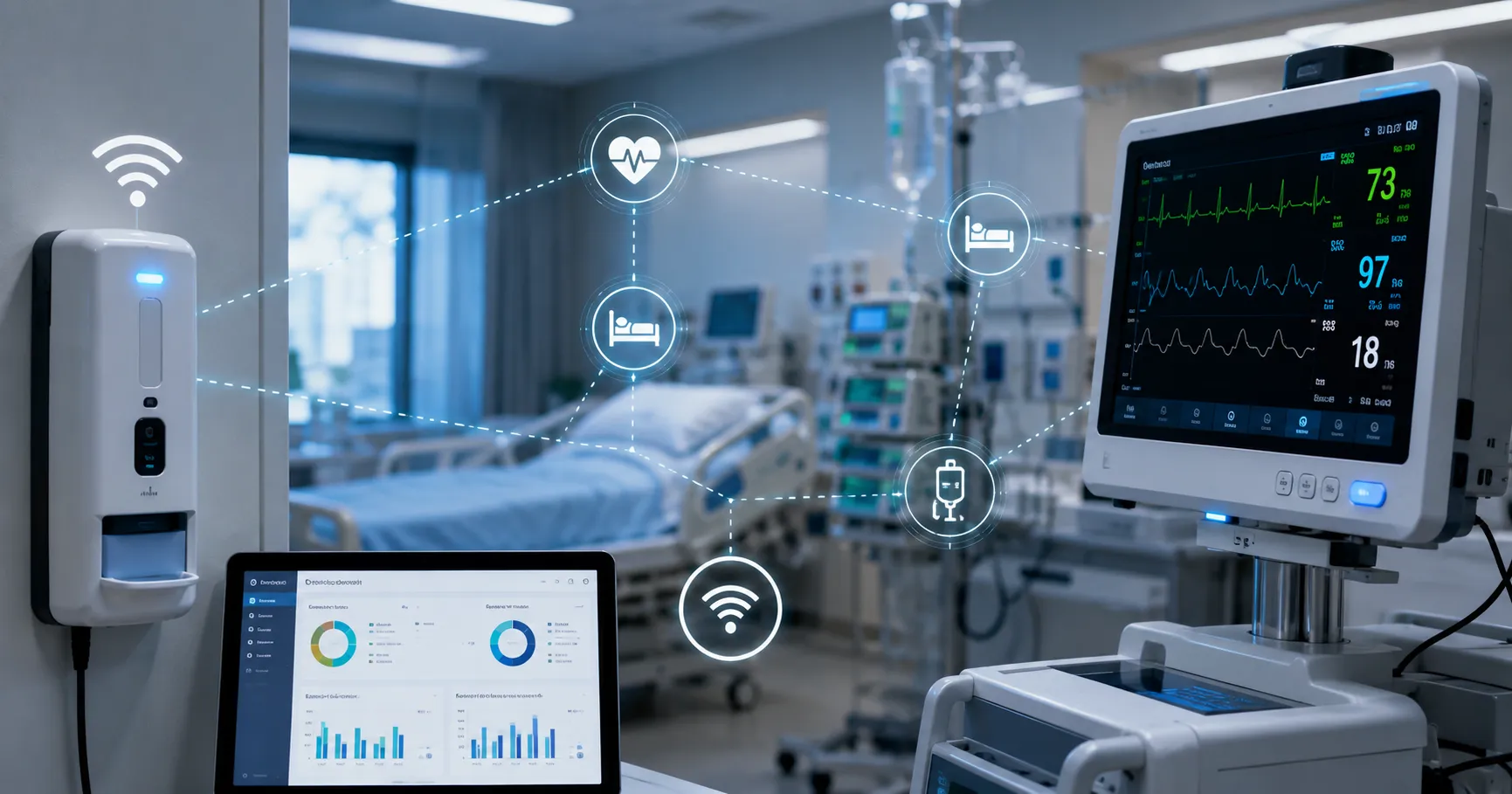
Smart sensors in hospital equipment help healthcare facilities collect, measure, transmit, and analyse important information from medical devices and clinical environments. These sensors may track patient vital signs, equipment performance, temperature, pressure, oxygen flow, motion, battery status, usage hours, humidity, location, device faults, and maintenance needs.
For healthcare buyers, smart sensors should not be viewed as simple add-on features. They affect patient monitoring, clinical workflow, equipment uptime, biomedical engineering, cybersecurity, data governance, software support, maintenance planning, and supplier evaluation. The FDA describes digital health technologies as systems that use computing platforms, connectivity, software, and sensors for healthcare and related uses, which directly connect to how smart sensor-enabled equipment works in modern healthcare environments.
What Smart Sensors Mean in Hospital Equipment
Smart sensors are components that detect changes, collect data, and often send that information to a device, dashboard, alarm system, cloud platform, or hospital network. In hospital equipment, these sensors may support monitoring, automation, alerts, safety checks, maintenance planning, and connected care.
A smart sensor may be built into a patient monitor, ventilator, infusion pump, hospital bed, imaging system, laboratory analyser, wearable device, sterilisation unit, refrigerator, oxygen system, or asset tracking tag. The sensor itself may be small, but the information it provides can support better decisions when used correctly.
Smart sensors become more useful when they are connected to clear workflows. A sensor that collects data but does not help staff act faster, maintain equipment better, or improve safety may not deliver real value.
How Smart Sensors Support Healthcare Facilities
Smart sensors enhance visibility for healthcare facilities. They help teams understand what is happening with patients, devices, rooms, storage areas, and critical equipment.
Patient Monitoring — Sensors in monitors, wearable devices, ventilators, and diagnostic tools can collect selected patient information such as oxygen saturation, heart rate, pressure, temperature, respiratory patterns, movement, or ECG data.
Equipment Alerts — Sensors can detect device faults, low battery, blocked tubing, pressure changes, temperature variation, sensor disconnection, or abnormal operating conditions.
Maintenance Planning — Sensor data can help biomedical teams identify usage hours, repeated faults, performance changes, and service needs before equipment failure affects care.
Environmental Monitoring — Sensors can monitor temperature, humidity, air pressure, and conditions in cold storage, sterile storage, laboratory rooms, and pharmacy areas.
Asset Tracking — Location sensors can help hospitals find mobile equipment such as infusion pumps, wheelchairs, monitors, beds, trolleys, and emergency devices.
Where Smart Sensors Are Used
Smart sensors can be used across many hospital departments. The right sensor-enabled equipment depends on clinical need, department workload, infrastructure, and staff workflow.
ICU and Critical Care — Patient monitors, ventilators, infusion systems, smart beds, and central monitoring stations may use sensors for continuous monitoring, alarms, device performance, and clinical data visibility.
Emergency Departments — Emergency teams may use sensor-enabled monitors, ECG devices, portable ultrasound units, vital-signs systems, oxygen equipment, and mobile diagnostic tools.
Laboratories — Laboratory analysers, refrigerators, incubators, centrifuges, and sample storage systems may use sensors for temperature, speed, pressure, quality control, and fault alerts.
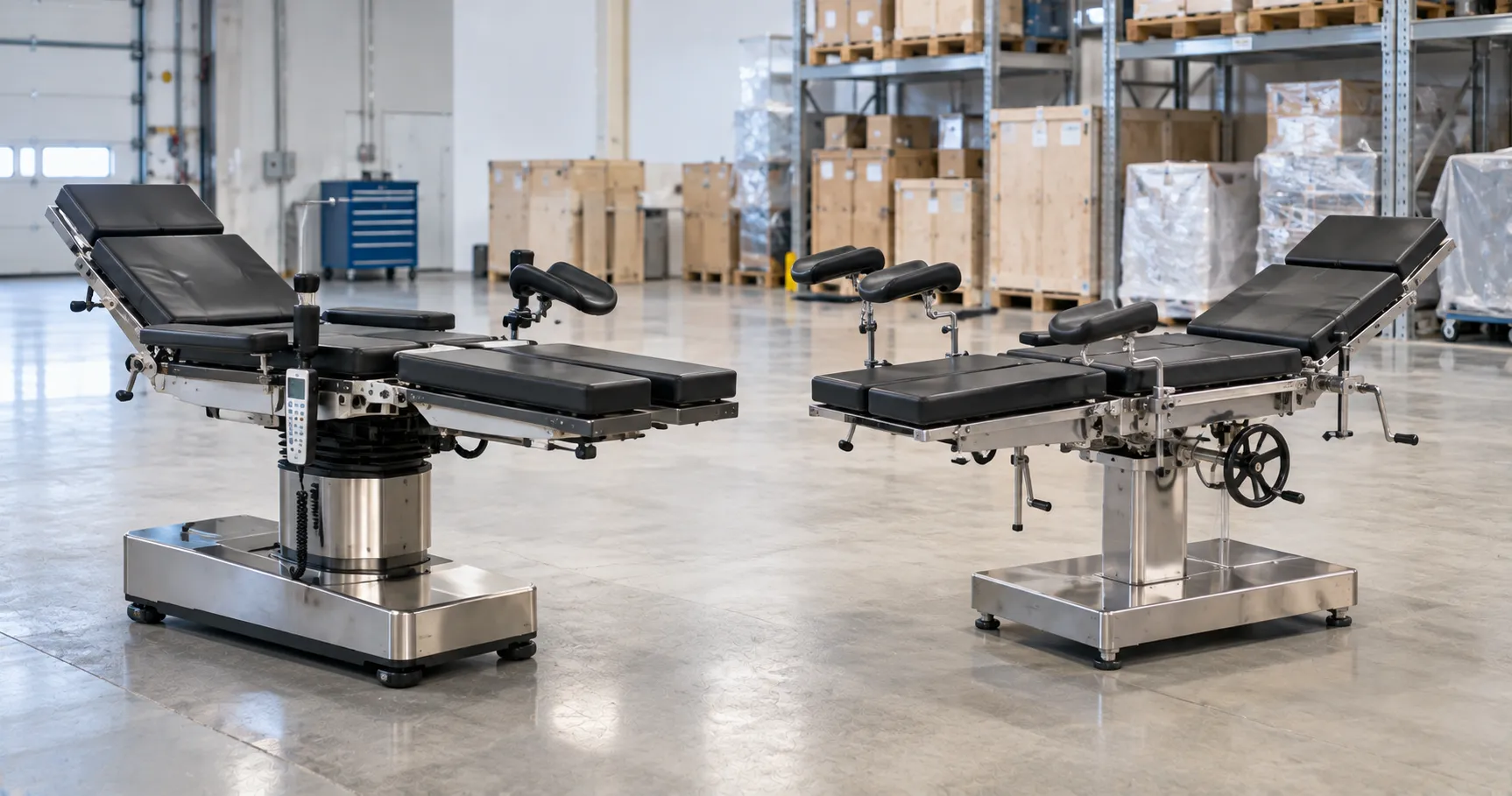
Operating Rooms — Surgical tables, anaesthesia workstations, patient warming systems, electrosurgical devices, surgical lights, and environmental systems may use sensors to support safe workflow.
Sterilisation and CSSD Areas — Autoclaves, washer-disinfectors, drying cabinets, and sterile storage systems may use sensors for cycle control, temperature, pressure, humidity, and process monitoring.
Wards and Outpatient Clinics — Smart beds, connected vital signs devices, wearable sensors, nurse call systems, and remote monitoring tools can support routine care and patient observation.
Facilities sourcing through regulated and certified equipment suppliers worldwide should confirm the sensor's purpose, accuracy, calibration requirements, data output, software support, service access, and documentation before procurement.
Common Types of Smart Sensors in Hospital Equipment
Smart sensors may measure physical, biological, electrical, environmental, or operational signals. Buyers should understand what the sensor measures and how that information is used.
Vital Signs Sensors — These may measure pulse rate, oxygen saturation, blood pressure, respiratory rate, temperature, ECG signals, or other patient parameters.
Pressure Sensors — Pressure sensors may be used in ventilators, infusion systems, medical gas systems, suction systems, mattresses, cuffs, and fluid systems.
Temperature Sensors — These are used in patient monitoring, refrigerators, incubators, warming systems, autoclaves, laboratory storage, and sterilisation equipment.
Flow Sensors — Flow sensors may be used in ventilators, oxygen systems, anaesthesia machines, suction systems, and infusion devices.
Motion and Position Sensors — These may support smart beds, rehabilitation devices, fall-risk systems, mobility tracking, and patient movement monitoring.
Humidity and Environmental Sensors — These support laboratories, pharmacies, sterile areas, clean rooms, storage spaces, and equipment rooms.
Location Sensors — RFID, Bluetooth, and real-time location sensors help hospitals track mobile equipment and improve asset visibility.
Battery and Performance Sensors — These sensors may track battery health, internal temperature, operating hours, component wear, and service needs.
Benefits of Smart Sensors in Hospital Equipment
Smart sensors can help hospitals improve daily operations when the data is accurate, useful, and connected to clear action.
Better Patient Visibility — Sensor-enabled monitoring can help clinical teams review selected patient trends more efficiently.
Faster Equipment Alerts — Sensors can warn staff when a device needs attention, a parameter changes, or a fault occurs.
Improved Equipment Uptime — Sensor data can help biomedical teams plan maintenance before failures become serious.
Reduced Manual Checks — Automated data collection can reduce repeated manual recording when systems are configured correctly.
Stronger Asset Management — Location and usage sensors help teams understand where equipment is, how often it is used, and whether more units are needed.
Better Compliance Records — Sensor-enabled systems may create digital logs for temperature, sterilisation cycles, equipment usage, alarms, and maintenance activity.
Smart Sensors and Interoperability
Smart sensors become more valuable when their data can move safely into useful systems. This is where interoperability becomes important. The
FDA describes medical device interoperability as the ability to safely, securely, and effectively exchange and use information among devices, products, technologies, or systems. For hospitals, this means sensor data should be usable by the right clinical or operational system without creating confusion or risk.
Clinical System Integration — Sensor data may need to connect with patient monitoring systems, electronic records, laboratory systems, imaging systems, or nurse call systems.
Biomedical System Integration — Equipment performance data may need to be connected to asset management platforms, maintenance software, or service dashboards.
Correct Data Mapping — Sensor values should be recorded with correct units, timestamps, patient matching, device identity, and location.
Downtime Planning — Equipment should still support safe workflow if connectivity fails.
Vendor Compatibility — Buyers should confirm whether the device works with existing hospital platforms or requires separate proprietary software.
Cybersecurity Risks With Sensor-Enabled Equipment
Smart sensors often connect to networks, gateways, cloud platforms, apps, or dashboards. This creates cybersecurity responsibilities.
Access Control — Hospitals should define who can access sensor data, device settings, dashboards, software updates, and remote service tools.
Secure Data Transmission — Buyers should ask whether sensor data is encrypted during transfer and storage.
Remote Access Management — Supplier remote access should be approved, logged, time-limited, and controlled by facility policy.
Software Updates — Sensor-enabled devices may need firmware or software updates. Updates should be documented and planned.
Cybersecurity Documentation — FDA cybersecurity guidance provides recommendations for cybersecurity device design, labelling, and documentation for devices with cybersecurity risk. This makes a cybersecurity review important before purchasing connected sensor-enabled equipment.
Procurement Guidance for Smart Sensor Equipment
Procurement of smart sensor-enabled hospital equipment should include clinical teams, biomedical engineers, IT teams, cybersecurity staff, procurement teams, finance teams, and compliance staff.
Clinical Need Review — Buyers should confirm what problem the sensor solves. It may support patient monitoring, equipment status, environmental safety, maintenance planning, or workflow automation.
Sensor Accuracy — Procurement teams should request accuracy data, validation information, limitations, calibration requirements, and intended use.
Total Cost of Ownership — Buyers should include device price, sensors, accessories, calibration, replacement parts, software licences, cloud fees, integration, training, service contracts, and support costs.
Supplier Transparency — Suppliers and manufacturers advertising to global healthcare buyers should provide clear specifications, sensor function, data output, connectivity requirements, cybersecurity documents, service terms, warranty, and training support.
Compliance Documentation — Buyers should request conformity documents, product registrations where relevant, user manuals, service instructions, calibration requirements, cleaning instructions, software details, and warranty terms.
Healthcare groups managing multiple facilities may benefit from structured distribution and reseller partnership arrangements. Standardising sensor-enabled equipment, accessories, software platforms, training, and service support can reduce variation across sites.
Maintenance and Calibration Planning
Smart sensors need proper maintenance. A sensor may provide inaccurate or unreliable data if it is damaged, dirty, outdated, poorly calibrated, or used outside its intended operating conditions.
WHO maintenance guidance explains that medical equipment maintenance includes inspection, preventive, and corrective maintenance, with preventive maintenance helping to extend equipment life and reduce failure rates.
Preventive Maintenance — Sensor-enabled equipment should follow manufacturer maintenance schedules.
Calibration Checks — Sensors that measure clinical or operational parameters may need calibration or verification.
Cleaning and Handling — Some sensors can be affected by dust, moisture, residue, impact, cable damage, or poor storage.
Battery Management — Wearable sensors, mobile devices, and wireless tags may depend on battery performance.
Replacement Planning — Sensors, probes, cables, adhesives, batteries, and modules may need regular replacement.
Service Records — Maintenance, calibration, faults, replacements, and software updates should be documented.
Smart Sensors for Predictive Maintenance
Smart sensors can support predictive maintenance by collecting useful equipment condition data. This may include usage hours, temperature, vibration, pressure, battery status, fault logs, or performance changes.
Predictive maintenance helps biomedical teams move from purely reactive repairs toward more planned maintenance. It does not replace preventive maintenance, but it can help teams prioritise devices that show warning signs.
For example, a sensor-enabled refrigerator may alert staff when the temperature moves outside the range. A smart pump may show repeated pressure warnings. A ventilator may log performance issues. A mobile asset tag may show that equipment is being moved frequently and may need closer inspection.
The value depends on data quality, dashboard design, staff response, and maintenance workflow.
Staff Training for Smart Sensor Equipment
Smart sensors can create new workflows, so staff training is essential.
Clinical staff should understand what the sensor measures, what alerts mean, when to act, and when to report problems. Biomedical teams should understand calibration, fault logs, replacement parts, and maintenance procedures. IT teams should understand connectivity, access control, updates, and cybersecurity.
Training should be role-based. A nurse, technician, biomedical engineer, and IT administrator may all interact with the same sensor-enabled system in different ways.
Common Mistakes to Avoid
Hospitals should avoid buying sensor-enabled equipment without clear planning.
Buying Sensors Without Workflow — Sensor data is only useful if someone reviews it and acts on it.
Ignoring Calibration — Poor calibration can reduce reliability and create false confidence.
Overloading Staff With Alerts — Too many low-value alerts can cause alert fatigue.
Skipping Cybersecurity Review — Connected sensors can create data and network risks.
Ignoring Hidden Costs — Sensors may require replacements, licences, dashboards, gateways, batteries, and service contracts.
Not Checking Compatibility — A sensor-enabled device may not connect with existing hospital systems.
Forgetting User Training — Staff need practical training before using the device in routine care.
International Sourcing Considerations
Smart sensor-enabled hospital equipment can be sourced internationally when buyers clearly define clinical use, device category, sensor type, accuracy requirements, connectivity needs, software support, calibration needs, warranty, spare parts, training, and compliance expectations.
Buyers should confirm whether they need patient-monitoring sensors, environmental sensors, equipment-tracking sensors, pressure sensors, flow sensors, temperature sensors, wearable sensors, smart beds, connected diagnostic equipment, or full smart-hospital device packages. For project-based sourcing, buyers can contact the Medigear.uk team for supply support to discuss availability, documentation, export needs, and procurement requirements.
Future Role of Smart Sensors in Healthcare Facilities
Smart sensors will continue to support connected healthcare, digital monitoring, predictive maintenance, automated alerts, asset tracking, and smarter hospital workflows. However, successful use depends on reliable data, trained users, cybersecurity planning, supplier support, and practical implementation.
The best smart sensor strategy starts with a clear hospital problem. If a sensor helps improve monitoring, reduce downtime, protect stored materials, support faster response, or improve equipment visibility, it can create real value. If it only adds data without taking action, it may increase workload rather than improve care delivery.
Final Thoughts
Smart sensors in hospital equipment help healthcare facilities improve monitoring, alerts, maintenance planning, equipment visibility, and workflow efficiency. They are important in connected patient monitors, ventilators, infusion systems, smart beds, laboratory equipment, sterilisation systems, refrigerators, wearable devices, and asset tracking platforms.
The right sensor-enabled equipment should match clinical needs, accuracy requirements, data workflows, cybersecurity policies, maintenance capacity, staff training, and local compliance standards. Buyers should review documentation, total cost of ownership, calibration requirements, software support, service reliability, and supplier transparency before ordering.
Disclaimer
Medigear.uk is a global medical equipment supplier, exporter, and distributor. The content published on this site is intended for educational and product awareness purposes only. Nothing on this page constitutes medical advice, clinical guidance, cybersecurity advice, legal advice, data protection advice, or treatment recommendations. All healthcare procurement, technology, legal, data, and clinical decisions should be made by qualified professionals and compliant procurement teams operating within the regulatory frameworks of their respective countries.