Advanced laboratory equipment plays an important role in modern hospital diagnostics. Hospitals depend on laboratory systems to test patient samples, support clinical decisions, monitor treatment response, manage emergencies, and improve diagnostic turnaround time. From routine blood testing to specialised sample analysis, laboratory equipment must be accurate, reliable, well-maintained, and suitable for the hospital’s testing workload.
For healthcare buyers, advanced laboratory equipment should be evaluated by clinical need, testing volume, sample workflow, reagent availability, quality-control requirements, maintenance support, service access, documentation, compliance, and total cost of ownership. FDA explains that in vitro diagnostics are tests performed on samples such as blood or tissue taken from the human body, and these tests may help detect disease, monitor health, or support treatment decisions.
What Advanced Laboratory Equipment Means
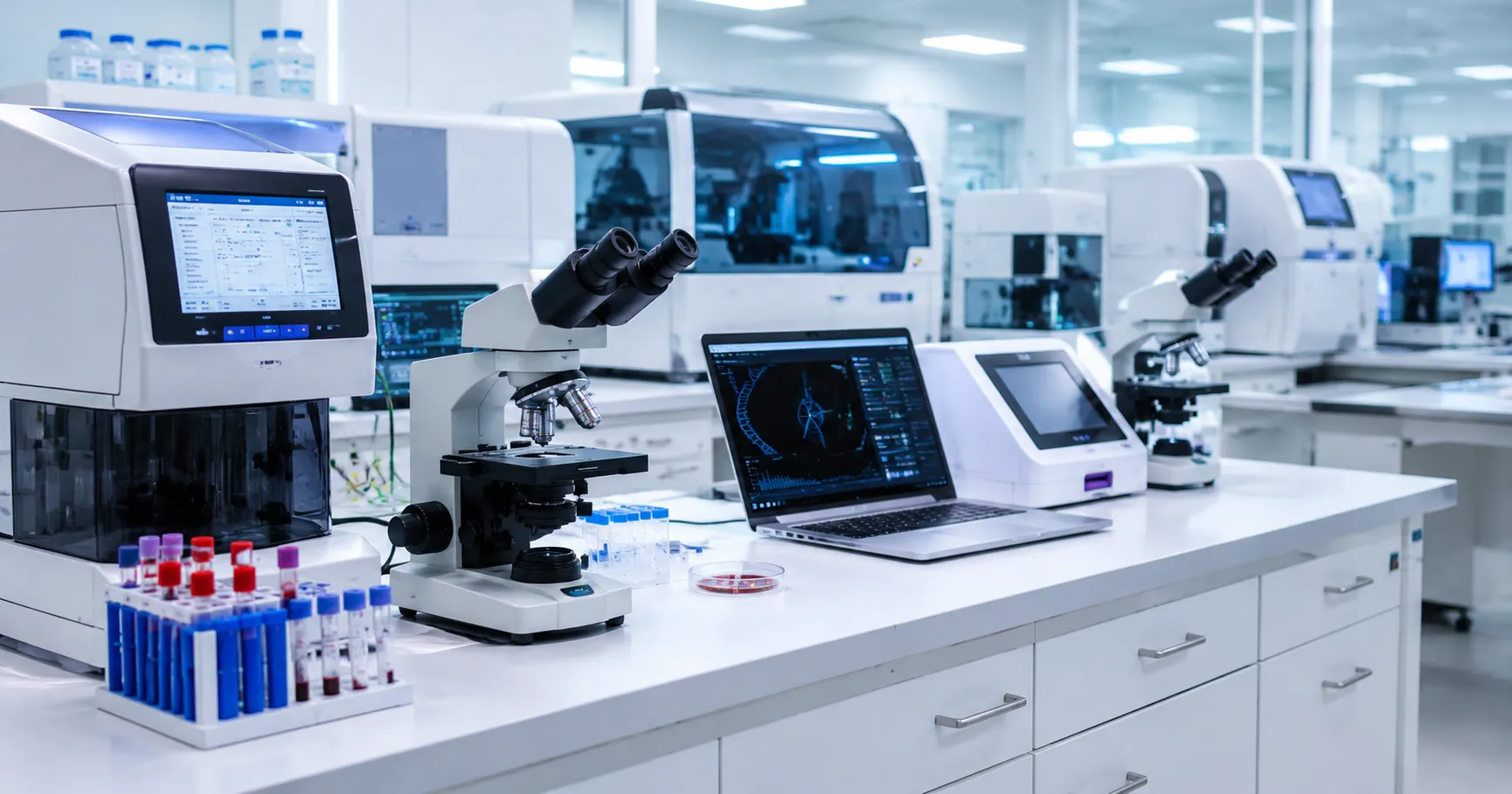
Advanced laboratory equipment includes diagnostic devices, analysers, sample preparation tools, storage systems, quality-control equipment, and digital platforms used in clinical laboratories. These systems may support biochemistry, haematology, immunology, microbiology, molecular diagnostics, coagulation testing, urinalysis, blood gas testing, pathology, and sample management.
Modern laboratory equipment may include automated analysers, barcode systems, laboratory information system connectivity, quality-control software, reagent tracking, sample workflow automation, remote service tools, and digital reporting features. However, advanced equipment should not be chosen only because it looks modern. It must fit the actual laboratory workflow.
A strong laboratory setup balances equipment capacity, accuracy, reagent supply, staff skill, maintenance support, and documentation control.
Why Advanced Laboratory Equipment Is Important
Hospitals need laboratory equipment that can support fast and dependable testing. Poorly selected equipment can lead to delays, repeated tests, reagent waste, maintenance issues, and reporting errors.
Faster Diagnostic Workflow — Automated analysers and organised sample handling can help laboratories process tests more efficiently.
Improved Testing Consistency — Quality-control systems, calibration records, and standard operating procedures support more consistent laboratory performance.
Better Emergency Response — Blood gas analysers, electrolyte systems, haematology analysers, and point-of-care devices can support urgent clinical decisions.
Reduced Manual Workload — Automation can eliminate repetitive manual tasks, improve sample tracking, and boost staff productivity.
Stronger Compliance Records — Digital logs, service records, calibration files, and quality-control reports help laboratories stay organised for audits.
Better Procurement Planning — Usage data, reagent consumption, maintenance history, and analyser performance help hospitals plan future purchases.
Common Types of Advanced Laboratory Equipment
Hospital laboratories use different equipment depending on the test menu, patient volume, and department structure.
Biochemistry Analysers — These systems support routine chemistry testing, including liver function, kidney function, electrolytes, enzymes, proteins, and metabolic markers.
Haematology Analysers — These devices are used for blood cell counting, differential counts, haemoglobin testing, and routine blood analysis.
Immunoassay Analysers — Immunoassay systems support testing for hormones, cardiac markers, infectious disease markers, fertility markers, and other specialised assays.
Coagulation Analysers — These systems support clotting studies and may be important for surgical, emergency, haematology, and anticoagulation workflows.
Urine Analysers — Urinalysis systems support routine screening, kidney-related testing, infection-related screening, and outpatient diagnostics.
Blood Gas and Electrolyte Analysers — These devices are important in emergency departments, ICUs, operating rooms, neonatal units, and respiratory care.
Microbiology Equipment — Incubators, biosafety cabinets, microscopes, culture systems, autoclaves, and identification tools support infection-related diagnostics.
Molecular Diagnostic Equipment — PCR systems and related platforms may support specialised infectious disease testing, genetic testing, and targeted laboratory workflows.
Centrifuges and Sample Preparation Tools — Centrifuges, pipettes, mixers, vortex systems, sample racks, and barcode tools support daily sample processing.
Laboratory Refrigerators and Freezers — Controlled storage is important for reagents, samples, controls, calibrators, and temperature-sensitive materials.
Facilities sourcing through regulated and certified equipment suppliers worldwide should confirm device category, test menu, reagent supply, service support, documentation, installation needs, and maintenance requirements before procurement.
Key Features Buyers Should Review
Advanced laboratory equipment should be selected based on technical and operational fit.
Testing Capacity — Buyers should check test throughput per hour, sample-loading capacity, continuous-loading options, and workflow suitability.
Test Menu — The analyser should support the hospital’s required tests and future expansion needs.
Accuracy and Precision — Buyers should request performance data, quality-control requirements, calibration process, and validation support.
Reagent Availability — Reagent cost, shelf life, packaging, storage conditions, and supply continuity should be reviewed before purchase.
Sample Handling — Barcode support, sample racks, tube compatibility, STAT testing, and automated sample recognition can improve workflow.
Connectivity — LIS connectivity, data export, remote service, and reporting integration may be important for modern laboratories.
Maintenance Requirements — Daily, weekly, monthly, and annual maintenance tasks should be realistic for laboratory staff.
Service Support — Buyers should confirm engineer access, spare parts, response time, training, and warranty terms.
Quality Control and Laboratory Standards
Quality control is central to laboratory performance. A hospital laboratory should not depend only on equipment automation. It must also maintain proper procedures, documentation, quality checks, staff training, and review systems.
WHO’s Laboratory Quality Management System handbook covers quality management topics for public health and clinical laboratories and is based on ISO 15189 and CLSI GP26-A3 documents. This supports the need for structured laboratory processes beyond the purchase of equipment.
Important quality-control areas include:
Internal quality-control samples
External quality assessment participation
Calibration records
Standard operating procedures
Staff competency records
Maintenance logs
Reagent lot records
Temperature logs
Result review procedures
Corrective action records
A laboratory analyser may be advanced, but its value depends on whether the laboratory has a strong quality system around it.
Procurement Guidance for Hospital Laboratories
Procurement of advanced laboratory equipment should involve laboratory managers, pathologists, biomedical engineers, procurement, finance, and IT teams, as well as compliance staff.
Define the Test Workload — Hospitals should estimate daily sample volume, peak workload, test categories, emergency testing needs, and future expansion.
Compare Total Cost of Ownership — Buyers should include analyser price, reagents, controls, calibrators, consumables, service contracts, spare parts, software, installation, training, and waste handling.
Review Supplier Support — Suppliers and manufacturers advertising to global healthcare buyers should provide specifications, test menu details, reagent information, warranty terms, installation support, training materials, and service documents.
Check Compliance Documentation — Buyers should request conformity documents, product registrations where relevant, user manuals, service manuals where available, quality-control instructions, calibration requirements, and warranty files.
Plan Installation Requirements — Laboratory equipment may need specific bench space, power supply, water connection, drainage, ventilation, temperature control, UPS support, network connection, and waste disposal planning.
Pilot or Demonstration Review — Larger laboratories should review usability, sample workflow, reagent handling, maintenance procedures, LIS integration, and staff feedback before making a bulk purchase.
Maintenance and Calibration Planning
Advanced laboratory equipment must be maintained carefully. WHO’s laboratory quality implementation guidance advises laboratories to plan maintenance and calibration for all equipment and to create a yearly schedule for these activities.
Maintenance planning should include:
Daily cleaning
Probe checks
Reagent line checks
Calibration
Quality-control runs
Preventive maintenance
Corrective maintenance
Software updates
Engineer visits
Spare part replacement
Temperature monitoring
Service documentation
Biomedical teams and laboratory managers should work together to ensure that maintenance is performed, recorded, and reviewed.
Digital Workflow and LIS Integration
Modern laboratories increasingly depend on digital workflow. Laboratory information system connectivity can reduce manual data entry, improve sample tracking, support report transfer, and improve traceability.
Important digital features include:
Barcode scanning
LIS connectivity
Automated result transfer
Quality-control dashboards
Reagent inventory tracking
User access control
Audit logs
Remote service tools
Report export
Equipment status alerts
However, connected systems must be reviewed carefully. Buyers should confirm data security, access control, user permissions, software version control, downtime workflow, and supplier update policy.
Reagent and Consumable Planning
Laboratory equipment selection should always include reagent planning. A high-performing analyser can create procurement problems if reagents are expensive, unavailable, unstable, or difficult to store.
Buyers should review:
Reagent supply continuity
Storage temperature
Shelf life
Open-vial stability
Calibration frequency
Control material requirements
Consumable usage
Waste disposal requirements
Delivery lead time
Minimum order quantity
Supplier support for reagents
Hospitals should avoid selecting analysers without confirming long-term reagent availability.
Staff Training and Competency
Advanced laboratory equipment requires trained users. Staff should understand sample loading, reagent handling, calibration, quality-control procedures, maintenance, troubleshooting, safety precautions, and result review.
Training should include:
Operator training
Supervisor training
Maintenance steps
Quality-control interpretation
Error code handling
Cleaning procedures
LIS workflow
Safety and waste handling
Competency review
Refresher training
Training records should be stored as part of the laboratory quality system.
Common Procurement Mistakes to Avoid
Hospitals should avoid these common mistakes when buying laboratory equipment.
Choosing Only by Price — A low-cost analyser may become expensive if reagents, consumables, service, or spare parts are costly.
Ignoring Reagent Supply — Equipment is not useful if reagents are unavailable or delayed.
Skipping Quality-Control Planning — Quality control must be planned before routine testing begins.
Forgetting Maintenance Capacity — Complex analysers need trained staff and reliable service support.
No LIS Review — Poor digital integration can increase manual work and reporting delays.
Ignoring Space and Utilities — Equipment may require specific power, bench space, water, drainage, or ventilation.
Weak Documentation Review — Missing manuals, certificates, warranty files, and service documents can lead to compliance issues.
International Sourcing Considerations
Advanced laboratory equipment can be sourced internationally when buyers clearly define the test menu, sample volume, analyser type, reagent requirements, installation needs, voltage, language settings, documentation, warranty, service support, and compliance requirements.
Healthcare groups managing multiple hospitals or laboratories may benefit from structured distribution and reseller partnership arrangements. Standardising analyser models, reagents, training, service contracts, and documentation can reduce complexity across facilities.
Buyers should confirm whether they need biochemistry analysers, haematology analysers, immunoassay systems, coagulation analysers, blood gas analysers, microbiology equipment, urinalysis systems, molecular diagnostic tools, centrifuges, refrigerators, biosafety cabinets, or complete laboratory packages. For project-based sourcing, buyers can contact the Medigear.uk team for supply support to discuss availability, documentation, export needs, and procurement requirements.
Future Role of Advanced Laboratory Equipment
Advanced laboratory equipment will continue to support faster diagnostics, automation, quality management, connected reporting, and better laboratory planning. The strongest laboratory systems will combine reliable analysers, stable reagent supply, trained users, digital records, preventive maintenance, and clear compliance documentation.
Hospitals should focus on equipment that improves diagnostic workflow without creating unnecessary complexity. The best laboratory setup is not always the most expensive one. It is the one that fits patient volume, test menu, quality requirements, maintenance capacity, and long-term procurement planning.
Final Thoughts
Advanced laboratory equipment supports modern hospital diagnostics by enabling faster testing, improved workflow, stronger quality-control processes, and more efficient reporting. The right equipment can help laboratories manage sample volume, reduce delays, organise records, and support clinical teams with reliable diagnostic information.
Healthcare buyers should compare not only equipment price, but also reagents, consumables, service support, calibration, maintenance, LIS connectivity, staff training, documentation, and total cost of ownership. A well-planned laboratory procurement strategy helps hospitals improve diagnostic capacity while maintaining service reliability and readiness for compliance.
Disclaimer
Medigear.uk is a global medical equipment supplier, exporter, and distributor. The content published on this site is intended for educational and product awareness purposes only. Nothing on this page constitutes medical advice, clinical guidance, laboratory practice advice, legal advice, regulatory advice, or treatment recommendations. All healthcare procurement, laboratory, regulatory, technology, and clinical decisions should be made by qualified professionals and compliant procurement teams operating within the regulatory frameworks of their respective countries.