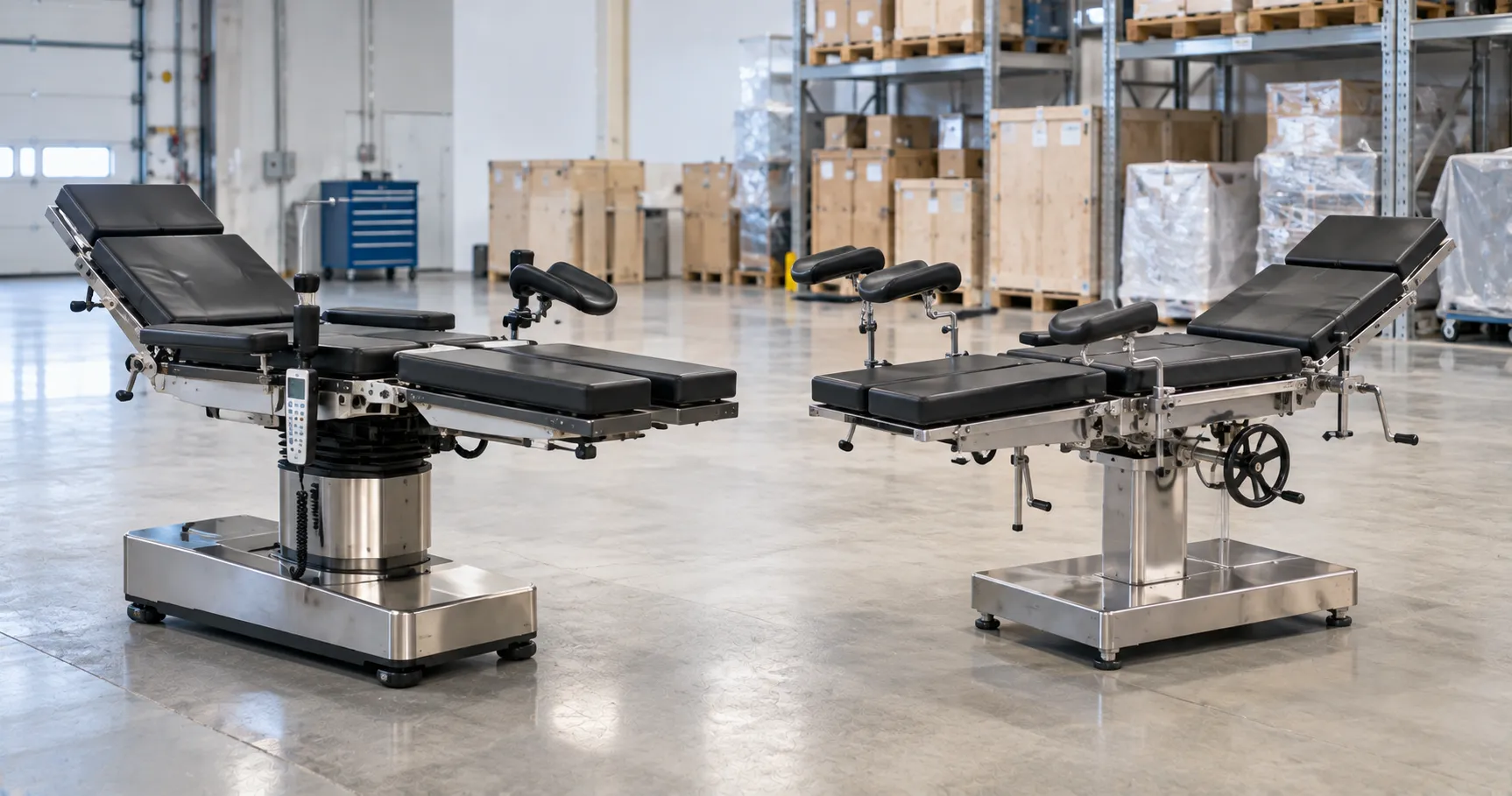

Medical equipment asset management helps healthcare teams control, track, maintain, and plan medical devices throughout their entire lifecycle. It covers equipment inventory, asset registration, location records, service history, preventive maintenance, corrective maintenance, calibration, warranty tracking, documentation, replacement planning, and procurement review.
For healthcare buyers, asset management is not only an administrative process. It directly affects equipment availability, clinical workflow, patient safety support, biomedical engineering, procurement decisions, budget planning, compliance readiness, and long-term equipment value. WHO explains that medical equipment maintenance includes inspection, preventive maintenance, and corrective maintenance, with preventive maintenance helping extend equipment life and reduce failure rates.
What Medical Equipment Asset Management Means
Medical equipment asset management is the structured process of recording, monitoring, maintaining, and reviewing medical equipment across a healthcare facility. It helps teams know what equipment they own, where it is located, who uses it, when it was serviced, when maintenance is due, and whether it should be repaired, replaced, upgraded, or retired.
A good asset management system may include equipment name, serial number, model, manufacturer, supplier, department, location, purchase date, warranty terms, service schedule, calibration status, fault history, spare parts, software version, user training records, and compliance documents.
The goal is simple: healthcare teams should be able to find equipment, trust equipment status, maintain equipment properly, and make better purchasing decisions.
Why Asset Management Matters in Healthcare
Healthcare facilities depend on medical equipment every day. If equipment is missing, under-maintained, poorly documented, or unavailable when needed clinically, hospital workflow can be affected.
Better Equipment Availability — Asset records help teams know which devices are available, in use, under maintenance, stored, or due for service.
Improved Maintenance Planning — Biomedical teams can schedule preventive maintenance and reduce avoidable downtime.
Stronger Compliance Records — Service logs, calibration certificates, warranty files, and inspection reports can be organised for audit readiness.
Smarter Procurement Decisions — Usage data and repair history help buyers decide whether to repair, replace, standardise, or expand equipment fleets.
Reduced Equipment Loss — Asset tagging and tracking reduce the risk of misplaced mobile devices.
Better Budget Planning — Lifecycle records help facilities plan replacement budgets before equipment failure creates urgent purchasing pressure.
What Equipment Should Be Managed
Every healthcare facility should manage both high-value and high-use equipment. Asset management should not focus only on large machines.
Critical Care Equipment — Patient monitors, ventilators, infusion pumps, syringe pumps, defibrillators, oxygen devices, suction units, and transport monitors.
Diagnostic Equipment — ECG machines, ultrasound systems, X-ray units, CT systems, MRI systems, laboratory analysers, endoscopy equipment, and point-of-care devices.
Surgical Equipment — Operating tables, surgical lights, electrosurgical units, anaesthesia workstations, suction devices, patient warming systems, and instrument systems.
Laboratory Equipment — Centrifuges, analysers, refrigerators, incubators, microscopes, spectrophotometers, sample storage units, and quality-control systems.
Sterilisation Equipment — Autoclaves, washer-disinfectors, drying cabinets, ultrasonic cleaners, sterilisation indicators, and sterile storage systems.
Hospital Furniture and Mobility Equipment — Hospital beds, stretchers, wheelchairs, examination tables, patient lifts, trolleys, transfer chairs, and bedside lockers.
Connected Medical Devices — Smart monitors, cloud-connected systems, AI-enabled devices, remote monitoring tools, imaging workstations, and equipment dashboards.
Facilities sourcing through regulated and certified equipment suppliers worldwide should confirm documentation, warranty, service access, spare parts, and lifecycle support before procurement.
Main Elements of an Asset Management System
A strong asset management programme includes more than a simple equipment list.
Asset Register — A central record of all equipment with model, serial number, department, location, supplier, and purchase details.
Location Tracking — Records showing where equipment is assigned, stored, used, repaired, or transferred.
Service History — Maintenance reports, repairs, faults, replaced parts, downtime, and service provider details.
Preventive Maintenance Schedule — Planned inspection and maintenance dates based on manufacturer guidance, risk level, and facility policy.
Calibration Records — Accuracy checks, calibration certificates, due dates, and responsible personnel.
Warranty Tracking — Warranty start date, expiry date, covered parts, service terms, and claim history.
Compliance Documents — User manuals, service manuals where available, conformity documents, certificates, inspection records, and training files.
Replacement Planning — Notes on equipment age, repair frequency, parts availability, performance, and replacement priority.
Benefits for Healthcare Teams
Medical equipment asset management supports multiple teams across a healthcare facility.
Clinical Teams — Doctors, nurses, technicians, and therapists can access equipment faster and reduce delays caused by missing or unavailable devices.
Biomedical Engineering Teams — Biomedical staff can plan maintenance, track faults, manage service records, and prioritise high-risk devices.
Procurement Teams — Buyers can use asset data to decide what to purchase, replace, standardise, or avoid.
Finance Teams — Finance teams can review equipment value, replacement budgets, service costs, and lifecycle costs.
Operations Teams — Hospital managers can improve equipment distribution, department readiness, and asset utilisation.
Compliance Teams — Compliance teams can more easily retrieve maintenance records, calibration files, training documents, and audit evidence
Asset Tags and Equipment Identification
Every managed device should have a clear asset identity. Asset tags help teams connect physical equipment with digital records.
Common identification methods include:
Barcode labels
QR code labels
RFID tags
Bluetooth tags
Engraved asset numbers
Department labels
Serial number records
Digital asset IDs
The best method depends on facility size, budget, equipment type, and tracking needs. Small clinics may use barcode or QR systems. Larger hospitals may benefit from RFID or real-time location systems for mobile and high-value equipment.
Digital Asset Management Tools
Digital tools make asset management easier than paper records or scattered spreadsheets. WHO’s medical devices topic page includes information on inventory and maintenance management systems as part of its medical device management resources, underscoring the importance of organised records for healthcare technology.
Digital asset management tools may support:
Equipment inventory
Asset location
Maintenance alerts
Fault reporting
Service history
Calibration reminders
Warranty records
Document storage
User training records
Procurement history
Replacement planning
Asset reports
A digital system should be easy for biomedical, clinical, procurement, and management teams to use. If the tool is too complex, staff may avoid updating records, which reduces data quality.
Maintenance Planning and Asset Management
Maintenance is one of the strongest reasons to manage medical equipment assets properly. WHO explains that a maintenance strategy includes inspection, preventive maintenance, and corrective maintenance.
Inspection — Equipment is checked to confirm physical condition, function, safety, accessories, and readiness.
Preventive Maintenance — Planned maintenance helps reduce the risk of failure and extend equipment life.
Corrective Maintenance — Repairs are performed after a fault, breakdown, or performance issue.
Calibration — Devices that measure clinical or technical values may require calibration or verification.
Service Documentation — Every service action should be recorded in the asset file.
When maintenance is linked to asset records, healthcare teams can see which devices are overdue, unreliable, costly to repair, or approaching end of life.
Asset Management and Procurement Decisions
Asset management data helps procurement teams make stronger purchasing decisions.
Repair or Replace Decisions — Repeated faults, high downtime, costly repairs, and unavailable spare parts may indicate that replacement is preferable to repair.
Standardisation — Asset data can reveal whether too many different brands or models are increasing the complexity of training, service, and spare parts.
Budget Forecasting — Equipment age and service history can support replacement budget planning.
Supplier Review — Procurement teams can compare supplier performance across delivery, warranty support, spare parts availability, service response, and product reliability.
Demand Planning — Usage records help identify whether departments need more units or better redistribution of existing devices.
Suppliers and manufacturers advertising to global healthcare buyers should provide clear specifications, warranty terms, service documents, spare part information, and training support to help healthcare teams manage assets after purchase.
Lifecycle Stages of Medical Equipment Assets
Every medical equipment asset moves through a lifecycle. Good management helps teams control each stage.
Planning Stage — The facility identifies clinical need, department requirements, budget, and technical specifications.
Procurement Stage — Buyers compare suppliers, documents, quotations, service terms, and total cost of ownership.
Installation Stage — Equipment is delivered, installed, tested, labelled, recorded, and assigned to a department.
Training Stage — Users, biomedical teams, and support staff receive training where required.
Operational Stage — The device is used in the daily clinical workflow and monitored for performance.
Maintenance Stage — Preventive maintenance, repairs, calibration, and inspections are recorded.
Review Stage — Teams review usage, faults, downtime, service cost, and replacement needs.
Decommissioning Stage — Equipment is removed from service, data is cleared as needed, records are archived, and disposal is in accordance with the facility policy.
Asset Management for Connected Devices
Connected medical devices require extra attention in asset management because they may include software, connectivity, data storage, dashboards, remote service, and cybersecurity requirements. The
FDA defines medical device interoperability as the ability to safely, securely, and effectively exchange and use information among devices, products, technologies, or systems. This matters because asset records for connected equipment should include integration details, software versions, network settings, update records, and system dependencies.
Connected device asset records may include:
Software version
Firmware version
Network connection type
System integration details
Remote service status
Cybersecurity documentation
Update history
User access roles
Data storage details
End-of-life data removal plan
If these details are missing, facilities may struggle during service, cybersecurity review, replacement, or system upgrades.
Cybersecurity in Asset Management
Medical equipment asset management should include cybersecurity for connected and software-enabled devices. FDA cybersecurity guidance provides recommendations on medical device cybersecurity considerations and information for premarket submissions.
Healthcare teams should record:
Connected device inventory
Software versions
Patch history
Remote access permissions
Supplier support contacts
Default password status
Network location
Data storage details
User access records
Cybersecurity incidents
End-of-support dates
Cybersecurity risk increases when facilities do not know what connected devices they own, where they are installed, or whether software support is still active. A complete asset register helps IT and biomedical teams work together.
Compliance and Documentation Control
Asset management improves documentation control. Healthcare equipment records should be easy to find, update, and review.
Important documents may include:
Purchase invoice
Supplier quotation
Warranty certificate
User manual
Service manual, where available
Installation report
Conformity documents
Calibration certificate
Preventive maintenance report
Repair report
Training record
Cleaning instructions
Software details
Cybersecurity information
Decommissioning record
Organised documentation helps healthcare teams respond faster during audits, inspections, supplier reviews, warranty claims, and replacement planning.
Staff Roles in Asset Management
Asset management works best when responsibilities are clear.
Clinical Users — Report equipment faults, use equipment correctly, follow cleaning instructions, and return mobile devices to assigned areas.
Biomedical Engineers — Manage maintenance schedules, service records, safety checks, calibration, repairs, and technical support.
Procurement Teams — Store purchase records, supplier documents, warranty details, and replacement planning data.
IT Teams — Support connected device records, cybersecurity review, software updates, user access, and system integration.
Finance Teams — Track capital cost, depreciation, replacement budgets, and service expenses.
Operations Managers — Review equipment availability, department needs, asset movement, and utilisation patterns.
Key Asset Management Metrics
Healthcare teams should monitor practical metrics that support better decisions.
Useful metrics include:
Total equipment count
Equipment by department
Equipment availability
Maintenance overdue rate
Downtime frequency
Repair cost
Warranty expiry
Calibration due date
Device age
Utilisation level
Fault repetition
Spare part availability
Replacement priority
Supplier response time
These metrics help teams move from reactive equipment management to planned lifecycle control.
Common Asset Management Mistakes
Healthcare facilities should avoid these mistakes.
Incomplete Asset Register — Missing serial numbers, locations, service dates, or supplier details weaken the system.
No Clear Ownership — Equipment may be misplaced when departments are not responsible for assigned assets.
Ignoring Mobile Equipment — Wheelchairs, pumps, monitors, trolleys, and transport devices are often misplaced if tracking is weak.
Poor Service Records — Missing repair history makes it difficult to identify unreliable devices.
No Warranty Tracking — Facilities may pay for repairs that should be covered by warranty.
Delayed Preventive Maintenance — Overdue maintenance can increase downtime and risk.
No Replacement Planning — Waiting until equipment fails can lead to urgent, expensive procurement decisions.
Procurement Guidance for Asset Management Systems
When buying or setting up an asset management system, healthcare teams should review both software and workflow.
Define the Asset Scope — Decide which equipment categories to include first.
Choose a tracking method — Barcode, QR code, RFID, Bluetooth, or RTLS — that matches the facility's needs.
Check Maintenance Features — The system should support preventive maintenance, fault reporting, calibration, and service records.
Review Document Storage — The tool should store manuals, certificates, warranty records, and service reports.
Check User Access Control — Different teams need different permission levels.
Review Reporting Tools — Dashboards should show overdue maintenance, asset location, service cost, and replacement needs.
Plan Training — Staff should know how to update records, report faults, scan assets, and review equipment status.
Healthcare groups managing several facilities may benefit from structured distribution and reseller partnership arrangements. Standardising asset management practices, equipment models, service records, and replacement planning can reduce variation across healthcare networks.
International Sourcing Considerations
Medical equipment asset management should begin before equipment is purchased internationally. Buyers should request complete technical and commercial documentation to ensure the asset record is created properly from the start.
Important sourcing details include:
Manufacturer name
Supplier details
Model and serial number
Country of origin
Warranty terms
Spare part support
Service access
User manual
Maintenance requirements
Calibration requirements
Software information
Cybersecurity information for connected devices
Compliance documents
Training requirements
Buyers should confirm whether they need diagnostic equipment, critical care devices, surgical equipment, laboratory systems, hospital furniture, sterilisation equipment, rehabilitation devices, smart devices, homecare equipment, or complete facility packages. For project-based sourcing, buyers can contact the Medigear.uk team for supply support to discuss availability, documentation, export needs, and procurement requirements.
Future Role of Medical Equipment Asset Management
Medical equipment asset management will continue to become more digital, connected, and data-driven. Healthcare teams will increasingly use equipment dashboards, tracking systems, maintenance alerts, usage data, cybersecurity records, and lifecycle analytics to make better operational decisions.
The strongest asset management programmes will connect procurement, biomedical engineering, clinical workflow, finance, IT, and compliance. Instead of treating equipment records as paperwork, healthcare teams can use asset data to improve uptime, reduce waste, plan budgets, and strengthen long-term equipment reliability.
Final Thoughts
Medical equipment asset management helps healthcare teams improve equipment visibility, service planning, compliance readiness, procurement decisions, and lifecycle control. It gives clinical, biomedical, finance, IT, and procurement teams a clearer understanding of what equipment exists, where it is located, how it performs, and when it needs attention.
The right asset management process should include accurate records, clear ownership, maintenance schedules, warranty tracking, cybersecurity review, documentation control, and replacement planning. Healthcare facilities that manage assets properly can reduce downtime, control costs, improve readiness, and make better long-term procurement decisions.
Disclaimer
Medigear.uk is a global medical equipment supplier, exporter, and distributor. The content published on this site is intended for educational and product awareness purposes only. Nothing on this page constitutes medical advice, clinical guidance, cybersecurity advice, legal advice, data protection advice, procurement law advice, or treatment recommendations. All healthcare procurement, technology, legal, data, and clinical decisions should be made by qualified professionals and compliant procurement teams operating within the regulatory frameworks of their respective countries.