Smart rehabilitation equipment helps hospital recovery centres support patients who need physical, neurological, orthopaedic, respiratory, mobility, or functional recovery after illness, surgery, injury, disability, or long-term health conditions. These devices may include robotic rehabilitation systems, gait training devices, balance platforms, therapy beds, electrotherapy units, mobility aids, connected exercise tools, wearable sensors, patient progress dashboards, and assistive technology products.
For healthcare buyers, smart rehabilitation equipment should be selected with attention to clinical purpose, patient group, safety, usability, staff training, maintenance, digital tracking, cybersecurity, documentation, and long-term service support. WHO defines rehabilitation as interventions designed to optimise functioning and reduce disability in people with health conditions in interaction with their environment.
What Smart Rehabilitation Equipment Means
Smart rehabilitation equipment refers to rehabilitation devices that use sensors, software, automation, robotics, digital tracking, connected dashboards, or guided therapy features to support patient recovery. These systems may help therapists measure movement, guide exercises, track progress, support gait training, improve balance, assist mobility, or deliver structured therapy programmes.
Not every rehabilitation device needs to be digital. Many essential recovery tools remain simple, reliable, and unconnected. However, smart rehabilitation equipment can add value by helping therapists measure progress, reduce manual documentation, improve consistency, support patient engagement, or manage therapy plans more efficiently.
WHO explains that assistive products can include physical products such as wheelchairs, prosthetic limbs, crutches, and hearing aids, as well as digital solutions such as software-based tools. This is relevant because modern rehabilitation centres often use both physical devices and digital systems together.
Where Smart Rehabilitation Equipment Is Used
Smart rehabilitation equipment can be used across different healthcare recovery settings.
Hospital Recovery Centres — These centres may support patients after surgery, stroke, trauma, joint replacement, neurological injury, cardiac events, or long hospital stays.
Physiotherapy Departments — Physiotherapy teams may use mobility trainers, electrotherapy systems, strength equipment, therapy couches, balance tools, and connected progress-tracking devices.
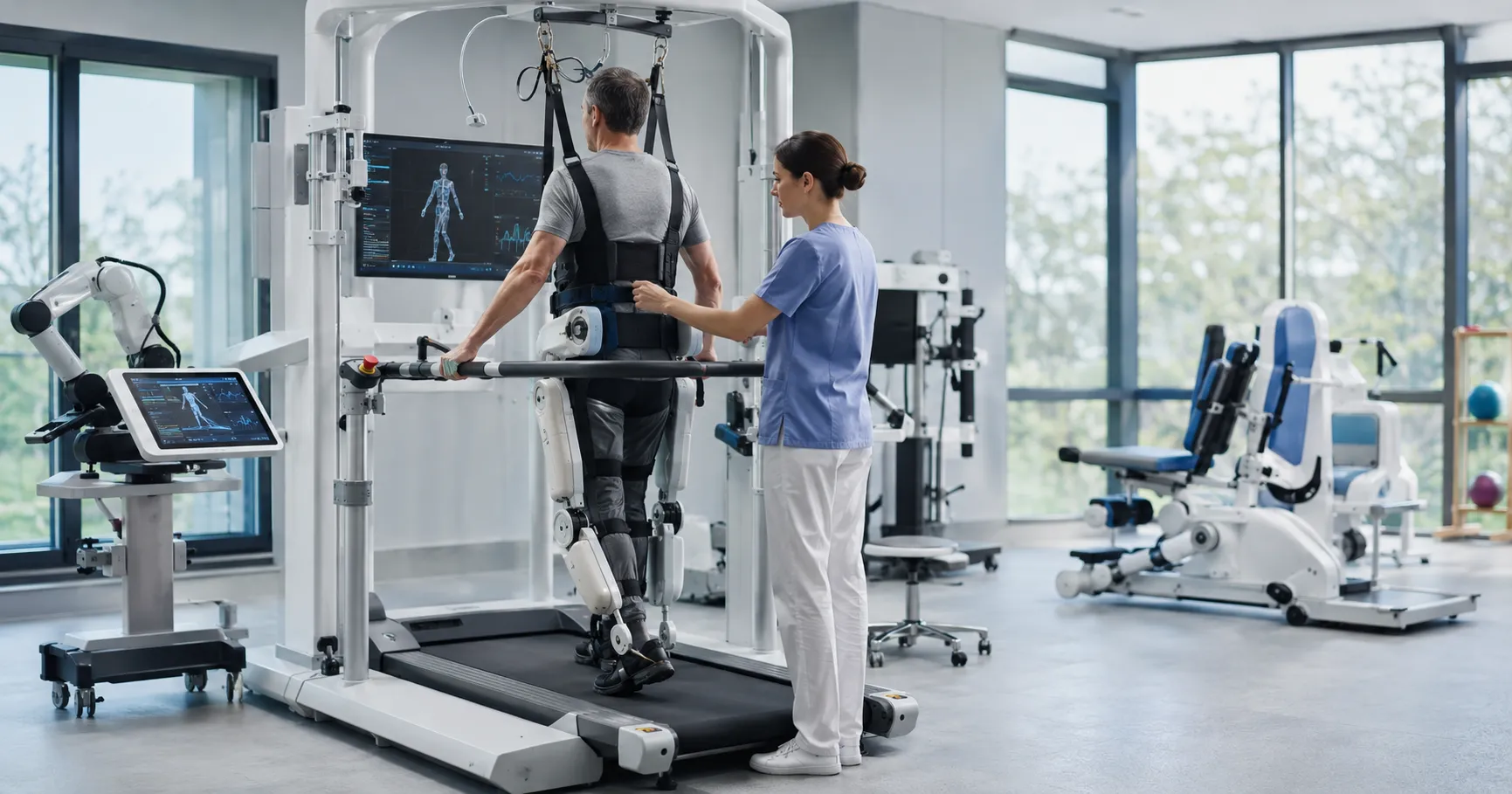
Neurological Rehabilitation Units — These units may use robotic gait trainers, balance platforms, upper-limb therapy devices, functional electrical stimulation systems, and sensor-based movement tools.
Orthopaedic Recovery Units — Patients recovering from fractures, joint replacement, spinal conditions, or musculoskeletal injuries may need strengthening, range-of-motion, gait, and balance equipment.
Long-Term Care and Elderly Recovery Areas — Mobility aids, transfer devices, fall-prevention tools, walking frames, therapy chairs, and balance systems may support daily functional recovery.
Outpatient Rehabilitation Clinics — These facilities may use compact smart therapy devices, connected exercise tools, electrotherapy units, and digital progress-tracking systems.
Facilities sourcing through regulated and certified equipment suppliers worldwide should confirm clinical suitability, device documentation, warranty, service support, training requirements, and spare part availability before procurement.
Common Types of Smart Rehabilitation Equipment
Recovery centres may use a variety of rehabilitation equipment, depending on patient needs and therapy goals.
Robotic Rehabilitation Systems — These systems may assist gait training, upper-limb movement, repetitive therapy, or supported motion exercises. Buyers should review patient weight limits, therapy modes, safety features, and training needs.
Gait Training Devices — Gait trainers, body-weight support systems, parallel bars, treadmills, walking aids, and sensor-based gait platforms may help patients practise walking safely.
Balance Training Platforms — These systems may support postural control, balance assessment, fall-risk reduction, and progress tracking.
Electrotherapy Equipment — TENS, EMS, ultrasound therapy, interferential therapy, and other therapeutic modalities may support selected physiotherapy programmes under professional use.
Connected Exercise Equipment — Smart bikes, resistance systems, motion sensors, and therapy software may help track exercise completion and patient progress.
Mobility Aids — Wheelchairs, walkers, crutches, canes, transfer chairs, patient lifts, and standing aids support movement and independence. WHO states that assistive technology helps maintain or improve functioning and independence.
Wearable Rehabilitation Sensors — Wearable sensors may track movement, activity, posture, gait, range of motion, or therapy compliance.
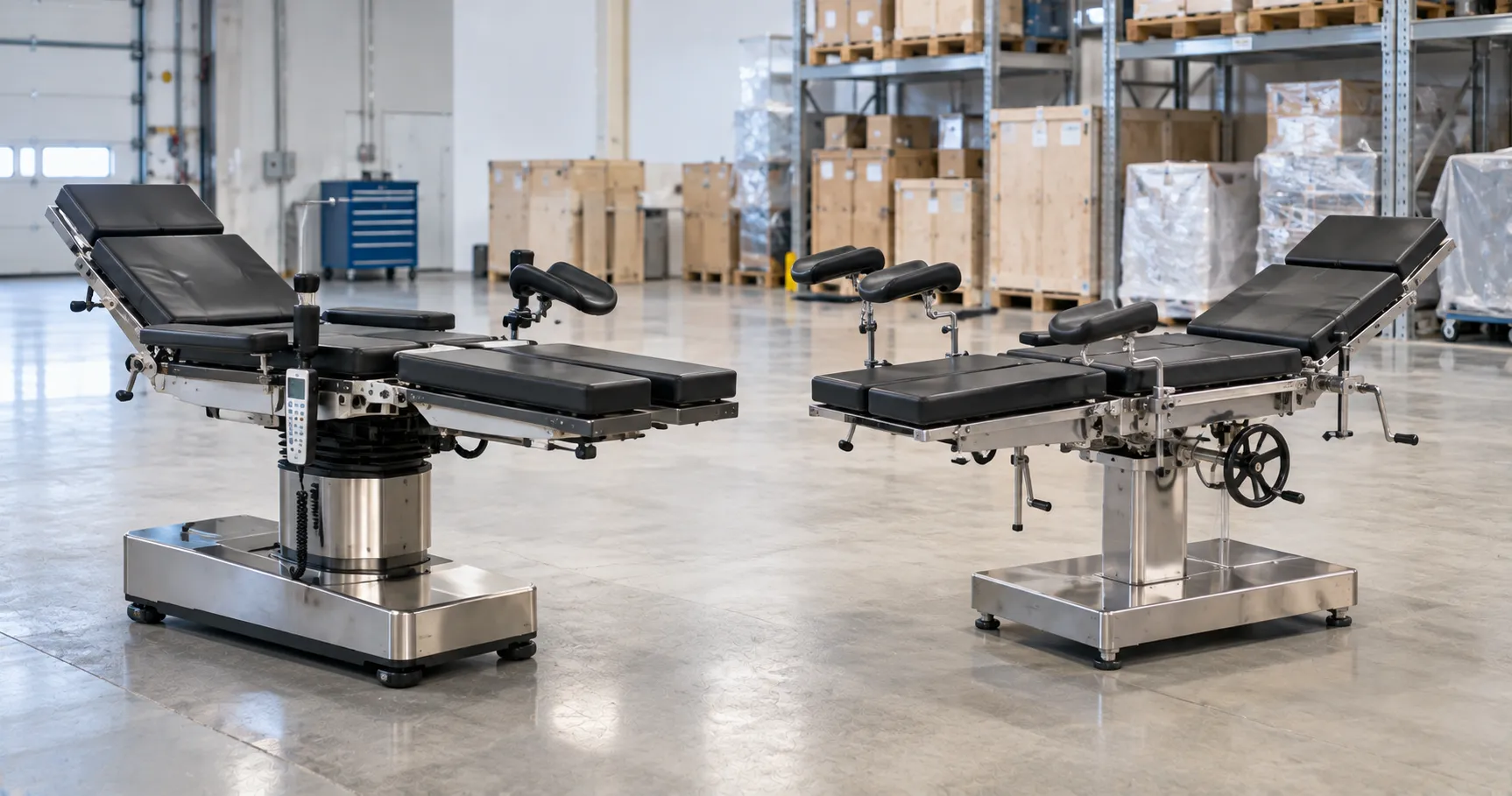
Therapy Beds and Treatment Tables — Adjustable therapy couches, tilt tables, standing frames, and positioning systems help therapists deliver treatment safely.
Patient Progress Dashboards — Digital platforms can help rehabilitation teams track patient goals, session history, movement data, therapy plans, and functional progress.
Benefits of Smart Rehabilitation Equipment
Smart rehabilitation equipment can support recovery centres when it is selected to meet real clinical needs and practical workflows.
Better Progress Tracking — Connected tools and sensors can help therapists measure movement, strength, balance, range of motion, or exercise completion over time.
More Consistent Therapy Sessions — Guided therapy programmes can help standardise selected exercises while allowing therapists to adjust care plans.
Improved Patient Engagement — Digital feedback, visual progress, and structured goals may help some patients stay motivated during recovery.
Support for Therapist Workflow — Smart devices may reduce repeated manual recording and help therapists review patient progress more easily.
Safer Mobility Practice — Gait trainers, body-weight support systems, transfer devices, and balance tools can help patients practise movement under supervised conditions.
Stronger Equipment Planning — Usage records, service data, and performance logs can help recovery centres plan maintenance and replacements.
Procurement Guidance for Smart Rehabilitation Equipment
Procurement of smart rehabilitation equipment should include rehabilitation physicians, physiotherapists, occupational therapists, nurses, biomedical engineers, IT teams, cybersecurity staff, finance teams, compliance staff, and procurement teams.
Clinical Requirement Review — The facility should define whether the equipment is needed for neurological recovery, orthopaedic rehabilitation, mobility training, balance therapy, strength recovery, pain management, elderly care, or outpatient physiotherapy.
Patient Group Review — Buyers should check patient age range, weight range, mobility level, cognitive ability, support needs, fall risk, and therapy tolerance.
Total Cost of Ownership — Buyers should include equipment price, installation, accessories, sensors, software licences, training, maintenance, spare parts, service contracts, calibration, consumables, and replacement planning.
Supplier Transparency — Suppliers and manufacturers advertising to global healthcare buyers should provide specifications, intended use, safety features, warranty terms, service support, user manuals, training materials, and spare part information.
Compliance Documentation — Buyers should request conformity documents, product registrations where relevant, user manuals, cleaning instructions, service instructions, software details, warranty terms, and maintenance requirements.
WHO notes that medical equipment requires calibration, maintenance, repair, user training, and decommissioning, usually managed by clinical engineers. This is especially important for smart rehabilitation devices, which may include sensors, motors, software, batteries, and connected platforms.
Digital Features and Data Tracking
Smart rehabilitation equipment may include dashboards, therapy software, movement tracking, patient profiles, exercise history, and outcome reports. These features can be useful, but buyers should check how the data will be used.
Patient Progress Records — Digital records can show improvements in mobility, strength, balance, endurance, or range of motion.
Therapy Session Tracking — Some systems record repetitions, resistance, duration, speed, movement quality, and patient participation.
Remote Review Options — Some platforms may allow authorised staff to review therapy progress from another workstation or department.
Data Export — Buyers should confirm whether reports can be exported in useful formats for clinical documentation or internal review.
Data Protection — If the system stores patient information, access control and privacy planning are necessary.The
FDA states that digital health technologies use computing platforms, connectivity, software, and sensors for healthcare and related uses. This applies to many connected rehabilitation devices with sensors, software platforms, and patient progress tools.
Cybersecurity Considerations
Smart rehabilitation equipment may connect to hospital networks, tablets, apps, cloud dashboards, vendor portals, or remote service systems. This creates cybersecurity responsibilities.
Access Control — Facilities should define who can access patient records, therapy plans, device settings, software updates, and dashboards.
Secure Data Transfer — Buyers should ask whether patient data and therapy data are encrypted during transfer and storage.
Remote Access Rules — Supplier remote access should be approved, logged, time-limited, and controlled by facility policy.
Software Updates — Connected rehabilitation devices may need firmware, app, or cloud updates. Updates should be documented.
Device Account Management — Shared therapy devices should have clear user roles and login procedures.
Data Removal at End of Life — Stored data should be removed before resale, transfer, or disposal of connected equipment.
Maintenance and Biomedical Engineering Planning
Smart rehabilitation equipment needs structured maintenance because many systems include moving parts, motors, sensors, batteries, software, straps, cables, and safety mechanisms.
WHO maintenance guidance explains that a maintenance strategy includes inspection, preventive maintenance, and corrective maintenance, and that preventive maintenance helps extend equipment life and reduce failure rates.
Preventive Maintenance — Devices should follow manufacturer schedules for inspection, lubrication, tightening, calibration, software checks, and safety testing.
Sensor and Calibration Checks — Motion sensors, force sensors, weight sensors, balance platforms, and progress-tracking systems may need verification.
Accessory Inspection — Straps, harnesses, supports, handles, cables, electrodes, pads, belts, and upholstery should be checked regularly.
Battery Management — Portable or wearable rehabilitation devices may depend on reliable battery performance.
Cleaning and Infection Control — Equipment used by multiple patients should be easy to clean in accordance with manufacturer guidance and facility policy.
Service Records — Maintenance reports, faults, repairs, calibration checks, part replacements, and software updates should be recorded.
Staff Training and Patient Safety
Smart rehabilitation equipment should be easy for trained staff to use safely. Training is especially important because many rehabilitation devices involve movement, support, balance, load, and patient transfers.
Therapist Training — Physiotherapists and occupational therapists should understand therapy modes, settings, patient positioning, safety limits, contraindications, and progress tracking.
Nursing and Support Staff Training — Support staff may need training on transfer devices, mobility aids, patient lifts, and cleaning procedures.
Biomedical Training — Biomedical teams should understand inspection, service requirements, calibration, sensor checks, and spare parts.
IT Training — IT teams may need to understand software access, cybersecurity, connectivity, data storage, and updates.
Patient Safety Protocols — Recovery centres should define supervision rules, emergency stop procedures, fall-risk precautions, harness use, weight limits, and cleaning responsibilities.
Common Planning Mistakes to Avoid
Hospitals and recovery centres should avoid these mistakes when buying rehabilitation equipment.
Buying Without Therapy Workflow Review — Equipment should align with the actual patient needs and the therapist's workflow.
Ignoring Space Requirements — Robotic systems, gait trainers, parallel bars, and therapy platforms may need dedicated floor space and safe movement areas.
Skipping User Training — Staff must understand how to use the equipment safely before treating patients.
Forgetting Accessories — Missing straps, electrodes, pads, supports, sensors, chargers, or harnesses can delay use.
Ignoring Maintenance Costs — Moving parts, software, sensors, and consumables can lead to long-term costs.
Choosing Technology Over Clinical Need — A device should be purchased because it supports recovery goals, not because it looks advanced.
No Data Governance Plan — Connected devices that store patient data need privacy and cybersecurity review.
International Sourcing Considerations
Smart rehabilitation equipment can be sourced internationally when buyers clearly define therapy goals, patient group, device category, room size, power requirements, accessories, training needs, documentation, warranty, service support, spare parts, cybersecurity expectations, and compliance requirements.
Healthcare groups managing several hospitals, rehabilitation centres, or physiotherapy clinics may benefit from structured distribution and reseller partnership arrangements. Standardising rehabilitation equipment, accessories, staff training, maintenance schedules, and service contracts can reduce variation across facilities.
Buyers should confirm whether they need robotic rehabilitation systems, gait trainers, balance platforms, therapy tables, mobility aids, electrotherapy devices, wearable sensors, connected exercise equipment, patient lifts, transfer devices, or full recovery centre equipment packages. For project-based sourcing, buyers can contact the Medigear.uk team for supply support to discuss availability, documentation, export needs, and procurement requirements.
Future Role of Smart Rehabilitation Equipment
Smart rehabilitation equipment will continue to support recovery centres as healthcare facilities adopt connected therapy tools, progress tracking, robotics, wearable sensors, and digital rehabilitation workflows. The strongest results will come from equipment that fits real therapy needs and supports trained rehabilitation professionals.
The future of rehabilitation technology will depend on patient-centred design, safe movement support, reliable data, staff training, cybersecurity planning, maintenance readiness, and supplier transparency. Smart features should support therapy goals, not make workflows harder.
When selected carefully, smart rehabilitation equipment can help hospitals improve recovery planning, therapy consistency, patient engagement, mobility support, and the quality of d long-term rehabilitation services.
Final Thoughts
Smart rehabilitation equipment helps hospital recovery centres support patient mobility, functional recovery, therapy planning, progress tracking, and rehabilitation workflow. These devices can improve recovery services when they are selected for real patient needs and supported by trained clinical teams.
The right equipment should match therapy goals, patient group, available space, safety requirements, maintenance capacity, staff training, cybersecurity policy, and local compliance standards. Buyers should review the total cost of ownership, documentation, accessories, service support, software lifecycle, and supplier reliability before ordering.
Disclaimer
Medigear.uk is a global medical equipment supplier, exporter, and distributor. The content published on this site is intended for educational and product awareness purposes only. Nothing on this page constitutes medical advice, clinical guidance, cybersecurity advice, legal advice, data protection advice, rehabilitation advice, or treatment recommendations. All healthcare procurement, technology, legal, data, rehabilitation, and clinical decisions should be made by qualified professionals and compliant procurement teams operating within the regulatory frameworks of their respective countries.