Portable medical devices help hospitals deliver care more flexibly across wards, emergency departments, operating areas, ICUs, recovery rooms, outpatient clinics, diagnostic units, ambulances, home care pathways, and patient transfer routes. These devices are designed to be moved, carried, mounted on trolleys, used at the bedside, or deployed quickly where clinical support is needed.
For healthcare buyers, portable medical devices should be evaluated for clinical use, durability, battery life, accuracy, portability, infection control, connectivity, cybersecurity, maintenance, spare parts availability, and compliance documentation. The FDA describes digital health technologies as systems that use computing platforms, connectivity, software, and sensors for healthcare and related uses. This definition applies to many connected portable devices used in hospitals.
What Portable Medical Devices Mean in Hospitals
Portable medical devices are those that can be easily moved between departments, patient rooms, procedure areas, or care locations. Some devices are handheld, some are trolley-mounted, some are battery-powered, and others are compact versions of larger hospital systems.
Examples include portable patient monitors, transport ventilators, portable ultrasound machines, mobile X-ray systems, ECG machines, infusion pumps, syringe pumps, pulse oximeters, defibrillators, suction units, nebulisers, blood gas analysers, point-of-care testing devices, oxygen concentrators, mobile examination lights, and portable sterilisation or diagnostic tools.
The purpose of portable equipment is not only convenience. In hospitals, portability can support faster response, bedside diagnosis, patient transport, flexible room use, emergency readiness, and service continuity when fixed equipment is unavailable.
Why Portable Medical Devices Are Important
Hospitals often need to deliver care across different spaces. A patient may need monitoring during transport. A doctor may need bedside imaging. An emergency team may need a defibrillator quickly. A ward may need a portable suction unit. A diagnostic team may need point-of-care testing without moving the patient.
Portable devices support these needs by improving access to equipment at the point of care.
Faster Bedside Care — Portable devices allow clinical teams to bring monitoring, diagnostics, or treatment support closer to the patient.
Better Emergency Readiness — Emergency departments, crash carts, ambulances, and rapid response teams depend on portable devices that are ready for immediate use.
Flexible Department Workflow — Portable equipment can be moved between rooms, procedure areas, wards, and departments as demand changes.
Support for Patient Transport — Transport monitors, portable ventilators, oxygen devices, suction units, and infusion pumps help maintain selected support during movement.
Improved Diagnostic Access — Portable ultrasound, ECG, blood gas testing, and point-of-care devices can reduce delays when patients cannot be moved easily.
Where Portable Medical Devices Are Used
Portable medical devices are used across many hospital departments and care settings.
Emergency Departments — Emergency teams use portable monitors, defibrillators, suction units, ECG machines, ultrasound systems, oxygen equipment, and point-of-care testing tools.
ICU and Critical Care — Critical care teams may use portable ventilators, transport monitors, infusion pumps, syringe pumps, blood gas analysers, and mobile ultrasound devices.
Operating Rooms and Recovery Areas — Portable monitoring, suction, warming, ultrasound, lighting, and emergency equipment may support procedure and recovery workflows.
General Wards — Wards may use portable vital-signs monitors, ECG machines, nebulisers, suction units, infusion systems, and mobile diagnostic tools.
Diagnostic Departments — Imaging and laboratory teams may use mobile X-ray systems, portable ultrasound, point-of-care analysers, and compact diagnostic devices.
Homecare and Outreach Services — Some portable devices support selected homecare, remote monitoring, rehabilitation, and community healthcare services.
Facilities sourcing through regulated and certified equipment suppliers worldwide should confirm device specifications, portability features, accessories, battery support, training needs, service access, and documentation before procurement.
Common Types of Portable Medical Devices
Portable medical devices can support monitoring, diagnostics, treatment, emergency response, transport, and equipment management.
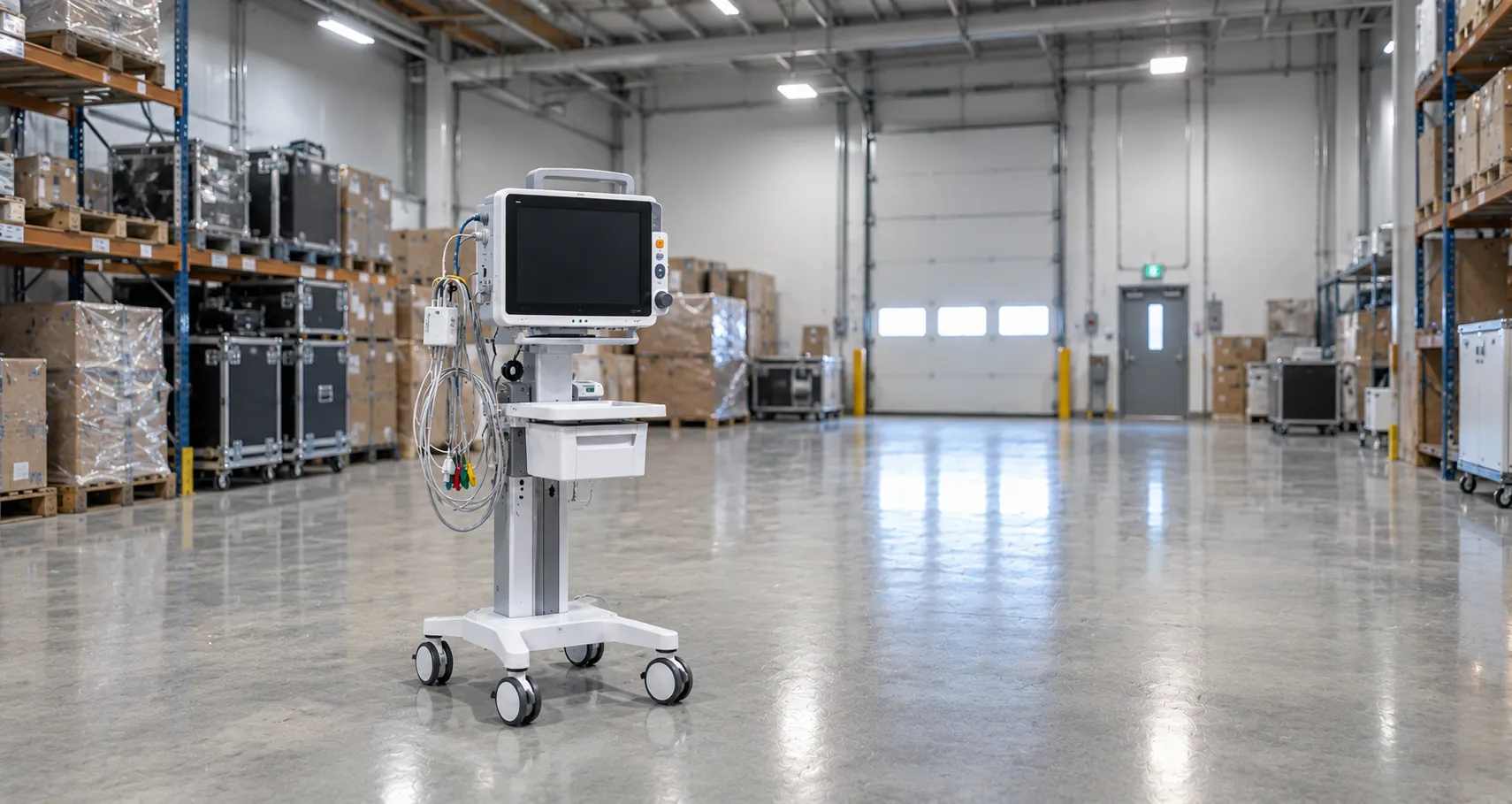
Portable Patient Monitors — These devices monitor selected patient parameters, including ECG, heart rate, oxygen saturation, blood pressure, temperature, and respiration. They may be used during transport, emergency care, recovery, or bedside observation.
Transport Ventilators — Transport ventilators support selected respiratory care during patient transfer or emergency movement. Buyers should review modes, battery life, oxygen connection, alarms, and accessories.
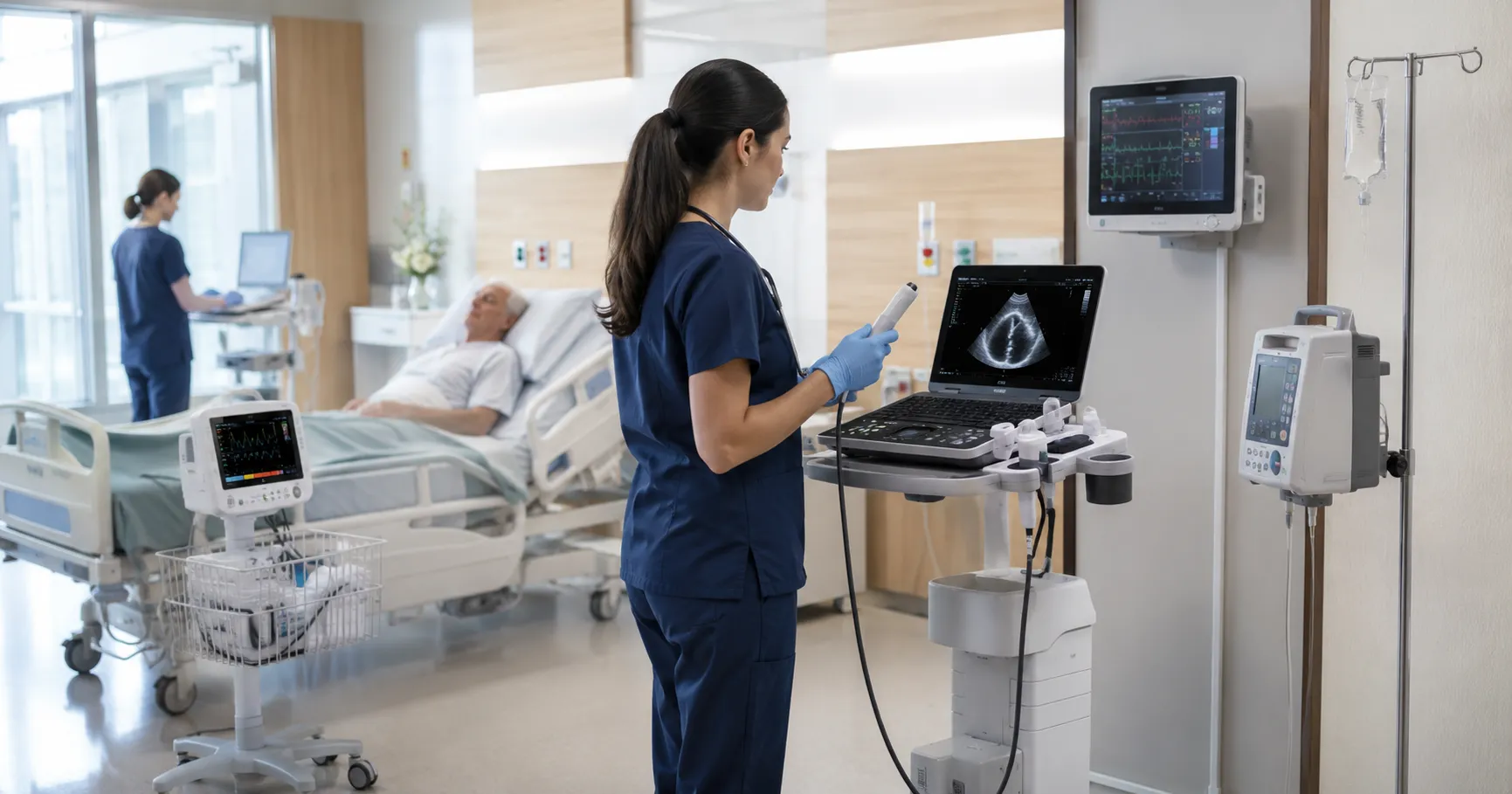
Portable Ultrasound Systems — Portable ultrasound devices support bedside imaging in emergency care, critical care, obstetrics, anaesthesia, vascular access, musculoskeletal care, and outpatient assessment.
Mobile X-Ray Systems — Mobile radiography systems allow imaging at the bedside or in departments where patient movement is difficult.
Portable ECG Machines — Portable ECG systems support cardiac assessment in wards, emergency areas, clinics, ambulances, and outreach settings.
Point-of-Care Testing Devices — Blood gas analysers, glucose meters, coagulation devices, cardiac marker tools, and rapid testing systems can provide faster access to clinical information near the patient.
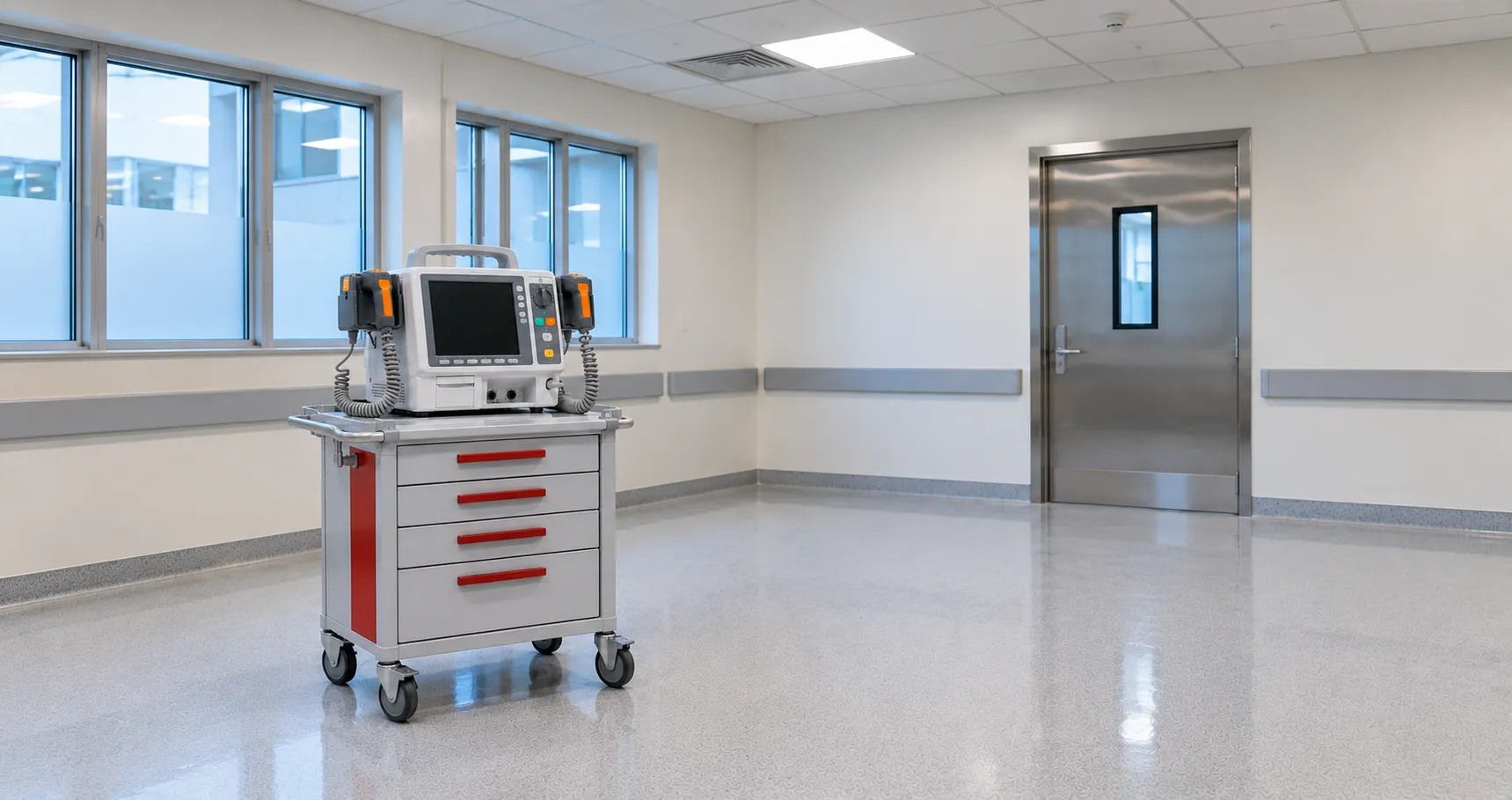
Portable Defibrillators — essential emergency devices. Portability is important for crash carts, ambulances, wards, emergency departments, and public clinical areas.
Portable Suction Units — These devices support airway clearance and procedure workflows where fixed suction is unavailable or during transport.
Infusion and Syringe Pumps — Portable pumps provide controlled delivery of fluids or medications during bedside care or patient transfers.
Portable Oxygen and Respiratory Devices — Oxygen concentrators, cylinders with regulators, nebulisers, CPAP or BiPAP devices, and respiratory therapy tools may support flexible care delivery.
Key Features Healthcare Buyers Should Review
Portable medical devices should be evaluated for both clinical performance and portability. A device may be technically advanced but unsuitable if it is heavy, fragile, difficult to clean, or unreliable on battery power.
Clinical Accuracy — Devices used for monitoring or diagnostics must provide reliable data for their intended use.
Battery Life — Portable equipment depends on battery performance. Buyers should check operating time, charging time, replacement battery cost, and battery health indicators.
Weight and Handling — Staff should be able to move or carry the device safely. Handles, wheels, mounts, trolleys, and docking stations matter.
Durability — Portable equipment may be moved frequently, so it should withstand normal hospital handling, cleaning, vibration, and transport.
Display Visibility — Screens should be readable in busy clinical areas, emergency settings, and transport conditions.
Alarm Quality — Alarms should be clear, meaningful, and suitable for the department. Poor alarm design can create missed alerts or unnecessary noise.
Cleaning and Infection Control — Portable devices move between patients and rooms, so cleaning instructions and material durability are important.
Accessory Availability — Cables, sensors, probes, cuffs, batteries, chargers, filters, tubing, mounts, and carrying cases should be available.
Connectivity and Interoperability
Many portable devices now include connectivity features. They may connect to central monitoring systems, electronic records, cloud dashboards, mobile apps, PACS, LIS, or maintenance platforms. The
FDA defines medical device interoperability as the ability to safely, securely, and effectively exchange and use information among devices, products, technologies, or systems. This is important when portable devices share patient data, diagnostic results, images, alarms, or service information.
Hospital System Compatibility — Buyers should confirm whether the portable device can connect with existing hospital systems.
Wireless Performance — Wi-Fi, Bluetooth, cellular, or gateway-based connectivity should be tested in real hospital areas.
Data Export — Diagnostic and monitoring data should be exportable in useful formats where needed.
Patient Matching — Connected portable devices should support accurate patient identification to avoid documentation errors.
Downtime Workflow — The device should remain clinically useful if network connectivity fails.
Cybersecurity Considerations
Portable connected devices may use hospital networks, wireless connections, cloud services, software updates, mobile apps, and remote service tools. This makes cybersecurity planning important.
FDA cybersecurity guidance provides recommendations on medical device cybersecurity considerations and what information to include in premarket submissions. For hospitals, this supports the need to ask suppliers about access controls, encryption, software updates, and remote service policies before purchasing connected portable devices.
Access Control — Hospitals should define who can access device data, settings, reports, dashboards, and update tools.
Secure Data Transmission — Buyers should ask whether patient data and device data are encrypted during transfer and storage.
Remote Service Rules — Supplier remote access should be approved, logged, limited, and controlled by policy.
Software Updates — Firmware and software updates should be carefully documented and managed.
Device Loss Risk — Portable devices can be misplaced. Facilities should plan asset tracking, user responsibility, and data protection.
Network Review — IT teams should review whether connected portable devices need network segmentation or other controls.
Procurement Guidance for Portable Medical Devices
Procurement of portable medical devices should include clinical users, biomedical engineers, IT teams, cybersecurity staff, finance teams, compliance staff, and procurement teams.
Define the Use Case — The hospital should decide whether the device is for emergency response, bedside diagnosis, patient transport, ward care, ICU use, outpatient service, or home care support.
Review Total Cost of Ownership — Buyers should include device price, batteries, chargers, trolleys, mounts, sensors, accessories, software licences, service contracts, maintenance, calibration, spare parts, and replacement planning.
Check Supplier Transparency — Suppliers and manufacturers advertising to global healthcare buyers should provide clear specifications, intended use, warranty terms, accessory lists, battery information, service support, and documentation.
Confirm Maintenance Requirements — WHO defines medical equipment as medical devices requiring calibration, maintenance, repair, user training, and decommissioning, which clinical engineers typically manage. Portable devices should be included in the same structured lifecycle planning.
Request Compliance Documents — Buyers should request product specifications, user manuals, conformity documents, product registrations where relevant, cleaning instructions, calibration requirements, cybersecurity information, and warranty terms.
Pilot Before Large Purchase — Hospitals should test usability, battery life, alarm quality, connectivity, cleaning workflow, portability, and staff feedback before making a bulk purchase.
Maintenance and Biomedical Engineering Planning
Portable medical devices often experience more handling than fixed equipment. They may be moved between rooms, transported in lifts, placed on trolleys, used during emergencies, cleaned frequently, and charged repeatedly.
WHO maintenance guidance explains that a maintenance strategy includes inspection, preventive maintenance, and corrective maintenance, with preventive maintenance helping extend equipment life and reduce failure rates.
Preventive Maintenance — Devices should follow the manufacturer's maintenance schedules.
Battery Checks — Battery health should be checked regularly because portable use depends on reliable power.
Accessory Inspection — Cables, sensors, probes, cuffs, tubing, mounts, and chargers should be inspected for wear or damage.
Calibration and Verification — Diagnostic and monitoring devices may need accuracy checks or calibration.
Cleaning and Disinfection — Portable devices should be cleaned according to the manufacturer's guidance and the infection control policy.
Asset Tracking — Portable devices are easier to misplace, so asset labels, barcode systems, RFID, or location tracking may help.
Service Records — Faults, repairs, maintenance, calibration, battery replacement, and downtime should be documented.
Staff Training for Portable Equipment
Multiple teams often use portable devices. Training should be clear and practical.
Clinical Training — Nurses, doctors, technicians, and paramedical staff should know how to operate the device, read alarms, connect accessories, clean it, and report problems.
Transport Training — Staff should know how to secure devices during patient movement and confirm battery status before transfer.
Emergency Training — Devices used in emergencies should be familiar to staff before urgent use.
Biomedical Training — Biomedical teams should understand service needs, battery replacement, calibration, and troubleshooting.
IT Training — IT teams should understand connectivity, software updates, user access, and cybersecurity controls.
Benefits of Portable Medical Devices
Portable medical devices can support flexible healthcare delivery in several ways.
Improved Access to Care — Equipment can be brought to the patient instead of moving the patient to the equipment.
Faster Response — Emergency and bedside teams can act more quickly when portable devices are ready and nearby.
Better Use of Space — Hospitals can use portable devices across multiple areas instead of installing fixed systems everywhere.
Support for Patient Transport — Transport-ready devices help maintain selected monitoring or therapy during movement.
Flexible Capacity Planning — Portable equipment can support temporary demand, overflow areas, mobile clinics, and multi-use rooms.
Improved Diagnostic Workflow — Portable ultrasound, ECG, point-of-care testing, and mobile X-ray can reduce delays for selected patients.
Common Mistakes to Avoid
Hospitals should avoid these mistakes when buying portable devices.
Ignoring Battery Performance — Weak battery life can make a portable device unreliable.
Buying Without Accessories — Missing cables, probes, sensors, chargers, or trolleys can delay use.
Choosing Devices Too Heavy for Workflow — Portability should match real staff handling needs.
Skipping Cleaning Review — Devices that move between areas must be easy to clean safely.
Ignoring Connectivity Testing — Wireless features should be tested in real hospital spaces.
No Asset Tracking Plan — Portable equipment can be misplaced if tracking is weak.
No Training Plan — Staff should be trained before routine or emergency use.
International Sourcing Considerations
Portable medical devices can be sourced internationally when buyers clearly define clinical use, department needs, portability level, battery requirements, accessories, power specifications, language needs, documentation, warranty, service support, cybersecurity expectations, and compliance requirements.
Healthcare groups managing several hospitals or mobile care services may benefit from structured distribution and reseller partnership arrangements. Standardising portable devices, batteries, accessories, mounts, service contracts, and training can reduce variation across facilities.
Buyers should confirm whether they need portable monitors, transport ventilators, mobile X-ray systems, portable ultrasound, ECG machines, point-of-care testing devices, suction units, defibrillators, infusion pumps, oxygen devices, or full mobile care packages. For project-based sourcing, buyers can contact the Medigear.uk team for supply support to discuss availability, documentation, export needs, and procurement requirements.
Future Role of Portable Medical Devices
Portable medical devices will continue to support flexible care delivery as hospitals expand connected care, bedside diagnostics, emergency readiness, remote monitoring, and mobile clinical workflows. The most valuable devices will combine clinical reliability, mobility, battery performance, cleanability, connectivity, and strong service support.
Hospitals should choose portable equipment based on real workflow needs. A device should make care easier, faster, safer, or more accessible. If it is difficult to move, hard to clean, unreliable on battery power, or poorly supported, it may not deliver the expected value.
Final Thoughts
Portable medical devices help hospitals deliver flexible care across emergency areas, ICUs, wards, diagnostic units, patient transport routes, and bedside workflows. They support faster access to monitoring, diagnostics, respiratory care, emergency response, and point-of-care testing when selected carefully.
The right portable device should align with clinical needs, departmental workflows, mobility requirements, battery expectations, cleaning policies, cybersecurity standards, maintenance capacity, staff training, and local compliance requirements. Buyers should review the total cost of ownership, accessories, service support, documentation, and supplier reliability before ordering.
Disclaimer
Medigear.uk is a global medical equipment supplier, exporter, and distributor. The content published on this site is intended for educational and product awareness purposes only. Nothing on this page constitutes medical advice, clinical guidance, cybersecurity advice, legal advice, data protection advice, or treatment recommendations. All healthcare procurement, technology, legal, data, and clinical decisions should be made by qualified professionals and compliant procurement teams operating within the regulatory frameworks of their respective countries.