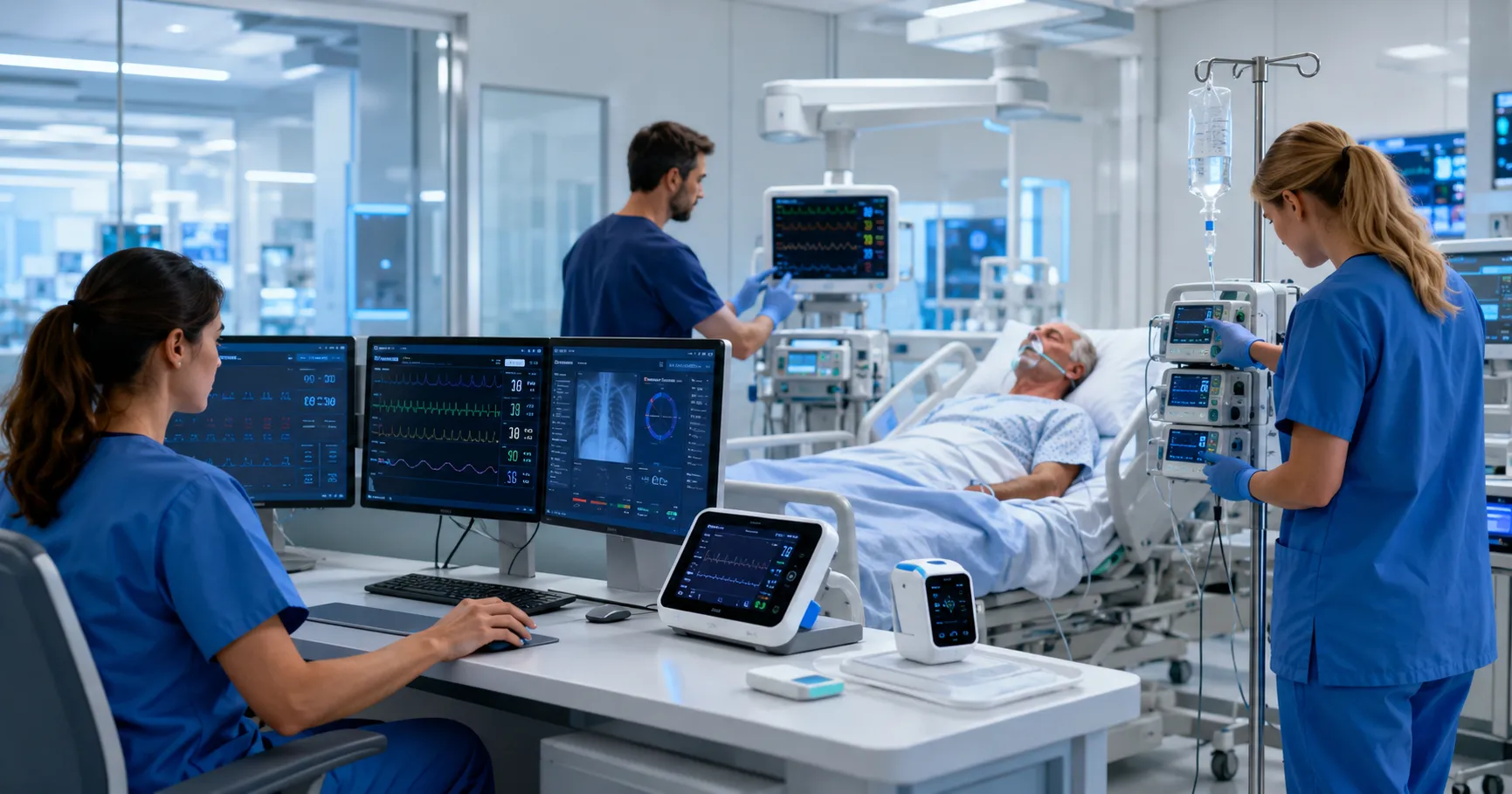
Smart medical devices are changing how hospitals manage patient care, equipment use, clinical communication, and operational planning. These devices may include connected patient monitors, smart infusion systems, wearable sensors, automated diagnostic equipment, AI-enabled imaging systems, digital laboratory devices, remote monitoring tools, smart hospital beds, and connected asset management platforms.
For healthcare buyers, smart medical devices should not be treated as normal equipment with a digital screen. Buyers need to review clinical purpose, connectivity, data quality, cybersecurity, interoperability, software updates, staff training, supplier support, and compliance with applicable local regulatory standards. FDA digital health information explains that digital health technologies use computing platforms, connectivity, software, and sensors for healthcare and related uses, which closely aligns with how many smart medical devices operate.
How Smart Medical Devices Improve Hospital Workflow
Smart medical devices improve workflow by helping hospital teams collect data, share information, automate routine steps, and respond to clinical or operational changes more efficiently. Their value depends on how well they fit the real clinical environment.
Connected Patient Data — Smart devices can collect patient readings and move them into dashboards, monitoring platforms, or clinical systems. This can reduce manual recording and help staff review trends more easily.
Faster Alerts and Notifications — Smart monitors, sensors, and connected platforms may generate alerts when readings move outside set limits. These alerts must be configured carefully so staff are not overwhelmed by unnecessary notifications.
Reduced Manual Work — Some devices help automate repetitive tasks such as vital-sign recording, device status reporting, medication delivery checks, and equipment tracking. This can save staff time when the workflow is planned properly.
Better Equipment Visibility — Smart asset platforms can help hospitals see where devices are located, whether they are in use, and when maintenance is needed. This supports smoother equipment allocation across departments.
Where Smart Medical Devices Are Used
Smart medical devices are used across many hospital departments. The best use depends on patient population, department workload, system integration, and staff readiness.
Intensive Care and High-Dependency Units — Critical care areas use connected monitors, ventilators, infusion systems, alarms, and digital dashboards. These systems can support trend review and faster escalation when used in accordance with clear clinical protocols.
Emergency Departments — Emergency teams may benefit from connected triage monitors, smart vital signs devices, mobile ultrasound, digital documentation tools, and automated workflow alerts. These tools can support faster assessment and better patient flow.
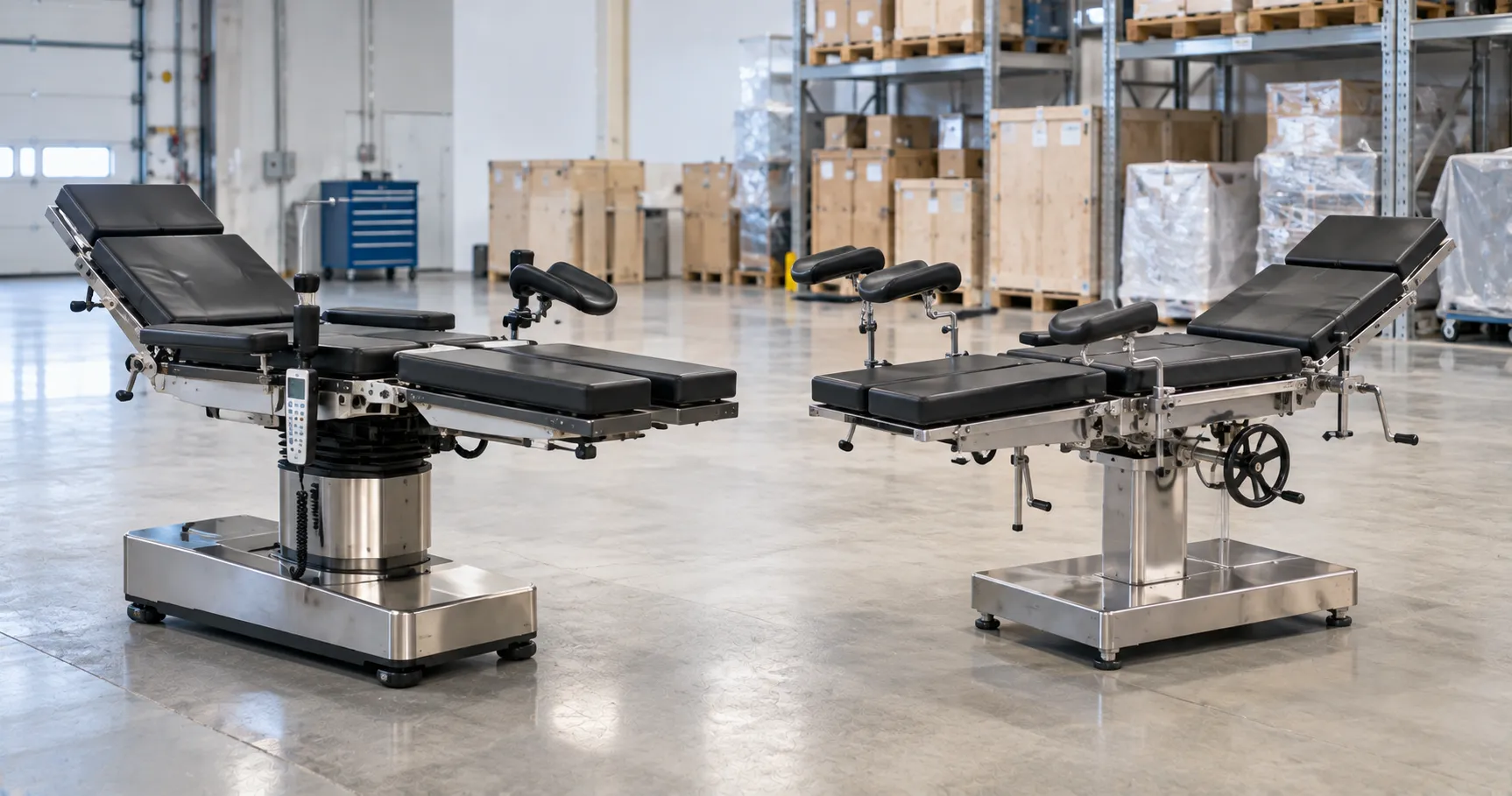
Operating Rooms and Procedure Areas — Smart surgical devices, digital imaging systems, automated anaesthesia workstations, and connected procedure room equipment can support precision, documentation, and workflow coordination.
Diagnostic and Laboratory Departments — Imaging, pathology, laboratory analysers, and digital reporting tools may use software, sensors, or automation to support faster processing. Facilities sourcing through regulated and certified equipment suppliers worldwide should confirm documentation, software support, service availability, and integration requirements before procurement.
Wards and Outpatient Units — Smart beds, connected monitors, digital thermometers, wireless vital-signs systems, and patient-tracking tools can support routine care. The device should be easy for staff to use during busy rounds.
Common Types of Smart Medical Devices
Smart medical devices can be simple connected tools or advanced systems with analytics, automation, and software-based decision support. Buyers should understand what makes the device “smart” and whether that feature is clinically useful.
Smart Patient Monitors — These systems can track vital signs and send data to central stations, dashboards, or hospital networks. Some models may support advanced alarm management, trend display, or remote review.
Connected Infusion Systems — Smart infusion systems may support dose libraries, safety alerts, and networked data. Buyers should review drug library management, cybersecurity, user training, and service support.
Smart Hospital Beds — Some beds include patient-position monitoring, exit alerts, weight-measurement features, pressure-injury prevention support, and connectivity to nurse call systems or dashboards.
Wearable Medical Sensors — Wearable sensors may monitor heart rate, oxygen saturation, movement, ECG, temperature, and other parameters. These devices require long battery life, patient comfort, and reliable data.
AI-Enabled Imaging Devices — Imaging systems may use algorithms to support image quality, reconstruction, prioritisation, measurements, or review assistance. These systems require regulatory, data, and clinical governance review.
Connected Laboratory Equipment — Laboratory analysers may connect with laboratory information systems, quality control platforms, and digital reporting tools. Integration and downtime planning are important.
Asset Tracking Devices — Tags and location systems help hospitals track equipment movement. They are useful for wheelchairs, pumps, beds, monitors, trolleys, and emergency equipment.
Benefits for Hospital Operations
Smart medical devices can support better operations when the hospital has the right digital infrastructure and governance in place. The technology should solve workflow problems rather than add complexity.
Improved Clinical Visibility — Connected systems can help staff review patient status, equipment condition, and department activity from one place. This can support faster decision-making.
Better Staff Time Use — Automation can reduce repeated manual steps. This may help staff spend more time on direct patient care, clinical review, and coordination.
Improved Equipment Utilisation — Asset tracking and usage dashboards help hospitals understand which devices are available, underused, overused, or frequently moved.
Reduced Downtime — Smart maintenance tools can help biomedical teams identify service needs earlier. ECRI notes that effective healthcare procurement is strategic and should align with long-term organisational goals while reducing operational costs.
Stronger Data for Planning — Device data can support budget planning, procurement decisions, replacement schedules, and service contract review.
Risks and Challenges Hospitals Should Consider
Smart devices create new responsibilities for hospitals. A connected device may improve workflow, but it can also introduce cybersecurity risk, integration problems, alert overload, and hidden costs.
Cybersecurity Risk — Connected devices may be exposed to network threats. FDA cybersecurity guidance provides recommendations for device design, labelling, and documentation for devices with cybersecurity risk, which highlights why a security review must be part of procurement.
Data Overload — Smart devices can generate large amounts of data. If dashboards and alerts are poorly designed, staff may struggle to identify what matters.
Interoperability Problems — A device may connect to one platform but not another. Hospitals should confirm compatibility with existing EMR, HIS, LIS, PACS, nurse call, asset tracking, and biomedical systems.
Hidden IT Costs — Networked medical devices can create extra IT costs, including integration, cybersecurity review, infrastructure, licences, and support. ECRI has warned that hidden IT-related costs can affect the procurement of networked medical devices.
Software Update Management — Smart devices may need software patches, firmware updates, app updates, or cloud platform changes. Updates should be documented and controlled.
Training Burden — Staff need to understand the device, data, alerts, limitations, and fallback workflow. Poor training can make smart devices less effective.
Procurement Guidance for Smart Medical Devices
Procurement of smart medical devices should include clinical teams, biomedical engineers, IT teams, cybersecurity staff, data protection officers, finance teams, and supply chain managers. A smart device must fit both clinical workflow and digital infrastructure.
Total Cost of Ownership — Buyers should include device price, software licences, cloud fees, integration costs, cybersecurity review, training, accessories, maintenance, spare parts, updates, service contracts, and downtime planning.
Clinical Need Review — The smart feature should solve a real problem. Hospitals should avoid buying connected equipment only because it appears modern.
Supplier Transparency — Suppliers and manufacturers advertising to global healthcare buyers should provide clear information on device specifications, connectivity, supported platforms, cybersecurity, software updates, data storage, service support, and documentation.
Compliance and Documentation — Procurement teams should request product specifications, intended use, conformity documents, software version details, user manuals, cleaning instructions, cybersecurity documentation, warranty terms, and service policies. Compliance should be checked against applicable local regulatory standards, as well as CE, FDA, IEC, ISO, or their regional equivalents, where relevant.
Pilot Testing Before Scale-Up — Hospitals should test smart devices in a real department before purchasing large quantities. Staff feedback can reveal workflow problems, alert issues, connectivity gaps, and training needs.
Healthcare groups managing several hospitals or clinics may benefit from structured distribution and reseller partnership arrangements. Standardising smart devices, dashboards, service plans, and training can reduce confusion across sites.
Connectivity and Interoperability Planning
Connectivity is one of the main reasons hospitals buy smart medical devices, but it is also one of the main reasons implementation becomes difficult. A connected device should be planned in collaboration with the IT and biomedical teams before purchase.
Network Requirements — Buyers should confirm whether the device uses Wi-Fi, Ethernet, Bluetooth, cellular connectivity, local servers, or cloud services.
System Integration — Hospitals should ask whether the device integrates with electronic medical records, monitoring stations, laboratory systems, imaging systems, asset platforms, or nurse call systems.
Data Format and Export — The device should support usable data formats for export. If data cannot be exported or reviewed properly, the smart feature may have limited value.
Downtime Workflow — Staff should know what to do if the network fails. A device should still support a safe clinical workflow during a loss of connectivity.
Cybersecurity Approval — IT teams should review authentication, encryption, software updates, remote access, password rules, audit logs, and vulnerability management.
Data Security and Privacy Considerations
Smart devices often handle patient data or operational data. Hospitals should know exactly what is collected, where it goes, who can access it, and how long it is stored.
Data Access Control — Access should be role-based. Not every staff member needs access to every dashboard or device setting.
Secure Transmission — Buyers should confirm whether data is encrypted during transfer and storage.
Cloud Hosting Review — If data moves to a cloud platform, hospitals should review hosting location, supplier access, data retention, backup, and breach response.
Audit Logs — Smart systems should record access, changes, alerts, updates, and user actions where appropriate.
Vendor Risk Review — Suppliers should explain their cybersecurity practices, support process, vulnerability response, and remote service access.
WHO digital health guidance highlights the need for countries to strengthen health systems through digital health technologies, but effective digital health adoption depends on governance, infrastructure, and safe implementation.
Maintenance and Service Life
Smart medical devices need both traditional equipment maintenance and digital lifecycle management. Biomedical and IT teams should work together.
Hardware Inspection — Sensors, screens, cables, batteries, wheels, mounts, and accessories should be inspected according to manufacturer guidance.
Software and Firmware Updates — Updates should be reviewed, tested, documented, and scheduled to avoid clinical disruption.
Battery and Power Management — Connected devices often rely on batteries, chargers, docking stations, or backup power sources. Weak battery planning can reduce reliability.
Calibration and Accuracy Checks — Devices that measure clinical parameters may need calibration or verification. Buyers should confirm requirements before purchase.
Service Contract Review — Service agreements should cover both physical repair and digital support. This may include software updates, cybersecurity patches, remote support, and replacement units.
End-of-Life Planning — Smart devices may become unsupported when software updates stop. Procurement teams should ask suppliers about expected support life and replacement planning.
Staff Training and Change Management
Smart devices change daily routines. Training should explain not only how to use the device, but also how it affects workflow.
User Training — Clinical staff should know how to operate the device, read alerts, respond to dashboard changes, and report problems.
Biomedical Training — Engineering teams should understand service needs, connectivity points, spare parts, calibration, and troubleshooting.
IT Training — IT teams should understand network, security, update, and integration requirements.
Clinical Governance Training — Staff should understand who is responsible for acting on smart-device data and when to escalate.
Feedback Loops — Hospitals should collect staff feedback after deployment. Workflow issues should be corrected before expanding the device across more departments.
International Sourcing Considerations
Smart medical devices can be sourced internationally when buyers clearly define clinical use, device type, connectivity needs, software support, language requirements, power specifications, data policy, cybersecurity expectations, documentation, warranty, and spare part support. This is especially important for hospitals buying connected monitoring systems, digital diagnostics, AI-enabled equipment, or smart asset platforms.
Buyers should confirm whether they need smart patient monitors, connected infusion systems, smart beds, wearable sensors, AI imaging tools, connected laboratory equipment, wireless equipment tracking, or full smart hospital packages. For project-based sourcing, buyers can contact the Medigear.uk team for supply support to discuss availability, documentation, export needs, and procurement requirements.
Future Role of Smart Devices in Hospitals
Smart medical devices are becoming part of the broader hospital digital transformation. Their future role will depend on interoperability, cybersecurity, clinical validation, usability, and total cost control.
Hospitals should focus on devices that improve real workflow. A smart device should help teams reduce manual work, improve visibility, manage equipment better, or support patient care more effectively. Devices that add dashboards without solving practical problems may increase workload rather than reduce it.
The best results come when smart device planning includes clinical teams, procurement, biomedical engineering, IT, cybersecurity, finance, and leadership from the beginning. Technology should support hospital workflow, not force staff into poorly planned digital routines.
Final Thoughts
Smart medical devices are changing hospital workflow by connecting patient data, equipment status, alerts, maintenance information, and clinical systems. They can support better visibility, faster coordination, and more efficient equipment management when selected carefully.
The right smart device should align with clinical needs, workflow, connectivity infrastructure, cybersecurity policy, staff training, maintenance capacity, and local compliance standards. Buyers should review technical documentation, total cost of ownership, integration requirements, supplier support, and lifecycle planning before ordering.
Disclaimer
Medigear.uk is a global medical equipment supplier, exporter, and distributor. The content published on this site is intended for educational and product awareness purposes only. Nothing on this page constitutes medical advice, clinical guidance, cybersecurity advice, data protection advice, legal advice, or treatment recommendations. All healthcare procurement, technology, data, legal, and clinical decisions should be made by qualified professionals and compliant procurement teams operating within the regulatory frameworks of their respective countries.