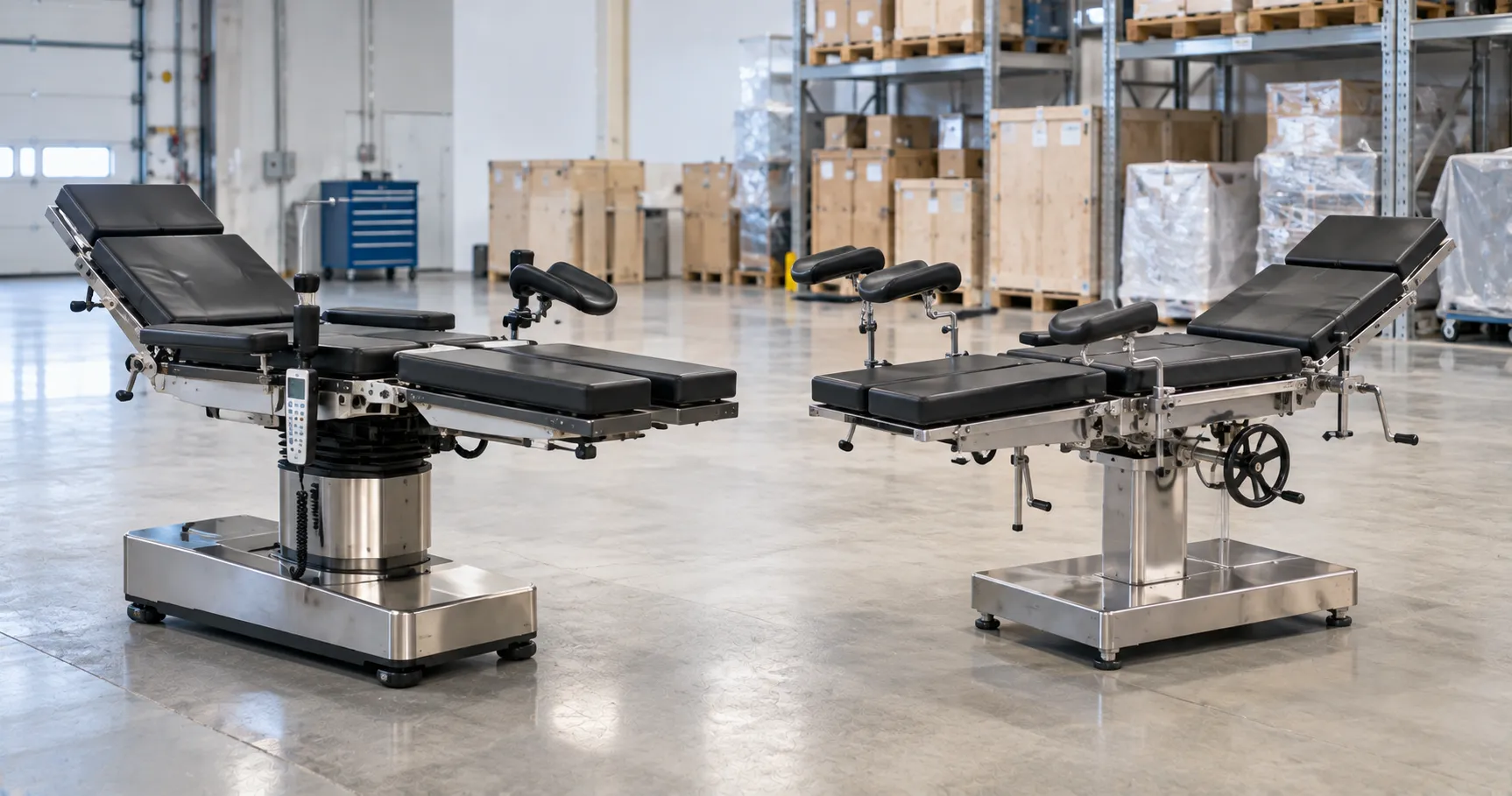

Smart hospital beds help healthcare facilities improve patient comfort, staff workflow, mobility support, positioning, pressure-care planning, and safety-related bed management. They may include electric height adjustment, backrest control, knee section movement, side rails, brake systems, weighing functions, bed-exit alarms, nurse call integration, battery backup, mattress compatibility, and connected monitoring features.
For healthcare buyers, smart hospital beds should be reviewed as medical equipment, patient furniture, and workflow infrastructure. The FDA describes digital health technologies as systems that use computing platforms, connectivity, software, and sensors for healthcare and related uses, which is relevant to connected hospital beds with alarms, sensors, control panels, and digital records.
What Smart Hospital Beds Mean
Smart hospital beds are medical beds designed to support patient positioning, comfort, mobility, clinical access, and safety-related workflows. Unlike basic manual beds, smart beds may include electric controls, adjustable sections, integrated alarms, embedded sensors, digital control panels, nurse call connections, weighing systems, and maintenance alerts.
They are used in general wards, ICUs, emergency departments, recovery areas, maternity units, rehabilitation centres, long-term care settings, and specialist departments.
Smart beds do not replace clinical judgement or patient assessment. They support trained healthcare teams by improving access, positioning, monitoring visibility, and equipment readiness.
Why Hospital Bed Planning Matters
Hospital beds are used continuously across patient care areas. Poor bed selection can affect staff workload, patient movement, cleaning workflow, maintenance cost, and safety planning.
A good bed strategy helps facilities:
-
Improve patient positioning
-
Support comfort during care
-
Reduce manual handling pressure
-
Support pressure care planning
-
Improve bed mobility
-
Support emergency access
-
Organise maintenance records
-
Standardise ward equipment
-
Improve procurement control
FDA hospital bed safety information explains that bed safety programmes should consider hospital bed systems, existing beds, and dimensional assessment guidance intended to reduce entrapment risk.
Key Features of Smart Hospital Beds
Healthcare buyers should review the features that match their clinical area.
Electric Positioning — Adjustable backrest, knee section, height, and Trendelenburg functions may support patient positioning and staff access.
Side Rails — Side rails can support selected patient safety workflows, but they must be assessed carefully for the patient and bed system.
Bed-Exit Alarms — Some smart beds include alarms that alert staff when a patient attempts to leave the bed.
Weighing Function — Integrated weighing may support selected clinical workflows where patient movement is difficult.
Nurse Call Integration — Bed controls and alarms may connect with nurse call systems or ward dashboards.
Brake and Mobility Systems — Reliable brakes, castors, steering control, and transport handles support movement across clinical areas.
Mattress Compatibility — Beds should match approved mattresses, pressure-relief surfaces, and side rail requirements.
Battery Backup — Battery support helps maintain selected electric functions during movement or power interruption.
Facilities sourcing through regulated and certified equipment suppliers worldwide should confirm bed specifications, mattress compatibility, accessories, documentation, warranty, spare parts, and service support before procurement.
Patient Safety and Bed Rails
Side rails should be planned carefully. FDA bed rail guidance explains that when bed rails are used, facilities should perform ongoing assessment of the patient’s physical and mental status, closely monitor high-risk patients, use proper mattress sizing, and reduce gaps between mattress and side rails.
Buyers and clinical teams should review:
-
Patient risk level
-
Rail height
-
Rail spacing
-
Mattress size
-
Gap risk
-
Patient mobility
-
Confusion or agitation risk
-
Care area policy
-
Staff training
-
Cleaning and inspection process
Side rails are not a single solution for all patients. Bed rail use should be part of a wider patient assessment and safety plan.
Comfort and Pressure Care Support
Patient comfort is important in hospitals because beds are used for long periods. Smart hospital beds may enhance comfort through adjustable positioning, compatibility with pressure-relief mattresses, height adjustment, ease of movement, and ergonomic controls.
Comfort planning should consider:
-
Mattress type
-
Backrest adjustment
-
Knee section support
-
Lateral tilt where available
-
Pressure-relief surfaces
-
Patient transfer needs
-
Noise level
-
Control accessibility
-
Cleaning compatibility
-
Patient weight capacity
For high-risk patients, the bed and mattress should be selected together rather than separately.
Staff Workflow and Manual Handling
Smart hospital beds can support nurses, carers, and clinical teams by improving access to the patient. Height adjustment, brake quality, side access, bed movement, and positioning controls can reduce repeated manual effort.
Important workflow checks include:
-
Can staff adjust bed height easily?
-
Can the bed move safely through corridors?
-
Are controls simple and protected?
-
Can the bed fit through lifts and doors?
-
Are brakes easy to use?
-
Can accessories be attached safely?
-
Is the bed easy to clean between patients?
-
Can emergency teams access the patient quickly?
A bed that looks advanced but is difficult for staff to use may reduce workflow efficiency.
Connected Bed Systems and Interoperability
Some smart hospital beds may connect to nurse call systems, patient monitoring platforms, asset-tracking tools, maintenance dashboards, or ward management systems. The FDA defines medical device interoperability as the ability to safely, securely, and effectively exchange and use information among devices, products, technologies, or systems.
Buyers should ask:
-
Can the bed connect with nurse call systems?
-
Can bed-exit alarms be routed?
-
Can asset tracking be added?
-
Can maintenance alerts be recorded?
-
Does the bed need network access?
-
What happens if connectivity fails?
-
Can the bed operate safely offline?
Connected features should support clinical workflow without making basic bed functions dependent on unstable systems.
Cybersecurity for Connected Hospital Beds
Connected beds may include software, sensors, network modules, service tools, user access settings, or remote diagnostics. FDA cybersecurity guidance provides recommendations on medical device cybersecurity considerations and information to include in premarket submissions.
Procurement teams should ask suppliers about:
-
Software update process
-
Access control
-
Remote service policy
-
Data handling
-
Encryption
-
Audit logs
-
Patch support
-
Network requirements
-
End-of-life data removal
-
Cybersecurity documentation
Cybersecurity should be reviewed before connected beds are installed in hospital networks.
Maintenance and Lifecycle Planning
Smart hospital beds need maintenance because they include moving parts, electronics, motors, controls, rails, brakes, wheels, cables, batteries, and accessories. WHO medical equipment maintenance guidance explains that maintenance strategies include inspection, preventive maintenance, and corrective maintenance, and that preventive maintenance helps extend equipment life and reduce failure rates.
Maintenance planning should include:
-
Brake inspection
-
Castor checks
-
Motor checks
-
Control panel testing
-
Side rail inspection
-
Battery checks
-
Cable review
-
Alarm testing
-
Mattress platform inspection
-
Cleaning checks
-
Spare part planning
-
Service records
Biomedical teams should track repeated faults, repair costs, downtime, warranty claims, and end-of-life status.
Procurement Guidance for Smart Hospital Beds
Procurement should involve nurses, doctors, biomedical engineers, infection control teams, facilities teams, finance teams, compliance staff, and procurement managers.
Define the Care Area — ICU beds, ward beds, emergency beds, maternity beds, bariatric beds, paediatric beds, and rehabilitation beds have different requirements.
Review Total Cost of Ownership — Buyers should include bed price, mattress, side rails, accessories, batteries, spare parts, preventive maintenance, service contracts, and replacement planning.
Check Supplier Transparency — Suppliers and manufacturers advertising to global healthcare buyers should provide specifications, user manuals, cleaning instructions, warranty terms, service support, spare parts, and compliance documents.
Test Before Bulk Purchase — Staff should test bed height, controls, movement, rail operation, cleaning process, mattress fit, and emergency access before large orders.
Common Mistakes to Avoid
Hospitals should avoid these smart bed procurement mistakes.
Buying Beds Without a Mattress Review — Bed and mattress compatibility affects comfort, pressure care, and side rail running.
Ignoring Bed Rail Risk — Rails require patient assessment, proper fit, and staff awareness.
Skipping Maintenance Planning — Motors, batteries, brakes, wheels, rails, and controls need regular inspection.
Choosing Beds That Are Hard to Clean — Complex surfaces and hard-to-reach areas can pose infection-control problems.
Not Checking Door and Lift Fit — Bed dimensions matter for transport and emergency movement.
Ignoring Staff Feedback — Nurses and carers should test-bed usability before procurement.
Overpaying for Unused Features — Smart features should match real care needs.
International Sourcing Considerations
Smart hospital beds can be sourced internationally when buyers clearly define bed type, department use, weight capacity, mattress compatibility, rail requirements, power requirements, cleaning instructions, accessories, warranty, spare parts, service access, documentation, and compliance requirements.
Healthcare groups managing multiple facilities may benefit from structured distribution and reseller partnership arrangements. Standardising hospital beds, mattresses, accessories, spare parts, cleaning methods, and maintenance records can reduce variation across wards and facilities.
Buyers should confirm whether they need general ward beds, ICU beds, electric beds, bariatric beds, paediatric beds, maternity beds, emergency beds, rehabilitation beds, or full patient room packages. For project-based sourcing, buyers can contact the Medigear.uk team for supply support to discuss availability, documentation, export needs, and procurement requirements.
Future Role of Smart Hospital Beds
Smart hospital beds will continue to support connected wards, patient safety planning, comfort improvement, staff workflow, asset tracking, maintenance records, and digital hospital operations. The strongest bed systems will combine practical design, durable materials, reliable movement, safe controls, mattress compatibility, service support, and documented maintenance.
Hospitals should choose beds that make patient care easier, safer, and more comfortable without adding unnecessary complexity.
Final Thoughts
Smart hospital beds support patient safety, comfort, positioning, nurse workflow, mobility, maintenance planning, and the development of connected wards. They are important for general wards, ICUs, emergency areas, recovery units, rehabilitation settings, maternity departments, and long-term care facilities.
The right hospital bed strategy should consider patient needs, staff usability, mattress compatibility, side rail planning, cleaning requirements, maintenance readiness, supplier support, spare parts, documentation, and total cost of ownership. Smart features should solve real workflow problems and support better care environments.
Disclaimer
Medigear.uk is a global medical equipment supplier, exporter, and distributor. The content published on this site is intended for educational and product awareness purposes only. Nothing on this page constitutes medical advice, clinical guidance, patient safety advice, cybersecurity advice, legal advice, regulatory advice, or treatment recommendations. All healthcare procurement, technology, facility, legal, regulatory, patient care, and clinical decisions should be made by qualified professionals and compliant procurement teams operating within the regulatory frameworks of their respective countries.