Smart emergency equipment helps hospitals respond faster in urgent clinical situations by improving access to equipment, patient monitoring, oxygen support, resuscitation readiness, alarm visibility, and emergency workflow. Emergency departments, ICUs, wards, operating rooms, recovery areas, ambulances, and rapid response teams all depend on reliable equipment that is ready when needed.
For healthcare buyers, emergency equipment planning should focus on readiness, usability, maintenance, accessories, staff training, service support, cybersecurity, documentation, and total cost of ownership. WHO’s emergency care system framework covers essential emergency care functions from the scene of illness or injury through transport, emergency units, and early inpatient care, showing why emergency response planning must be organised across the full care pathway.
What Smart Emergency Equipment Means
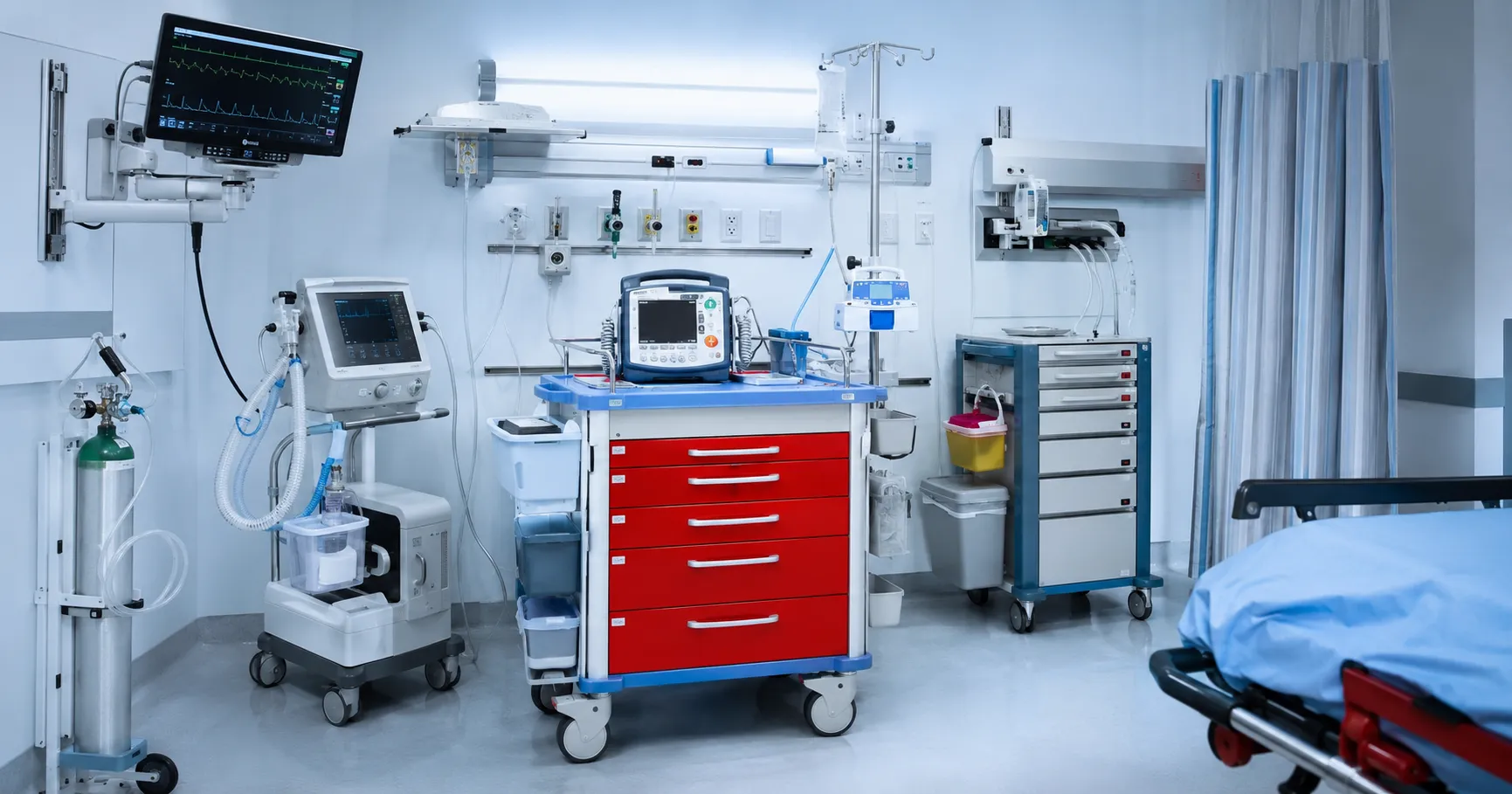
Smart emergency equipment refers to emergency medical devices and response systems that support faster recognition, monitoring, treatment, movement, communication, or documentation during urgent care. These devices may include defibrillators, patient monitors, transport ventilators, suction units, oxygen systems, infusion pumps, syringe pumps, emergency trolleys, crash carts, airway devices, portable ultrasound units, ECG machines, alarm systems, asset-tracking tools, and connected response dashboards.
Smart features may include digital displays, automated self-tests, alarm logs, wireless connectivity, battery alerts, data export, usage records, maintenance reminders, or location tracking. The goal is not to make emergency care complicated. The goal is to help trained clinical teams access the right equipment quickly and confirm that devices are ready for use.
Why Emergency Equipment Planning Matters
Emergency care depends on speed and readiness. A missing defibrillator pad, an empty oxygen cylinder, an uncharged battery, a faulty suction unit, a missing airway accessory, or an overdue maintenance record can delay the response.
Faster Device Access — Emergency equipment should be easy to locate, clearly organised, and available in high-risk areas.
Better Patient Monitoring — Patient monitors, ECG devices, pulse oximeters, and vital-signs systems support rapid assessment in urgent care.
Improved Resuscitation Readiness — Defibrillators, airway tools, oxygen equipment, suction units, and emergency medicines should be checked and ready.
Stronger Team Coordination — Crash carts, emergency trolleys, alarms, and digital records help teams work with clearer roles and supplies.
Better Maintenance Control — Service records, battery checks, and fault logs help biomedical teams keep response devices ready.
Key Smart Emergency Equipment for Hospitals
Emergency equipment needs vary by department, but several categories of devices are important for response planning.
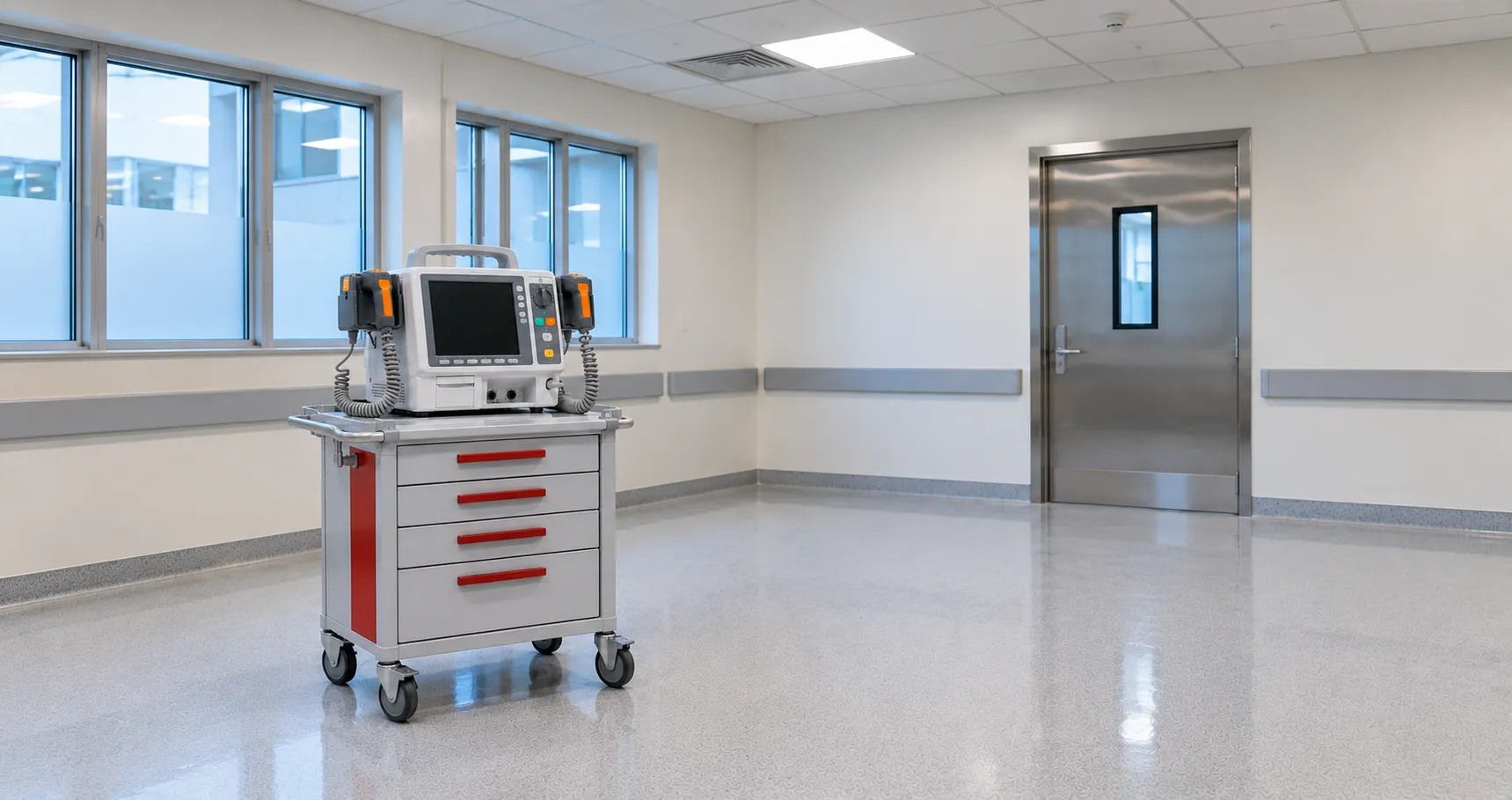
Defibrillators — Defibrillators support emergency cardiac response. Buyers should review energy settings, AED/manual mode, battery life, self-test features, pads, cables, printer options, and service support.
Patient Monitors — Emergency monitors track vital signs such as ECG, oxygen saturation, blood pressure, temperature, respiration, and selected advanced parameters.
Transport Ventilators — These support selected respiratory care during emergency transfer, ICU movement, ambulance transport, or internal hospital transport.
Oxygen Systems — Oxygen cylinders, regulators, flowmeters, masks, tubing, concentrators, and pipeline connections are essential for emergency response.
Suction Units — Portable and wall-mounted suction systems support airway clearance and procedure readiness.
Infusion and Syringe Pumps — These support controlled delivery of fluids and medicines during emergency and critical care.
Crash Carts and Emergency Trolleys — These organise medicines, airway tools, IV supplies, defibrillator accessories, syringes, gloves, and emergency consumables.
Portable ECG Machines — ECG devices support cardiac assessment in emergency departments, wards, clinics, and ambulance workflows.
Point-of-Care Diagnostics — Blood gas analysers, glucose meters, portable ultrasound, and selected bedside testing tools can support urgent clinical review.
Facilities sourcing through regulated and certified equipment suppliers worldwide should confirm specifications, accessories, warranty, spare parts, user manuals, service access, and compliance documents before procurement.
Emergency Department Workflow
Smart emergency equipment should align with real clinical workflows. Emergency teams need equipment that is simple to access, easy to move, quick to operate, and practical under pressure.
A strong emergency workflow should include:
-
Clearly assigned equipment locations
-
Daily readiness checks
-
Battery and charging checks
-
Crash cart sealing and restocking
-
Oxygen and suction verification
-
Defibrillator self-test review
-
Accessory availability
-
Emergency trolley standardisation
-
Fault reporting process
-
Biomedical service escalation
Equipment should be placed where emergency teams actually need it, not only where storage is convenient.
Connected Devices and Interoperability
Many emergency devices now include connectivity, data export, alarm routing, central monitoring links, or asset tracking. The FDA defines medical device interoperability as the ability to safely, securely, and effectively exchange and use information among devices, products, technologies, or systems.
Buyers should check whether smart emergency devices can connect with central monitoring stations, electronic records, nurse call systems, ambulance systems, maintenance dashboards, or asset tracking platforms.
Important questions include:
-
Can the device export useful data?
-
Can alarm information be reviewed later?
-
Does it support existing hospital systems?
-
Can staff identify the correct patient or device record?
-
What happens if connectivity fails?
-
Can the device operate safely offline?
Connected emergency devices should support care without creating dependence on unstable networks.
Cybersecurity for Smart Emergency Equipment
Smart emergency equipment may include software, wireless connectivity, remote service access, cloud dashboards, user accounts, or data storage. FDA cybersecurity guidance provides recommendations on cybersecurity device design, labelling, and documentation for devices with cybersecurity risk.
Cybersecurity checks should include:
-
Access control
-
User permissions
-
Software update process
-
Remote service policy
-
Encryption
-
Audit logs
-
Default password control
-
Patch support
-
Data storage
-
End-of-life data removal
Cybersecurity is important because emergency devices must remain reliable, secure, and serviceable throughout their lifecycle.
Maintenance and Readiness Planning
Emergency equipment must be maintained before it is needed. WHO maintenance guidance explains that maintenance strategies include inspection, preventive maintenance, and corrective maintenance, with preventive maintenance helping extend equipment life and reduce failure rates.
Maintenance planning should include:
-
Preventive maintenance schedules
-
Defibrillator checks
-
Battery testing
-
Pad and cable inspection
-
Oxygen regulator checks
-
Suction performance checks
-
Ventilator service records
-
Pump calibration was required
-
Software updates
-
Fault logs
-
Spare part planning
Biomedical teams should track repeated faults, downtime, missing accessories, and overdue service. Emergency devices with unreliable performance should be reviewed for repair or replacement.
Procurement Guidance for Emergency Equipment
Emergency equipment procurement should involve emergency physicians, nurses, ICU teams, ambulance teams where relevant, biomedical engineers, IT teams, finance teams, compliance staff, and procurement managers.
Define Department Needs — Equipment needs differ between emergency departments, wards, ICUs, operating rooms, outpatient clinics, and ambulances.
Review Accessories — Defibrillator pads, ECG cables, SpO2 probes, cuffs, tubing, masks, batteries, chargers, filters, IV sets, and airway tools should be included.
Compare Total Cost of Ownership — Buyers should include device price, consumables, accessories, batteries, service contracts, spare parts, training, maintenance, and replacement planning.
Check Supplier Transparency — Suppliers and manufacturers advertising to global healthcare buyers should provide specifications, warranty terms, service support, spare part information, user manuals, and compliance files.
Standardise Where Possible — Standardising emergency devices, accessories, carts, and checklists can reduce staff confusion and maintenance complexity.
Staff Training and Simulation
Emergency equipment is only effective when staff know how to use it. Training should be practical and repeated.
Training should cover:
-
Device setup
-
Emergency use steps
-
Alarm response
-
Battery checks
-
Accessory replacement
-
Crash cart checks
-
Patient transfer use
-
Cleaning process
-
Fault reporting
-
Downtime workflow
Simulation training can help teams test whether equipment is easy to find, easy to use, and complete during urgent scenarios.
Common Planning Mistakes to Avoid
Hospitals should avoid these mistakes when planning emergency equipment.
Buying Without Response Workflow Review — Equipment must match real emergency pathways.
Ignoring Accessories — Missing pads, sensors, cables, tubing, masks, batteries, or filters can delay care.
Weak Battery Management — Emergency equipment must be charged and ready.
No Crash Cart Standardisation — Different cart layouts can confuse staff during urgent response.
Skipping Maintenance Records — Emergency equipment needs documented inspection and service.
No Cybersecurity Review — Connected emergency devices should be reviewed before network use.
Ignoring Staff Feedback — Nurses, doctors, and technicians should test the device's usability before making a bulk purchase.
International Sourcing Considerations
Smart emergency equipment can be sourced internationally when buyers clearly define department needs, device categories, accessories, power requirements, oxygen compatibility, documentation, warranty, spare parts, service support, cybersecurity expectations, and compliance requirements.
Healthcare groups managing multiple hospitals or urgent care facilities may benefit from structured distribution and reseller partnership arrangements. Standardising defibrillators, monitors, oxygen systems, emergency trolleys, accessories, and maintenance records can reduce variation across facilities.
Buyers should confirm whether they need defibrillators, patient monitors, transport ventilators, suction units, oxygen systems, crash carts, emergency trolleys, infusion pumps, ECG machines, or complete emergency response packages. For project-based sourcing, buyers can contact the Medigear.uk team for supply support to discuss availability, documentation, export needs, and procurement requirements.
Future Role of Smart Emergency Equipment
Smart emergency equipment will continue to support faster hospital response through better device readiness, connected monitoring, battery alerts, asset tracking, response dashboards, and maintenance visibility. The strongest emergency equipment strategies will combine reliable devices, trained staff, standardised carts, preventive maintenance, cybersecurity review, and clear procurement records.
Hospitals should choose emergency equipment that is easy to use, quick to access, serviceable, well-documented, and supported by reliable suppliers.
Final Thoughts
Smart emergency equipment helps hospitals improve response times, equipment readiness, patient monitoring, oxygen support, resuscitation workflows, and emergency department planning. It is important across emergency rooms, ICUs, wards, operating rooms, ambulances, and rapid response teams.
The right emergency equipment strategy should include reliable devices, complete accessories, trained users, preventive maintenance, cybersecurity review, clear documentation, standardised carts, and strong supplier support. Buyers should compare the total cost of ownership, service access, spare parts, warranty, compliance files, and long-term response readiness before ordering.
Disclaimer
Medigear.uk is a global medical equipment supplier, exporter, and distributor. The content published on this site is intended for educational and product awareness purposes only. Nothing on this page constitutes medical advice, emergency care guidance, clinical guidance, cybersecurity advice, legal advice, regulatory advice, or treatment recommendations. All healthcare procurement, emergency care, technology, legal, regulatory, facility, and clinical decisions should be made by qualified professionals and compliant procurement teams operating within the regulatory frameworks of their respective countries.