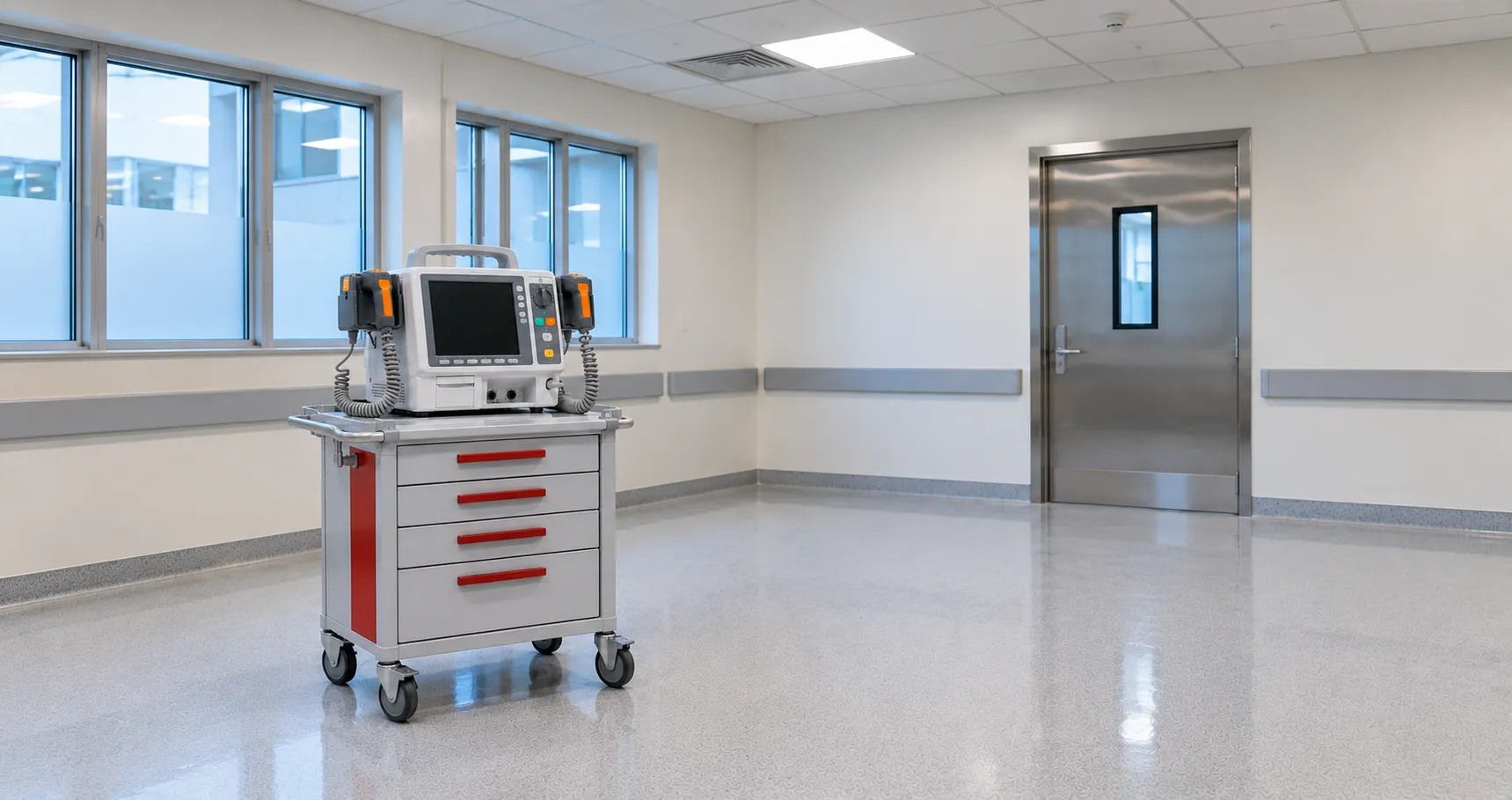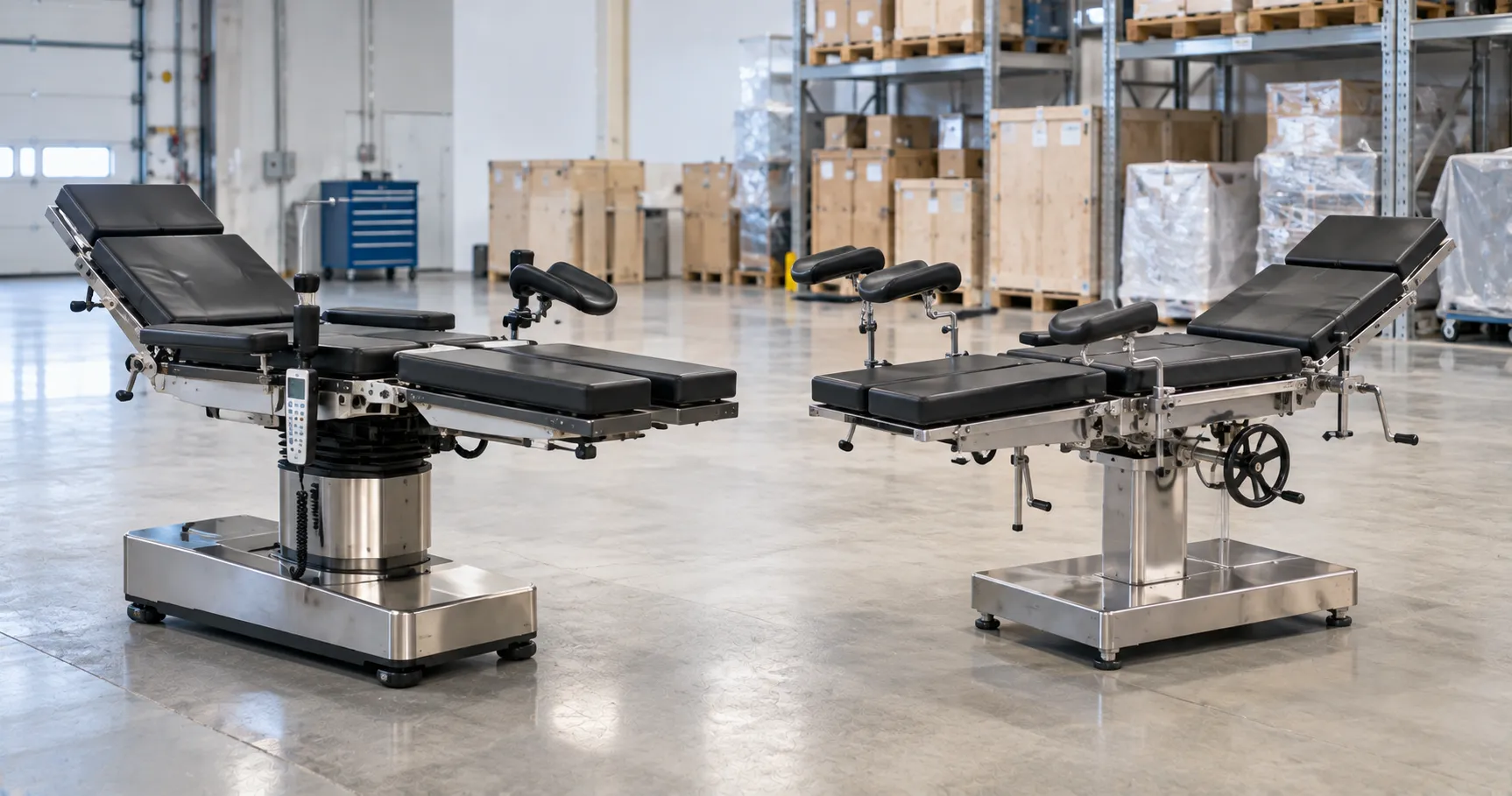
Predictive maintenance in medical equipment management uses data, sensors, service records, usage patterns, and analytics to help hospitals identify equipment problems before they become serious failures. Instead of waiting for a device to break or servicing every device only by a fixed schedule, predictive maintenance aims to understand equipment condition and plan maintenance at the right time.
For healthcare buyers, predictive maintenance is not just a software feature. It affects biomedical engineering workflow, equipment uptime, patient care readiness, service contracts, spare parts, cybersecurity, asset tracking, and long-term procurement planning. WHO maintenance guidance explains that a medical equipment maintenance strategy includes inspection, preventive maintenance, and corrective maintenance, with preventive maintenance helping extend equipment life and reduce failure rates.
How Predictive Maintenance Supports Healthcare Facilities
Predictive maintenance helps healthcare facilities move from reactive equipment repair toward planned, data-informed maintenance. The aim is to reduce unexpected downtime, protect critical services, and improve the way biomedical teams manage equipment.
Earlier Fault Detection — Connected devices, service logs, usage hours, error codes, and sensor readings can reveal warning signs before a device fails. This helps biomedical teams act before equipment becomes unavailable.
Better Maintenance Timing — Traditional preventive maintenance follows fixed intervals. Predictive maintenance adds equipment condition and usage data, helping teams decide when service is actually needed.
Improved Equipment Uptime — Hospitals depend on working devices for diagnostics, monitoring, surgery, sterilisation, oxygen delivery, laboratory testing, and emergency care. Better maintenance planning can reduce avoidable service interruptions.
Smarter Resource Use — Biomedical teams often manage hundreds or thousands of assets. Predictive maintenance helps prioritise devices that need attention rather than treating all equipment the same.
Where Predictive Maintenance Is Used
Predictive maintenance can be used across many hospital departments. Its value is highest where equipment is critical, expensive, frequently used, difficult to replace, or connected to patient care workflows.
Critical Care Units — Ventilators, patient monitors, infusion systems, syringe pumps, and critical care beds need strong uptime planning. Predictive alerts can help biomedical teams prepare service work before a device fails during clinical use.
Diagnostic Imaging Departments — CT, MRI, X-ray, ultrasound, mammography, and digital radiography systems are high-value assets. Downtime can delay diagnosis, reschedule patients, and create service backlogs.
Laboratory Departments — Analysers, centrifuges, refrigerators, incubators, and automated laboratory systems often run continuously. Predictive maintenance can help identify usage patterns, temperature issues, error trends, or service needs.
Sterilisation and CSSD Areas — Autoclaves, washer-disinfectors, ultrasonic cleaners, and drying systems require reliable operation because the availability of sterile instruments depends on them.
Facility-Wide Biomedical Engineering — Facilities sourcing through regulated and certified equipment suppliers worldwide should confirm whether the equipment provides service logs, usage data, connectivity options, remote diagnostics, software support, and maintenance documentation before procurement.
Predictive, Preventive and Corrective Maintenance
Hospitals often use three maintenance approaches together. Predictive maintenance does not fully replace preventive or corrective maintenance. It adds another layer of intelligence.
Corrective Maintenance — Corrective maintenance happens after a fault occurs. A device is repaired because it is already broken, malfunctioning, or unsafe to use.
Preventive Maintenance — Preventive maintenance occurs on a scheduled basis. It may include inspection, calibration, cleaning, lubrication, software checks, replacement of wear parts, and safety testing.
Predictive Maintenance — Predictive maintenance uses data to estimate when a device may fail or require service. Research on IoT-based predictive maintenance management for medical equipment describes a predictive approach used to support failure diagnosis for critical equipment with frequent failure modes.
Condition-Based Maintenance — closely related to predictive maintenance. It uses the actual condition of the equipment, such as temperature, vibration, battery health, usage hours, or error codes, to guide maintenance decisions.
In practice, hospitals may combine all four approaches. A critical device may still need scheduled safety checks even if predictive analytics are available.
Data Used in Predictive Maintenance
Predictive maintenance depends on data quality. If data is missing, inaccurate, inconsistent, or poorly organised, the system may produce weak predictions.
Usage Hours — Equipment with heavy use may need service earlier than equipment used only occasionally. Usage data helps biomedical teams avoid one-size-fits-all maintenance schedules.
Error Codes and Fault Logs — Modern devices may record alarms, system errors, battery warnings, temperature faults, pressure faults, or failed self-tests. These logs can help identify patterns.
Sensor Data — Some devices can collect data on temperature, vibration, pressure, humidity, current, voltage, flow, battery health, or component performance.
Service History — Previous repairs, spare part replacements, calibration failures, downtime records, and repeated faults can show which devices need closer monitoring.
Environmental Conditions — Heat, dust, humidity, unstable power, poor ventilation, or frequent movement can affect equipment life. Predictive maintenance should consider the real-world environment in which equipment is used.
Asset Location and Movement — Equipment that is moved frequently may experience more wear. Asset tracking can help show where devices are used, stored, or repeatedly transferred.
Technologies Behind Predictive Maintenance
Predictive maintenance can use simple analytics or advanced systems. The right technology depends on facility size, equipment type, budget, and biomedical engineering maturity.
IoT Sensors — Internet-connected sensors can collect data on equipment condition. These may be built into the device or added through external monitoring systems.
Connected Equipment Platforms — Some devices send service data to dashboards, hospital networks, or manufacturer support platforms. Buyers should review what data is collected and who can access it.
AI and Machine Learning Models — Machine learning can help identify patterns in equipment behaviour and service records. A biomedical equipment predictive maintenance study notes that predictive maintenance is increasingly recognised as a strategic lever to enhance reliability and continuity of care, while also highlighting challenges such as fragmented data and weak interoperability.
Computerised Maintenance Management Systems (CMMS) platforms help biomedical teams manage work orders, service schedules, spare parts, asset records, and maintenance history.
Asset Tracking Systems — RFID, barcode, Bluetooth, or location systems can help teams find equipment and understand use patterns.
Remote Diagnostics — Some suppliers can review device logs or performance data remotely. This can speed troubleshooting, but it also requires cybersecurity and access control planning.
Benefits for Biomedical Engineering Teams
Predictive maintenance can strengthen biomedical engineering operations when implemented carefully. It helps teams work more proactively and use service resources more effectively.
Better Work Order Prioritisation — Biomedical teams can focus first on devices showing warning signs, repeated errors, or high usage.
Reduced Emergency Repairs — Early detection can reduce the number of urgent repair calls. This helps biomedical teams plan workload instead of constantly reacting.
Improved Spare Parts Planning — Predictive data can show which components fail frequently. Procurement teams can stock the right parts before failures interrupt care.
Stronger Service Contract Review — Hospitals can use downtime data, repair frequency, and service response records to negotiate better supplier support.
Improved Equipment Replacement Planning — Predictive replacement planning can help hospitals reduce operational and capital costs while improving efficiency, according to ECRI's discussion on predictive replacement strategies.
Benefits for Hospital Operations
Predictive maintenance is not only a biomedical engineering tool. It affects patient flow, department readiness, budget planning, and service continuity.
Reduced Clinical Disruption — Equipment failure can delay imaging appointments, procedures, laboratory results, surgery, and patient monitoring. Predictive maintenance helps reduce avoidable interruptions.
Improved Equipment Availability — Departments can plan service windows when equipment is less busy. This helps avoid sudden shortages during peak demand.
Better Budget Forecasting — Maintenance data helps hospitals estimate upcoming repair, replacement, and spare part costs more accurately.
Lower Hidden Costs — Unexpected equipment failures can lead to overtime, patient rescheduling, outsourcing, emergency rental, and urgent spare-part shipping. Predictive maintenance can reduce some of these hidden costs.
Stronger Procurement Decisions — Maintenance records show which brands, models, or suppliers perform better over time. This helps future purchasing decisions become more evidence-based.
Equipment Types That Benefit Most
Not every device needs advanced predictive maintenance. The best candidates are usually high-risk, high-value, high-use, or difficult-to-replace devices.
Imaging Equipment — CT, MRI, X-ray, C-arm, mammography, and ultrasound systems can cause major service disruption when unavailable.
Critical Care Equipment — Ventilators, patient monitors, infusion systems, and anaesthesia workstations need strong uptime planning.
Laboratory Equipment — High-volume analysers, refrigerators, centrifuges, incubators, and automated sample systems can affect diagnostic turnaround time.
Sterilisation Equipment — Autoclaves, washer-disinfectors, and CSSD systems are critical to surgical and procedure workflows.
Medical Gas and Oxygen Systems — Oxygen concentrators, compressors, vacuum systems, flow equipment, and pipeline support equipment. Performance.
Mobile Equipment Fleets — Infusion pumps, wheelchairs, beds, monitors, and trolleys may benefit from usage and location tracking.
Procurement Guidance for Predictive Maintenance Solutions
Predictive maintenance procurement should include biomedical engineers, clinical users, IT teams, cybersecurity staff, finance teams, facility managers, and supply chain leaders. A predictive system must fit the facility’s assets, data quality, and maintenance culture.
Total Cost of Ownership — Buyers should include sensors, software licences, dashboards, integration, cloud fees, staff training, cybersecurity review, service support, spare parts, and system maintenance.
Asset Coverage — The system should support the equipment types that matter most. A dashboard that covers only a small number of devices may have limited operational value.
Supplier Transparency — Suppliers and manufacturers advertising to global healthcare buyers should explain what data is collected, how predictions are generated, how alerts are prioritised, and what maintenance actions are recommended.
Compliance and Documentation — Procurement teams should request product specifications, intended use, software details, cybersecurity documentation, data handling policies, integration guidance, warranty terms, and service support information. Compliance should be checked against applicable local regulatory standards, as well as CE, FDA, IEC, ISO, or their regional equivalents, where relevant.
Pilot Testing Before Scale-Up — Hospitals should test predictive maintenance systems on a limited group of devices before expanding. A pilot can reveal data gaps, false alerts, workflow issues, and integration problems.
Healthcare groups managing several hospitals or clinics may benefit from structured distribution and reseller partnership arrangements. Standardising predictive maintenance tools, asset records, service workflows, and supplier reporting can reduce variation across sites.
Cybersecurity and Data Security Planning
Predictive maintenance systems may collect device data, service records, network information, remote access data, or operational dashboards. This creates cybersecurity responsibilities.
Access Control — Hospitals should define who can view dashboards, change settings, approve remote access, and export data.
Secure Data Transmission — Buyers should confirm whether device data is encrypted during transfer and storage.
Remote Service Rules — Remote diagnostics can be useful, but supplier access should be controlled, logged, and limited to approved use.
Software Updates — Predictive maintenance software should have a documented update process. Updates should not disrupt clinical workflows or device safety.
Cybersecurity Documentation — FDA cybersecurity guidance provides recommendations on device design, labelling, and documentation for medical devices with cybersecurity considerations, reinforcing the need to evaluate security during procurement.
Known Vulnerability Planning — Connected patient monitors and similar devices have been subject to cybersecurity safety communications, underscoring the need for hospitals to include security monitoring in connected equipment planning.
Implementation Planning for Hospitals
Predictive maintenance should be implemented in stages. A rushed deployment can lead to dashboard overload, poor data quality, staff confusion, and misplaced confidence.
Start with the equipment for which downtime has the greatest financial or patient-care impact.
Clean the Asset Register — Predictive maintenance depends on accurate asset records. Serial numbers, department locations, service history, model names, and status should be updated.
Define Alert Rules — Alerts should be meaningful. Too many low-value alerts can overwhelm biomedical teams and reduce trust.
Train Biomedical Teams — Engineers and technicians should understand the dashboard, risk scores, work order process, escalation steps, and data limitations.
Involve Clinical Departments — Clinical teams should know when equipment may be removed for service and how replacement units will be managed. Regularly, Hospitals should review downtime, repair frequency, alert accuracy, work order response, and staff feedback after implementation.
Maintenance Workflow Changes
Predictive maintenance changes the way maintenance teams work. It shifts attention from fixed schedules alone to condition-informed planning.
From Calendar-Based to Risk-Based Planning — Devices with higher risk scores may be serviced sooner, while stable equipment may stay on normal schedules.
From Repair Logs to Data Insights — Service records become more valuable when analysed across device fleets.
From Emergency Calls to Planned Service Windows — Teams can schedule service during lower-demand periods when warning signs appear early.
From Isolated Devices to Fleet Management — Predictive maintenance helps hospitals understand trends across all devices of the same model, department, or supplier.
From Manual Reports to Dashboards — Biomedical teams can use dashboards to review equipment status, upcoming service needs, and failure patterns.
Challenges in Predictive Maintenance
Predictive maintenance has strong potential, but hospitals should understand its limits.
Fragmented Data — Equipment data may be stored across supplier portals, service sheets, CMMS platforms, spreadsheets, and device logs.
Weak Interoperability — Some devices cannot share useful data. Others require proprietary platforms that do not connect easily.
Poor Data Quality — Missing service records, incorrect asset tags, incomplete work orders, and inconsistent fault descriptions can weaken predictions.
False Alerts — Predictive systems may generate warnings that do not lead to real failures. This can reduce staff trust.
Staff Adoption — Biomedical teams may resist systems that add work without clear value. Training and workflow design are important.
Budget Constraints — Sensors, software, integration, and training cost money. Facilities should start with high-value use cases.
International Sourcing Considerations
Predictive maintenance tools and connected equipment can be sourced internationally when buyers clearly define asset types, monitoring goals, data requirements, software needs, cybersecurity expectations, language support, warranty, service access, and integration requirements. This is especially important for healthcare groups purchasing connected imaging systems, laboratory platforms, critical care equipment, or fleet management software.
Buyers should confirm whether they need connected equipment, predictive maintenance software, CMMS integration, sensor kits, remote diagnostics, asset tracking, service dashboards, or full biomedical management platforms. For project-based sourcing, buyers can contact the Medigear.uk team for supply support to discuss availability, documentation, export needs, and procurement requirements.
Future Role of Predictive Maintenance in Healthcare
Predictive maintenance is likely to become more important as hospitals use more connected equipment, digital service records, AI tools, and asset management platforms. The future of equipment management will depend on reliable data, strong cybersecurity, biomedical skills, supplier transparency, and practical workflow design.
Hospitals should focus on predictive maintenance that solves real problems. A small programme that reduces downtime for critical equipment may be more valuable than a large dashboard that no one uses.
The most successful facilities will combine predictive maintenance with preventive maintenance, corrective maintenance, good asset records, staff training, spare parts planning, and clear supplier accountability.
Final Thoughts
Predictive maintenance in medical equipment management helps hospitals move from reactive repair toward smarter, data-informed service planning. It can support better uptime, stronger biomedical workflows, improved spare parts planning, and more reliable clinical operations.
The right predictive maintenance approach should match equipment risk, data quality, biomedical capacity, cybersecurity policy, maintenance workflow, supplier support, and local compliance standards. Buyers should review documentation, total cost of ownership, integration needs, training requirements, and service accountability before investing.
Disclaimer
Medigear.uk is a global medical equipment supplier, exporter, and distributor. The content published on this site is intended for educational and product awareness purposes only. Nothing on this page constitutes medical advice, clinical guidance, cybersecurity advice, data protection advice, legal advice, or treatment recommendations. All healthcare procurement, technology, data, legal, and clinical decisions should be made by qualified professionals and compliant procurement teams operating within the regulatory frameworks of their respective countries.