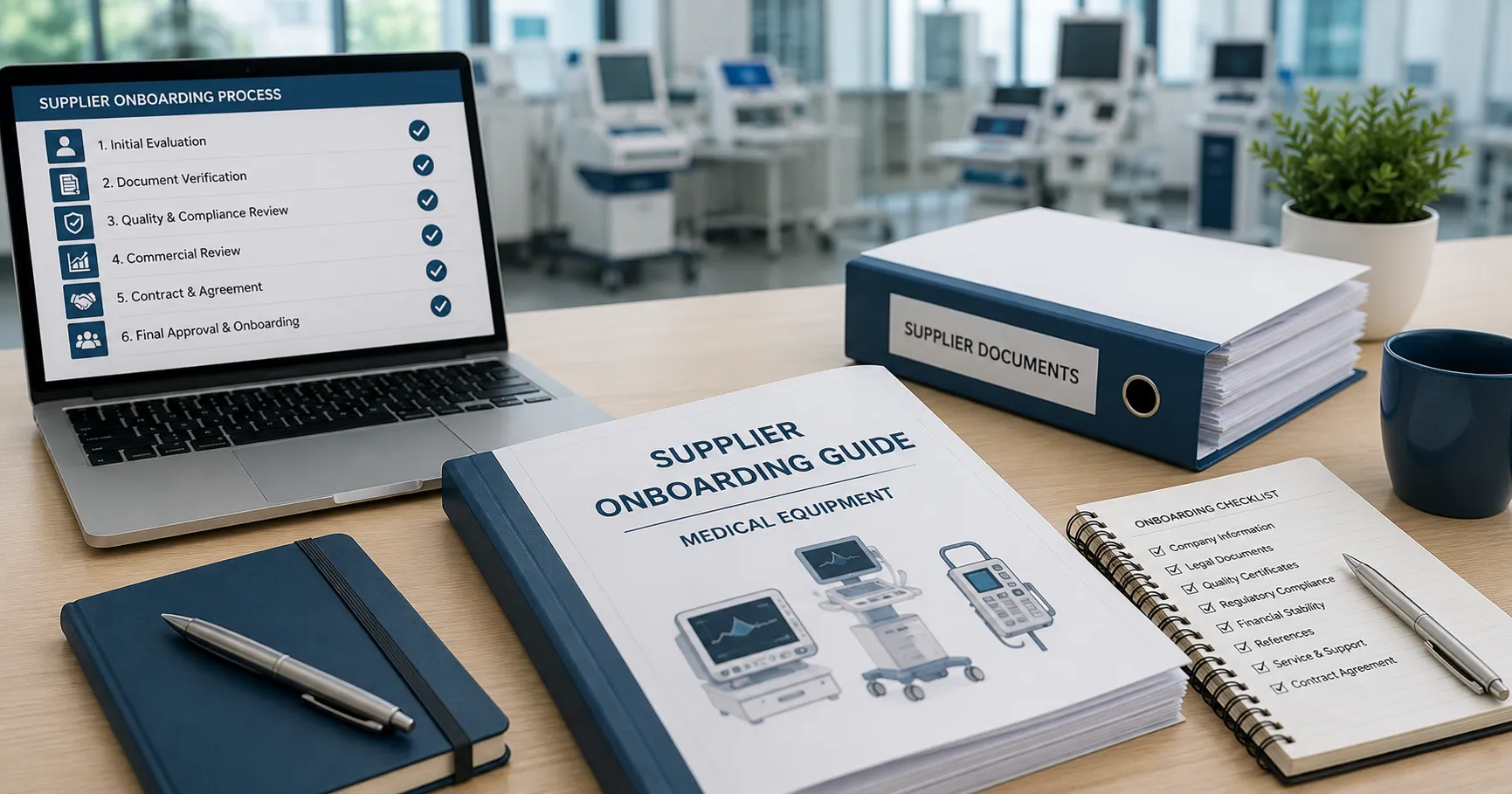
A supplier may offer suitable products and competitive pricing but still create significant procurement risk if its documentation, delivery capability or service arrangements have not been verified. Approving a supplier based only on a quotation can expose healthcare facilities to incomplete orders, unsuitable equipment and limited support after installation.
For healthcare buyers, medical equipment supplier onboarding creates a controlled route from initial enquiry to approved vendor status. It enables buying teams to verify who the supplier is, what products it is authorised to provide and whether it can meet clinical, regulatory and commercial obligations.
The process should remain proportionate. A local supplier providing basic non-critical accessories may not require the same assessment as an international vendor supplying imaging, laboratory or life-support equipment. However, every supplier should pass defined identity, compliance and capability checks.
This guide explains how buying teams can assess supplier credentials, evaluate operational capacity, verify documentation and establish reliable performance controls.
Why Supplier Onboarding Matters to Clinical Procurement
Supplier onboarding protects healthcare organisations from risks that may not be visible in a product catalogue or commercial quotation. It provides evidence that a proposed supplier can support the intended purchase responsibly.
Verified supplier identity — Buying teams should confirm the supplier’s registered name, address, ownership details and authorised representatives. Payment information should match verified company records rather than relying solely on details supplied through email.
In practice, procurement teams often find that differences between trading names, invoice names and bank account names need to be resolved before any order is approved.
Confirmed product authority — A supplier should explain whether it acts as a manufacturer, authorised distributor, reseller or refurbishment provider. Where authorisation is relevant, buyers should request evidence directly linked to the products and territories involved.
Documented quality controls — The supplier should demonstrate how products are selected, stored, inspected and released for delivery. Quality certificates can support the review, but buyers should also assess the operational processes behind them.
Clinical suitability safeguards — Onboarding should confirm that the supplier understands the intended healthcare setting and does not recommend equipment solely on availability. Product configuration, accessories and compatibility should be reviewed against the clinical requirement.
Clear accountability — Buyers should identify who is responsible for quotations, order confirmation, documentation, delivery, installation and after-sales support. Unclear responsibility frequently leads to delays when several organisations participate in the supply chain.
A controlled onboarding process provides procurement teams with a consistent basis for approving suppliers and documenting why they were deemed suitable.
Supplier Onboarding Across Different Healthcare Settings
The depth of supplier assessment should reflect the healthcare environment, equipment risk and consequences of supply failure.
Large hospitals and teaching facilities — Major hospitals may approve suppliers across imaging, surgery, critical care, laboratory and sterilisation categories. These organisations often require departmental review, technical approval, financial checks and formal supplier registration before purchase orders can be issued.
Supplier records may also need to integrate with digital procurement, finance and inventory systems.
District and regional hospitals — Regional facilities may depend heavily on supplier responsiveness because local service options can be limited. Buying teams assessing regulated and certified equipment suppliers worldwide should verify access to spare parts, remote support, engineer availability, and realistic response times.
Experienced clinical supply managers typically examine whether support commitments can be delivered at the facility’s actual location rather than accepting general regional coverage statements.
Community clinics and outpatient centres — Smaller facilities may use a simplified onboarding process, but essential checks should not be removed. Supplier identity, product documentation, warranty and delivery responsibilities still require verification.
A short process should remain controlled rather than informal.
Diagnostic and laboratory facilities — These facilities may depend on recurring reagents, calibrators and quality-control materials. Supplier assessment should cover continuity of consumable supply, storage requirements, shelf life and batch traceability.
Mobile and remote healthcare programmes — Suppliers supporting mobile services must understand transportation, battery, environmental and connectivity requirements. Replacement accessories and remote troubleshooting may be more important than physical service visits.
Healthcare groups operating multiple sites — Multi-facility buyers may approve suppliers centrally while monitoring performance locally. The onboarding process should distinguish group-wide requirements from site-specific delivery, installation, and support conditions.
Risk-based onboarding allows healthcare organisations to apply stronger controls where supplier failure would create greater clinical or financial consequences.
Documents and Capabilities Buying Teams Should Verify
Supplier documents should be assessed for validity, relevance and consistency. Collecting certificates without checking what they cover provides limited protection.
Company registration information — Buyers should obtain the supplier’s registered legal name, business address, tax information and ownership details where required. The information should match quotations, contracts, invoices and payment records.
Quality management evidence — Depending on the supplier’s role, relevant documentation may include quality management certification, internal procedures or manufacturer quality records. Certification scope and issuing body should be checked rather than relying on the certificate title alone.
Product conformity documents — Equipment should meet applicable local regulatory standards, including CE, FDA, or their regional equivalents, where relevant. Buyers should confirm that conformity documents apply to the exact model and legal manufacturer being offered.
Manufacturer authorisation — Distributors and resellers may need to demonstrate that they are authorised to supply, install, or service specific products. The validity period, geographical scope and covered product range should be reviewed.
Technical documentation quality — User manuals, service information, data sheets, installation requirements and maintenance schedules should be available in a usable format. Missing or inconsistent documents can indicate future difficulties with commissioning and service.
Financial and supply capability — Buying teams may assess financial stability, stock access, lead times and previous delivery experience. The depth of the check should reflect contract value and the operational consequences of non-delivery.
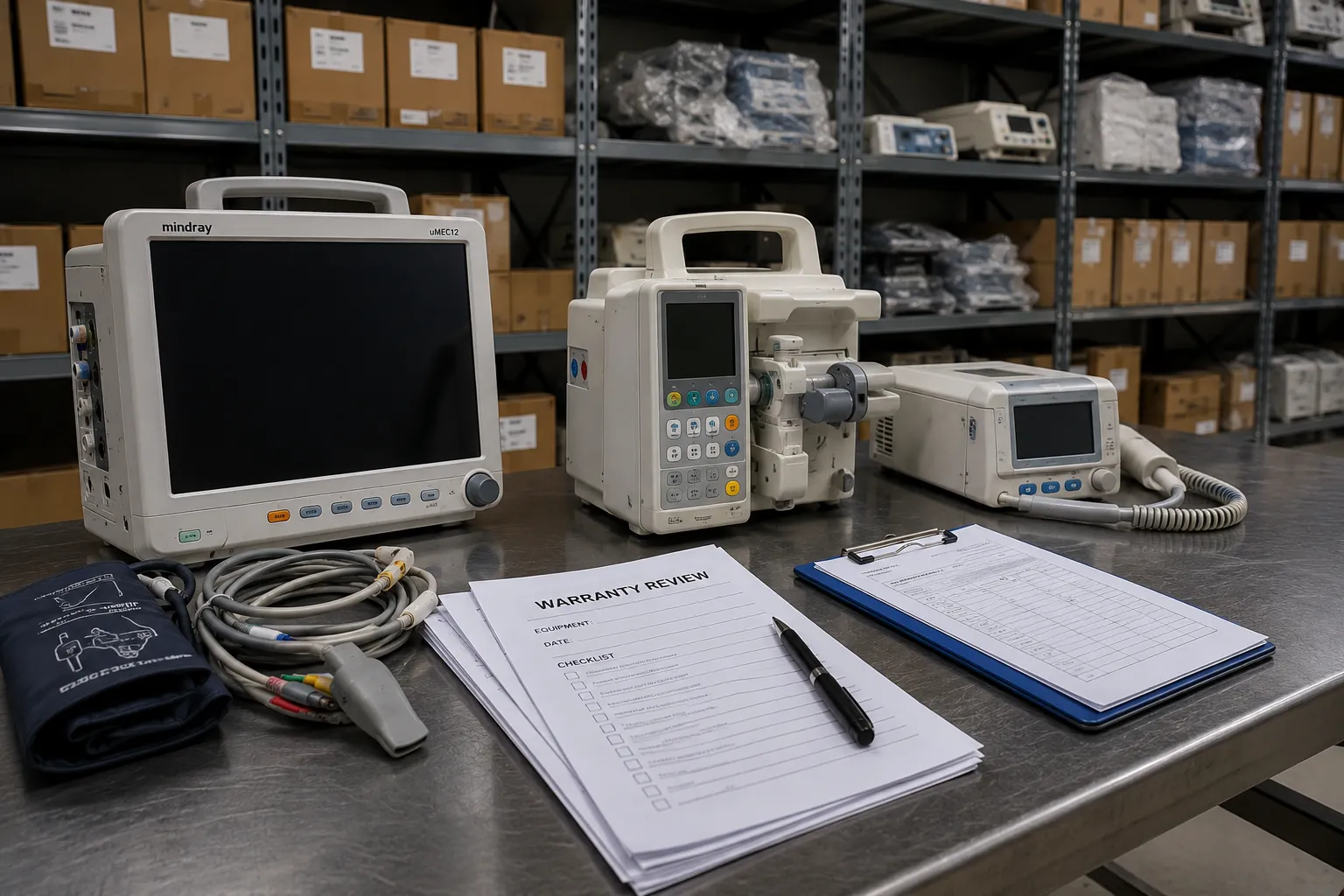
Service and warranty capacity — Buyers should identify who provides installation, preventive maintenance, repairs and spare parts. Where another organisation performs these services, its responsibilities should be documented.
Each document should support a specific onboarding decision. A certificate should not be requested merely because it appeared on an older checklist.
How to Evaluate and Approve a New Supplier
A structured evaluation process helps buying teams make consistent approval decisions and prevents commercial pressure from bypassing essential checks.
Apply risk-based qualification — Suppliers should be classified according to equipment risk, spend, supply dependency and service complexity. Higher-risk suppliers may require references, audits, financial checks and technical demonstrations.
Use a documented assessment form — the evaluation should cover company identity, compliance, product capabilities, commercial terms, logistics, and service support. Mandatory failures should be distinguished from minor information gaps.
Evaluate product communication — Suppliers and manufacturers advertising to global healthcare buyers should provide accurate specifications, configuration details and regulatory information. Marketing claims should be checked against formal product documentation before approval.
Review references carefully — References should relate to similar equipment, contract size and healthcare settings. Buyers should ask about delivery performance, documentation quality, issue resolution and after-sales support rather than requesting only general satisfaction.
Confirm commercial controls — Payment terms, quotation validity, delivery responsibilities, warranty exclusions and cancellation conditions should be clear. Changes to verified bank details should require independent confirmation.
Record the approval decision — The supplier record should identify who reviewed each area, which documents were accepted and whether any conditions remain. Conditional approval should include a deadline for resolving outstanding requirements.
Buying teams establishing repeated international procurement arrangements may benefit from collaborative global distribution and procurement partnerships. These relationships should still operate through documented qualification, service expectations and regular performance reviews.
Monitoring Suppliers After Initial Approval
Supplier onboarding does not end when a vendor number is created. Ongoing performance determines whether the supplier should remain approved.
Delivery performance monitoring — Buyers should compare confirmed and actual delivery dates, order completeness and shipment condition. Repeated delays may affect clinical projects even when individual products are acceptable.
Documentation accuracy — Invoices, packing lists, serial-number records, conformity documents and service reports should remain consistent. Documentation errors can delay customs clearance, asset registration or clinical acceptance.
Product and service quality — Complaints, returns, installation failures and recurring repairs should be recorded against the supplier. Trends often provide more useful information than isolated incidents.
Corrective action management — Suppliers should investigate significant failures and provide corrective actions. Buying teams should verify that agreed-upon improvements were implemented rather than closing issues after receiving a written response.
Periodic reassessment — Certification expiry, ownership changes, product discontinuation and deteriorating service performance may trigger reassessment. Review frequency should reflect supplier risk and purchasing activity.
Facilities with limited alternative supply options may be reluctant to challenge an established vendor. However, unresolved quality or support issues can increase total ownership costs and create avoidable downtime.
Performance data should therefore influence future quotation requests, contract renewals and approved-supplier status.
International Supplier Onboarding and Sourcing Risk
International suppliers can expand product access, but they introduce additional documentation, communication, logistics and service considerations.
Export capability — Buyers should confirm whether the supplier has experience preparing medical equipment for international shipment. Packaging, handling, insurance and export documentation should suit the equipment and destination.
Import and regulatory readiness — The supplier should identify which documents it can provide and which local registrations remain the buyer’s responsibility. Requirements vary between healthcare systems and product classifications.
Delivery and customs responsibilities — Commercial terms should define responsibility for freight, insurance, customs, taxes, inspection and final delivery. Ambiguity can create unplanned costs and delays.
Communication and escalation — International transactions may involve time zone, language, and regional office differences. Buying teams should establish named contacts and escalation routes before placing an order.
Service across borders — Warranty coverage should explain whether engineer travel, remote diagnostics, parts freight and local labour are included. A global warranty statement may not reflect the support available at a specific destination.
Specialist sourcing assistance — Buying teams assessing new international suppliers or placing multi-category orders can contact Medigear. UK to submit a medical equipment enquiry. Providing the destination, quantities, technical requirements, and expected delivery period supports a more accurate sourcing review.
International supplier onboarding works best when compliance, logistics and after-sales responsibilities are confirmed before commercial approval.
Final thoughts
Medical equipment supplier onboarding should establish whether a vendor can provide suitable products, reliable documentation and sustainable support. Competitive pricing alone does not demonstrate that a supplier is ready to support healthcare procurement.
Effective buying teams apply consistent identity, compliance, technical, commercial and service checks. They adjust the depth of assessment according to equipment risk and retain clear evidence supporting each approval decision.
Disclaimer
Medigear.uk is a global medical equipment supplier, exporter, and distributor. The content published on this site is intended for educational and product awareness purposes only. Nothing on this page constitutes medical advice, clinical guidance, or treatment recommendations. All healthcare procurement and clinical decisions should be made by qualified medical professionals and compliant procurement teams operating within the regulatory frameworks of their respective countries.