
A Runner's Heel Pain That Would Not Settle
A keen runner feels a sharp pain under his heel. It hurts most with the first steps each morning. Rest helps a little. The pain returns once he runs again. Months pass with no real change. His physiotherapist suggests something new. She recommends shockwave therapy. Within a few sessions, his pain starts to ease. Clinics and hospitals use shockwave therapy every day for stubborn tendon problems. Buyers sourcing this equipment through the Medigear.uk buyer portal can compare devices from many suppliers. This includes shockwave therapy units for tendon care.
What Is Shockwave Therapy
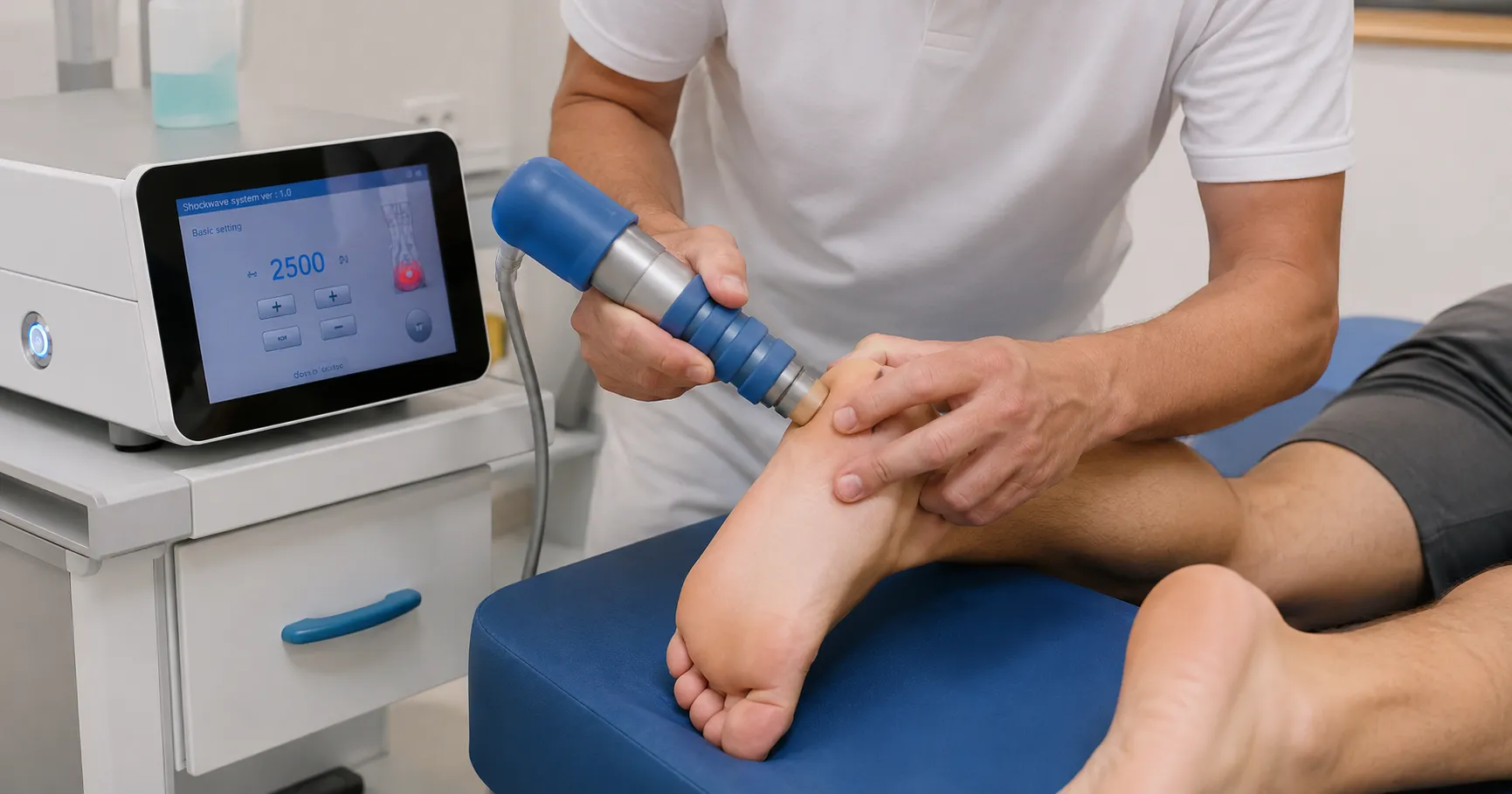
Shockwave therapy uses sound wave pulses to treat injured tissue. A handheld device sends these pulses through the skin. The waves target a specific painful area. This approach is non-invasive. It needs no cuts and no anaesthetic. Sessions usually take just a few minutes. Most treatment plans involve several sessions over a few weeks. Shockwave therapy is widely used in sports medicine and physiotherapy. It also appears in orthopaedic and podiatry clinics. The device itself is compact and often handheld. Some units sit on a small mobile cart. Settings adjust the pulse strength and frequency for each patient. A trained clinician selects the right settings based on the condition being treated. The patient's response often guides small adjustments during the session.
How Does Shockwave Therapy Actually Work
The exact mechanism is still being studied. Researchers continue to explore how the pulses trigger healing at a cellular level. Several theories help explain the effect. One theory suggests shockwave therapy triggers a mild, controlled injury response. This response may stimulate blood flow to the area. New blood vessels can form as a result. This process is called neovascularisation. Better blood flow can support tissue repair over time. This is one reason this treatment suits long-standing injuries. Another theory involves pain signal disruption. The pulses may reduce the sensitivity of local nerve endings. This can lower pain in the short term, too. This treatment may also help break down calcium deposits in some tendons. These deposits can build up in long-term tendon problems. They sometimes contribute to ongoing pain and restricted movement. Results vary between patients and the specific condition treated. This is why clinicians set expectations carefully before starting. Suppliers listing shockwave therapy devices on Medigear.uk can reach relevant buyers. This includes buyers in physiotherapy and sports medicine. They work across the NHS and private sector.
What Tendon Conditions Does Shockwave Therapy Treat
Shockwave therapy suits a range of stubborn tendon conditions. These span different joints and activities. Plantar fasciitis is one of the most common conditions. This condition causes heel pain, often worse in the morning. Achilles tendinopathy is another frequent target. This affects the tendon connecting the calf muscle to the heel bone. It often develops gradually in active adults. Tennis elbow and golfer's elbow both respond well in many cases. These conditions involve tendons near the elbow joint. Patellar tendinopathy affects the tendon below the kneecap. This is common in jumping sports. Calcific tendinitis of the shoulder is another condition often treated this way. This approach tends to work best on chronic, long-standing tendon problems. It suits these more than fresh injuries. It is less commonly used for fresh, acute injuries. Clinicians usually try other treatments first before considering this option.
What Is the Difference Between Radial and Focused Devices
Devices used for this treatment come in two main types. Each suits a different clinical purpose. Radial devices spread energy outward from the treatment head. This creates a wider treatment area with reduced penetration depth. They suit larger, more superficial areas of tissue. Focused devices concentrate energy onto a specific, deeper point. This makes them suitable for smaller, more precise targets. Focused units often need more technical setup and specialist training. Radial units tend to be simpler to operate. Many physiotherapy clinics start with a radial device. It suits a wider range of everyday uses in general practice. Specialist sports medicine or orthopaedic centres may prefer focused units for precision work. Some larger clinics stock both types to cover different patient needs. Departments handling other chronic conditions plan varied equipment stock in a similar way. The Medigear.uk guide to Parkinson's disease equipment explores this idea further.
What Does a Treatment Session Involve
A typical treatment session starts with a brief assessment. The clinician identifies the exact area of pain. A gel is applied to help the device make good contact with the skin. The device head is placed against the treatment area. Pulses begin at a lower setting. Intensity increases gradually based on patient comfort. Most sessions last between five and fifteen minutes. Patients often feel a dull ache or mild discomfort during treatment. This usually settles quickly once the session ends. A full course typically involves three to six sessions. These are usually spaced about a week apart. Some soreness after a session is common and expected. Most patients return to normal activity the same day.
Who Should Avoid Shockwave Therapy
Certain groups need caution or should avoid this treatment entirely. Pregnant women should not receive treatment over the abdomen or lower back. Patients with bleeding disorders need specialist advice first. Anyone taking blood-thinning medication should discuss this with their clinician beforehand. Shockwave therapy should not be used over open wounds or infected tissue. It should not be applied directly over major nerves or blood vessels. Patients with certain cancers may need to avoid treatment near the affected area. Growth plates in children require particular caution during treatment. A clinician should always review a patient's full medical history first. This helps confirm the treatment is safe and suitable. Every patient's situation is checked individually before starting.
What Equipment Supports This Treatment
A clinic offering this treatment needs extra items too. The main device alone is not enough. Several other items support safe, everyday use. Spare treatment heads suit different body areas and depths. Conductive gel keeps contact quality consistent during each session. Cleaning supplies support infection control between patients. Comfortable treatment couches or chairs help patients stay still and relaxed. Patient information leaflets explain what to expect before and after treatment. Software on some devices logs treatment history for each patient. Staff need training on the correct technique and settings for different conditions. Consistent equipment quality across a clinic supports safe, effective care for every patient treated. Suppliers offering shockwave therapy accessories through Medigear.uk gain direct access to hospital and distributor procurement teams across multiple regions.
Does Your Clinic Have the Right Shockwave Therapy Setup
Clinics differ in scale and clinical focus. A small physiotherapy practice may need one versatile radial device. A sports medicine centre may want both radial and focused units for varied cases. Podiatry clinics often prioritise devices specifically suited to foot and heel conditions. Orthopaedic departments may want higher-specification units for precise, deep-tissue work. Matching equipment to patient volume and case mix matters greatly. It avoids both underinvestment and wasted spend on unused features. Clinics should also weigh training needs against how often the equipment gets used. Some services choose to reference broader equipment risk planning. This helps when adding new treatment technology. The Medigear.uk medical equipment risk assessment guide covers this process in more depth. Medigear.uk distribution partners can help clinics assess their needs. They can also help source a fitting shockwave therapy configuration.
How Should Shockwave Therapy Devices Be Maintained
Routine care keeps a shockwave therapy device reliable. Treatment heads wear down with repeated use and need periodic replacement. Cables and connectors should be checked for damage before each clinic day. Calibration checks confirm the device delivers accurate pulse strength over time. Software updates may apply to more advanced clinical models. Cleaning the device and treatment heads between patients follows standard infection control steps. Staff training should be refreshed periodically. Correct technique directly affects both safety and results. A simple service log helps clinics track calibration checks. It also tracks any faults reported by staff. Hospitals and clinics that contact the Medigear.uk team can discuss maintenance planning for their shockwave therapy equipment.
Why Choose Medigear.uk for Shockwave Therapy Equipment
Medigear.uk connects hospitals, clinics, and distributors with a broad supplier network. This network spans physiotherapy and sports medicine equipment. The platform covers shockwave therapy devices and treatment heads. It also covers the full range of accessories that support ongoing clinical use. Procurement teams can compare specifications from multiple manufacturers without committing to a single source. Distributors gain access to a curated supplier directory. It spans the United Kingdom, Europe, and beyond. Every listing on Medigear.uk meets quality and compliance standards relevant to the UK market. The platform serves NHS trusts and private clinics. It also serves international buyers working across physiotherapy and sports medicine. Whether a clinic needs a full shockwave therapy setup or just one spare part, the Medigear.uk marketplace makes the search simpler. Contact the Medigear.uk team to discuss your shockwave therapy equipment needs. They can help find the right supplier for your clinic.
Conclusion
Shockwave therapy offers a non-invasive option for stubborn tendon conditions that have not responded to rest or other treatments, from plantar fasciitis and Achilles tendinopathy to tennis elbow and calcific tendinitis. Understanding the difference between radial and focused devices, what a session involves, and who should avoid treatment helps clinics deliver safe, effective care. Reliable results depend on well-maintained equipment, trained staff, and a setup matched to patient needs. Procurement teams and distributors who understand what a physiotherapy or sports medicine clinic needs are better placed to support timely, effective tendon care. Contact Medigear.uk to explore shockwave therapy equipment options suited to your clinic.
⚠️ This article is published by Medigear.uk for general informational purposes only. It does not constitute medical advice, clinical guidance, or a product endorsement. Always consult qualified physiotherapists, orthopaedic specialists, and manufacturer documentation when selecting, configuring, or recommending shockwave therapy equipment. Medigear.uk is a medical equipment distributor and does not sell medicines or pharmaceuticals.