How to Select the Right Endoscope for Clinical Procedures
The surgeon looked through the scope. He saw a polyp that would have become cancer within two years. It was sitting in a fold of the colon that a standard camera angle would have missed. The scope he was using had a wider field of view, a sharper chip, and a tip that bent further than the model it replaced. That polyp was removed on the spot. The patient went home that day. And a cancer that would have shown up with blood, pain, and a stage three diagnosis in eighteen months was stopped before it started — because the right endoscope was in the right hands at the right time.
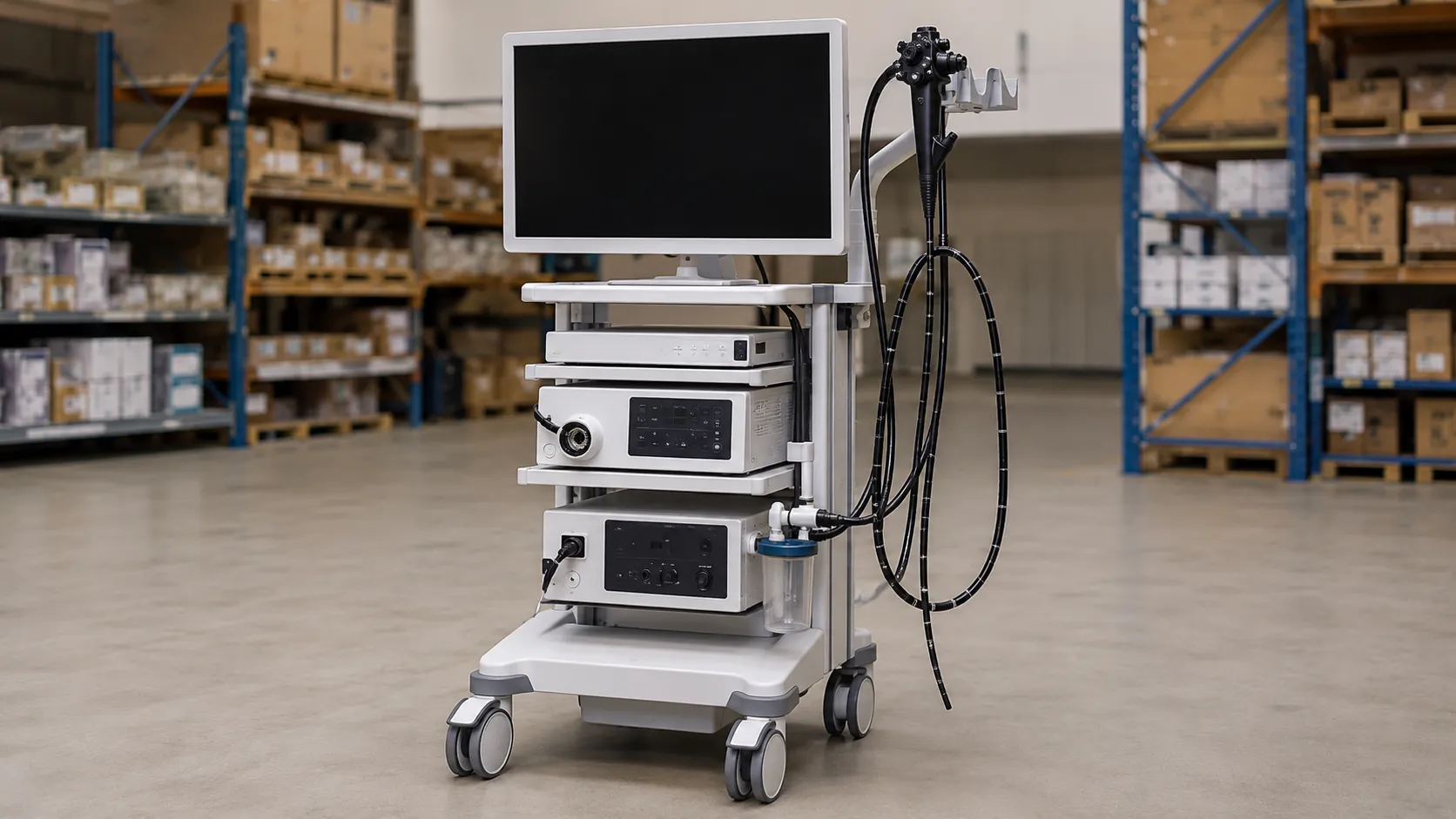
An endoscope is not a camera on a stick. It carries light, image, air, water, and tools into the body. Into places no other device can reach. Pick the wrong one and you limit what the doctor sees, reaches, and treats. The patient may need a second go that the first should have handled.
This guide covers how to select the right endoscope for your clinical service with the honest detail that consultants, procurement leads, and unit managers actually need. Medigear supplies certified endoscopes and accessories to hospitals and clinics across the UK — and every tip here comes from real clinical demand, not product brochures.
Flexible vs Rigid
Endoscopes split into two main types. Flexible endoscopes bend and follow the body's curves — gullet, stomach, colon, airway, bladder. They are the workhorses of gut, lung, and bladder medicine. Rigid endoscopes are straight tubes for joint surgery, sinus work, and keyhole procedures where the path is short. Flexible or rigid is set by anatomy. The choice within each type — that is where it gets harder.
Image Quality
Image quality starts with the chip. Modern flexible endoscopes use CCD or CMOS chips at the tip. CMOS chips are lighter. Use less power. Often give sharper images. HD is the minimum for any new scope purchase. SD is no longer good enough when small lesions and subtle colour shifts carry clinical weight. Some offer zoom, narrow-band imaging, or colour modes that show detail beyond what white light alone reveals. These matter most in cancer checks — where spotting one millimetre of odd tissue early changes the outcome by years.
Field of View
Field of view affects how much the clinician sees in a single frame. Wider field means fewer blind spots. Less twisting. Faster moves through tricky anatomy. Standard scopes offer 140 to 170 degrees. Newer wide-angle endoscopes push past 210. For screening units where polyp detection rate drives quality scores, wider view is not luxury. It is a clinical must.
Tip Deflection
Tip deflection — how far the end bends — sets what the operator can reach. A scope that bends 210 up and 180 down handles tight colon turns and reaches behind folds a stiffer tip would miss. In lung work, tight tip control lets the scope enter smaller airways. In upper gut work, bending back in the stomach needs good tip range. Check the bend range against your procedures before signing.
Working Channel
Working channel width limits what can pass through the scope. Biopsy tools, snares, needles, clips, and stent systems all need a channel wide enough to pass without jamming. A narrow channel limits what the doctor can do — turning a see-and-treat session into a look-and-refer one. For units doing polyp removal, stenting, or foreign body work, channel width shapes what the endoscope can do in practice.
Insertion Tube Diameter
Tube diameter affects patient comfort and sedation needs. Thinner scopes suit nasal entry, child use, and slim-scope gastroscopy — where patient comfort is the barrier. Thicker scopes give better image, bigger channels, and more control — but need heavier sedation. Matching tube size to the patient and the procedure is a balance every unit must get right.
Scope Length
Scope length varies by procedure. A standard gastroscope reaches the small bowel at about 100 to 110 cm. A colonoscope needs 130 to 170 cm to reach the top of the colon. An enteroscope — for deep small bowel — goes past 200 cm. A scope too short for the target wastes money on a device that cannot finish the job.
Reprocessing
Reprocessing is the most important and most missed factor in endoscope selection. Every flexible endoscope must be cleaned and dried between patients to stop cross-infection. The cycle — leak test, manual clean, machine disinfection, rinse, dry — takes thirty to forty-five minutes per scope. Scopes with complex channels or hard-to-reach gaps are tougher to clean and carry higher infection risk. Before buying any scope, confirm your cleaning setup can handle it without slowing your list or risking patient safety.
Linked Guides
For clinics managing diagnostic capability alongside endoscopy, our complete buyer's guide to ECG machines covers cardiac monitoring that supports sedation safety during procedures — because every patient under sedation needs heart rhythm and oxygen monitoring. Our guide to choosing the right ultrasound machine covers the imaging that pairs with endoscopic ultrasound in advanced diagnostic pathways.
Durability and Repair Cost
Durability and repair cost shape the true price of any endoscope. Flexible scopes are fragile — one drop, one bite, one rough turn can crack the lens, break fibres, or wreck the bending section. A single repair can run into thousands. Ask about repair rates, turnaround, loaner scopes, and whether a service deal makes sense for your volume. A scope that breaks every six months costs more than a tougher one at a higher price.
Processor Compatibility
Compatibility with your processor and light source must be checked before purchase. Not every scope fits every processor. Mixing brands usually fails and voids both warranties. Adding to your fleet? Match the brand and check the connector. Starting fresh? Pick the processor and endoscope system together.
Single-Use Endoscopes
Single-use disposable endoscopes are growing — mainly in lung and bladder work where infection risk is high and cleaning is complex. No cleaning. No infection risk. No repair bills. The trade-off is cost per case and image that does not yet match the best reusable scopes. The choice depends on volume, cleaning capacity, infection history, and total cost over five years.
Training
Staff training on scope handling, insertion, and cleaning matters as much as the scope itself. A badly handled scope breaks faster, cleans worse, and gives poor images. A trained team extends scope life, keeps image sharp, and holds infection rates down. Budget for training with the purchase — not when the first repair bill arrives.
Ergonomics
Ergonomics affect the operator as much as the patient. A scope that is heavy, stiff, or awkward causes hand fatigue and wrist strain over years of daily use. Endoscopists who do dozens of cases a week need a scope that fits their hand and responds smoothly. Test the scope in your hands before buying — not just on a screen.
Paediatric Scopes
Paediatric endoscopy needs smaller scopes with thinner tubes, softer tips, and gentler profiles. Adult scopes used on children cause pain, damage, and failed procedures. Dedicated paediatric scopes cost more but are essential for any endoscope unit that sees children regularly. A child who suffers a bad first scope may refuse follow-ups for years — making the wrong choice a long-term cost.
Accessories and Consumables
Accessories make up a larger share of running costs than most buyers plan for. Biopsy forceps, snares, baskets, needles, clips, and cleaning brushes are used on almost every list. Some are single-use. Some are reusable with limited lives. Matching these to the endoscope working channel and checking supply chain before purchase stops mid-list shortages that cancel cases.
Traceability
Traceability systems track which scope was used on which patient, when it was last cleaned, and how many cases it has done since its last service. This data backs infection audits, warranty claims, and planning. A unit that cannot say which scope touched which patient last Tuesday has a gap that CQC will find first.
Future-Proofing
Future-proofing matters when the kit lasts a decade. AI polyp detection is entering clinical use. Narrow-band imaging, linked reporting, and cloud sharing are growing fast. An endoscope system bought today should have the power, upgrade path, and links to support features coming within its working life. Buying an endoscope for today and replacing in three years costs more than buying for tomorrow and keeping for seven.
Certification
Always confirm CE marking, ISO 13485 standards, and full MHRA compliance before buying any endoscope. Check that the scope meets current Medical Devices rules. Ask about warranty, service support, parts, and software updates. An endoscopy system is a long-term investment — the supplier relationship shapes performance across its full life.
Why Choose Medigear
Medigear supplies certified endoscopes, processors, light sources, and accessories to hospitals, clinics, and endoscopy units across the UK — with clear pricing, honest guidance, and after-sales support built for daily clinical use. Whether you are equipping a new unit, expanding scope range, or upgrading to HD, our team matches the right system to your procedures. Reach out to our team directly for guidance built around the patients on your list and the clinicians holding the scope.
Conclusion
An endoscope is the tool that turns a symptom into a diagnosis and a diagnosis into a treatment — often in the same session, often without a single cut. Choosing the right one means matching image to need, channel to procedure, cleaning to capacity, and durability to daily use. The polyp that would have become cancer. The lesion caught one visit earlier. The patient who went home the same day. Those outcomes start with the scope in the room. Medigear stands alongside endoscopy units with certified equipment and the honest support that clinical precision demands. Speak to our team today and find the endoscope that turns what you see into what you can do.
⚠️ This post is for general information only. We do not sell medications or provide prescriptions — Medigear.uk is a medical equipment supplier only.