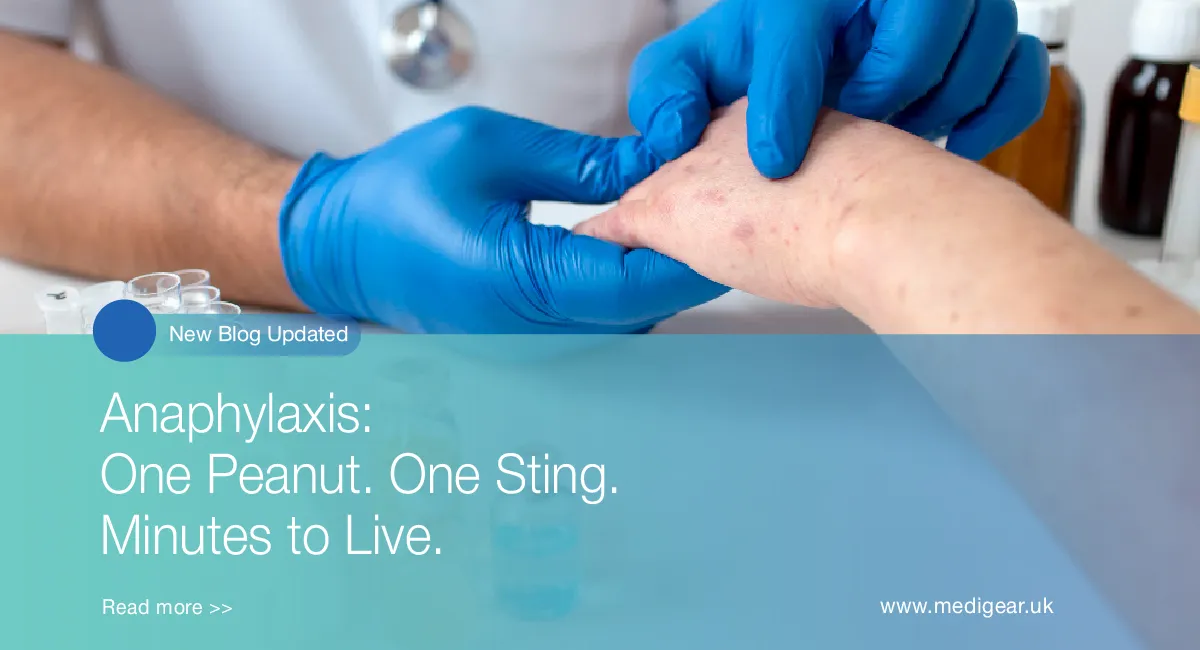
Anaphylaxis: One Peanut, One Sting, Minutes to Live
She bit into a biscuit at a birthday party. Within two minutes her lips tingled. Within five her throat began to close. Within eight she was on the floor gasping for air while her mother screamed for help and a room full of seven-year-olds watched in silence. She was allergic to peanuts. The biscuit was not supposed to contain any. It did. And the next ninety seconds decided whether she would survive her ninth birthday or not.
Anaphylaxis does not build slowly. It does not give time to think, plan, or drive to the hospital. It hits like a switch. One moment the body is fine. The next it is attacking itself hard enough to close the airway, crash the blood pressure, and stop the heart in minutes. It is the fastest emergency most people will ever see. And the only thing that stops it is a drug that must be given before the body crosses the line between treatable and too late.
This guide explains anaphylaxis with the urgency it demands. What triggers it, what happens inside the body, what the signs look like, how to respond, and how the right clinical equipment ensures that clinics, schools, and workplaces are ready for a reaction that gives no warning and no second chance. Medigear supplies certified emergency equipment to clinics across the UK — because anaphylaxis readiness is not a policy document. It is a loaded auto-injector within arm's reach.
What Happens Inside the Body
Anaphylaxis is a severe allergic reaction that hits the whole body. The immune system — built to fight germs — mistakes a harmless thing for a threat and launches a huge, wild response. Cells flood the body with chemicals that open blood vessels, swell tissues, tighten airways, and crash blood pressure. It is not a rash. It hits breathing, heart, gut, brain, and blood flow all at once.
Triggers
The most common triggers are foods, insect stings, and drugs. Peanuts, tree nuts, shellfish, milk, eggs, and wheat cause most food cases. Bee and wasp stings cause most venom cases. Antibiotics, painkillers, anaesthetic drugs, and contrast dyes trigger drug cases. Latex, exercise, and cold cause rarer types. Some patients react to traces so small they are invisible — nut oil on a shared knife, a crumb of egg in a mix, a drop of milk in a sauce. The amount that sets off anaphylaxis can be almost nothing.
Symptoms
Signs of anaphylaxis usually start within minutes — though delayed cases can begin an hour or more later. Skin signs often hit first — hives, flushing, swelling of the lips, tongue, or face. But it is not just a bad rash. The hallmark is spread beyond the skin — throat swelling that blocks breathing, blood pressure dropping to cause dizziness or collapse, belly pain, vomiting, or a sense of doom that patients describe as knowing something terrible is happening before they can say what.
Speed Kills
The speed matters. A child who was fine thirty seconds ago can be unable to breathe ninety seconds later. An adult who felt a mild tingle can be out cold in three minutes. The gap between first sign and airway closure varies — but it is always shorter than people think. Anaphylaxis kills not because it cannot be treated but because help arrives too late.
Adrenaline
Adrenaline — also called epinephrine — is the only first-line treatment for anaphylaxis. It opens the airway, lifts blood pressure, steadies the heart, and shuts down the allergic storm. It works in minutes when jabbed into the outer thigh. Nothing else works as fast. Not antihistamines. Not steroids. Not inhalers. Only adrenaline. And it must be given early — at the first body-wide sign, not after the patient is on the floor.
Auto-Injectors
Auto-injectors — spring-loaded devices that push a set dose of adrenaline through a needle — are the standard outside hospitals. Patients at risk carry them. Schools store them. Workplaces keep them in first aid kits. But carrying one is not the same as being ready to use it. Many hesitate — scared of the needle, unsure of the dose, or not certain the reaction is bad enough. That pause costs lives. The rule is simple — if in doubt, give it. A dose given too early does no lasting harm. A dose given too late does nothing.
Second Doses and Backup
About a third of anaphylaxis cases need a second jab — either because the first was not enough or the reaction comes back. Patients should carry two auto-injectors. Clinics should keep backup adrenaline in their emergency kits. Any place that sees patients — GP rooms, dental clinics, jab centres, allergy clinics — must have adrenaline ready and staff trained to act fast.
Biphasic Reactions
Biphasic reactions — where signs come back hours after the first attack settles — hit up to one in five cases. This is why patients treated for anaphylaxis should be watched for at least six to twelve hours after. Sending someone home after one dose without watching is a risk that guidelines exist to stop.
Children
Children face specific risks because their airways are smaller, their symptoms are harder to read, and their ability to say what they feel is limited. A child who says their tongue feels funny or their tummy hurts may be describing the start of anaphylaxis that an adult would spot straight away. Schools need trained staff, auto-injectors within reach, and action plans for every allergic child — not filed in an office but stuck on the classroom wall, the hall, and the kitchen.
Allergy Testing
Allergy testing finds triggers so patients can avoid them — but avoidance is not always possible. Skin prick tests and IgE blood tests show which triggers cause a reaction. Anyone who has survived anaphylaxis needs a specialist referral — for testing and for building a plan that covers avoidance, emergency drugs, and training for the patient and the people around them.
Linked Guides
For clinics managing emergency readiness alongside wider patient care, our complete buyer's guide to ECG machines covers cardiac monitoring that supports post-anaphylaxis assessment — because adrenaline affects the heart, and patients who have had multiple doses need rhythm checks. Our guide to pulse oximeters and heart problem detection explains how oxygen tracking supports breathing assessment during and after anaphylaxis treatment.
Mental Health
Mental health after anaphylaxis is real, lasting, and often ignored. Patients — especially children — develop fear of food, fear of eating out, fear of social events, and anxiety so severe it limits daily life. Parents carry guilt, hypervigilance, and the constant weight of knowing that a single mistake could kill their child. Mental health support should come alongside anaphylaxis care — built in from day one, not added when someone breaks down.
Food Labelling
Food labelling saves lives when it is accurate and read carefully — but failures, cross-contamination, and hidden ingredients continue to cause fatal reactions. Restaurants, cafes, and food makers carry a legal and moral duty to declare allergens clearly. Patients carry the weight of checking every label, asking every server, and trusting every answer with their life. It never ends.
Action Plans
Anaphylaxis action plans should be written, laminated, and placed everywhere the patient spends time — home, school, workplace, grandparents' house, sports club. The plan should include the trigger, the early signs, the steps to take, where the auto-injector is stored, and when to call for an ambulance. A plan in a medical file helps nobody when a child is on the canteen floor.
Exercise-Induced Anaphylaxis
Exercise-induced anaphylaxis is a rare but real form that catches patients off guard. It happens during or soon after effort — sometimes only when exercise follows a certain food. A runner who ate wheat two hours before a jog may collapse mid-stride. Neither the food nor the run alone would have caused a problem. Awareness of this trigger prevents cases that would otherwise be blamed on cardiac events or panic attacks.
Drug-Induced Anaphylaxis in Clinics
Drug-induced anaphylaxis in clinical settings demands that every clinic giving injections, infusions, or contrast agents has adrenaline, oxygen, and monitoring equipment within arm's reach. Jab centres, dental rooms, and scan suites all carry this risk. An anaphylaxis reaction where the team is not ready is not just a medical event. It is a failure that was entirely avoidable.
Travel
Travel with anaphylaxis risk needs careful planning. Carrying auto-injectors across borders. Managing airline nut bans. Finding safe food abroad. Accessing care in unknown health systems. All of it adds stress that others never face. An action plan in the local language, spare injectors in hand luggage, and travel cover for allergic emergencies turn a risky trip into a safe one.
Why Choose Medigear
Medigear supplies certified emergency equipment — including resuscitation kits, monitoring devices, and clinical tools — to clinics, schools, and workplaces across the UK. Whether you are equipping an allergy clinic, stocking a school medical room, or building emergency readiness for a GP surgery, our team matches the right tools to your need. Reach out to our team directly for guidance built around the anaphylaxis emergency your patients hope never comes — and the readiness that saves them when it does.
Conclusion
Anaphylaxis gives no warning. No second chance. No time to search for a plan that should already be in place. A peanut. A sting. A drug. Ninety seconds between a child breathing and a child not breathing. The only thing that fills that gap is adrenaline — ready, loaded, within arm's reach, and in the hands of someone who knows when and how to use it. Medigear stands alongside clinics, schools, and workplaces with certified emergency equipment and the honest guidance that anaphylaxis readiness demands. Speak to our team today — because the emergency you prepare for is the one your patient survives.
⚠️ This post is for general information only. We do not sell medications or provide prescriptions — Medigear.uk is a medical equipment supplier only.